8 Ways The Wicked Movie Can Improve On The Original Musical
Warning: This list contains spoilers for the Broadway musical Wicked.
Summary In the Wicked movie(s), Elphaba and Fiyero's romance needs more development to justify their betrayal of Glinda.
Glinda should say more about the Wizard to deepen the depiction of her loyalty and internal struggles.
Dr. Dillamond, Madame Morrible, Nessarose, and Dorothy's trio should have stronger character arcs.
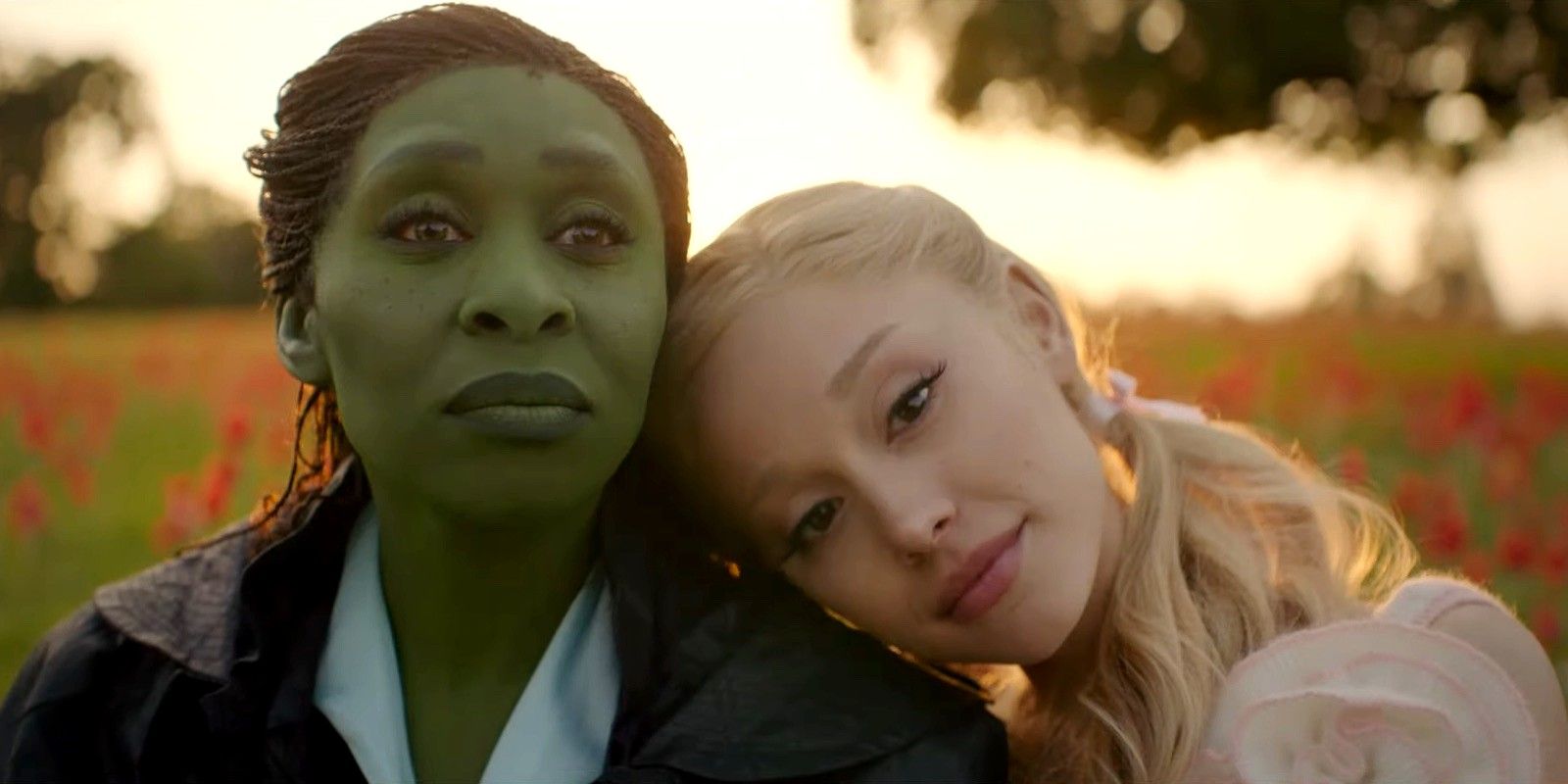
The Broadway musical Wicked is a near-perfect masterpiece, but there are still ways the upcoming movie can improve upon the story. Like the musical it is based upon, the two-part movie adaptation of Wicked follows Elphaba (Cynthia Erivo), a young woman born with green skin destined to become the Wicked Witch of the West. Along the way, she becomes close friends with Glinda the Good (Ariana Grande) and discovers the secrets of the Wonderful Wizard of Oz (Jeff Goldblum). With the Wicked movie's cast of unrivaled talent, there are ample opportunities to organically expand the characters and plot.
Wicked is a complex exploration of the politics of perception and fabricated public personas. The best way for the movie to improve the story is to further delve into these themes. Wicked on stage is already nearly three hours long, with much of that time taken up by the musical numbers. However, even then, time constraints mean that some characters' arcs have to be summarized rather than fleshed out to give Elphaba and Glinda's friendship and individual arcs their due. With Wicked being split into two full-length movies, there is time for other characters to be given complete stories.
Your browser does not support the video tag.
8 Elphaba & Fiyero Should Have More Scenes Together
Elphaba and Fiyero's romance should be further developed to justify the events of the second act.
Close
Fiyero (Jonathan Bailey) attends Shiz University with Elphaba and Glinda, beginning a relationship with Glinda almost as soon as he arrives. Yet as he and Elphaba get to know one another, they end up falling in love with each other, with Elphaba bringing out Fiyero’s more thoughtful side. Fiyero and Glinda are together while Elphaba is on the run, and when the story picks up some time later in the second act, they announce their engagement. However, Fiyero then runs away with Elphaba for one romantic musical number in the forest before he is captured.
More scenes of Elphaba and Fiyero’s budding romance while they are still at school would improve the story, and better justify them both betraying Glinda after not having seen each other for presumably years. Elphaba also accidentally turns Fiyero into the Scarecrow; he finds her after her supposed death, and they leave Oz together. Just one line where Fiyero mentions traveling with Dorothy to get back to Elphaba, and a more developed relationship as the foundation of their running away together forever, would make this a much better storyline.
Related 5 Minutes Of Wicked Footage Highlight Glinda & Elphaba's Relationship & Oz In Crisis At CinemaCon CinemaCon offers a closer look at the upcoming movie Wicked, which stars Cynthia Erivo and adapts the first part of the hit musical of the same name.
7 Glinda Should Say More About The Wizard
Glinda's loyalty to the Wizard of Oz could be further explored.
Close
Glinda only confronts the Wizard and banishes him from Oz after Elphaba’s “death” — Elphaba is the one who truly opposes him.
After Elphaba is labeled as the “Wicked Witch,” the Wizard and Madame Morrible (Michelle Yeoh) frame Glinda as the opposite. She becomes a spokesperson for the Wizard and is positioned as the counterpart to the Wicked Witch of the West. Throughout Wicked, it seems as though Glinda thinks that the Wizard’s actions can be justified because the people in Oz believe in the idea of him. Glinda only confronts the Wizard and banishes him from Oz after Elphaba’s “death” — Elphaba is the one who truly opposes him.
Glinda touches upon the show’s themes of public vs. private personas when she sings “Popular,” telling Elphaba: “[…] think of / Celebrated heads of state / Or specially great communicators / Did they have brains or knowledge? / Don't make me laugh! / They were popular!” However, she is forced to eat her own words when she becomes embroiled in the conflict between Elphaba and the Wizard where the lives of her loved ones are threatened.
Elphaba and Glinda have a confrontation that is overshadowed by Glinda’s anger about the situation with Fiyero. One direct comment from Glinda during this scene about what she actually thinks of the Wizard would be an effective way to drive the movie’s discourse. It would also make Glinda’s later decisions more poignant when she realizes that Morrible sent the tornado that killed Nessarose "Nessa" (Marissa Bode) and decides the Wizard cannot rule Oz any longer.
6 Dr. Dillamond's Character Should Be Reinvented
Dr. Dillamond could rise above his Broadway role in the Wicked movie.
Close
Peter Dinklage’s Wicked role of Dr. Dillamond is somewhat notorious in the Broadway fanbase. A humanoid goat (created with prosthetics onstage) whose song “Something Bad” is the slowest moment of the show, he inspires Elphaba’s dedication to empowering the animals of Oz, who are mysteriously losing their ability to speak. However, Dillamond still stands as a goofy part of the show that most people choose to ignore. This is unfortunate when the storyline he represents is important to Elphaba’s arc, and he could be a much more effective character.
Like Fiyero, Dillamond should get more scenes with Elphaba to establish how important their relationship is in her life. Additionally, he should be played as less of a joke and a more serious and wiser character — something that Dinklage excels at portraying. Elphaba also discovers that the Wizard is behind what is happening to the animals in an effort to subjugate them. Laying the foundation for this revelation, which motivates Elphaba for years, with a better version of Dillamond’s character will make this subplot stronger.
5 Madame Morrible Should Have A Real Backstory
Madame Morrible's history could have interesting implications for Elphaba and Glinda's arcs.
Close
Madame Morrible has the potential to be an interesting character in Wicked, but also because of time constraints, her primary purpose is to be a straightforward villain in Elphaba and Glinda’s story. First the headmistress of Shiz and later the Wizard’s press secretary, Morrible plays a key role in tarnishing Elphaba’s reputation. However, her reasons for siding with the Wizard are never explored. Presumably, she does it to increase her own status and social power. Unlike the Wizard, she has real magical ability and is powerful enough to summon a tornado that brings Dorothy’s house to Oz and kills Nessa.
If the movie shows some scenes of Morrible teaching Elphaba sorcery it could lead to a conversation between them, which could shed some more light on Morrible’s rise to power. The story of Wicked revolves around two women with contrasting personalities set against each other as the two major forces of good and evil in Oz; further developing the stories of the other female characters around them will make this even more nuanced. Additionally, with an actress like Yeoh playing Morrible, a backstory of how she climbed Oz’s hierarchy with cunning schemes is in order.
Related "So Much More To Explore": Wicked Movie Producer Defends Decision To Release In Two Parts Marc Platt, the producer of the Wicked film, explains why the musical adaptation will be split into two parts, with the first arriving soon.
4 Dorothy's Trio Should Have Stronger Storylines
The Scarecrow, Tin Man, and Cowardly Lion are mere Easter Eggs in Wicked.
Close
The Scarecrow, Tin Man, and Cowardly Lion are more token nods to The Wizard of Oz than strong plot points in Wicked. When Nessa casts a spell to make the Munchkin Boq (Ethan Slater) fall in love with her and almost kills him, Elphaba manages to save his life by turning him into the Tin Man. Elphaba frees the Lion from a cruel teacher when he is a cub, and he grows up to become a coward because she did not “let him fight his own battles.”
Boq becomes a fervent witch hunter, which more or less makes sense because Nessa blames his tin state on her sister. The Lion could be given a better backstory because acting as though saving a lion cub is evidence of Elphaba’s wickedness is a bit of a stretch, and somewhat confusing in the context of the Wizard’s oppression of the animals. With all three members of Dorothy’s trio, there is a disconnect between their cameos in Wicked and their roles in Wizard of Oz. Why they help Dorothy in the context of Wicked’s plot could be better explained.
3 Nessarose's Character Should Be More Developed
Nessa could play an important part in expressing the main themes of Wicked.
Close
Among the Wizard of Oz characters who appear in Wicked is Nessa, Elphaba’s younger sister and the Wicked Witch of the East. Wicked’s two-part release can fix Nessa’s character by giving her more screen time and therefore more character development. Like many of the supporting characters in Wicked, Nessa exists primarily as a prop in a story that is about Elphaba and Glinda. Her death pushes Elphaba further toward villainy, leading to her relentless mission to reclaim Nessa’s ruby slippers. However, Nessa’s storyline of becoming the Wicked Witch of the East could be expanded, creating an interesting parallel to Elphaba.
Nessa is spoiled by her and Elphaba’s father, who neglects his older daughter because of her green skin. Nessa is frustrated by needing to use a wheelchair and becomes an entitled, tyrannical leader when she inherits her father’s position as governor of Munchkinland. Wicked skips over how Nessa got to the point of being such an awful ruler that the Munchkins would break into song and dance at the news of her death. If Wicked is an exploration of how one is given true and false labels of wickedness, they have another potentially poignant character in Nessa.
2 The Wizard's Connection To Elphaba Should Be More Important (Or Cut)
The Wizard plays a role in Elphaba's backstory, but it does not affect Wicked's story that much.
Close
Wicked implies that the Wizard is Elphaba’s biological father and the reason for her green skin is that when he and Elphaba’s mother had their affair, he gave her a green elixir to drink. This is a plot point that likely only made it into Wicked as a tribute to Gregory Maguire’s novel of the same name upon which it is based. Elphaba never finds out about this in the show, and it therefore has no impact on her emotions or how she confronts the Wizard. He only realizes the truth at the very end, when Elphaba is allegedly dead.
Essentially, the plot point does not affect the outcome of Wicked. If it is kept in the movie(s), it should either be expanded — with Elphaba and/or the Wizard discovering it earlier, so it can further complicate their dynamic — or it should be cut out of the story entirely. This is an element of Wicked that the cinematic adaptation might look to the original novel for inspiration of how it can elaborate upon this part of the story.
Related New Wicked Movie Photo Hints The Wizard Is Not What You're Expecting Character images from the upcoming Wicked movie contain subtle details that reveal the most surprising aspect of Jeff Goldblum's Wizard of Oz.
1 Dorothy Gale Should Have A Bigger Role In The Story
The Wicked movies will probably feature Dorothy more.
Close
The first Wicked trailer suggests a change for Dorothy, in that she will actually appear rather than only being hinted at. In the Wicked musical, Dorothy is only heard crying offstage and seen as a silhouette when she "melts" Elphaba. However, Dorothy also poses some interesting possibilities in how she is used to comment upon the character arcs of the many witches of Oz.
Elphaba has the best of intentions but has "wickedness thrust upon her;" Glinda is kind at heart but accepts injustices rather than fighting them; Madame Morrible uses her power only to her own benefit; and Nessa becomes wicked through initially inconsequential, selfish behavioral habits. In contrast to all of them, Dorothy is the picture of innocence who views Oz as a wonderland. Just giving her a bigger presence will emphasize these comparisons. Dorothy might also directly say something about what is happening in Oz, representing one possibility of how the movie adaptation of Wicked can make the story even more profound.




COMMENTS