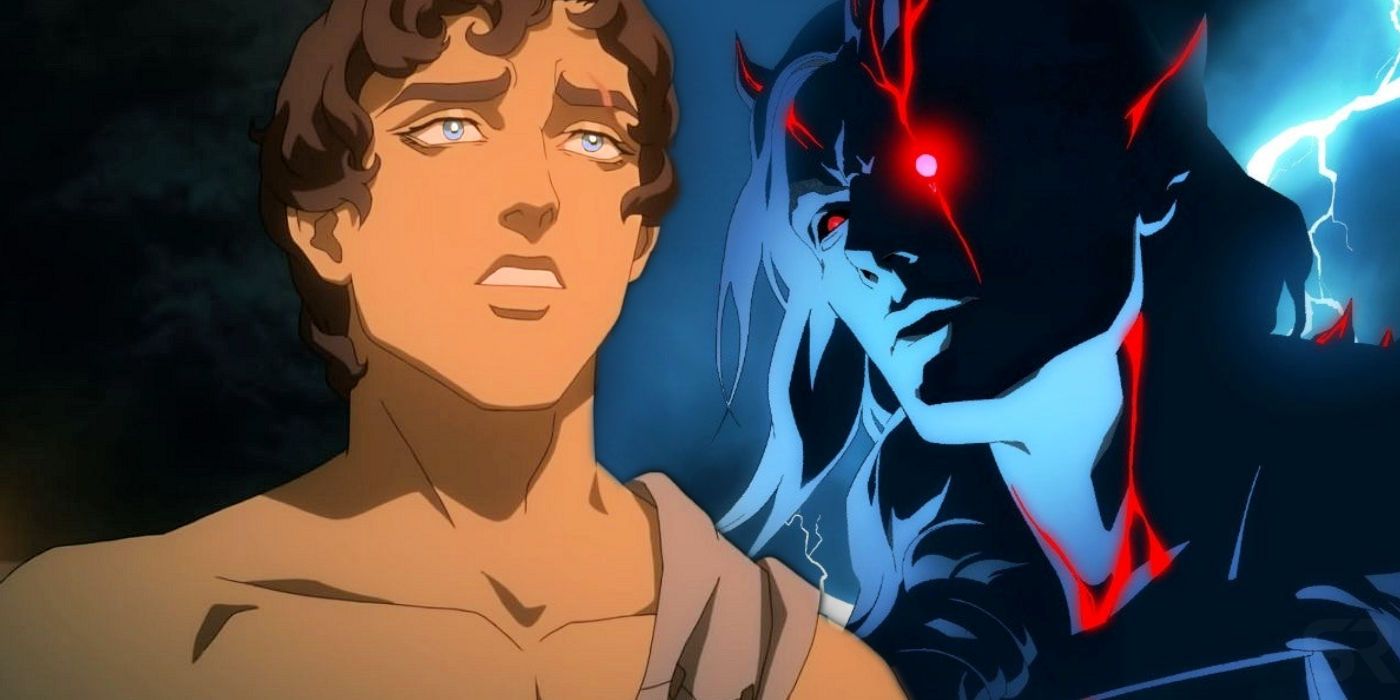
Blood Of Zeus Ending & Season 2 Setup Explained
Summary Blood of Zeus season 1 sets up season 2 with epic battles, reveals identities, and potential return of villains and conflicts ahead.
Heron, a demigod, discovers his divine powers and sacrifices for the greater good against villains like Seraphim and potentially Hades.
Potential for Blood of Zeus season 2 explores themes of power struggles, alliances, and the evolving roles of gods and demigods like Heron.
Netflix’s Blood of Zeus season 1 ends with setting up Blood of Zeus season 2, including a new villain. The series chronicles the life of Heron, who discovers that he is the son of Zeus. When demons invade his hometown, Heron discovers the truth about his birth, and that he may be instrumental in saving humanity. Conflict erupts in the mortal realm and on Mount Olympus as Hera seeks revenge against Zeus for his infidelity and the demons wreak havoc on their human counterparts. Hera enlists the help of the demon Seraphim and Zeus calls upon Heron to protect humankind.
The Blood of Zeus characters have an epic battle as Heron and his mortal allies recover the Cauldron of Darkness to end the conflict. Hera is unresponsive to Zeus’ pleas for peace, but when Hera is attacked, Zeus sacrifices himself to save her life. She disappears after being maimed by Seraphim, and it's unclear if she survives. Heron and Seraphim have a long-awaited confrontation, made more intense by the fact that the men are half-brothers. Ultimately, peace seems to return to Olympus - but the pieces are still put in place for Blood of Zeus season 2.
Blood of Zeus season 2 premiered on Netflix on May 10, 2024
Related Who Is Typhon? Blood Of Zeus' New Monster Explained Blood of Zeus season 2 reveals Typhon was the greatest challenge the Greek Gods ever confronted and teases his true power.
Seraphim's Defeat (& How He Can Return In Season 2)
Seraphim Can Return In The Afterlife
As Seraphim and Heron fight, Seraphim proves himself to be a more than formidable opponent, but his key motivator turns out to be his biggest downfall. He often gains the upper hand against Heron, but Heron eventually emerges victorious by accessing his godly power. Heron’s training with Zeus allows him to finally win as he reflects on his father’s insistence that he must let go of his anger. Seraphim is, in the end, destroyed because of his own inability to move past his rage, even if it is understandable and, in some aspects, justified.
Seraphim’s constant search for a sense of autonomy through power and revenge perpetuates an endless cycle that is only broken when Heron accesses his divine powers and kills Seraphim. However, though the end of the episode finds Seraphim dead, his journey does not appear to be over, as the villain for a potential Blood of Zeus season 2 reveals his intentions to subjugate Seraphim in the afterlife. Seraphim may well return as an antagonist in future seasons, again doing the bidding of a vengeful god.
Seraphim killed his and Heron's shared mother, Electra.
Zeus' Death & Olympus' Future
Zeus’ death in Blood of Zeus' ending is shocking and creates a lot of questions about the future of Olympus, not the least of which is the inevitable power vacuum that will be created in his absence. Most importantly, though, Zeus’ sacrifice exemplifies the qualities that made him a good leader, and offers him some possible recompense for the pain he caused Hera. When a giant turns on Hera, attacking her, Zeus immediately launches attacks against it in response, eventually drawing its attention and putting himself in harm’s way to protect her.
When it becomes clear that the only way to defeat the beast requires Zeus to sacrifice his life, he does so amidst a silent but powerful reconciliation with Hera. With Zeus dead and Hera gone, there is, of course, a question about who will lead the Greek gods of Olympus. Though it is a question that will demand a more definitive answer in a potential Blood of Zeus season 2, the end of the show’s season 1 finale shows the gods working together to rebuild Olympus and tend to the wounded.
With the conflict over and the opposing leaders gone, the Blood of Zeus gods are able to put aside their differences in the interest of the common good. Heron certainly seems like a viable option to lead Olympus going forward, especially considering the growth he experiences during the final battle.
Related How To Find All Anime On Netflix Netflix has a choice selection of movies and TV shows, but how do viewers find all of the anime content hidden on the streaming service?
Heron's Godhood & Powers Explained
Heron Is A Demigod Due To Being The Son Of Zeus & Electra
Close
As Zeus confirms in earlier episodes, Heron’s half-god/half-mortal parentage makes him a demigod. Zeus predicts that Heron may wield divine strength, and during his fight with Seraphim, Heron discovers that the full scope of his power reaches even beyond that. Heron recalls Zeus’s insight: that raw strength and aggression are not always enough to defeat an enemy, and that true power can be accessed only through calmness. Heron is able to defeat Seraphim by sacrificing himself, impaling both himself and Seraphim on Seraphim’s bident.
Like his father, Heron is willing to die to save his people, which is what allows him to access the godly power of lightning and save Olympus from ruin.
Heron reflects on Seraphim’s pain and on his own, and ultimately finds the strength to summon lightning, which he uses to kill Seraphim. It is tragic, but indicative of Heron’s growth - especially his ability to channel lightning like his father. Though he survives his wounds, Heron’s willingness to sacrifice himself is an important quality that he didn’t possess at the beginning of Blood of Zeus. Heron was initially unwilling to defend his village after being ostracized for his status as an illegitimate child. He was driven to join the conflict because he wished to exact revenge against Seraphim.
However, Heron's willingness to sacrifice himself to end the fighting displays a shift in Heron’s morality - he no longer wishes to kill Seraphim out of revenge; he only does so because Seraphim intends to finish what Hera started and wipe out Olympus entirely. Like his father, Heron is willing to die to save his people, which is what allows him to access the godly power of lightning and save Olympus from ruin.
Related Blood Of Zeus' Eleusinian Stone Explained & Its Real Greek Mythology The Eleusinian Stone is a vital part of Blood of Zeus season 2, and plays a role in setting up the core conflict of a prospective season 3.
Blood Of Zeus Sets Up Hades As Season 2's Villain
Hades Appears In The Final Minutes Of Blood Of Zeus Season 1
Though the Blood of Zeus ending wraps up on an uplifting note as Heron reunites with his friends while Olympus is rebuilt, a final scene sows the seeds of future conflict, setting up another major villain for season 2: Hades. When Seraphim wakes in darkness and tries to summon his bident, a voice praises him for having “used my bident well.” The owner of this voice is none other than Hades, who reveals that Seraphim is indeed dead, and that he is destined to suffer for eternity in the underworld as a spirit.
Hades offers Seraphim a way out from that suffering, demanding that Seraphim kneel to him. Seraphim screams in anguish, having spent his entire life fighting to avoid subjugation, but finding no real choice. Though Seraphim is one of Blood of Zeus’ main antagonists, it is clear that he has suffered greatly in his life and is later abused and manipulated by Hera. Hades’ willingness to force Seraphim to do his bidding makes him much more villainous, especially when he implies that he has been watching Seraphim and knows of his suffering in the mortal realm.
Furthermore, Seraphim first found his bident plunged into the back of a giant after being swept into a cave by the currents of a body of water. This may indicate that Hades put the bident into Seraphim’s hands intentionally and that he might have had a hand in the creation and rise of demons. It is possible that Hades, like Hera, seeks revenge against mankind or the gods for a perceived slight, perhaps on an even greater scale.
Related 30 Best Movies On Netflix Right Now (May 2024) From Marriage Story to Glass and They Cloned Tyrone, here are our picks for the best movies on Netflix for everyone to enjoy this month.
Blood Of Zeus Ending's Greek Myth Connections
As Heron Cheated Death, He Could Now Be A Target Of Hades'
In Greek myth, Hades is the god of the underworld, having received his domain after drawing lots with his younger brothers, Zeus and Poseidon, who rule the heavens and the sea, respectively. Some myths indicate that Hades felt bitter about his fate, revealing a possible motivation for his Blood of Zeus counterpart to cause chaos for the other gods, who get to reside in the much more idyllic Olympus. Hera experienced similar resentment towards Zeus in Greek myth, often turning her wrath not upon her husband, but toward his various lovers and resulting children.
Hades sought to punish anyone who cheated death, and Heron could be one such target, considering that he survives gravely serious wounds after the battle against the giants.
Hera does the same in Blood of Zeus, but takes it a step further by targeting Zeus as well. In the way Hera uses the giants against Zeus and his allies, Hades may be able to harness the power of the souls that he guards in the underworld - he certainly seems to intend to do so with Seraphim. However, Blood of Zeus differs from Greek mythology, as Hades does not act out of vengeance unless provoked, and it's possible that Blood of Zeus will heighten his wrath, possibly having him turn it against the gods rather than just mortals.
Hades sought to punish anyone who cheated death, and Heron could be one such target, considering that he survives gravely serious wounds after the battle against the giants. The same could apply if Zeus were somehow to return. The series could also introduce other figures from myths about Hades, such as his wife Persephone, or opponents like Theseus, Pirithous, or Heracles. All of these possibilities mean that Blood of Zeus has several avenues to explore if it continues for a second season, grappling with what it means to be a god, and whether all on Mount Olympus are treated equally.
How The Blood Of Zeus Season 1 Ending Teases Future Seasons
The Blood Of Zeus Creators Have Envisioned 5 Seasons
Image via Netflix
The Blood of Zeus creators, Charley and Vlas Parlapanides, have mentioned plans for up to five seasons (via Observer), and the season 1 finale subtly teases several narrative threads that could be developed in future installments. The creators explained:
“We’ve planned out what we would hope to be a five-season arc. It all depends on whether we get viewership
The ending of Blood of Zeus season 1 sets the stage not only for season 2 but also hints at a broader, more extensive narrative arc. The final scene introducing Hades as a major antagonist suggests that the series will delve deeper into the darker aspects of Greek mythology. Hades’ manipulation of Seraphim indicates a power struggle that could involve other gods and mythological figures, setting up a rich tapestry of conflicts and alliances. This move opens the door for exploring Hades’ motivations and schemes, possibly revealing a larger plot against Olympus that extends beyond personal vendettas.
There is currently no release date for Blood of Zeus season 3.
The ambiguous fate of Hera, who vanishes after being attacked, leaves room for her return either as an ally or a new kind of antagonist. Her complex relationship with Zeus and her deep-seated desire for revenge provide fertile ground for future storylines beyond season 2. Additionally, the rebuilding of Olympus hints at potential political intrigue and power shifts among the gods, especially with the leadership vacuum left by Zeus' death.
Heron's growth and newfound powers position him as a central figure in the ongoing battle between gods and demons.
Moreover, Heron's growth and newfound powers position him as a central figure in the ongoing battle between gods and demons. His journey from a reluctant hero to a powerful demigod willing to sacrifice himself for the greater good suggests that his role will continue to evolve. Future seasons might explore Heron's struggle with his dual heritage and his place among the gods. As Heron takes on more responsibility, his relationships with both mortals and gods will likely become more complex, providing a rich narrative vein for the Blood of Zeus series to mine.
Source: Observer







COMMENTS