
Obama (Privately) Slams Trump
Former President Barack Obama has never exactly been a political attack dog. For most of his presidency, he was far more about compromise than bluster. And since leaving office in 2017, he has tended to moderate his public statements about President Trump — attacking him obliquely, if at all.
But when journalists’ cameras are off, in lucrative private fund-raisers with donors, Obama has been letting loose on Trump, as our reporters Shane Goldmacher and Glenn Thrush detail in a new article. Obama has highlighted the numerous accusations of sexual assault leveled against Trump and warned of the president’s tendency to lean on “nativist, racist, sexist” fears, according to notes made from recordings of Obama’s remarks, donors and others who have been on the calls.
The combination of Obama’s sought-after presence and his dire warnings about Trump appears to be paying off: Digital events he has participated in have raised $24 million for Joe Biden’s campaign since the start of last month.
During a conversation with J.B. Pritzker, the governor of Illinois, Obama pointed to Trump’s fixation on the preservation of Confederate monuments and the Confederate flag. “That’s like his No. 1 priority,” Obama said, adding that this “gives you a sense of what this is about.”
Congress is getting its licks in before the August recess with a string of high-profile hearings, and yesterday the Big Tech bosses were in the hot seat. The heads of Amazon, Google, Apple and Facebook appeared before the House — in the case of Jeff Bezos, Amazon’s chief executive, for the first time — and faced tough questions from members of the House Judiciary antitrust subcommittee about their increasingly firm grips on their areas of industry.
As is often the case, the questions were more substantive than the responses, as the executives frequently wriggled out of answering or said they couldn’t recall the documents and conversations mentioned. Nevertheless, multiple executives were asked about their use of data to steer traffic away from smaller competing businesses. Another topic that kept coming up: the tech giants’ practice of buying up smaller companies that pose a threat to their hold on consumers’ data and eyeballs.
The subcommittee said it had amassed 1.3 million documents on the four tech giants over the course of a 13-month investigation into their dominance in the industry.
“Any single action by one of these companies can affect hundreds of millions of us in profound and lasting ways,” Representative David Cicilline, a Democrat from Rhode Island and the chairman of the antitrust subcommittee, said in his opening statement. “Simply put: They have too much power.”
Also yesterday, the Trump administration asked the Federal Communications Commission to narrow its protections of internet platforms that take down content seen as politically inflammatory. Trump and other Republicans have repeatedly complained that tech companies too often target conservative content for removal.
At the day’s antitrust hearings, Republican members of the House often veered away from the stated focus on monopolistic corporate practices, instead focusing their questions on instances of what they called anti-conservative bias in the companies’ decisions around censorship.
Yesterday in this newsletter, our reporter Emily Cochrane described Trump as “ever a businessman and real estate developer” as she detailed his attempts to keep the F.B.I. headquarters near his hotel in downtown Washington. And in fact, Trump’s personal approach to real estate development has been rearing its head in another way lately.
In the 1970s, Trump and his father were sued by tenants for screening out Black renters at their housing developments; they eventually settled the suit without admitting wrongdoing. Last week, the administration moved to nullify an Obama-era rule aimed at fighting housing discrimination in suburbs.
And on Twitter yesterday, the president restated the familiar argument that fair-housing legislation depresses housing prices as he boasted that he was protecting suburbanites and that they would “no longer be bothered or financially hurt by having low income housing built in your neighborhood.”
It was the latest of many recent attempts to explicitly play up white racial anxieties as the presidential campaign enters its final months.
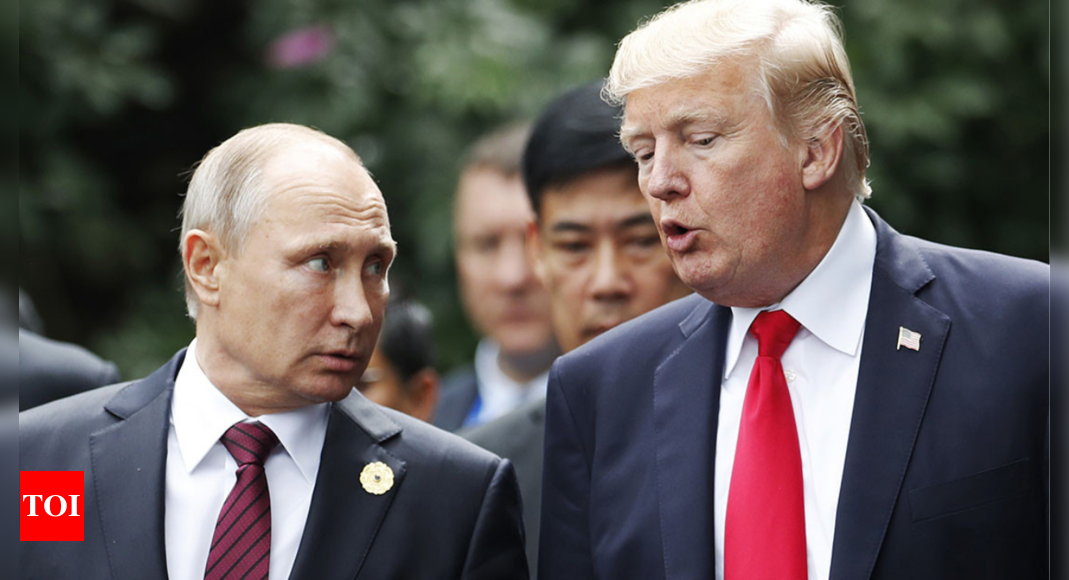
Trump said yesterday that when he spoke to President Vladimir Putin of Russia last week, he didn’t think it was worth the time to mention the Russian government’s reported bounty payments to Taliban fighters.
“That was a phone call to discuss other things, and frankly, that’s an issue that many people said was fake news,” Trump told Axios.
Evidence that Russia had offered payments to the Taliban in exchange for attacks on American troops was presented to Trump in February, but he has repeatedly refused to acknowledge having received that information.






COMMENTS