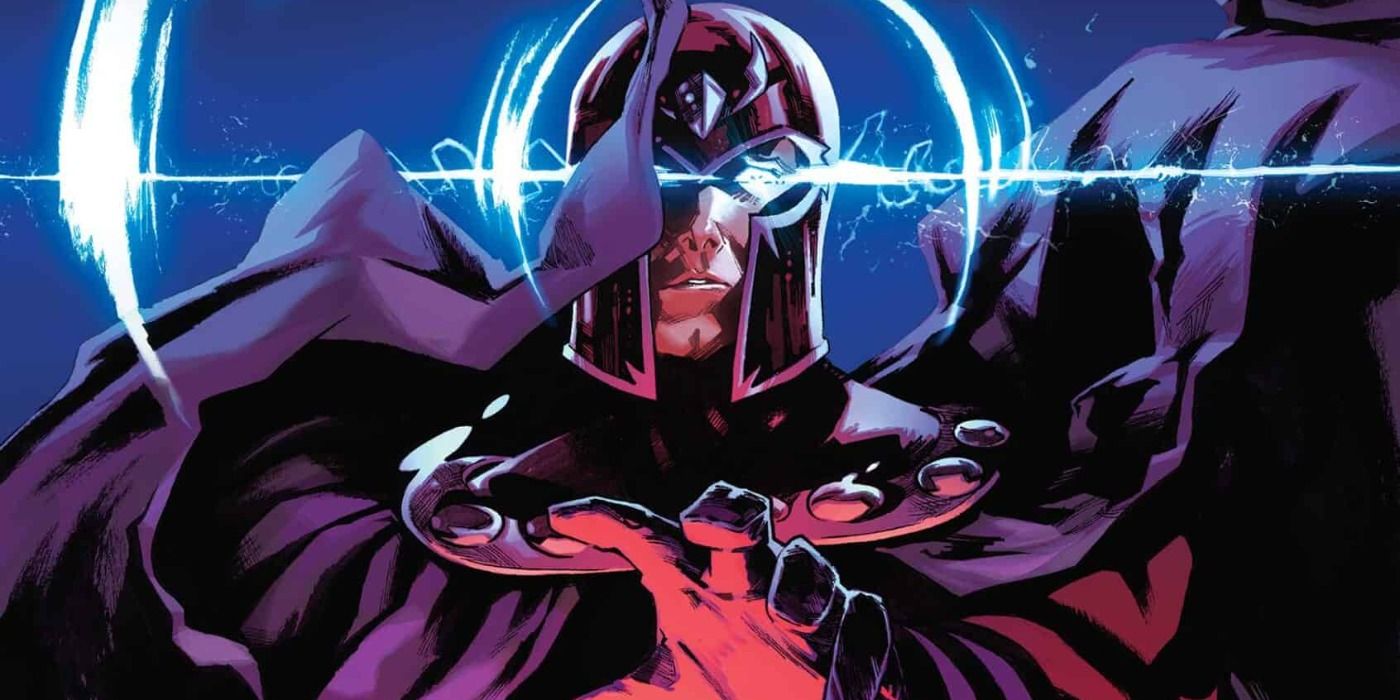
Magneto's Real Name Is One Of X-Men's Most Glaring Mistakes
Summary Magneto's name evolution reflects a deeper understanding of his Jewish identity, culminating in the fitting moniker of Max Eisenhardt.
From villain to hero, Magneto's transformation is intertwined with his Holocaust survivor background, adding complexity to his character.
Max Eisenhardt's true name embodies the core virtues of Magneto, showcasing the significance of names in character development.
Just as Magneto has gone from villain to hero during the course of his history, Marvel writers' understanding of his Jewish identity has also developed over time – a process exhibited by the changes to the Master of Magnetism's "true" name throughout the years. Now, he is known as Max Eisenhardt, but his name didn't always so precisely reflect his heritage, or hold as much meaning as this one does.
Magneto is one of the most popular characters in comic book history, and one of the most powerful mutants in the Marvel Universe. Upon his introduction by creators Stan Lee and Jack Kirby in 1963's X-Men #1, Magneto was not Jewish; this dimension was added to his character in later years, as the next generation of X-writers sought to humanize the franchise's first and foremost villain. This effort also resulted in Magneto being named "Erik Lehnsherr," a name later stories would retcon in favor of the more appropriate Max Eisenhardt.
Related Magneto's Twist on an Iconic X-Men Catchphrase Shows How Much He's Grown Magneto's death left him grappling with his past actions and villainous approach, and his first fight following his resurrection shows he's changed.
"Erik Lehnsherr" Wasn't The Right "Real Name" For Magneto
Introduced By Writer Chris Claremont
Close
The human name [Chris] Claremont gave Magneto, Erik Lehnsherr, did not fit well with the character's new origins. It wasn't until the 2008-09 series X-Men: Magneto Testament that his true Max Eisenhardt identity was established.
Notably, Magneto's name change came in response to long-simmering fan dissatisfaction with the Lehnsherr name, which many considered to be among the stand-out mistakes in X-Men history. Magneto was conceived of as the archenemy of Charles Xavier's X-Men, a mutant supremacist who sought to achieve total subjugation of humanity. The closest thing to a human name he was given was "Magnus." While Lee established his friendship with Professor X early on in his life, he seemingly possessed few redeeming qualities. It wasn't until writer Chris Claremont took over the series that Magneto obtained his now-classic backstory.
Claremont re-conceived the character as a survivor of the Auschwitz concentration camp, a Jewish man who rejected humanity after experiencing the worst it had to offer. As an antagonist, Magneto's actions were cast in a complex new light, bringing a level of moral complexity to X-Men stories that helped to elevate the franchise to an incredible level of success, forging it into one of Marvel's most iconic properties. However, the human name Claremont gave Magneto, Erik Lehnsherr, did not fit well with the character's new origins. It wasn't until the 2008-09 series X-Men: Magneto Testament that his true Max Eisenhardt identity was established.
Max Eisenhardt is a German-Jewish name meaning "strength of iron" or "as strong as iron." By contrast, "Lehnsherr" means "feudal lord." While Eisenhardt is the character's definitive birth name, it is interesting to note that the "Lehnsherr" identity also remains canon, as an alias used by Magneto. As his Jewish roots became more essential to his character over the past several decades, the matter of his name became increasingly important. Likewise, part of his in-universe redemption story has been embracing his history, and truly becoming "Max."
Magneto's Jewish Identity Was Essential To His Growth As A Character
X-Men: Magneto Testament – Written By Grek Pak; Art By Carmine Di Giandomenico
Close
Magneto's Jewish heritage is just one of the most potent examples of how real-world identities and mutanthood intertwine in order to produce complex narratives that have persistent appeal – as has been the case with X-Men for decades.
2008's Magneto Testament offered Marvel readers the authoritative account of the character's origin story, functioning as a culmination of over three decades worth of gradual development. X-Men stories have not always centered Magneto's Jewish identity, but its establishment was pivotal as a major first step toward a more complicated, nuanced version of the Master of Magnetism, which in turn has been part of the flourishing of the X-franchise in every medium, from comics, to film and television. The retcon from Erik to Max is also still fairly recent in Marvel history – meaning the greatest fruits of it are still likely to come.
The Krakoan Era of X-Men comics rebooted the franchise's timeline, and in the process, made a point to emphasize the use of the name Max for Magneto. In many ways, this era has represented the full realization of decades worth of potential for the X-Men concept, something that is most apparent in Magneto. His path from villainy to heroism was long and convoluted – featuring more than one significant backslide; Krakoa offered a look at the most articulated version of Magneto, a statesman and leader who doesn't need to obscure any part of his identity.
Related Professor X & Magneto Were NOT Based On Martin Luther King & Malcolm X Professor X and Magneto may famously be compared to Dr. Martin Luther King Jr. and Malcolm X, but the true inspiration comes from Israel, not America.
Representation is essential in all mediums, and the X-Men franchise has always been at the forefront of that. Even when their inclusion had to be reduced to subtext, given the restrictions of the time, X-books have always sought to speak to underrepresented and mistreated groups. Magneto's Jewish heritage is just one of the most potent examples of how real-world identities and mutanthood intertwine in order to produce complex narratives that have persistent appeal – as has been the case with X-Men for decades.
"Max Eisenhardt" Is The Perfect True Name For Magneto
Maximum Meaning
Close
Readers can anticipate that Max will remain one of the core characters of the franchise, and will continue to add to his legacy as one of Marvel's most prominent Jewish characters.
In fiction, names are charged with significance. Whereas in real life, a German-born Jewish man might end up with a non-Jewish surname meaning "feudal lord," in a narrative, this choice of a name is not yielding the full meaning that it could. For an individual who is most famous for manipulating metal, a name meaning "strong as iron" is more appropriate. It shows that the core virtues of the character extend beyond just his mutant power, but radiate from the very nature of his being.
With this in mind, Max Eisenhardt stands out as the perfect choice for Magneto's true name – made all the more notable by the circuitous route it took to get there. Given the opportunity, Chris Claremont would likely go back and deliberate on a stronger name for Magneto than "Erik Lehnsherr." Still, while many fans have cited this as a "mistake" on the creator's part, it is more a product of the fast-paced nature of the comic book writing process. Moreover, comic book writing is an iterative process; Claremont can be said to have penned the first draft of Magneto's backstory.
In turn, subsequent writers have refined Magneto's history, and true origin, in the decades since. Now, as Max Eisenhardt, he has never been more essential to the X-franchise – not even in his role as the first enemy the X-Men ever faced. With the Krakoan Era ending, and the new "From the Ashes" relaunch approaching, readers can anticipate that Max will remain one of the core characters of the franchise, and will continue to add to his legacy as one of Marvel's most prominent Jewish characters.






COMMENTS