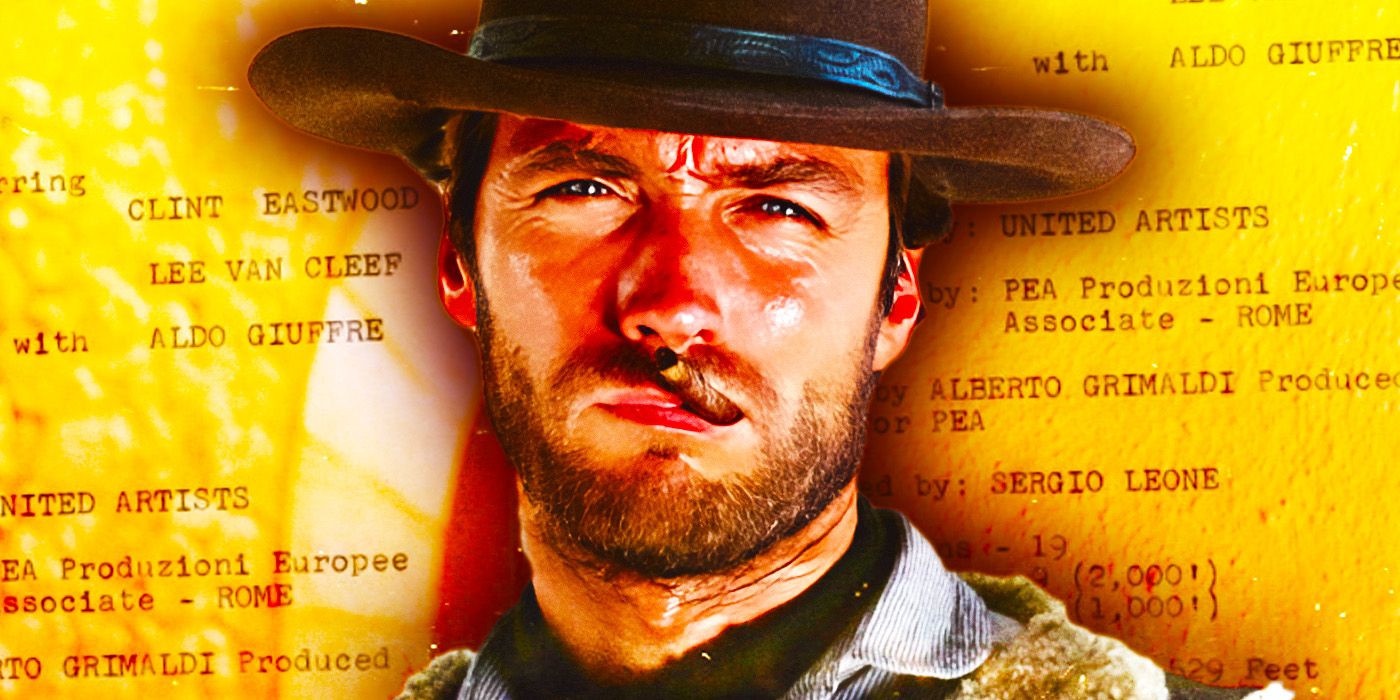
Clint Eastwood's 20 Best Western Quotes
Summary Eastwood delivers iconic quotes that range from intimidating threats to thoughtful insights, showcasing his range as an actor in Westerns.
The depth in Eastwood's characters adds richness to his line deliveries, highlighting the complexities of the Wild West outlaws he portrays.
Eastwood's memorable lines in Western movies will go down in cinema history due to their impact on the characters and the overarching themes of the films.
The Western movies of Clint Eastwood are packed full of iconic film quotes. As the definitive embodiment of a lone-man outlaw bandit, Eastwood is forever associated with Westerns and the Wild West as Eastwood can deliver an epic movie quote like no other. Characters such as The Man With No Name in Sergio Leone’s Dollars Trilogy have spoken some of cinema’s most iconic phrases and have solidified Eastwood’s reputation as one of the most important actors of the past seven decades of filmmaking.
Eastwood’s best Western movie quotes are as iconic as they are varied, consisting of serious threats by sinister outlaws, hilarious quips by brooding bandits, and words of wisdom from aging desperados. Having played troubled criminals with tragic backstories like in The Outlaw Josey Wales, as well as retired bounty hunters coming back for one last job such as in Unforgiven, Eastwood delivers a committed performance and adds something unique to his line deliveries. Eastwood perfected the role of a loner outlaw in Westerns and Eastwood’s quotes will go down in cinema history as some of the best uttered on screen.
Related Clint Eastwood's 10 Best Movies, Ranked Clint Eastwood is one of Hollywood's most iconic filmmakers and movie stars. In nearly 70 years of working on films, here are his best.
20 “I Got A Dollar Here Says I Can Break Your Neck 'for You Get That Rig Moved A Half Inch.”
Joe Kidd (1972)
Eastwood does some of his best intimidating here.
Clint Eastwood’s characters don’t typically have to say much to appear intimidating in any of his Westerns, but that doesn’t mean that many of them don’t have some pretty threatening lines. This is one from the movie Joe Kidd. Eastwood plays the titular character, a former bounty hunter who ends up in the middle of a land dispute between the owner and the less fortunate peasants occupying the area. It’s a relatively typical Western, but Eastwood does some of his best intimidating here.
Eastwood’s Kidd says this particular line after being threatened with a gun by another character. Kidd is so secure in his own skills and understands his opponent well enough to know that the other man wouldn’t even be able to get a shot off before he moved. That confidence is typical of the characters Eastwood goes on to play after.
19 “Go Ahead, Let The Tears Fall In The Beer… There's Nothing Wrong With Cryin'.”
Bronco Billy (1980)
If there’s one thing that most Westerns have in common, it’s that the outlaws, the lawmen, the bandits, and the bounty hunters are not allowed to be vulnerable. They can be unhinged and angry, or steady and self-assured, they can even be silent as long as they’re a perfect shot. They are not, however, supposed to show their softer side. That makes this line from Bronco Billy something of an anomaly.
Of course, Bronco Billy is also something of an anomaly as Eastwood plays a man who runs a Wild West show as interest in it is waning rather than his usual gunslinger. It’s refreshing, however, to hear him tell another character that it’s okay to cry. It’s a brief moment in the movie that allows the cowboys to wallow in their circumstances instead of simply hopping on a horse and finding a problem to fix.
18 “Well, It Really Doesn't Matter, Does It?”
Pale Rider (1985)
Pale Rider (1985) Director Clint Eastwood Release Date June 28, 1985 Cast Clint Eastwood , Michael Moriarty , Carrie Snodgress , Chris Penn , Sydney Penny , Richard Dysart , Richard Kiel , Doug McGrath , John Russell Runtime 115 minutes
Pale Rider is unique among Eastwood’s Westerns because there’s a supernatural element to the movie. It’s implied repeatedly that Eastwood’s character is either a ghost or an angel. It’s never directly spelled out for the audience, but the script remains cryptic right up until the end as to just who Eastwood’s character really is.
That’s why this seemingly innocuous line is one of the best from Eastwood’s Westerns. Out of context, the line could be about anything. In reality, it’s the character’s response to the question of who he is. Because, in the end, it doesn’t matter who the Preacher really is. His past isn’t important. Instead, what’s important is that he’s there to help. The Preacher’s mission is to make sure the less fortunate aren’t taken advantage of by someone in a position of power, and that’s all anyone needs to know about him.
17 "When A Man's Got Money In His Pocket, He Begins To Appreciate Peace."
A Fistful Of Dollars (1964)
Close
A Fistful of Dollars Release Date January 18, 1964 Director Sergio Leone , Monte Hellman Cast Clint Eastwood , Marianne Koch , Gian Maria Volonte , Wolfgang Lukschy , Sieghardt Rupp , Joseph Egger Runtime 99minutes
As the first film in Sergio Leone’s Dollars Trilogy, A Fist Full of Dollars is the film that introduced Clint Eastwood’s iconic character of The Man With No Name to the world. This legendary movie quote about the peace a man feels when he knows he has some money highlights the uncertain nature of life in the Wild West. While some Westerns would like the audience to believe that the bad guys always wear black hats and the good guys never break the law, that isn't the case. It usually comes down to dire financial straits for the characters.
When a bandit is doing well financially, they have no reason to go out looking for trouble and start to enjoy the quiet and calm. They might even be law abiding during those times. However, when money is tight, life is not as peaceful, and outlaws like The Man With No Name find themselves in the midst of conflict.
16 "We All Have It Coming, Kid."
Unforgiven (1992)
Unforgiven (1992) Where to Watch *Availability in US stream
rent
buy Not available Not available Not available Director Clint Eastwood Release Date August 7, 1992 Cast Clint Eastwood , Gene Hackman , Morgan Freeman , Richard Harris , Jaimz Woolvett , Saul Rubinek , Frances Fisher Runtime 130 Mins
While the Western movies of Clint Eastwood are full of insightful quotes about the nature of life and death, this assertion that “we all have it coming” from Eastwood as William Munny feels like it is being spoken from a life of experience. There's something world-weary about the line delivery as Eastwood plays a man who has seen and done his fair share of things he could end up punished for.
Unlike his earlier Western films, Eastwood was already in his 60s when Unforgiven was made, and quotes like this take on an extra layer of significance due to wisdom and life experience that can be felt from his aging character. It wasn't much longer after this movie that Eastwood made his preference for being behind the camera instead of in front of it known as well.
Related All 9 Western Gunslingers Played By Clint Eastwood, Ranked By Deadliness Western movie legend Clint Eastwood has played countless deadly Western gunslingers, all of whom were fearsome foes for outlaws in the Wild West.
15 "You See, My Mule Don’t Like People Laughing. He Gets This Crazy Idea You’re Laughing At Him.”
A Fistful Of Dollars (1964)
During an epic showdown in A Fistful of Dollars that would see The Man With No Name expertly kill four bandits in the blink of an eye, Clint Eastwood’s character jokingly gives the men time to apologize for laughing, not at him, but at his mule. Eastwood’s deadpan delivery and threatening nature make this quote as sinister as it is hilarious. That's become a hallmark of Westerns in large part to the very characters that Eastwood played so often.
The humor in this scene quickly turns to action when the bandits realize they’re not going to make it out of this confrontation alive. Before the bandits have time to even draw their guns, The Man With No Name quickly shoots and they’re all dead. It's not the only scene like this in an Eastwood movie, but one of the best examples of his dry humor balanced with the quick action of a scene.
14 "Alive Or Dead? It's Your Choice."
For A Few Dollars More (1965)
Close
For A Few Dollars More (1965) Director Sergio Leone Release Date May 10, 1967 Cast Clint Eastwood , Lee Van Cleef , Gian Maria Volonte , Mario Brega , Luigi Pistilli , Klaus Kinski , Aldo Sambrell , Benito Stefanelli , Lorenzo Robledo Runtime 132 minutes
As the second film in Sergio Leone’s Dollars Trilogy, In For A Few Dollars More audiences were already aware of Clint Eastwood’s The Man With No Name and his iconic portrayal of the outlaw bounty hunter. As Eastwood’s character fights to take Baby "Red" Cavanagh in for a $2,000 bounty, he tells him: “Alive or dead? It’s your choice.”
The Man With No Name’s no-nonsense attitude and single-minded approach to achieving his goals make him a fearsome and difficult foe for any rival bandits, who would be wise to take his offer, give themselves up, and come out of the confrontation at least alive. Again, this kind of exchange between a bounty hunter and a criminal isn't uncommon in Westerns, but it's Eastwood's delivery of the line, as someone all business, that helped to make it popular.
13 "It's A Hell Of A Thing, Killin' A Man."
Unforgiven (1992)
In a heart-to-heart between Clint Eastwood’s character of William Munny and Jaimz Woolvett as The Schofield Kid in Unforgiven, The Kid becomes emotional from having shot and killed several men. The aging killer Munny implies past days when he was young and innocent when he tells The Kid that “it’s a hell of a thing, killin’ a man.”
Over the years Munny has likely killed countless people throughout the violent past of his outlaw days, and there is a sadness in Eastwood's delivery of this line that implies a sense of regret about his past actions. It's a contrast to other Westerns, or even other modern action movies, that would like to allow the audience to suspend any kind of realism and remove the weight of the person's actions. Instead, Eastwood's line makes it clear that taking a life weighs on someone, whether they're the good guy or the bad guy.
12 "Every Gun Makes Its Own Tune."
The Good, The Bad, And The Ugly (1966)
The Good the Bad and the Ugly Release Date December 29, 1967 Director Sergio Leone Cast Aldo Giuffrè , Eli Wallach , Clint Eastwood , Lee Van Cleef , Luigi Pistilli Runtime 178 minutes
In The Good, the Bad and the Ugly, Blondie states that “every gun makes its own tune,” which highlights the unique and individual nature of every firearm. While it is true no two guns are identical, this iconic quote also highlights that every gun has a story to tell, especially in the Wild West when bandits like Blondie have faced countless foes and shot at many different enemies.
It's a reminder that for every story being told in a Western, the characters are built with rich backstories and lives that precede what the audience is seeing in the movie. The gun an outlaw is using in the movie has just as much history as the character the audience loves so much. Of course, it's also a reminder that the gun's "tune" can also change depending on who is playing the song. Is it a bandit or a lawman? The songs would be very different.
11 “The Dead Can Be Very Useful Sometimes.”
A Fistful of Dollars (1964)
In A Fistful of Dollars, The Man With No Name carefully places the bodies of dead soldiers by a grave in a plan to stir up conflict between two rival families. Eastwood’s character states that the dead can often be very useful and highlights that the deceased have “helped me out of tough spots more than once” as they don’t talk and if done right, they can be made to look alive.
This quote showcases the cunning nature of Eastwood’s The Man With No Name and how he always thinks outside of the box and bends situations to his favor. In his line of work, that kind of creative thinking can certainly pay off. Part of the appeal of Westerns is that the stories are very straightforward with a clearcut hero and villain, but moments of creativity like this help the movie stand out.
10 "Dying Ain't Much Of A Living, Boy."
The Outlaw Josey Wales (1976)
The 1976 revisionist Western movie The Outlaw Josey Wales was directed by Clint Eastwood. Eastwood also appeared in front of the camera, starring as the titular bandit. Set at the end of the Civil War, the film tells the story of a Missouri farmer and Confederate guerrilla who ends up on the run from Union soldiers who murdered his entire family.
In the line “dying ain’t much of a living, boy,” Josey Wales highlights the uncertain nature of life as an outlaw, trying to dissuade someone else from the same line of work. But to keep afloat, he is forced to persevere. While Josey’s life is one spent always on the move, the alternative is just to give up and die. Giving up isn't exactly in his nature, as is true for most of the characters Eastwood plays in Western movies.
9 "I'm Here To Kill You, Little Bill."
Unforgiven (1992)
This line delivered by Clint Eastwood as William Munny in Unforgiven signals the most pivotal moment of the entire film. The journey of Munny’s character has been building up to the moment he confronts Sherriff Bill Daggett for killing his partner in crime, Ned Logan. It's a moment when Eastwood's character acknowledges just the kind of person he's been in the past, and he readily becomes that person again in the name of justice. His full line is:
I've killed women and children. I've killed everything that walks or crawls at one time or another. And I'm here to kill you, Little Bill, for what you done to Ned.
The calm and collected demeanor in which Eastwood delivers the line highlights the seriousness of the moment and feeds into the themes of morality, vengeance, and the consequences of violence seen in Unforgiven.
Related How Clint Eastwood Landed His Man With No Name Role How did Clint Eastwood go from a struggling TV actor to a Western icon? Here's the story of how he landed his legendary Man With No Name role.
8 “It’s What People Know About Themselves Inside That Makes ‘Em Afraid"
High Plains Drifter (1973)
High Plains Drifter Where to Watch *Availability in US stream
rent
buy Not available Not available Not available Director Clint Eastwood Release Date April 6, 1973 Cast Clint Eastwood , Verna Bloom , Mariana Hill Runtime 105 Minutes
In High Plains Drifter, yet another film that Clint Eastwood directed himself, Eastwood plays a mysterious nameless figure, known as The Stranger, who dishes out justice in a corrupt mining town. The quote perfectly encapsulates the insightful nature of Eastwood’s character who, despite not revealing much about his own life, appears to have some innate insight into what makes people tick and how the past catches up with those who have checkered histories.
He understands that people don't want their secrets exposed, that people prefer to keep the darkest parts of them where no one else can see. While much of his past might remain a mystery, he can easily ferret out who has also done wrong by the people of the town. The quote recalls the themes of justice and revenge seen in High Plains Drifter.
7 "'Bout Time This Town Had A New Sheriff."
High Plains Drifter (1973)
Clint Eastwood’s character of The Stranger in High Plains Drifter is highly attuned to the corrupt nature of the mining town of Lago in the Old West. When the residents of the town hire The Stranger to protect them after he kills the three gunmen who had been tormenting them, The Stranger takes full advantage of his new role and appoints a downtrodden dwarf as both sheriff and mayor.
Eastwood’s assertion that it is time the town had a new sheriff, highlights his understanding that the town needs new authority figures if it is ever going to rise above its previous subjugated state. He doesn't place himself in charge as some of the people might expect, but instead, someone who has seen the effects of corruption, and someone who has been powerless. The new sheriff is someone who will actually care to do right by the town.
6 “Sometimes, Trouble Just Follows A Man”
The Outlaw Josey Wales (1976)
The story of The Outlaw Josey Wales starring Clint Eastwood is one constant hardship that is best summed in his quote: “Sometimes, trouble just follows a man.” The circumstances of Josey Wales’ life is one of consistent trouble and difficulties starting with the murder of his family by a band of pro-Union militants. This unasked-for torment is what sets in motion the outlaw lifestyle of Josey Wales as he continually must flee and fight in the lawless land of the Old West.
It could be argued that this line could be the motto of many of the outlaws or other sharpshooters that Eastwood has played in his career. He often plays characters who find themselves in the middle of troubled circumstances though no fault of their own, but who take responsibility for those circumstances and find a way out. In Westerns, that might be with the help of a shootout.
5 “When You Hang A Man, You Better Look At Him.”
Hang ‘Em High (1968)
Hang ‘Em High (1968) Director Ted Post Release Date July 31, 1968 Cast Clint Eastwood , Inger Stevens , Ed Begley , Pat Hingle , Ben Johnson , Charles McGraw , Ruth White , Bruce Dern Runtime 114 minutes
Clint Eastwood plays Marshal Jed Cooper in Hang ‘Em High, an innocent man who survives a hanging from a posse who accuses him of murder. In search of vengeance, Cooper hunts down one of the men and, before taking his revenge, shows him the scar on his neck from the unsuccessful lynching. Cooper’s line of “when you hang a man, you better look at him” highlights the cold-hearted nature with which he was almost put to death, and the importance of an outlaw remembering the faces of all those they have wronged, because they might come one day.
What's most interesting about Eastwood's role in this movie is that Jed Cooper isn't his usual gunslinger. The audience sees that the man has been put through the wringer, and he is allowed to be vulnerable at many points throughout the movie. It brings a much more human element to the usual quest for justice, or in this case, revenge, in Eastwood's Westerns. Even this line, with as cold of a delivery as it has, reminds the audience of the very human element of the character's struggles.
4 “I Have A Very Strict Gun Control Policy; If There’s A Gun Around, I Want To Be In Control Of It.”
The Outlaw Josey Wales (1976)
Clint Eastwood’s character of Josey Wales in The Outlaw Josey Wales has experienced incredible hardship following the murder of his wife and child. As such, he is always on his guard and aware of how in the Old West bandits like him end up dead if they are not very careful. Josey Wales' “gun control policy” is a humorous representation of the character’s alert and distrustful nature, and that if an outlaw wants to stay alive, they need to take control of the situations they are in and ensure all potential dangers have been addressed.
Though the line is played for laughs, it's a great way to explain how all of the gunslingers in Westerns are quick to move their fingers to the holster on their hip when a situation gets tense (or to reach under the table, or the bar of the saloon, or wherever the nearest gun is stored.) The outlaws of the Westerns are keenly aware of the need to be the fastest on the draw to know where every gun in the room is.
3 “Walk A Straight Line Through A Cow Pasture, You Gotta Step In Some Cow Pies, But You Get Where You're Goin'."
Joe Kidd (1972)
Joe Kidd (1972) Director John Sturges Release Date July 19, 1972 Cast Clint Eastwood , Robert Duvall , John Saxon , Don Stroud , Stella Garcia , James Wainwright , Paul Koslo , Gregory Walcott Runtime 88 minutes
No one can say that Eastwood’s characters are afraid of a little difficulty in their lives If anything, his characters embrace the hardships and understand that they have to go through them to come out the other side. That’s the case with Joe Kidd as well.
Eastwood’s character compares the difficulties experienced in life to walking through cow manure in a pasture. He understands that it’s unlikely to completely avoid the bad in life, much like it’s unlikely to completely avoid cow pies in a pasture full of cows. There’s an expectation that everything can’t be perfect all the time, and that’s especially true in Westerns. Westerns are one of the genres in which the main characters consistently hit rock bottom, but it’s also one of the genres in which the characters never give up.
2 "You See, In This World, There's Two Kinds Of People, My Friend. Those With Loaded Guns, And Those Who Dig."
The Good, the Bad and the Ugly (1966)
Close
Clint Eastwood’s The Man With No Name persona that is seen across Sergio Leone’s Dollars Trilogy is encapsulated by this iconic movie quote. The outlaw attitude of the Old West is heard in the way that Eastwood’s character, known in The Good, the Bad and the Ugly as Blondie, highlights the power his gun grants him and demands that the grueling work of digging for hidden treasure be done by Mexican bandit Tuco alone. It is a badass line that highlights both the serious and funny sides of the Spaghetti Western genre.
In the context of the scene, Blondie wants Tuco to dig for treasure, but in the larger context of Westerns, the people with fast trigger fingers hold all the power. They are the ones protecting the small towns during westward expansion, and they are the ones targeting wealthy settlers for their valuables. Clint Eastwood always plays a character who is keenly aware of the power dynamics in his Westerns.
1 “This Macho Thing Is Overrated…”
Cry Macho (2021)
Cry Macho Where to Watch *Availability in US stream
rent
buy Not available Not available Not available Director Clint Eastwood Release Date September 17, 2021 Cast Natalia Traven , Eduardo Minett , Dwight Yoakam , Clint Eastwood , Horacio Garcia-Rojas , Fernanda Urrejola Runtime 104 minutes
Clint Eastwood’s Western characters are seen as the ultimate guy’s guys. There is no one more macho than them. This is why it might be surprising for some to hear his Cry Macho character Mike Milo say this particular quote. Mike, however, is the last character Eastwood has played on screen since going behind the camera full time, and he’s the star of a Neo-Western as a man approaching the end of his life.
Mike has learned a few things in his very long life, and his full quote, about trying too hard to demonstrate how macho someone is proves that:
This macho thing is overrated. Just people trying to show that they've got grit. That's about all they end up with. It's like anything else in life: you think you got all the answers, then you realize, as you get older, you don't have any of them.
Mike and Cry Macho are really the culmination of Clint Eastwood’s work in Westerns, demonstrating that all of those young, tough guys he played might not have been the best role models after all.




COMMENTS