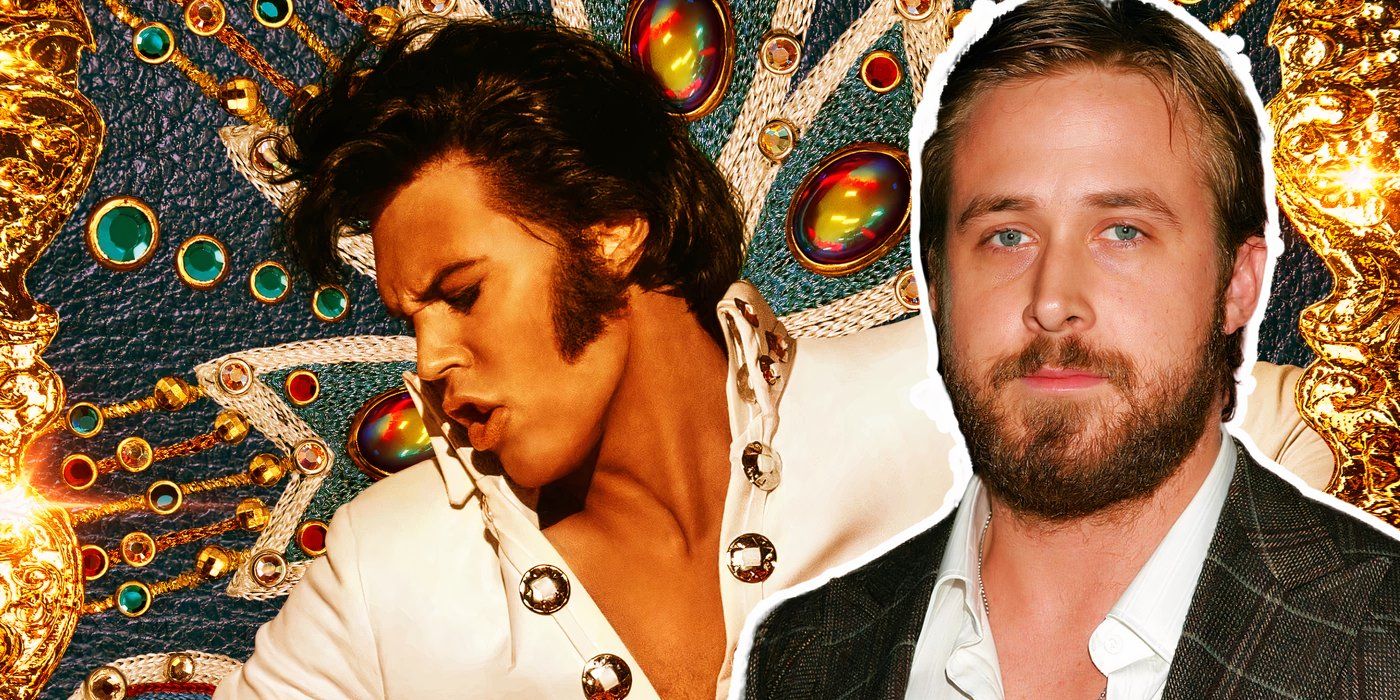
How Ryan Gosling Inspired Austin Butler's Intense Elvis Weight Gain
Summary Austin Butler's commitment to embodying Elvis included mimicking his voice and even gaining weight, drawing inspiration from Ryan Gosling's unconventional method.
Butler's portrayal of Elvis was praised for his emotional depth and uncanny resemblance, enhanced by the costume and makeup team's work.
Though not the first actor to gain weight for a role, Butler's performance in "Elvis" solidified his status as a rising star in Hollywood, earning him a Golden Globe win and an Oscar nomination.
In preparation for his Oscar-nominated performance, Austin Butler took inspiration from Ryan Gosling for Elvis' weight gain aspects. Directed by Baz Luhrmann, Elvis explores the amazing career of rock n' roll icon Elvis Presley, from the early days of his career until his final days as a Las Vegas performer. Though Butler had previously starred in movies from filmmakers like Quentin Tarantino and Jim Jarmusch, Elvis was his breakthrough role, earning him a Golden Globe win and an Oscar nomination while cementing him as one of the rising stars in Hollywood.
Part of the reason for Butler's effectiveness in the role was his commitment to the iconic part. Butler's singing in Elvis has been discussed at length as well as his mimicking of the distinct voice. However, one aspect that is overlooked is the weight gain he committed to for the role. In the later scenes during Elvis' Las Vegas days, Butler was able to create the look of the heavier and older singer in the final days of his life. Interestingly, Butler drew from a fellow Oscar-nominated actor's previous methods to achieve the necessary look.
Your browser does not support the video tag.
Related How Much Austin Butler Was Paid For Elvis Austin Butler starred as Elvis Presley in Baz Luhrmann's 2022 biopic Elvis – read on to learn how much money the actor earned for his leading role.
Austin Butler Tried Ryan Gosling's Weight Gain Method
Ryan Gosling Gained Weight For His Planned Role In The Lovely Bones
Close
While Austin Butler's weight gain for Elvis was not as extensive as some other examples, the fact that he needed to do it in the middle of filming meant he had to find an effective way to gain weight quickly. In an interview with Variety, Butler detailed how he used the weight gain technique Ryan Gosling employed for The Lovely Bones to bulk up for his scenes as an older Elvis Presley.
"I heard that when Ryan Gosling was going to do ‘The Lovely Bones,’ had microwaved Häagen-Dazs and would drink it. So I started doing that. I would go get two dozen doughnuts and eat them all. I really started to pack on some pounds. It’s fun for a week, [but then] you feel awful about yourself."
While the extra pounds helped add to the authenticity of Butler's acclaimed performance, Gosling's melted ice cream technique actually led to his dismissal from The Lovely Bones. The director didn't agree with Gosling's method and replaced him with Mark Wahlberg mere days before production began.
What Made Austin Butler's Portrayal Of Elvis So Successful
Butler's Committed Performance Served As His Breakthrough Role
On top of his Academy Award nomination for Best Actor and his win at the Golden Globes for the same category, Butler also won a dozen other Critics' Choice awards for his role in Elvis. There are many reasons why his portrayal of Elvis was praised, but one of the more surprising factors is the fact that Butler, like Elvis, lost his mother at the young age of 23, which likely allowed the actor to relate more to the iconic singer and really delve deep into the emotional aspects of the role.
The Elvis costume and makeup team - both of which were nominated for Academy Awards - also achieved Butler's near uncanny resemblance to Elvis, which added to the allure of his performance. Butler's ability to emulate The King's trademark on-stage persona was a huge boon for the film, while the young actor also imitated Elvis' unique singing voice. Butler actually did a lot of the singing for the film, with composer Elliott Wheeler combining the actor with the real Elvis for the post-1968 Presley vocals.
It was Butler's undeniable embodiment of Elvis off the stage that made his portrayal special. He ran the gamut of emotions during the film, going from deep sadness at the loss of his mother to the rage he showed during his on-stage denunciation of Colonel Tom Parker. Hence, Butler's dedicated performance in Elvis showcased his efforts and hard work on the film, which rewarded him with his first Oscar nomination.
Other Notable Weight Gain Diets For Movie Roles
Robert De Niro, Christian Bale And Jared Leto Have All Gone To Weight-Gain Extremes
Close
Austin Bulter and Ryan Gosling are far from the only actors to use extreme methods to gain weight for their roles. One of the most famous early examples of this was Robert De Niro's incredible transformation for his role as Jake LaMotta in the Martin Scorsese boxing drama Raging Bull. Like Butler in Elvis, De Niro played LaMotta first as a younger and more fit man, then gained 60 pounds during filming in order to play him at the end of his career.
Scorsese shut down filming for four months so De Niro could go to Italy and France where he would indulge in meals of pasta, ice cream, and beer. According to De Niro, "The first 15 pounds was fun, the rest was hard work." The hard work paid off with an Oscar win for De Niro (via THR). Christian Bale's body transformations for roles are also well known with the actor explaining that his 60-pound increase for Vice was due to a diet of pies (via People).
Some of these cinematic weight gains were in less popular projects. Matt Damon gained 30 pounds for the comedy The Informant! with the help of McDonald and Doritos (via Vulture), while Matthew McConaughey gained nearly 50 pounds for the crime movie Gold (via E Online). Both actors admitted to enjoying the process. However, perhaps the most extreme was Jared Leto's nearly 70-pound weight gain for Chapter 27 by drinking microwaved pints of ice cream mixed with soy sauce and olive oil, resulting in him needing a wheelchair (via LA Times).





COMMENTS