Oppenheimer's 20 Best Quotes
Summary The best quotes in Oppenheimer delve into the moral dilemmas and nationalistic justifications for the creation of the atomic bomb, highlighting its dystopian implications and dark impact.
Oppenheimer's rich and poignant language reflects the internal and external chaos experienced by the renowned theoretical physicist during the creation of the bomb and its lasting effect on his life.
The film emphasizes Oppenheimer's sense of remorse and anxiety through several powerful quotes, such as Truman's reminder that the victims of Hiroshima didn't care about who invented the bomb.
Along with the Best Picture win and the massive box office success, the Oppenheimer quotes that have stayed with audiences highlight the movie's incredible impact. The impressive biopic utilizes a mix of original dialogue, real-life quotations, and philosophical statements to highlight the themes, anxieties, and overall significance of the Manhattan Project and the creation of the atomic bomb. Much of the best lines in Oppenheimer center on the moral dilemmas and oftentimes nationalistic justifications for the creation of the weapon of mass destruction while also emphasizing its dystopian implications and dark impact.
Oppenheimer does so well in just about every department, from performances to the soundtrack and practical visual effects, that it comes as no surprise that Nolan's screenplay is full of rich and poignant language. The best Oppenheimer quotes come together as a medley that depicts both the internal and external chaos of the theoretical physicist's tense reality during that crucial period in time. The most gripping statements in Oppenheimer touch on every level of his experience in Los Alamos and the resounding effect that his remarkable yet terrifying contribution to the world left on him throughout his life.
Related Oppenheimer Timeline - All Events In Chronological Order Christopher Nolan's movie Oppenheimer tells its story across multiple points in time in a non-linear fashion. Here is a chronological order of events.
20 “Can You Hear The Music, Robert?”
Niels Bohr (Kenneth Branagh)
The movie asks complex questions about the historical event at the center of the story, but it is also a celebration of the brilliant minds of the scientific field and what they are able to accomplish. In one of the earlier scenes of the movie, Danish physicist Niels Bohr questioned a young Oppenheimer on whether he could "hear the music" regarding his understanding and mastery of his field.
It presents Oppenheimer, Bohr, and the purist of scientific knowledge at large through an artistic lens, comparable to a famous composer such as Beethoven or Mozart "hearing the music" in their minds and pulling it down from an ethereal realm into the practical and symbolic human world. The movie has a great deal of respect for scientific minds while also speaking to the burden their knowledge carries.
19 “Power Stays In The Shadows.”
Lewis Strauss (Robert Downey Jr.)
Late in Oppenheimer when Strauss' corruption has been revealed, he attempts to justify his shady activity as the source of his political success. He tells an associate that "amateurs chase the sun and get burned. Power stays in the shadows" and is met with the stark reality that he can no longer hide in the darkness if he wants to become a U.S. Secretary of Commerce.
Robert Downey Jr.'s performance in Oppenheimer brilliantly uses the likability of the actor to showcase Strauss as a deeply unlikable and petty villain. Interestingly, this movie helped bring Strauss and his actions out of the shadows after being an overlooked figure in this history. This quote also suggests the underlying jealousy Strauss holds towards Oppenheimer with the achievements the scientist has achieved in his career taunting the perceived lack of respect Strauss has received.
18 “Hiroshima Isn’t About You.”
President Harry S. Truman (Gary Oldman)
Close
Gary Oldman plays Oppenheimer's President Harry S. Truman and makes an impact with only one memorable scene. Oppenheimer is brought to the White House to meet with Truman to discuss his concerns about a potential arms race over the atomic bomb with Russia. Truman loses patience with Oppenheimer's sense of remorse and anxiety and tells him bluntly "You didn't drop the bomb, I did." He reminds Oppenheimer that the victims of the bombings in Japan don't care about who invented the bomb before quietly kicking him out of the Oval Office.
In a certain sense, Truman is right and Oppenheimer's self-pity is too late. However, it also shows the former president in a villainous light as he is uncaring about what the scientists might have created, now considering the invention something that belongs to him and he can use as he sees fit.
17 “Oppie, You Owe Me $10!”
George Kistiakowsky (Trond Fausa)
Moments before testing the atomic bomb at Los Alamos, the torrential rain and thunderstorms risked the success of the trial. Oppenheimer contemplated calling off the test but was reassured by his associate George Kistiakowskey's confidence that the bomb would still go off, betting a month of his salary against $10. Oppenheimer shakes on it, the bomb goes off, and Kistiakowskey runs over to celebrate with Oppie, shouting "you owe me $10!"
It is a humorous line to end the intense and incredible bomb sequence, but it also highlights the turmoil faced by Oppenheimer as he is filled with doubt surrounding the bomb and does not feel as celebratory as others. While he is momentarily caught up in the excitement of pulling off the scientific feat that no one else in history has accomplished, he is met with the idea that he might have hoped it didn't go off.
16 “It Won’t Be For You, It Would Be For Them.”
Albert Einstein (Tom Conti)
"When they've punished you enough, they'll serve you salmon and potato salad, make speeches, give you a medal, and pat you on the back telling you all is forgiven. Just remember, it won't be for you... it would be for them."
Albert Einstein makes for a great supporting character in Oppenheimer, appearing in a handful of scenes but making a big impact. It is not just the fact that he is one of the most famous scientific minds of all time, but that he is a mentor figure to Oppenheimer as he deals with these complex questions. Albert Einstein offered a word of advice to Oppenheimer as he can relate to being mistreated and used by his own government and country despite his groundbreaking achievements.
Many of the themes of the movie deal with that very fact. Regardless of Oppenheimer's service to his country, he was later vilified only for them to eventually praise him for his innovative work. Einstein lays it all out for Oppenheimer just as it will happen, but reminds him that these are empty gestures from people who do not really care about him.
Related What Did Oppenheimer Say To Einstein & What Did It Really Mean? While Strauss was convinced that Einstein and Oppenheimer were talking about him, that wasn't the case. The conversation was way more profound.
15 “Batter My Heart, Three-Person'd God. Trinity.”
J. Robert Oppenheimer (Cillian Murphy)
When tasked with coming up with a name for his atomic experiment, Oppenheimer calls it the Trinity Test after reciting a line from a famous poem "Holy Sonnet XIV" written by John Donne. The "Three-Person'd God" refers to the Holy Trinity in Christian belief, referring to the notion of God being the Father, the Son, and the Holy Spirit.
"Batter My Heart" is a request for God's forcible intervention to be remade and seek salvation. Oppenheimer drew parallels to this concept that the bomb would ultimately destroy to build anew. However, it may be a moment of him trying to convince himself his work is being used for the greater good. Oppenheimer has become, like many of Christopher Nolan's movies, a story fans can revisit for more details to explore, such as these subtle moments of Oppenheimer battling the conflicting ideas about what he is setting out to do.
14 “You Don’t Get to Commit The Sin And Then Ask All of Us To Feel Sorry For You When There Are Consequences.”
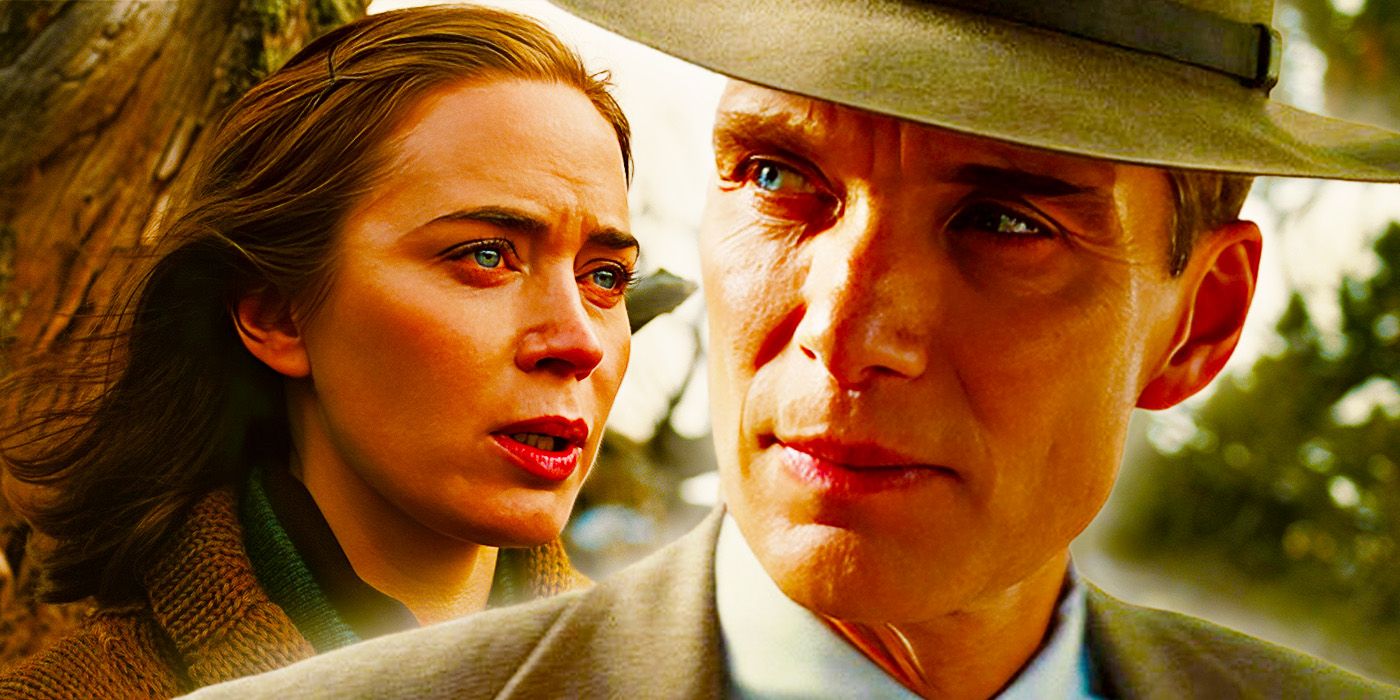
Kitty Oppenheimer (Emily Blunt)
Close
One of Kitty Oppenheimer's most memorable lines in the movie is when she tries to get her husband to pull himself together after he learns of the fate of Oppenheimer's former lover Jean Tatlock. He appears to have spent all day outside in the cold when Kitty finds him and grabs him by his lapels, saying "You don't get to commit to sin and then ask all of us to feel sorry for you when there are consequences."
She is filled with anger over her husband's betrayal and laments that he is now making himself the victim she needs to feel sorry for. It is a critical moment for the husband and wife, but it also brings up the question of how Oppenheimer should be viewed in the aftermath of the Manhattan Project. He is filled with remorse, but he is also the one who made the decision to build the bomb.
13 “Alfred Nobel Invented Dynamite.”
J. Robert Oppenheimer (Cillian Murphy)
Leslie Groves, played by Matt Damon, is a terrific addition to the Oppenheimer cast. So much of the movie is about the combative nature of the military and the science community working together. The relationship between Groves and Oppenheimer highlights this tension with a lot of humor and respect between the two men.
In his first exchange with the formidable General Groves, Oppenheimer is asked why he doesn't have a Nobel Prize, pointing out that the man whom the prestigious award was named after was the inventor of dynamite. This alludes to how Oppenheimer could have earned a Nobel Prize for being the father of the atomic bomb, but due to controversy, he was not. While Groves speaks to Oppenheimer's accomplishments, it is another way of highlighting the theme of science being used for destructive means.
12 “Until They Don’t.”
Luis Alvarez (Alex Wolff)
Even though Groves has respect for Oppenheimer and attempts to allow the scientists to do their work as best they can, there is a sense that he sees them as tools toward an end goal rather than true collaborators and the rest of the military seems to share this outlook to a harsher degree. When Oppenheimer was recruiting scientists and physicists for his Los Alamos team, he explained the desperation of the United States' political situation and the urgency of their swift action by saying "They need us."
One of the physicists, Luis Alvarez, tried to reason with Oppenheimer, pointing out that the United States government needed them now but would likely discard them once the mission was accomplished, a foreshadowing of events to come and how quickly they turn against Oppenheimer himself once his work has serves them well.
11 “These Things Are Hard On Your Heart.”
J. Robert Oppenheimer (Cillian Murphy)
Moments before the Trinity Test, Oppenheimer says to himself "These things are hard on your heart," which is a direct contrast to the concept of a hardened heart in Christian theology. In this sense, the traditional concept of 'sin' is viewed as something that makes your heart become hardened, hinting that Oppenheimer was viewing his efforts with the atomic bomb as a form of sin through the lens of an omnipresent God.
Up until the moment the bomb goes off, Oppenheimer is attempting to reason with why he needs to go through with this task. He gives reasons why, despite the issues it introduces into the world, the bomb is a necessary evil. This line before the bomb goes off feels like a tragic one as if he is resigning himself to the fact that this decision he made will stick with him for the rest of his life.
10 “Is It Possible They Talked About Something More... Important?”
Senate Aide (Alden Ehrenreich)
Close
One of the lines with the biggest punch in Oppenheimer arrives in the final moments of the film, in which Strauss must face the music of a swarming press after he is rejected as a member of the United States Cabinet. The Senate Aide who had supported Strauss' candidacy throughout the film explains that Einstein and Oppenheimer were likely not talking about Strauss at all during a pivotal scene that shaped Strauss' twisted sentiments about scientists and fuels his vindictiveness towards Oppenheimer.
Strauss' wounded ego made him assume Oppenheimer was bad-mouthing him to Einstein. However, the Senate Aide deflates that ego in one biting remark that reminds Strauss he is insignificant regarding the troubles these brilliant men face. It is one of the most satisfying moments in the movie with Alden Ehrenreich's character perfectly summing up the flaws in Strauss.
Related Oppenheimer's Black & White vs. Color Sequences Meaning Explained Oppenheimer is unique as it uses both black and white and color scenes. Nolan does this for a reason, and the trailer shows which scenes are affected.
9 “Tell Her To Bring In The Sheets!”
J. Robert Oppenheimer (Cillian Murphy)
Following the success of the Trinity Test, Oppenheimer rejoices with his associates, telling one of them to call his wife Kitty and "tell her to bring in the sheets." This was a cryptic message to inform Kitty that the atomic test had been successful, which she realized as soon as she received the information at home through a phone call. However, it comes back into play later in the movie showing the sharp writing of the movie.
As Oppenheimer received the word that the security committee had chosen to revoke his security clearance, Oppenheimer let Kitty know by sending along the message not to take in the sheets. It is a moment that serves as an effective juxtaposition of Oppenheimer's most triumphant and tragic moments. The fact that he would connect the two suggests that Oppenheimer sees this humiliation as some karmic penance for the Manhattan Project.
8 “Robert, This Is Not Mine, It’s Yours.”
Albert Einstein (Tom Conti)
The movie's exploration of the scientific process that resulted in the making of the bomb reveals some fascinating and terrifying ideas. Given that this whole process was theory, they were not totally sure what kinds of reaction would come from detonating such a device. Oppenheimer seeks the professional advice of Einstein after Teller introduces the possibility that their atomic bomb could set off a chain reaction that could ignite the atmosphere and destroy the world.
Einstein reviews the calculations on a piece of paper and confirms the risk, handing the note back to Oppenheimer to demonstrate that he wants no part of it and that the consequences, good or bad, will fall on Oppenheimer in the end. It also hints that Oppenheimer was already having reservations and wanted the burden shared with someone else or perhaps have someone tell him not to do it.
7 “Prometheus Stole Fire From The Gods And Gave It to Man. For This, He Was Chained To A Rock And Tortured For Eternity.”
Opening Caption
In the first glimpse of the film, a quotation is projected reading, "Prometheus stole fire from the gods and gave it to man. For this, he was chained to a rock and tortured for eternity." In the context of the film, Oppenheimer is essentially Prometheus, who showed the world that incredible power can be harnessed and utilized. Oppenheimer was punished for his guilt in the creation of the bomb but also by his government and country for speaking out against it.
It is fascinating how the movie is able to take two sections of Oppenheimer's life, the Manhattan Project and the hearing over his security clearance, and link them together. The latter storyline presents the idea that Oppenheimer's government turned on him following his contributions. However, the movie also puts forth the idea that Oppenheimer felt he deserved it.
6 “Theory Will Take You Only So Far.”
J. Robert Oppenheimer (Cillian Murphy)
The risk involved in the Trinity Test and the creation of the atomic bomb was based on the notion that at the time it was entirely theoretical. Due to Oppenheimer's genius, he was able to construct a bomb based on theory alone, which he admits "will only take you so far." Ernest Lawrence understands this too and agrees with Oppenheimer's ambitions despite knowing the slim chance that the plan could end the world because it is based on theory instead of fact.
However, there is a sense that Oppenheimer's hubris is what led to him being haunted by the future consequences. He understood that taking it beyond theory makes it real and if it is real then it would be used. Oppenheimer wants to pursue this for the sake of science, but there is also a sense that it moves beyond his control and suddenly he has introduced the most devastating weapon in human history into the world.
5 “Zero Would Be Nice!”
Gen. Leslie Groves (Matt Damon)
Close
While Christopher Nolan is not a filmmaker known for having a lot of humor in his movies, the tension of Oppenheimer can sometimes be cut with a well-timed joke. In the same vein as "Theory will only take you so far," is the inverse reaction to that sentiment presented by General Groves. Groves asks for clarification from Oppenheimer about the level of risk involved in the Trinity Test which Oppenheimer explains is "near zero."
Groves questions the 'near' part of Oppenheimer's response, to which Oppenheimer asks "What do you want from theory alone?" Groves exclaims, "Zero would be nice!" It is a funny line that highlights the dangers of the Manhattan Project. However, it also shows how the military minds don't quite understand what they are dealing with and are in over their heads whether they know it or not.
4 “This Isn’t A New Weapon, It’s A New World.”
Niels Bohr (Kenneth Branagh)
Niels Bohr breaks down the impact of the creation of the bomb on Oppenheimer by explaining that building the atomic bomb won't just change the military capabilities of the United States but it will actually permanently change the world. This helps Oppenheimer realize the scope of his efforts amid all the nationalistic urgency and scientific achievement and ignites his campaign to urge politicians to use the technology responsibly.
This is a view that was taken by many of the scientists involved in the Manhattan Project as they attempted to open discussions about the need for regulations and de-escalation when it came to the building of more bombs. They had helped to change the world in some dramatic ways and now they were afraid of just what that meant for the future. The bomb was used to end the war, but there was the question of what the next bomb would be used for.
Related Why Oppenheimer's Trinity Test Scene Has No Sound (Explained By Real Science) Having no sound in Oppenheimer's Trinity test scene might have been an artistic choice but there is also an intriguing scientific reason behind it.
3 “They Won’t Fear It Until They Understand It. And They Won’t Understand It Until They’ve Used It.”
J. Robert Oppenheimer (Cillian Murphy)
Oppenheimer grows to comprehend the impact of the atomic bomb on the rest of the world, specifically everyday people who don't have access to such threatening innovations, He says "They won't fear it until they understand it. And they won't understand it until they've used it", also commenting on how governments and politicians did not even grasp the power they wielded when Oppenehimer first completed his creation.
Oppenheimer has a sense that there is an inevitability to using the bomb as the world needs to see the power that it is capable of so they know not to use it. In his mind, they need to be the ones to achieve this goal as such power in the hands of the Nazis would be devastating for the entire role. While it is an interesting idea for the justification of the bomb, it also acknowledges the devastation that first has to come from it.
2 “Now I Am Become Death, The Destroyer Of Worlds.”
J. Robert Oppenheimer (Cillian Murphy)
The most iconic line from Oppenheimer is a quotation from the Hindu scripture Bhagavad Vita that Oppenheimer recites to allude to his role as essentially Death itself. While Oppenheimer might have embodied much of the guilt for the atomic bomb's creation, he unfairly attributed all of the destruction it caused to himself individually, as evidenced by this line that suggests he was the embodiment of death and destruction.
Interestingly, Nolan uses the well-known phrase in a way that the audience might not expect. Instead of him uttering the iconic phrase in the aftermath of the bomb being dropped, he recites it as he has sex with Jean, suggesting that the idea is already in his mind. In a grim way, the moment also links to his guilt over the death of Jean and how he feels that he played some role in her demise.
1 “I Believe We Did.”
J. Robert Oppenheimer (Cillian Murphy)
Close
In the final moments of the film, Oppenheimer's conversation with Einstein by the pond is revealed, indicating that the two scientists were not, in fact, speaking about Strauss at that moment. Oppenheimer brings up another time when he and Einstein spoke and he asked him about the possibility of the bomb igniting a chain reaction that would destroy the world. Einstein remembers the conversation with Oppenheimer suggesting that he believes that is indeed what they did.
In this moment, Oppenheimer confesses the fear he has in what will come of his accomplishment. The chain reaction of the imminent Russian arms race and the United States' possession of the atomic bomb would only lead to bigger bombs and more destruction. This quote signifies the immense moral plight that the renowned physicist faced after the birth of the atomic bomb in Oppenheimer.




COMMENTS