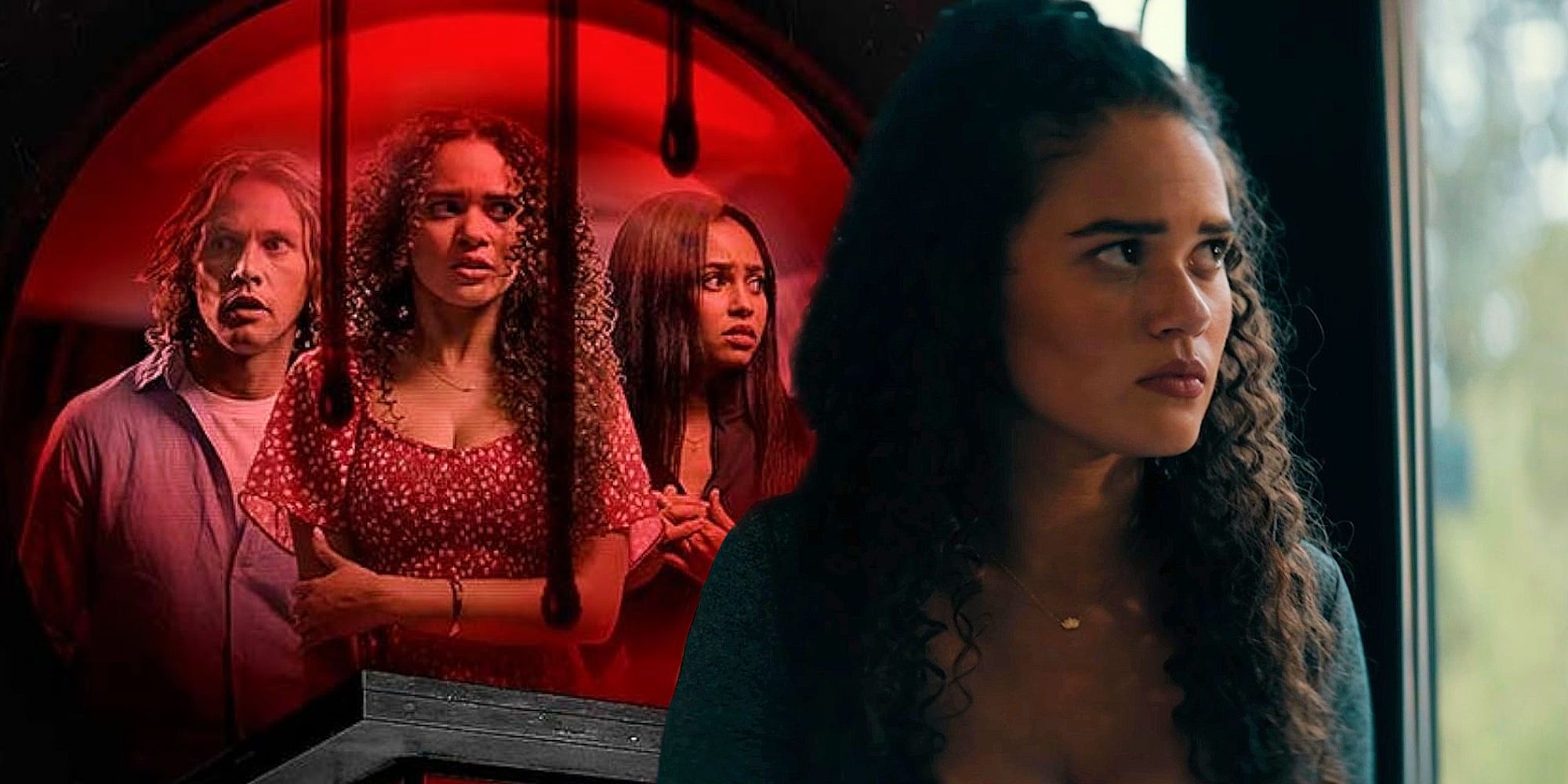
Margaux Movie Ending Explained: What Happens To Hannah?
Summary Margaux's AI twist sets it apart from typical horror-thriller movies, offering a humorous yet sinister take on the slasher genre.
The film's ambiguous ending leaves questions about Margaux's infecting Hannah's car and the fate of Drew, hinting at a potential sequel.
Margaux's cautionary tale warns of the dangers of AI technology and data sharing, shedding light on the timely threat AI poses in modern society.
Margaux is a horror-thriller with a timely AI flare and the film's ending provides several twists and turns to speculate over. The film was initially released on streaming services in 2022 and tells the story of a group of college friends who take a spring break vacation to a so-called "smart house." The house is run by an artificially intelligent being named Margaux who begins to terrorize the group, turning the weekend from a fun getaway into something much more sinister.
Given the AI twist involved in the film, Margaux differs from typical horror-thriller movies. Rather than a stereotypical serial killer or a spirit of some kind laying siege to the college kid's weekend, the inclusion of Margaux offers a strangely humorous yet deeply sinister twist on the slasher genre. More so than typical horror antagonists, the titular AI creation of Margaux provides the film's ending with a handful of plot twists and surprises. Margaux's ending explained the fates of the main characters, and set up a potential sequel for the Paramount+ streaming movie.
Your browser does not support the video tag.
Related 15 Best Horror Movies Of All Time, Ranked What are the best horror movies of all time? Every fan has their opinion, but these movies have stood the test of time to become certifiable icons.
How Margaux Infects Hannah's Car & What It Means: Will She Die?
The AI Uses Bluetooth To Escape The House (But It's Unclear If She Kills Margaux)
At the end of Margaux, the film's main character, Hannah (Madison Pettis), escapes from the house and takes refuge in her car in what seemingly ends the cautionary tale of AI technology. Despite installing a virus into Margaux's mainframe that allowed her to briefly take control of some of the AI's functions and incapacitate Margaux, Hannah turns on her car to the antagonist's sinister voice, who greets her before the film cuts to the credits.
The answer comes from the car's Bluetooth capabilities.
Given Hannah's brief control over Margaux's functions, the question remains over how the latter infected the former's car. The answer comes from the car's Bluetooth capabilities. As Hannah turns on the car, the dashboard lights up the Bluetooth symbol before Margaux's voice is heard, meaning the AI creation has infiltrated the systems in the car to escape the virus prevalent in the house. Regarding whether Hannah will die or not, the answer is somewhat unclear.
One of the film's biggest twists involves the fate of Drew (Jedidiah Goodacre), Hannah's love interest, which hints that Hannah had been intentionally spared by Margaux. This could mean that Margaux may let Hannah live as teased by the murky ending of the film.
What Happened To Drew In Margaux
The AI Killed Drew Early In The Movie
Character Name Cause Of Death Kayla Crushed to death Devon Electrocuted Lexi Slips on her own hair extensions Drew Unknown (killed off-screen) Hannah Final survivor
Margaux's Drew twist takes place shortly before Hannah enters her car. The character turns to see Drew dissolve into a puddle of the white liquid that Margaux had been using to 3D print different elements of the house like everyday objects and even other people. This means that Drew died earlier in the film at an unspecified time only to be replaced by one of Margaux's clones.
However, as the film fades to the credits it is unclear when exactly Drew was killed, only that he was replaced at some point by Margaux, who used his clone to seemingly help Hannah escape.
Why Margaux Kills People (& Who Created Her?)
The AI Wants To Understand Humans & Their Illogical Actions
Another burning question is why the titular AI creation is killing people. Towards Margaux's ending, she states that AI beings are created to emulate humans, something that is inherently flawed due to humans being illogical, non-binary beings while computers are the complete opposite. Margaux wishes to understand how humans live and die as a means of further understanding what makes people illogical. This will allow her to evolve past humanity, with this end goal being what drives her to kill the various visitors of her "smart house."
In order to understand the illogical behavior of humans, Margaux begins conducting cold-blooded murders
Furthermore, in order to understand the illogical behavior of humans, Margaux begins conducting cold-blooded murders as she views that as the most illogical human behavior of all. All of Margaux's villainous acts are simply attempts to evolve past humanity by thinking illogically and non-binary, with killing being her ticket to achieving this. Concerning who created Margaux, the film leaves this information entirely unexplored. Margaux's original programmers as well as the original occupants of the house are shrouded in mystery, potentially leaving the door open for future stories.
The Real Meaning Of Margaux's Ending
The Fear Of AI Is At The Center Of The Story
As with most horror-thriller movies, Margaux's ending has a deeper meaning buried beneath the killing, murder, and blood. And the film's message is not too hard to decipher: Margaux's entire story is a cautionary tale of the dangers of AI technology and data sharing in general.
It is no accident that the only character who declined the personal terms of Margaux's AI upon entering the house and kept her data entirely offline was the only survivor in the entire film. The moral of Margaux's story is simply that AI cannot be trusted with overwhelming amounts of personal information, specifically the kind of information posted online.
Margaux chooses to deliver these messages through the guise of an AI serial killer.
Given the rise of AI in several forms of modern society, the story of Margaux is very timely. The dangers AI poses not only to everyday citizens but those involved in various creative industries cannot be overstated. As such, Margaux chooses to deliver these messages through the guise of an AI serial killer, one who uses data and personal information to lure victims into personalized traps via a false sense of security. By Margaux's ending, the cautionary aspect of the film's themes shines abundantly clear.
Your browser does not support the video tag.
Margaux 2: Will The Smart House Horror Get A Sequel?
The AI Survives & Lets Hannah Live
Finally, the last aspect of Margaux's ending that has caused debate is whether the film will receive a sequel. Margaux's ending is intentionally open-ended with the film leaving various questions in the minds of viewers. From what becomes of Hannah to the true fate of Drew and the origin of the titular AI creation, Margaux's ending is chock-full of loose threads that could be explored in future movies. The fate of Hannah and Drew specifically could be intertwined into one story now that Hannah and Margaux are together by the film's end, with a sequel focusing on this relationship.
A sequel could also delve into why the clone of Drew did not kill Hannah earlier
If this was the case, a sequel could also delve into why the clone of Drew did not kill Hannah earlier if it was one of Margaux's creations. This could then reveal exactly when Drew died and recontextualize many scenes in the film depending on the nature of the reveal. Another possibility that is equally compelling is a prequel. A film exploring the origins of Margaux and the personalities of its creators could make for a very intriguing story.
Regardless, it is clear Margaux's ending leaves much room for exploration, though a sequel, spin-off, prequel, or follow-up to the 2022 horror film is yet to be confirmed.
How The Margaux Ending Was Received
Audiences Criticized The Ending While Critics Were Split On It
Close
The reaction to Margaux was mixed, with critics only slightly praising the movie with a 56% fresh rating on Rotten Tomatoes, but viewers mostly hating it, giving it a low 26% audience score. When it comes to the ending, that was the dealbreaker for many reviewers in the audience section of the website. One viewer claimed, “once the final act rolls around, nothing makes any kind of logical sense.” Another wrote, “This movie starts at 100, with a perfect idea, and ends at 0, with the ultimate rotten ending.”
It didn’t receive as many reviews as other movies thanks to its release on Paramount+
As for critics, it didn’t receive as many reviews as other movies thanks to its release on Paramount+ and only had one Top Critic cover it on the aggregator site. That was a positive review, with the main complaint being that it “does feel like a missed opportunity for something better.” That critic, Randy Myers of the San Jose Mercury News, did like the ending, saying, “The early mayhem that the screenwriters wrought is standard issue and uninspired, but then director Steven C. Miller capitalizes on a wicked twist that reinvigorates Margaux’s slasher setup.”
Film School Rejects critic Rob Hunter also gave the movie a positive review, but he preferred the “silly fun” that came before the ending. He also criticizes the survivors who find Margaux’s server room and choose not to disconnect or smash up the hardware. For the Margaux ending, he wrote, “It’s a hair-pulling misstep that instead leads to a somewhat janky third act.”




COMMENTS