Army inducts first lot of desi anti-drone systems for China border deployment
Congratulations! You have successfully cast your vote Login to view result
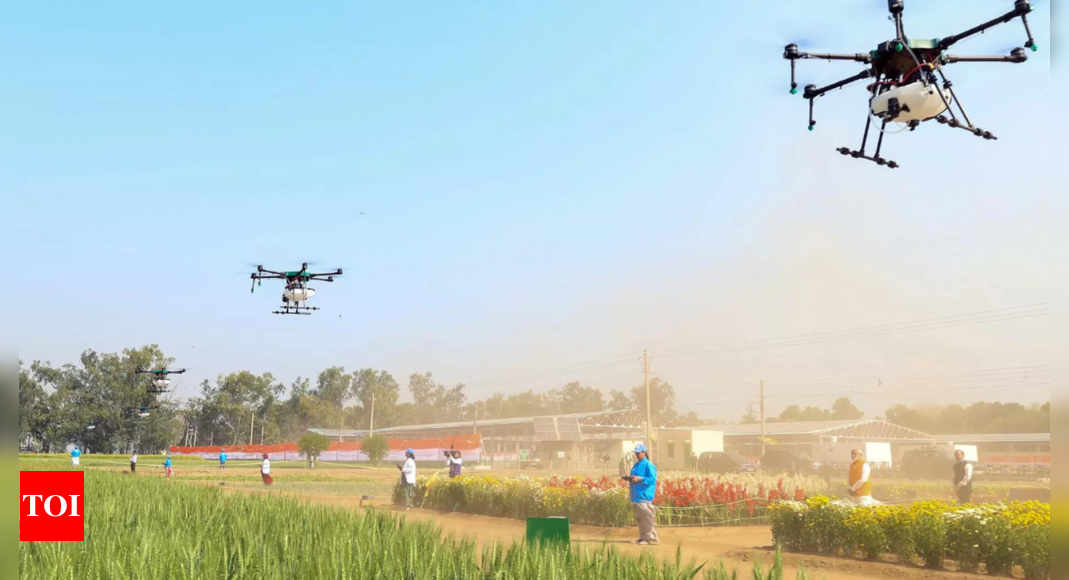
NEW DELHI: The Army has now inducted an initial lot of seven new indigenous integrated drone detection and interdiction systems (IDD&IS) for deployment along the northern borders with China, even as DRDO is working on more powerful directed energy weapon systems in shape of high-energy lasers and high-powered microwaves.The vehicle-based IDD&IS, which provide for both “soft kills” of hostile drones through jamming and “hard kills” through lasers, has a detection range of 5 to 8 km. While the “soft kill” can jam the drones at ranges from 2 to 5 km, the effective “hard kill” range is over 800 meters.“Produced by DRDO and Bharat Electronics , these IDD&ISs are Mark-1 variants inducted by the Army Air Defence (AAD). They will add to the existing counter-drone systems . There will, of course, be advanced IDD&IS versions with longer interception ranges,” an officer said.“The systems provide an integrated capability to detect low radar cross-section drones or unmanned aerial vehicles (UAVs) and enable their destruction through integrated application of soft and hard kills,” he added.With the cost-effective operational utility of drones and swarm drones being reinforced by the Armenia-Azerbaijan, Russia-Ukraine and other conflicts, the armed forces are going in for induction of a wide array of UAVs from both domestic as well as foreign sources. There is an equal emphasis on inducting different kinds of effective counter-drone systems. They range from jamming, spoofing and blinding systems to disrupt the satellite or video command-and-control links of drones to laser-based DEWs.The armed forces have already inked several contracts for them, and more are in the pipeline. IAF, for instance, recently floated initial tenders for 10 kamikaze drones-based anti-swarm drone systems, 10 mobile micro munitions-based anti-swarm drone systems and 100-200 vehicle-mounted C-UAS (counter unmanned aircraft systems).







COMMENTS