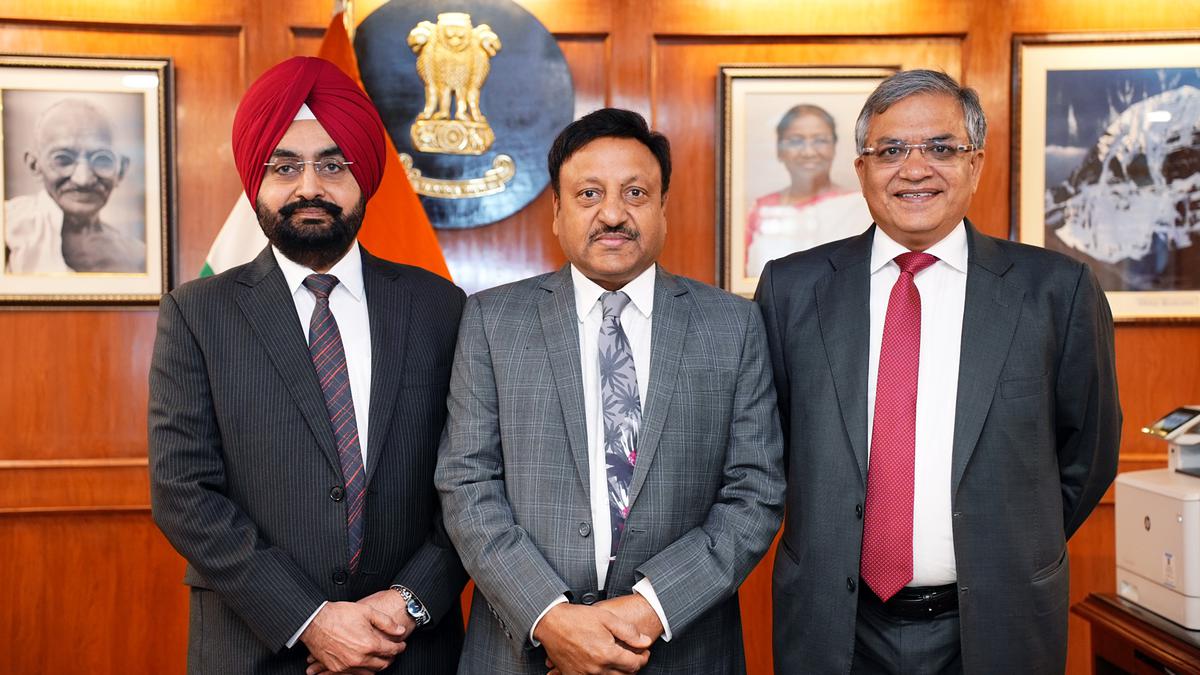
SC dismisses applications to stay appointments of ECs Sukhbir Singh Sandhu, Gyanesh Kumar
March 21, 2024 12:17 pm | Updated 12:17 pm IST
The Supreme Court on March 21 dismissed the applications to stay the appointments of Elections Commissioners Sukhbir Singh Sandhu and Gyanesh Kumar.
A petition by the Association for Democratic Reforms (ADR) had argued that a new law, the Chief Election Commissioner and Election Commissioners (Appointment Conditions of Service and Terms of Office) Act of 2023, aided the government by giving it a dominant role in the appointment process.
The 2023 statute had countermanded a previous SC judgment, by replacing the Chief Justice of India with a Cabinet Minister as a member of the high-level selection committee. ADR was represented by advocates Prashant Bhushan and Cheryl D’Souza.
The apex court questioned the central government over the procedure adopted for the appointment of the election commissioners.
The Centre on March 20 had defended the move, saying the appointments were a necessity arising from a constitutional duty to conduct the national elections on time. It rebuffed allegations that it had taken advantage of the two vacancies in the Election Commission to fill the posts with appointees favourable to the present regime.
The Centre said that it would not have been “humanly possible” for Chief Election Commissioner Rajiv Kumar to solely steer the “world’s biggest electoral exercise”, with voting scheduled to begin on April 19.
The Bench headed by Justice Sanjiv Khanna, hearing both sides said the selection committee should have been given more time to apply its mind and understand the background of the commissioners.
“We will examine the Act for appointment of the ECs but we are currently focussing on an interim relief as the elections are approaching,” the court said.
The court further said that the 2023 verdict nowhere said there has to be a member from judiciary in selection panel for the EC appointment.
The court dismissed the applications to stay the appointments, saying it would examine the main petitions challenging the new law.






COMMENTS