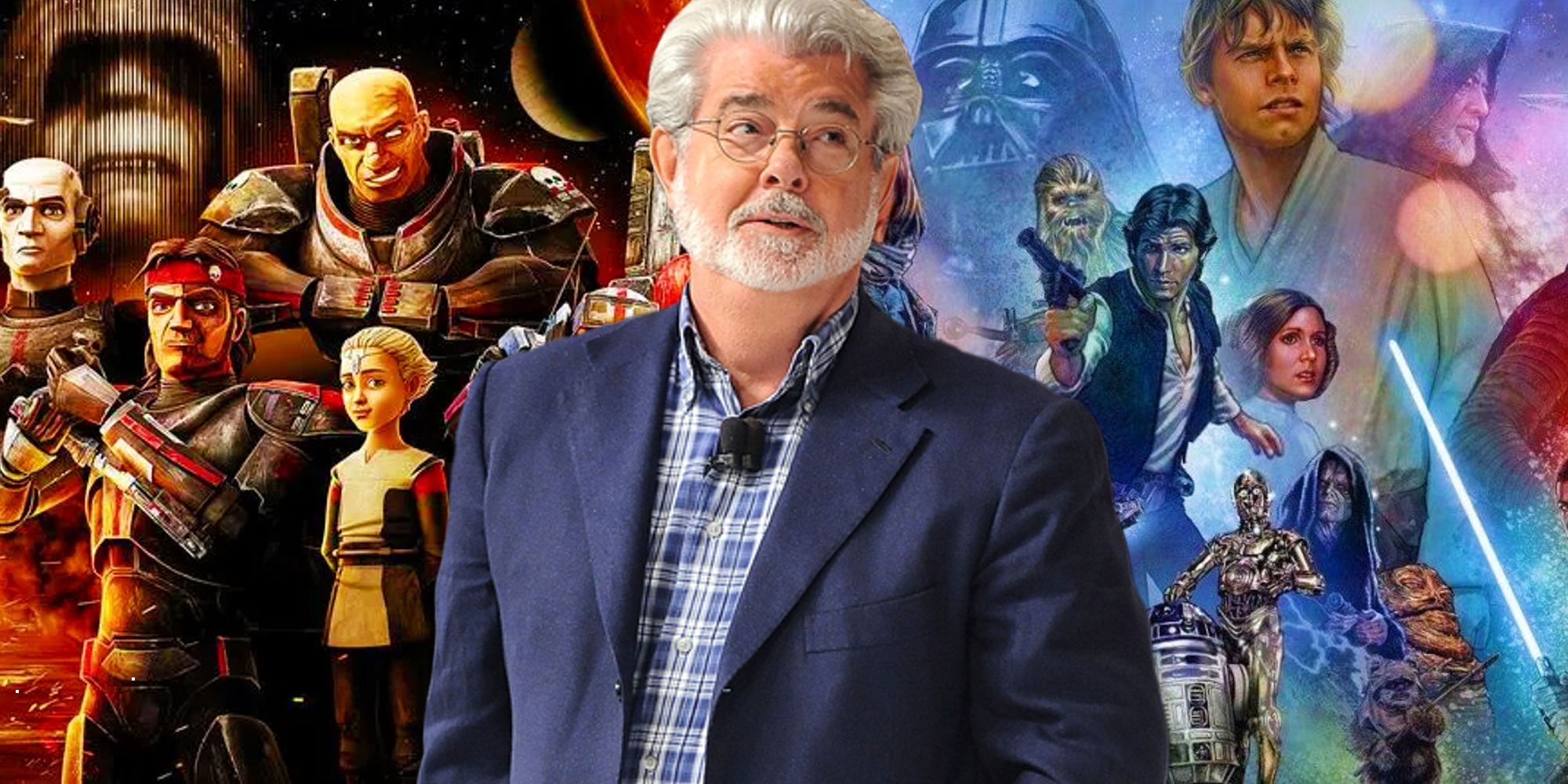
Star Wars: The Bad Batch Season 3 Is Following George Lucas' Most Important Rule To The Letter
Summary Palpatine hunts Omega in Bad Batch, a key to Project Necromancer.
Ventress trains Omega in the Force, paralleling Grogu's journey.
George Lucas' poetry rule evident in storytelling of Star Wars series.
Star Wars: The Bad Batch season 3 is following George Lucas' most important storytelling rule. A group of rogue clones, the Bad Batch is being hunted by Palpatine because one of their own, Omega, is crucial to the success of Project Necromancer. What is becoming clear, though, is that the narrative of Star Wars: The Bad Batch season 3 is mirroring another recent tale.
When making the Star Wars prequel trilogy, George Lucas famously stated e viewed Star Wars like poetry. He believed that things in Star Wars should "rhyme" thematically and also in narrative terms - and that's what The Bad Batch season 3 seems to be doing with The Mandalorian. The return of Asajj Ventress builds on an already-existing rhymescheme between Omega and the iconic Grogu.
Asajj Ventress Hailing from the Nightsisters of Dathomir, Asajj Ventress became Count Dooku's apprentice during the Clone Wars. Betrayed by her master, she sought revenge - even forming a surprising alliance with Jedi Master Quinlan Vos at one point. Asajj has reinvented herself as a bounty hunter, and survived into the Dark Times of the Empire's reign. Created By George Lucas , Genndy Tartakovsky Cast Nika Futterman , grey delisle First Appearance Star Wars: Clone Wars (2003) Alias The Bald Banshee Race Dathomiri
The Bad Batch Teases Omega Will Leave Clone Force 99 To Train
Ventress Arrives As A Harbinger Of The Future
Your browser does not support the video tag.
Ventress makes her return in Star Wars: The Bad Batch season 3, episode 9, and she quickly becomes Omega's impromptu teacher in the ways of the Force. In revealing to the Batch that the term 'M-count', which the Empire is using to describe Omega, means 'Midichlorian count', Ventress lets the group know that Omega could be Force-sensitive. Ventress then tries to train Omega in the ways of the Force, and tacitly implies that she might indeed be powerful in the Force.
After Ventress departs, she also hints that Omega might need to be trained further – and possibly even come with her to do so. This very much parallels the way young Grogu, also highly Force-sensitive, needed to leave Din Djarin in The Mandalorian in order to pursue his training with Luke Skywalker. Leaving his Mandalorian caretaker was an incredibly large move for Grogu, just like leaving the Bad Batch would be for Omega.
Omega A mysterious mutant clone created by the Kaminoans, Omega longed to get away from Kamino and explore the galaxy. She was rescued from the Empire by Clone Force 99, and soon became the heart of the team. The Empire still view Omega as valuable, though, and all signs indicate her story could well end in tragedy. Cast Michelle Ang First Appearance Star Wars: The Bad Batch Race Clone TV Shows Star Wars: The Bad Batch Franchise Star Wars
Omega's Story Is Mirroring Grogu's
Midichlorian-Rich Children Chased By The Empire
Omega and Grogu definitely have established parallels, but they go further than the ways they rhyme that we've already mentioned. In fact, they both may actually be necessary for the Emperor specifically and in his plans to cheat death. It's not an exact match; Grogu appears to be a natural source of Midi-chlorians, while Omega is a unique clone whose blood can sustain their injection. But both seem crucial to the Empire's attempts to create Force-sensitive clones, allowing Palpatine to transfer his consciousness.
Related 10 Moments From Star Wars TV Shows That Feel Straight Out Of The Movies Star Wars will always be a film franchise at its core, and every new TV show is packed with moments that reference or flat-out copy the movies.
This poetic approach to the story highlights the fact that Palpatine's unnatural goal of cheating death is dependent on destroying a child's innocence. Grogu and Omega are alike in the fact they are innocents who would be preyed upon by a malevolent Empire. This poetry makes these characters similar to one another, like two different versions of a similar mythological concept – something very important to George Lucas.
George Lucas Always Believed Star Wars Should Be Like Poetry
Rhyming Is Inherent To The Star Wars Saga
Close
Since the beginning, George Lucas has based a lot of his decisions for the Star Wars story on that of mythology. And something very prominent in mythology is the same concepts showing up in different places over time, rhyming, in a way. Since then, Star Wars has rhymed countless times, and newer projects post-Lucas have all tried their best to adhere to that standard. From the sequel trilogy, to live-action shows like The Mandalorian, and even in the newer animated shows like The Bad Batch and Tales of the Jedi.
Related 10 Times Star Wars Movies Told The Same Story Twice Star Wars movies are full of moments that rhyme with previous films, and there are multiple examples of when the saga told the same story twice.
The most shocking thing, though, is what this reveals about the nature of the Star Wars saga as a whole. This universe just keeps on growing, and we're now to the point where Star Wars stories produced since the Disney purchase are rhyming with other Disney-era stories. It's been fascinating to see these inherently referential pieces of storytelling take on a life of their own as the Star Wars universe just gets bigger and bigger, and of course – rhymes more and more.




COMMENTS