‘No immunity for lawmakers indulging in graft’, SC overrules majority verdict in 1998 JMM bribery case
March 04, 2024 11:18 am | Updated 11:54 am IST - NEW DELHI
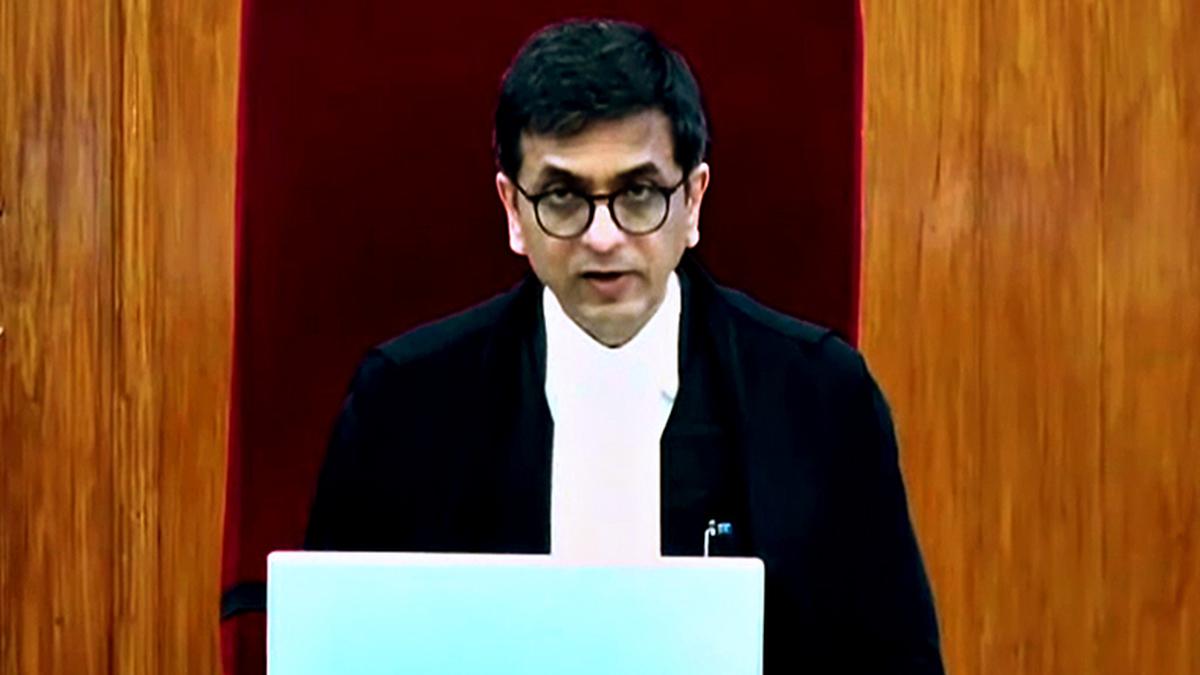
A seven judge Bench on March 4 overruled the Supreme Court’s majority judgment in the 1998 JMM bribery case that MPs/MLAs have immunity from prosecution for accepting bribes to cast a vote or make a speech in the House in a particular fashion.
The judgment has virtually opened the doors for the CBI to initiate prosecution against the accused in the bribery case under the Prevention of Corruption Act.
The Bench in a unanimous judgment authored by Chief Justice of India D.Y. Chandrachud said that a legislator would not be protected for parliamentary privilege and would be liable for criminal prosecution under the Prevention of Corruption Act for accepting the bribe. The crime was complete the moment the bribe was accepted, whether or not, he or she had followed it up by voting or making a speech in the manner the bribe giver wanted it, the court held.
Equally, the place where the bribe was offered or received did not matter, the court observed in the judgment.
Taking bribes by legislators destroyed the fabric of representative democracy, the Chief Justice held.
‘Breach of discipline’
Voting or speaking in favour of a party in the House after taking money from them amounted to a breach of discipline and was agnostic to the functions of a legislator. It demolished the faith of the people in the debates and grievously affected the foundation of parliamentary democracy, the court said.
The Supreme Court framed a two-point test for claiming parliamentary privilege. One, the act should have been part of the collective functioning of office. Two, the act was part of the obligations and duties of office of a legislator.
Sita Soren’s appeal
The reference came in an appeal filed by JMM leader Sita Soren, who was accused of taking a bribe to vote for a particular candidate in the Rajya Sabha elections of 2012. Though she later denied culpability on the ground that she voted for the official nominee of her own party, the CBI had filed a charge sheet in the case. The Jharkhand High Court had refused to quash the charge sheet, following which she had moved the Supreme Court.
Ms.. Soren is the daughter-in-law of JMM chief and former Union Minister Shibu Soren, who was involved in the alleged JMM bribery case. In 1993, four JMM MLAs and eight other MPs were allegedly bribed to ensure the survival of the then P.V. Narasimha Rao government during a no-confidence vote. They voted accordingly, and when the scandal broke, claimed immunity from criminal prosecution because their act of voting had happened inside Parliament.
Reserving judgment in October last year, the seven-judge Bench had orally observed that legislators could not escape from the law by claiming immunity of office or privilege under Articles 105(2) or 194(2) of the Constitution merely because the incident of bribery was completed outside the House.
The court had made it clear orally that the place — whether inside or outside the House — where an MP or MLA completed the crime of bribery really made no difference to prosecution under the Prevention of Corruption Act.
The government’s stand in the case was in tune with the minority view of Justice (retired) S.C. Agarwal on the Bench in the JMM bribery case in 1998.
Justice Agarwal had clearly held that the protective cloak of immunity around an MP or MLA would not extend to bribes received outside the House.
But the majority verdict of the five-judge Bench in the JMM case in 1998 had held that bribe-takers were immune from prosecution provided they go ahead and cast their vote or give the speech, which was a parliamentary function.
In the review hearings, Chief Justice Chandrachud had observed that the majority view had turned the anti-corruption law on its head.






COMMENTS