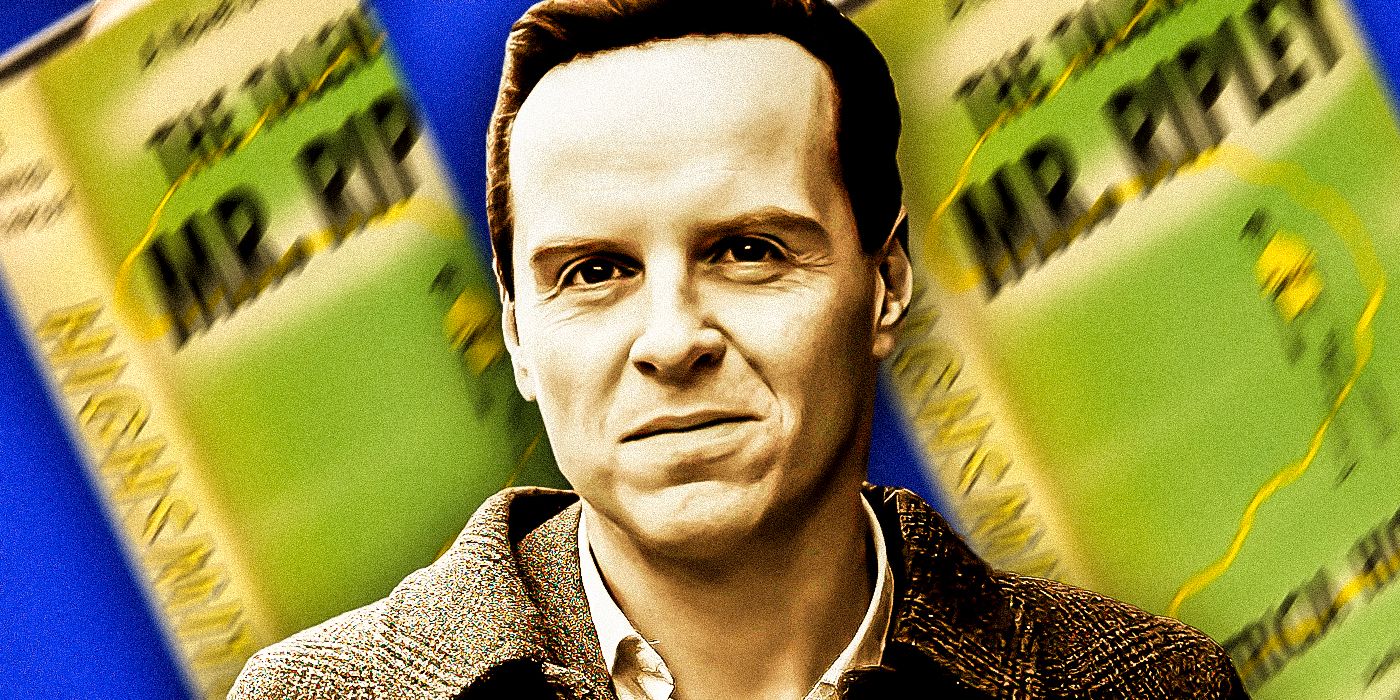
12 Biggest Details Netflix’s Ripley Leaves Out From The 1955 Book
WARNING: SPOILERS ahead for Ripley.
Summary The Ripley series delves into dark details such as Aunt Dottie's abuse and Tom's guilt over killing Freddie Miles, adding depth to the characters.
Tom's connections in New York, like Bob, Ed, and Cleo, are highlighted in the novel, showing a different side to his character before Italy.
The urgency of Dickie's return home due to his mother's illness, Fausto's role, and Tom's escape to Greece provide key differences from the series.
There are several significant details in The Talented Mr. Ripley novel that are left out of Netflix's Ripley. The acclaimed new psychological thriller series is based on the 1955 novel The Talented Mr. Ripley written by Patricia Highsmith, who is regarded as one of the best authors of suspense of the 20th century. The Talented Mr. Ripley is the first of Highsmith's 5-part "Ripley" book series that also includes Ripley Under Ground and Ripley's Game, both of which were also adapted into feature films. Ripley has received rave reviews from critics upon its April 4, 2024 release exclusively on Netflix.
Ripley's cast is led by an exceptionally chilling Andrew Scott (Fleabag, Black Mirror, All of Us Strangers) as the titular treacherous protagonist. The series also stars Dakota Fanning as Marge Sherwood, the girlfriend of Johnny Flynn's Richard "Dickie" Greenleaf who is suspicious of Tom's motives throughout. Steven Zallian, the acclaimed screenwriter of Schindler's List, American Gangster, and The Irishman, wrote and directed the entire 8-episode miniseries, which is shot entirely in black and white. The Talented Mr. Ripley was previously adapted in the 1999 film written and directed by Anthony Minghella (The English Patient), in which Matt Damon portrayed Ripley, Jude Law played Dickie and Gwenyth Paltrow plays Marge.
Related 14 Biggest Changes Netflix's Ripley Show Makes To The Talented Mr. Ripley Book Although Ripley is based on Patricia Highsmith's celebrated The Talented Mr. Ripley novel, there are many different key details & plot points.
Your browser does not support the video tag.
12 Dickie’s Mother Emily Greenleaf Has Leukemia
Dickie preferred to stay in Italy than see his dying mother
While this initially seems like a minor detail, it actually makes the urgency of Dickie's return home much more heightened.
One of the most notable details left out of the Ripley series is the subject of Dickie's mother's declining health. Emily Greenleaf, depicted briefly in Ripley episode 1 before Tom heads out to Italy in search of Dickie, is terminally ill with leukemia in the 1955 novel. While this initially seems like a minor detail, it actually makes the urgency of Dickie's return home much more heightened. It also displays how disinterested Dickie is in seeing his dying mother, which is quite alarming and telling of his character. It would have been a crucial factor in determining how he would be received by the audience in Ripley.
11 Bob, Ed, & Cleo Are Tom’s Friends In New York
Tom is much more connected than it seems in Ripley
Tom, who is undoubtedly a loner in the miniseries, actually has several acquaintances in New York that he parts with before heading to Italy.
In the 1955 novel, Tom Ripley isn't as lonely and seedy in New York as he is at the start of the Netflix series. Tom, who is undoubtedly a loner in the miniseries, actually has several acquaintances in New York that he parts with before heading to Italy. He has a roommate named Bob Delancey, whom he tries to avoid most of the time, as well as a social friend named Ed. They actually show up on the ship that Tom is taking to Italy before he starts his voyage. Tom also has a platonic female friend named Cleo who he shows some type of feelings for, making his character much less sociopathic.
10 Aunt Dottie’s Abuse Of Tom Is Described More Extensively
Tom blames her for many of his shortcomings
The 1955 novel reveals more details and examples of her abuse of Tom, which contributes to his troubles developing as a young adult.
It's very clear that Tom does not like his Aunt Dottie at all in Ripley because of her abusive treatment of him as a child. The 1955 novel reveals more details and examples of her abuse of Tom, which contributes to his troubles developing as a young adult. Tom blames many of his apparent flaws and shortcomings of character on Aunt Dottie, who constantly called him a "sissy" and other insults that gave Tom low self-esteem and made him quite an angry child.
It was astounding and pitiful how naïve he had been, how little he had known about the way the world worked, as if he had spent so much of his time hating Aunt Dottie and scheming how to escape her, that he had not had enough time to learn and grow. – The Talented Mr. Ripley, page 36
Related 15 Biggest Differences Between Netflix's Tom Ripley Show & Matt Damon's 25-Year-Old Movie Adaptation There are many differences between Netflix's Ripley and the classic 1999 film The Talented Mr. Ripley despite being based on the same source material.
9 Tom Wants To Be Dickie, Not Just Own His Things
Tom's more interested in Dickie's possessions in the series
In the 1955 novel, Tom's desire to become Dickie is fueled more by an obsession with who he is as a person than merely the fact that he's incredibly wealthy.
Ripley does an excellent job of conveying Tom's obsession to become Dickie because of his material wealth and status. In the 1955 novel, Tom's desire to become Dickie is fueled more by an obsession with who he is as a person than merely the fact that he's incredibly wealthy. Tom is drawn like a moth to a flame over Dickie's nonchalance about his wealth, the clothes he wears, the restaurants he goes to, and the overall ease of his life. He is more inclined to become Dickie once he is denied his friendship, indicating that Tom was also trying to escape his own corrupt character.
8 Marge Is A Practicing Catholic From Ohio, Not Minnesota
Marge isn't overtly religious in the series
Marge also tells Tom at the end of Ripley that she plans to return home to Minnesota, but in the book, she is from Ohio.
Marge is interested in going to church in the book, whereas that detail is not as much of a feature of her character in the series. Marge also tells Tom at the end of Ripley that she plans to return home to Minnesota, but in the book, she is from Ohio. There's no clear reason why that detail was changed in Zaillian's translation from book to series. As for the religious piece, Marge is mostly preoccupied with her book and Dickie when she appears in Ripley, making the inclusion of her religious beliefs somewhat unnecessary.
7 Tom Feels Very Guilty For Killing Freddie Miles
Tom is completely indifferent to it in the series
Freddie is much different in the series than in the book in the way that he is more reserved and instantly antagonistic towards Tom.
It's not a shock that Tom Ripley hates Freddie Miles and has no problem killing him in the Ripley series. Freddie is much different in the series than in the book in the way that he is more reserved and instantly antagonistic towards Tom. In fact, when Tom and Freddie first meet, Freddie hardly says anything to him and does not interrogate him as seen in the series. Tom feels like he has no choice but to kill Freddie once he comes up again in "Dickie's" Rome apartment, but expresses zero remorse in the series. In the book, Tom is stricken with guilt and shame for killing Freddie.
Related Every Tom Ripley Movie & TV Adaptation, Ranked The 2024 Netflix limited series Ripley is the latest of a number of films and television series that were adapted from Patricia Highsmith's novels.
Your browser does not support the video tag.
6 Fausto Came To See Dickie & Tom In Rome
Fausto plays a larger role in the book
Fausto called "Dickie" at the Rome apartment and Tom pretended to be Dickie, averting Fausto from actually coming up to the place.
Fausto, the Italian language tutor who teaches Tom and Dickie the language in Mongibello, makes an effort to come visit "Dickie" in Rome after tracking down his location. On that note, Freddie was also about to track "Dickie" down not from the phone book as in the series, but from a local Italian boy who had spotted Dickie's flashy apparel and jewelry. Fausto called "Dickie" at the Rome apartment and Tom pretended to be Dickie, averting Fausto from actually coming up to the place. Fausto is given more development in the book than in the series.
5 The Police Found Dickie’s Suitcases In Venice
Inspector Ravini never found Dickie's belongings
The police in the 1955 novel were more successful at finding evidence of Dickie's whereabouts than Inspector Ravini in the Netflix series.
The police in the 1955 novel were more successful at finding evidence of Dickie's whereabouts than Inspector Ravini in the Netflix series. Inspector Ravini had come up short in obtaining any type of evidence other than witness testimony when trying to solve the case of Dickie's disappearance and Freddie's murder. In the book, Tom had nearly gotten exposed when the Venice police found Dickie's suitcases and canvases in Venice, where Tom had obviously brought them. Tom is still able to get away with it all, but he has more close calls in the book.
4 Tom’s Aunt Dottie Does Not Die In The Book
Tom likely made up her death in the series
Tom does not claim that his aunt died in the book when Marge asks him "who died?" and instead makes up another excuse, revealing that Aunt Dottie was still alive by the end of the series.
It's inferred that Tom's Aunt Dottie dies in the Ripley series, which Tom even confesses to Marge when she visits him in Venice. It's clear that Tom might have been coming up with a quick excuse in the series to justify the lavish house he was living in after Marge asked him who died so that he could afford it, which she also asks in the book. However, Tom does not claim that his aunt died in the book when Marge asks him "who died?" and instead makes up another excuse, revealing that Aunt Dottie was still alive by the end of the series and book.
Related 10 Biggest Things That Happen To Tom Ripley After Netflix’s Ripley Show The Talented Mr. Ripley was the first of five Ripley novels written by Patricia Highsmith, leaving plenty more source material for Netflix to adapt.
3 Tom Befriends Irishman Peter Smith-Kingsley In Venice
Peter was depicted in the 1999 film
Close
Peter was depicted in the 1999 film adaptation of the book by actor Jack Davenport, but the character is not included in the Netflix series version.
Tom ends up befriending an Irishman by the name of Peter Smith-Kingsley near the end of The Talented Mr. Ripley novel. Peter was depicted in the 1999 film adaptation of the book by actor Jack Davenport, but the character is not included in the Netflix series version. Tom and Peter travel to Greece together towards the end of the novel after meeting in Venice, which is exactly what happens in The Talented Mr. Ripley film. Tom also meets a charming elderly woman named Mrs. Cartwright while on the ferry to Greece with Peter, all details that did not make it to Zaillian's adaptation.
2 Tom Ends Up In Greece, Not England, In The End
Close
Reeves, who becomes a significant character in the later Ripley books, gives Tom a new fraudulent passport that allows him to flee for England.
The final trick up Tom's sleeve was safely getting out of Venice with Dickie's wealth and most importantly, his prized Picasso. Tom is able to do this under the guise of a new alias, Timothy Fanshaw, which he also adopts at the end of the 1955 novel. The ending of The Talented Mr. Ripley book is much different from the Netflix series, as Peter is not included at all but Reeves Minot, played by John Malkovich, is instead. Reeves, who becomes a significant character in the later Ripley books, gives Tom a new fraudulent passport that allows him to flee for England. In this way, Reeves sort of doubles as his true character as a criminal as well as takes the place of Peter, a friend that Tom meets in Venice.
1 Tom Decided To Kill Dickie On The Train To San Remo
Tom's inner monologue in the book reveals the exact moment of decision
Close
Tom's suspicions lead him to kill Dickie on the boat without uttering a word but also reveal that the decision to murder Dickie was not as premeditated as it was portrayed to be in Ripley.
The exact moment that Tom decided to kill Dickie in Ripley is hard to discern because of how difficult Tom is to read. In the book, the reader is given direct access to Tom's internal monologue, which reveals that Tom suddenly decided to kill Dickie while they were on the train to San Remo. Tom, who becomes increasingly paranoid and overly analytical of Dickie's words and actions, deduces that Dickie is trying desperately to get rid of him while on the train to San Remo and is only doing this out of pity. Tom's suspicions lead him to kill Dickie on the boat without uttering a word but also reveal that the decision to murder Dickie was not as premeditated as it was portrayed to be in Ripley.
Related All 8 Famous Paintings In Ripley & Their Meanings Explained Ripley features several famous paintings, including many works by Caravaggio. These paintings illuminate some of the deeper themes of the show.
Your browser does not support the video tag.




COMMENTS