Harry Potter In The 1960s Art Gives The Franchise An Early TV Feel
Summary AI-generated images imagine what Harry Potter would look like in 1965, giving the franchise the appearance of being a TV show from the era.
The franchise made effective use of advancing VFX technology in the early and mid-2000s, but also kept things grounded with practical effects.
If the eight movies had been released earlier or later than when they were, they may not have brought the books' magical world to life as effectively.
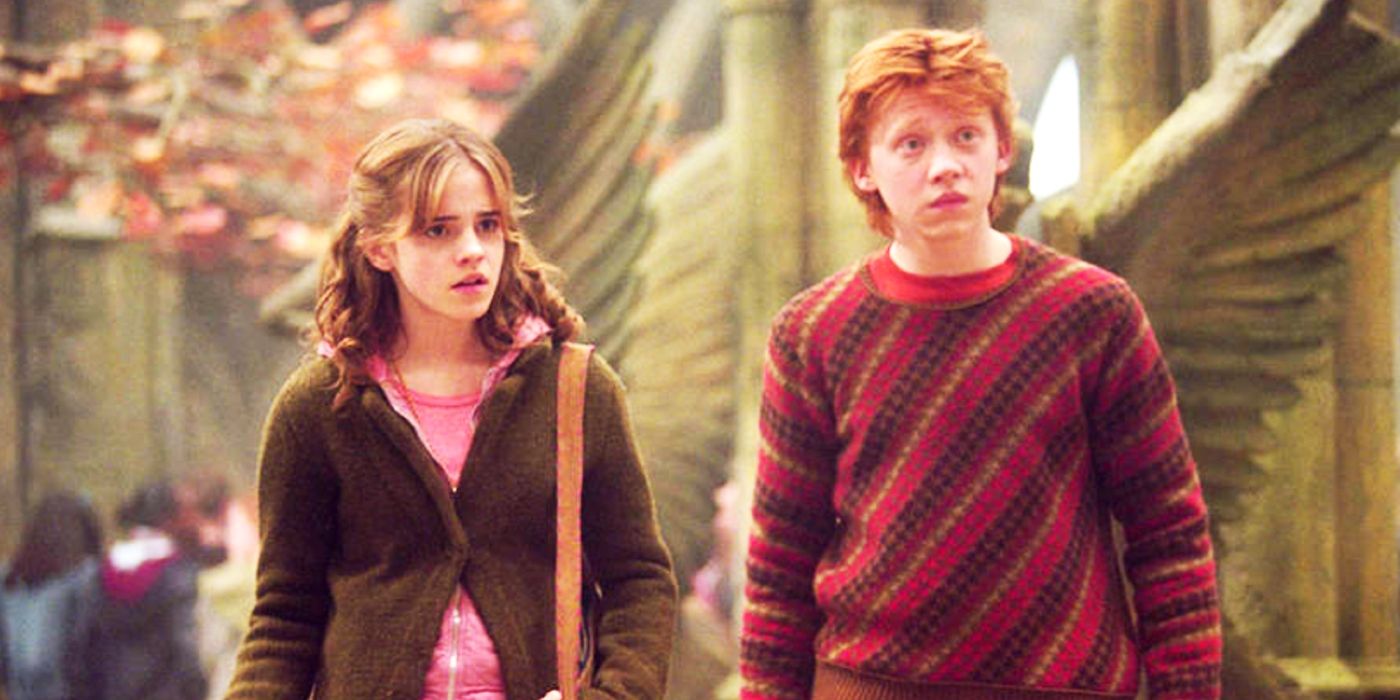
Harry Potter enters the 1960s in new art that gives the franchise an early TV feeling. The world of J.K. Rowling's popular novel series first graced movie screens in 2001, with Chris Columbus' Harry Potter and the Sorcerer's Stone introducing audiences to Daniel Radcliffe as Harry, Rupert Grint as Ron, and Emma Watson as Hermione. The rest of the saga would play out across seven sequels, with the grand finale ultimately coming in 2011.
AI-generated art shared by @harrypotterfans4u now imagines what the cast of Harry Potter would look like if the saga came out in the '60s instead of the early 2000s. Check out the art below:
In order from left to right, the images show reimagined versions of Harry, Ron, Snape, Hermione, Dumbledore, Draco Malfoy, Hagrid, Dobby, and Voldemort. The art gives the franchise an early TV feel, with era-appropriate costumes and effects. Snape is even wearing eyeliner.
Harry Potter Came Out At The Perfect Time
The Wizarding World Franchise Blends VFX & Pratical Elements To Stunning Effect
Close
With the eight Harry Potter movies releasing between 2001 and 2011, they really did come at a prime time in movie history. While visual effects and CGI had been around for some time, the early 2000s is when this technology started to allow scenes to look more real and life-like than ever before. The Harry Potter movies feature a lot of impressive practical effects, but it blends these real elements with VFX elements that still largely hold up to this day.
VFX were used to bring the sport of quidditch to life, for example, a feat that would have been quite a challenge to pull off entirely practically. In Harry Potter and the Chamber of Secrets, the Basilisk is similarly brought to life largely digitally, as are the Dementors, the werewolf, and the hippogriff in Harry Potter and the Prisoner of Azkaban. As VFX technology advances, each new movie in the franchise becomes more ambitious in terms of its depictions of magic and spell-casting.
Related Harry Potter: 10 Behind-The-Scenes Facts About Filming Quidditch Making the world of Harry Potter look believable on screen was no easy task, and Quidditch especially required a lot of movie magic.
VFX, then, were crucial in bringing the Harry Potter franchise's magical world to life. Had the films instead come out in the 1960s, the production would have been limited in terms of the technology available, and this could have resulted in an adaptation that felt less true to the world of the books. At the same time, if the movies came out today, they may have over-relied on VFX instead of practical elements and real sets. It remains to be seen how the upcoming Harry Potter TV show approaches this, but the movies evidently came out at the perfect time.
The Harry Potter TV show is expected to air on Max at some point in 2026.
Source: @harrypotterfans4u




COMMENTS