Leigh Bardugo's The Familiar Ending Explained
Warning: Major spoilers for Leigh Bardugo's new book The Familiar.
Summary Luzia pulls off a miraculous escape from the stake by teleporting herself and Santángel away using ancient magic.
Santángel's curse was never broken, but everyone thinks they're dead, freeing them from Víctor's control.
Fortún inadvertently helps Luzia escape by unknowingly providing the magical power she needed to perform the spell.
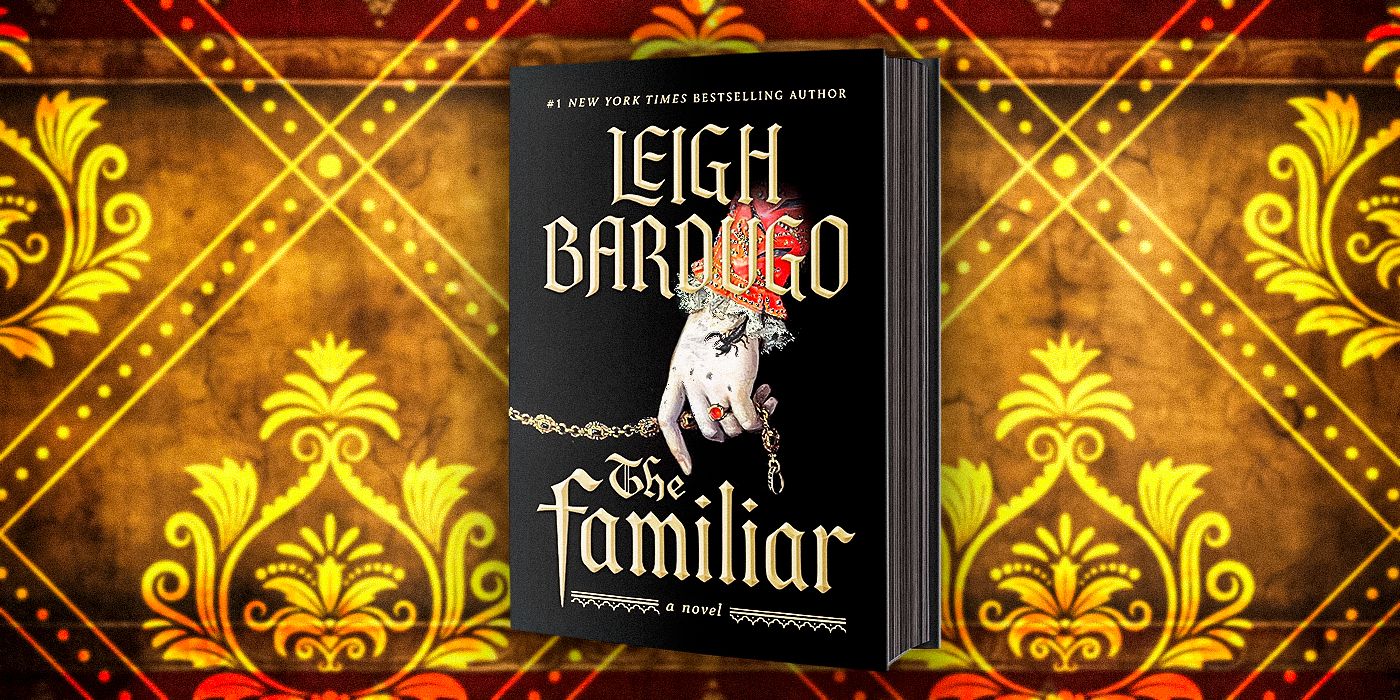
Leigh Bardugo's new book, The Familiar, has a gripping ending full of karmic resolution that comes with one particular twist. The Familiar is new territory for Leigh Bardugo, as much a historical fiction novel as a magical fantasy, with a heavy dose of the author's intense, slow-burn romance. While The Familiar is certainly spicy in spots, the focus is mostly on a different kind of desire: the desire to rise above one's station in life, to no longer be controlled, to want more out of what life has offered so far.
Every character in The Familiar's story wants in some way, whether it's freedom, wealth, an easier life, more greed, or to see the world. Some of those wants are innocent and pure, while others are willing to trample others to see their desires fulfilled. Desperate measures are taken in dire circumstances, and by the ending of The Familiar, every character's life is profoundly changed by the events that have unfolded.
What Happens In The Familiar's Ending
Luzia Pulls Off The Greatest Miracle She's Ever Done
In the ending of The Familiar, Santángel tries to save Luzia in front of the Inquisitors board by taking the blame for "corrupting" her in order to take her place in the execution. But Luzia does not play along and claims Satan corrupted her and that she knew what she was doing, thereby condemning them both. They're both ordered to be burned at the stake, and after saying their goodbyes, both are stripped naked, tied to a stake, and set on fire. However, Luzia has a plan, one that she can't even tell Santángel if it's to work.
Luzia, it turns out, had squirreled away the story Santángel had told her about old mystics and wise men who used to be able to teleport themselves certain distances. It's a dangerous, finicky magic, nearly impossible to pull off, but Luzia does, waiting until the last possible moment, after the flames have risen around them but not yet consumed them, to work the spell. She whisks her and her lover away, and though their bodies were not found later in the ashes, it was assumed by all that they'd perished and burned to bits in the holy flames.
How Santángel's Curse Was Broken
The Truth: It Wasn't Broken At All
In short, Luzia's spell was a bit of deception: Santángel's curse was never actually broken. The real trick Luzua pulled off was that everyone now thinks they're dead and she and Santángel are free of Víctor de Paredes. This is particularly important to Santángel as he's been bound to the de Paredes family for half a millennium, unable to escape. Though Víctor is dead by the end of the story, his wife bears a son before he dies, so, technically, Santángel is now bound to his son but will never have to be in his servitude.
Just because he no longer has Víctor's control hanging over his head, however, it doesn't mean Santángel is free of the curse. The curse still very much exists; Santángel still burns up in the sun each day that he's away from the de Paredes lands. The difference is Luzia. With her magic unleashed, she's able to weave together old magic and new in a powerful refrane, singing her lover back into existence each morning after he drifts away. Luzia quite literally puts Santángel back together again bit by bit, just as she did the smashed goblets.
Related 10 Romantasy Books That Deserve TV Shows After ACOTAR & Fourth Wing With A Court of Thorns and Roses and Fourth Wing both getting TV adaptations, it's worth wondering which romantasy series could be next up.
In the end, Santángel is still immortal, but Luzia is, too. Thanks to her magic, she can not only put Santángel back together again every morning, but herself, too. She will never know the ravages of time. Any wound, she can fix. Any bit of aging, she can undo. Any hurt or harm to Santángel his curse knits together, any hurt or harm to herself she can reverse. The two trapped souls formerly bound in a life of servitude are free to go wherever and do whatever they want, to be whomever they please, and to live forever. It's a poignant reward for two people who suffered so much.
The two trapped souls formerly bound in a life of servitude are free to go wherever and do whatever they want, to be whomever they please, and to live forever.
Why Fortún Donadei Loses His Power
The Emerald Was The Key
Custom image by Yeider Chacon
Despite betraying Luzia and condemning her to death, Fortún Donadei, in the end, is the one to unwittingly help her and Santángel escape. Not only did Luzia remember the story Santángel told her about the teleporting holy men, but also about the powerful magical stones they used to pull off such big magic. She also cleverly figured out that the giant emerald in the cross Fortún always wore and had a nervous habit of touching was one such stone; it was that stone's power she drew on while performing the spell to teleport her and Santángel out of the flames.
Unfortunately for Fortún, there's another part of the story Santángel imparted that directly impacts him: with magic that big and powerful, the stones can only be used one time, cracking afterward. It was that stone that was magnifying Fortún's natural but very minor magical abilities. Without it, he isn't able to conjure up the incredible manifestations he had before, his magic now small and mundane, less even than the tiny milagros Luzia was performing at the beginning of The Familiar.
The ending of The Familiar hints things may yet get even worse for Fortún, too. Before he dies, Víctor tells his new, suddenly impotent milagrero that he knew of a wise man in a country far away, a wise man who could restore Fortún's magic. This, of course, is the wise man who originally cursed Santángel with immortality and a life of indentured servitude. Víctor also has the map and directions that have been handed down among generations of his family for 500 years. Now that he planted that seed in Fortún's mind, it's almost certain the ambitious, desperate young man will seek out that miracle, not knowing it's a curse until it's too late.
Why Víctor De Paredes Was Afraid To Leave The House
He Found Out What Kind Of Man He Was Without Santángel
It may seem strange on the surface that Víctor allowed himself to waste away and die when he might have taken Fortún on that trip and bound himself to a new familiar, but his fear and paranoia bound him to being a shut-in. It's not entirely clear why Víctor's luck runs out with Santángel still being alive, but there are a few explanations. One is that his luck hadn't actually run out - he just thought it had, and the fear was enough to ultimately bring about his own downfall: locked away in his home, Víctor lost his vigor, his confidence, and his ruthlessness. If that's the case, he may very well have unintentionally been the architect of his own demise.
Another explanation is that Víctor's luck hadn't actually run out, but the moment his son was born, Santángel's luck transferred from Víctor to his son. It was never made clear whether Santángel's luck bound him to just one de Paredes family member at a time and that luck passed from father to son, or if the luck was spread over the whole de Paredes family in an umbrella. With de Paredes wife, Maria, being so kind and loving, if Santángel's luck did transfer to Víctor's son, it's possible his son grows up to be a far better and more compassionate man than his father.
Luzia's words to Víctor were certainly prescient: "How you must hate him," she said. "He's stolen any chance for you to know what kind of man you might be without him."
The third option is that the luck part of Santángel's curse snapped the first morning after the execution when Santángel burned up in the sun. It was the first time he'd ever been brave enough to allow himself to burn up and die, so it's not known what happens when he does. Either way, without Santángel, Víctor is toothless. Luzia's words to Víctor were certainly prescient: "How you must hate him," she said. "He's stolen any chance for you to know what kind of man you might be without him." In the end, that man was revealed: cowardly, paranoid, afraid of everything, a man who dies alone and unloved.
Why Teoda Still Looks Like A Child
A Rare Genetic Disease Is The Likeliest Explanation
In The Familiar, one of the smaller but more surprising reveals is that Teoda is not a little girl, but a 38-year-old grown woman in a child's body. Like many things in the book, it's not precisely explained why this is. It's possible that, similar to Luzia, Teoda's magical abilities extend her life, though trapping her in a child's body doesn't exactly seem fair. More likely, she has a rare genetic condition.
Progeria, for example, is a genetic disease in which a human ages but their body never grows beyond that of a child; Syndrome X is another. Those diseases, however, leave notable physical changes: often an overly large head and wizened features for progeria and severe cognitive and developmental issues with Syndrome X. There is an extremely rare genetic disease known as Highlander Syndrome, though, that merely slows the body's growth and stops puberty, making the person look like a child even when they're a full adult, without causing any notable physical or cognitive issues. It's likely that Teoda, with her sharp mind and her child's body, had some unknown genetic disease like this in The Familiar.







COMMENTS