Iran promises Indian officials can meet with 17 detained Indian crew members ‘soon’
April 15, 2024 09:31 am | Updated 09:32 am IST - NEW DELHI
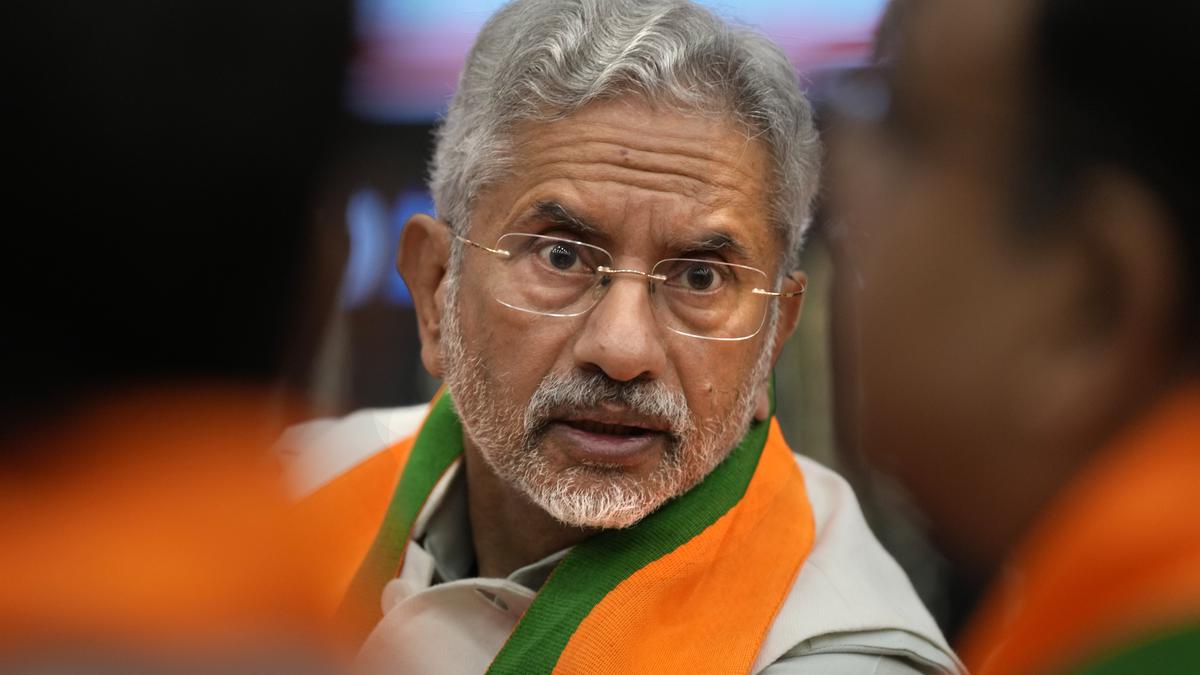
Iran said that it will allow Indian officials to meet with the 17 Indian crew members detained after its forces seized an Israel-linked ship MSC Aries “soon” after the issue was raised by External Affairs Minister S. Jaishankar, who spoke to Foreign Ministers of both Iran and Israel on Sunday night.
In a readout of the conversation between Mr. Jaishankar and Iranian Foreign Minister Amir Abdollahian released on Monday, the Iranian Foreign Ministry said that they had discussed Iran’s drone and missile attack on Israel in what it called a response to Israel’s attack on the Iranian embassy on April 1 in which 7 Iranian diplomats and commanders died, as well as the situation in Gaza, and Red Sea.
In a post about his conversation earlier, Mr. Jaishankar said that he had taken up the release of the Indian crew members during his conversation and also discussed the strikes.
Track Iran-Israel tensions LIVE updates here
“Discussed the current situation in the region. Stressed the importance of avoiding escalation, exercising restraint and returning to diplomacy. Agreed to remain in touch,” he wrote on a social media platform.
“Dr. Amir Abdollahian mentioned that they are following up on the details related to the detained ship and the possibility of representatives of the Indian government meeting with the crew of the mentioned ship will be provided soon,” a translated version of the Iranian Ministry of Foreign Affairs statement said.
Mr. Jaishankar said that he had also shared India’s “concern at the developments”, indicating Iran’s drone and missile attacks, with Israeli Foreign Minister Israel Katz.
“Shared our concern at the developments yesterday. Discussed the larger regional situation. Agreed to stay in touch,” Mr. Jaishankar posted on social media platform X.
A statement by the Ministry of External Affairs issued earlier in the day had also not referred directly to Iran’s missile strikes, saying that India was “seriously concerned at the escalation of hostilities between Israel and Iran which threatens the peace and security in the region,” and calling for de-escalation and diplomacy.
The MEA statement, that suggested a neutral approach by New Delhi given India’s strong strategic ties with both countries was received with some disappointment by a former Israeli diplomat.
“As a supporter of Indian foreign policy, I find the weak, balanced MEA statement disappointing. I expected India to publicly condemn the attack, as did so many other friends [and] partners of Israel around the world. I hope that the FMs’ call included a condemnation of Iran’s attack at least,” wrote former Israeli Ambassador to India Daniel Carmon.
Mr. Carmon was referring to the statements by the U.S., its allies and Western countries strongly condemning the strikes and affirming support for Israel, in contrast to the statement from New Delhi. On Sunday, the Iranian MFA had summoned envoys of U.K., Germany and France to protest their statements condemning the Iranian actions. In a briefing to diplomatic envoys, Mr. Abdollahaian also said that Iran had warned the United States against any “misadventure” in support of Israel.
According to the Iranian MFA statement on the call with Mr. Jaishankar, Mr. Abdollahian had also called for India’s “continued role through international institutions, including the U.N., to stop the war in Gaza, which is the root of current crises in the region,” and to stop Israeli “aggression” there.
It said that Mr. Jaishankar had called for a reduction in tensions, and responsible behaviour from all parties. In a statement, Iran’s Foreign Ministry said that “at this point, the Islamic Republic of Iran has no intention of continuing defensive operations, but if necessary, it will not hesitate to protect its legitimate interests against any new aggression”.






COMMENTS