Was Chevalier d'Éon Transgender? Franklin Episode 3 Character Explained
Summary Franklin Episode 3 introduces Chevalier d'Eon, the famous French diplomat, spy and soldier.
Chevalier d'Eon's gender identity was speculated in the 18th century, inspiring ridicule and intrigue during the Franco-American alliance.
Was Chevalier d'Eon transgender? Franklin poses the question without a direct answer, hinting at a progressive portrayal of the historic figure.
Franklin episode 3 digs deeper into the international espionage that surrounded Benjamin Franklin's not-so-secret mission to France, and in doing so introduced one of the most famous spies of that era, Chevalier d'Eon. While the show centers around Michael Douglas as Benjamin Franklin and Noah Jupe as his grandson William Temple Franklin, part of Franklin's appeal is the cast of characters pulled right out of the history books. Famous names from that time period come and go, including the Marquis de Lafayette, Edward Bancroft, and Pierre Beaumarchais.
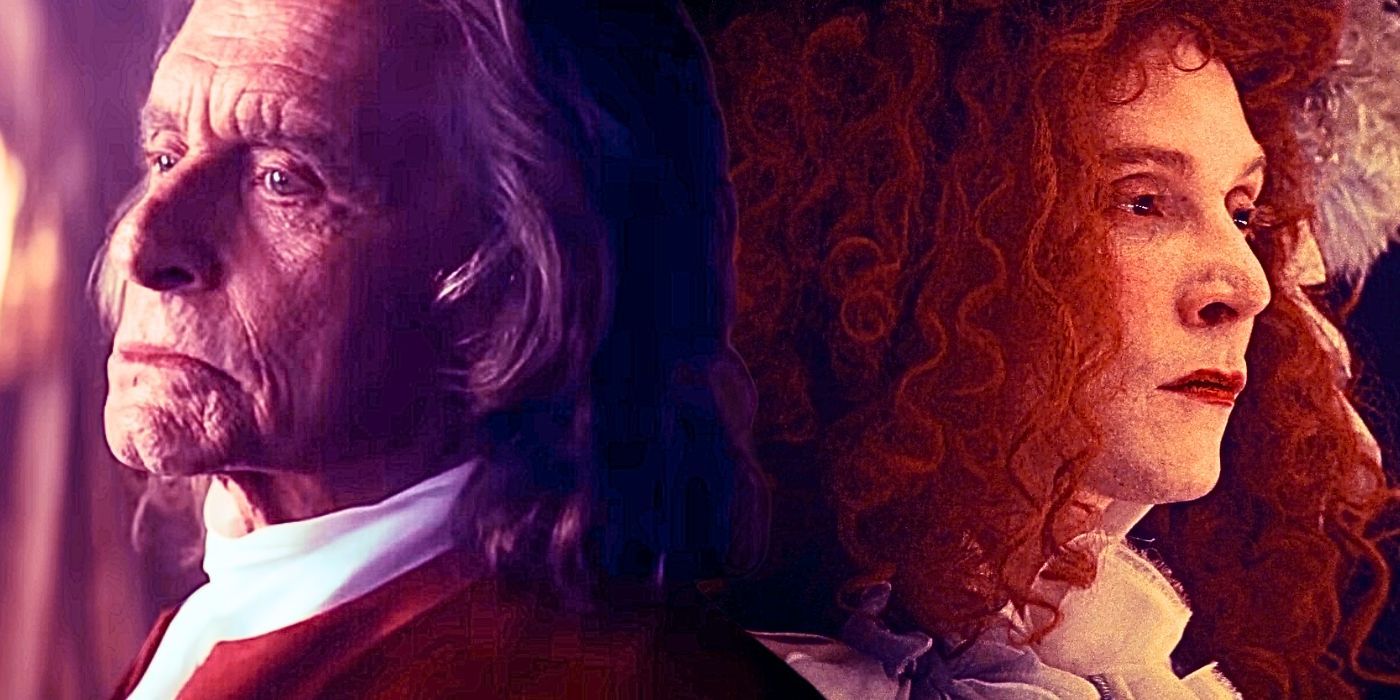
Franklin episode 3 introduces Chevalier d'Eon as "the chevaliere Charles-Geneviève-Louise-Auguste-Andrée-Timothée d’Éon de Beaumont" on stage to thunderous applause. While d'Eon was viewed in a positive light as a hero of France, the secret agent's gender identity was a subject of speculation, and in the 18th century, that speculation bred ridicule. Franklin asks whether Chevalier d'Eon was transgender, even if that more progressive label didn't exist in the 1770s.
Related Franklin Review: Michael Douglas Is Pivotal To Apple TV+'s Brilliant, Powerful Historical Drama Franklin navigates the story of America's journey into independence with a talented cast and a contemporary feel despite the period setting.
Who Was Chevalier d'Éon?
The talented soldier, spy, and diplomat became famous in France.
Chevalier d'Eon is an established diplomat and spy by the time Benjamin Franklin meets them in Franklin. Per the Encyclopedia Brittanica, d'Eon spied for the French in both England and Russia in the early stages of their military career, and was made a captain of dragoons in the Seven Years' War in 1761. D'Eon actually played a significant role in drafting the treaty that eventually ended the Seven Years' War, and for their service received the Order of St. Louis and the title of chevalier, which is the rough French equivalent of a knight.
Franklin Episode Release Schedule Episode Title Release Date Episode 1 "Sauce For Prayers" April 12th Episode 2 "Welcome, Mischief" April 12th Episode 3 "Pride and Gout" April 12th Episode 4 "Small Revenge" April 19th Episode 5 TBA April 26th Episode 6 TBA May 3rd Episode 7 TBA May 10th Episode 8 TBA May 11th
Following the war, d'Eon was sent to London on the order of King Louis XV, and due to conflicts with the powers in France including the blackmail of the king, remained exiled in England until 1774. Upon their return to France, speculation began that despite pursuing traditionally male careers and dressing in a dragoon uniform, d'Eon was actually a woman. D'Eon claimed to have been assigned female at birth, but was raised as a boy so that his father could inherit from his in-laws, who would only permit that if he had a son.
D'Eon was fully recognized as a woman upon their return to France, and gained fame both there and in England with their new identity as a woman. While there was still constant speculation about d'Eon's gender, they leaned into it, and became a household name with the widespread acknowledgment of their book of memoirs in London. D'Eon even performed fencing demonstrations in a dress, and continued to fan the flames of the rumors.
Franklin Poses The Question: Was Chevalier d'Éon Transgender?
The show never directly answers the question.
Close
Franklin shows Chevalier d'Eon taking the stage to address a large group of nobles and aristocrats, and the crowd's admiration for them seems genuine. However, it's clear that mockery was always just under the surface, as all it takes is a brief slip of the tongue from Franklin to send the crowd into fits of laughter. Franklin later directly asks d'Eon what their gender is, and they provide a beautiful response: "I am...a fact that does not yet have a name."
D'Eon attempted to join the French forces heading overseas to fight in the American War for Independence, but they were not permitted under the terms of their exile in England.
While the progressive phrasing may not have existed in the late 1700s, many scholars now accept that Chevalier d'Eon was indeed transgender. That fact became more widely accepted over time, and d'Eon's influence grew. In 1920, Havelock Ellis, a physician and progressive intellectual who studied human sexuality, coined the now-outdated term "eonism" as a category of sexuality that was distinct from homosexuality. The human rights organization The Beaumont Society is named for d'Eon, and has long provided support for transgender people.
Chevalier d'Éon Was Officially Recognized As A Woman In France
King Louis XVI recognized them as a woman and forced them to wear women's clothing.
After many years of typically acting and dressing as a man and years in exile in England, Chevalier d'Eon was permitted to return to France in 1777 by Louis XVI and be recognized as a woman. However, as a condition of their return, d'Eon was forced to wear women's clothing for the rest of their life to align with their gender identity. While Franklin might manipulate the timeline slightly in order to put Benjamin Franklin in the same room as Chevalier d'Eon, its portrayal of the clothing and disposition of the famous diplomat and spy is fairly accurate.
Source: Encyclopedia Brittanica






COMMENTS