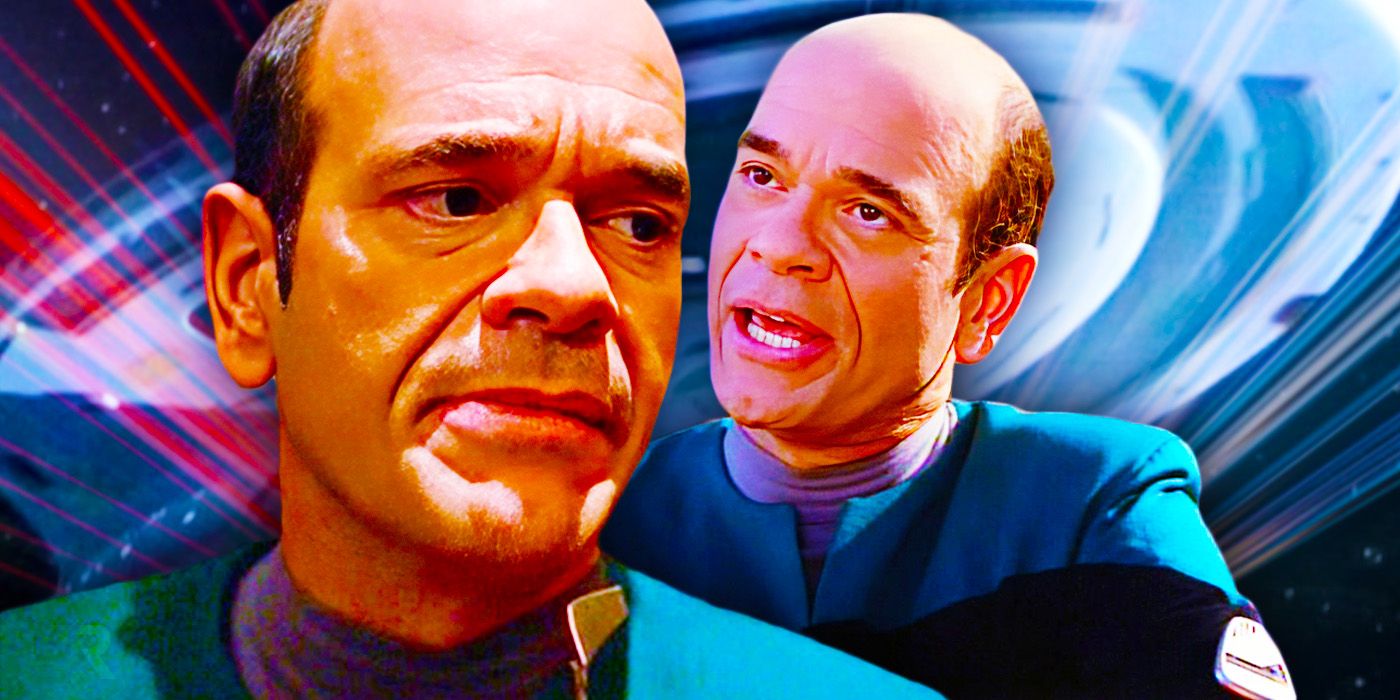
I’m Glad Robert Picardo Changed His Mind About Star Trek: Voyager’s Big Doctor Twist
Summary Robert Picardo was initially wary of the Doctor's mobile emitter, fearing it would change the character too much.
Picardo's concerns were unfounded, as the emitter actually helped the Doctor feel more fleshed-out and unique.
The mobile emitter allowed for some of the Doctor's best episodes in Star Trek: Voyager, enhancing his exploration of humanity.
Robert Picardo initially had misgivings about the Doctor's big twist in Star Trek: Voyager season 3, but thankfully changed his mind when he saw how well it was working. From the start, the Doctor was one of the most intriguing members of Voyager's cast of characters and had a storyline filled with potential. Although his episodes in seasons 1 and 2 were generally met with acclaim, it wasn't until season 3 and the acquisition of a specific device that the Doctor's arc began to be taken in more expansive directions.
Season 3, episodes 8 and 9, "Future's End Parts I&II" saw the USS Voyager's crew travel back in time, ending up in 1990s Los Angeles. There, they were pulled into a conflict with Henry Starling (Ed Begley Jr.) a supposedly genius tech mogul who in reality had stolen 29th-century technology and was planning to use it with potentially disastrous results. At one point, Starling stole the Doctor's program from Voyager, and while holding him at his lab, inadvertently gifted him with a mobile emitter, something that would end up irrevocably changing the Doctor's life and trajectory on Voyager.
Robert Picardo Explains Concerns About The Doctor’s Mobile Emitter In Star Trek: Voyager Season 3
Picardo wasn't sure the mobile emitter was a good thing
The mobile emitter was a revelation for the Doctor, as it allowed him to reliably travel outside of sickbay whenever he wanted. However, actor Robert Picardo was concerned that having the mobile emitter would change the Doctor's character too much from how he'd been in Voyager's early seasons. Speaking to Star Trek Monthly at the time that Voyager was airing, Picardo admitted that he was initially wary of the emitter, feeling that the ability to move freely about the ship would mess with the story formula that made the Doctor compelling. Read Picardo's full quote below:
"I was concerned about the Portable Holographic Emitter because I didn't want to mess with a winning combination. The audience seemed to embrace The Doctor's character during the show's first seasons, and so much of his character is based on the notion that he is severely limited and has to cope with limitations such as the fact that he can only exist in Sickbay or in the Holodeck, and that he's different to an organic being. So it seemed to me that if we took the risk of making him more like everyone else, we were damaging part of his uniqueness. Fortunately, that does not seem to have been the case. I am very happy that I was wrong about the Portable Emitter."
Picardo's fears about what the mobile emitter might have done to the Doctor weren't unfounded. As the first main character who was also a sentient hologram, the Doctor was a unique addition to the Star Trek franchise. Even similar characters, like Data on Star Trek: The Next Generation, didn't experience the same struggles with such a limited scope of mobility. Indeed, some of the Doctor's best episodes of seasons 1 and 2 dealt with him figuring out his limitations and how they impacted his growing humanity. However, as Picardo himself pointed out, there was never any cause for concern.
Picardo Agrees He Was Wrong About Star Trek: Voyager’s Mobile Emitter Twist
The Doctor's mobile emitter was one of the best things to come out of season 3
Close
Rather than ruining what made him so compelling, the mobile emitter allowed some of The Doctor's best Star Trek: Voyager episodes to be possible. The wider freedom the emitter gave the Doctor only helped him continue to explore his humanity more expansively. This in turn helped the Doctor feel more fleshed-out, whereas being confined to Sickbay and the holodeck might have limited him too much in the long run. Ultimately, it's a very good thing that Robert Picardo got over his fears about the emitter, given the influence he had on decisions made about the Doctor.
Source: Star Trek Monthly issue 30
Star Trek: Voyager is available to stream on Paramount+.





COMMENTS