The Sympathizer's Sandra Oh & Hoa Xuande Break Down Their "Satisfying" Character Arcs
Summary The Sympathizer centers on a North Vietnamese spy in the Vietnam War, portrayed brilliantly by Hoa Xuande, with Sandra Oh playing a pivotal role in his internal conflicts.
The show focuses on Vietnamese representation, avoids Western perspectives, features mostly Vietnamese dialogue, and sheds light on the struggle of Asian actors in Hollywood.
Xuande and Oh were thrilled about the show's complex layers and Vietnamese representation, with episode 4 standing out as a highlight for its satirical take on Hollywood-based Vietnam War productions.
Sandra Oh continues her reign on television with The Sympathizer. Having first broken out with the HBO comedy Arliss, Oh has garnered widespread acclaim on both the big and small screens throughout her career with the likes of Grey's Anatomy, for which she landed five Primetime Emmy nominations and won her first Golden Globe, Sideways and Turning Red. More recently, she's been seen and heard in AMC's Killing Eve, which earned her second Golden Globe win and landed six additional Emmy nominations, and Prime Video's Invincible.
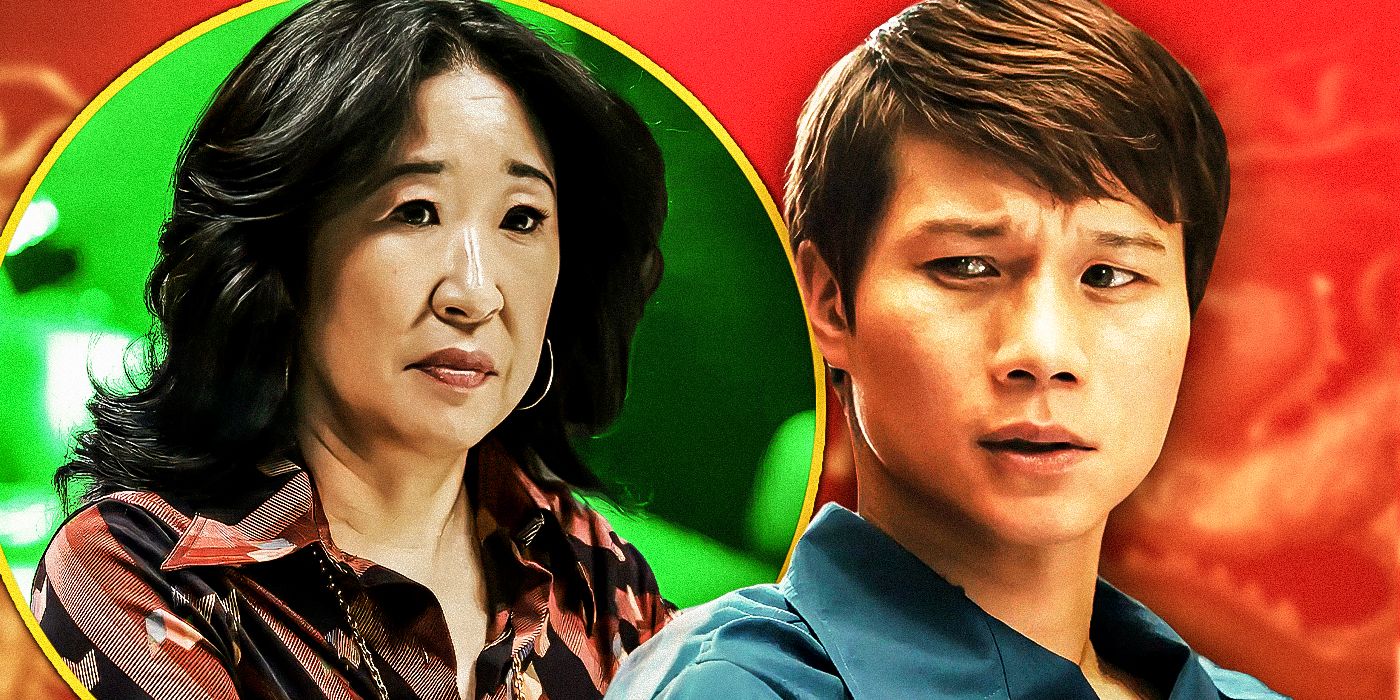
Based on Viet Thanh Nguyen's Pulitzer Prize-winning novel of the same name, The Sympathizer centers on the story of the Captain, a North Vietnamese spy working undercover in the South Vietnamese army who escapes to America as the Vietnam War ends, but continues his mission covertly from the country. Hoa Xuande leads the star-studded cast of the HBO thriller as the Captain, brilliantly capturing his wavering loyalties and internal conflicts. Oh stars in the show as Ms. Mori, a woman working for the Captain's Occidental grad school professor with whom he falls in love, who furthers his struggles over determining to choose between his mission and himself.
Related The Sympathizer True Story: The Fall Of Saigon & Its Impact On The Show The HBO miniseries The Sympathizer is based on Viet Thanh Nguyen's book of the same name and chronicles the fall of Saigon during the Vietnam War.
Alongside Xuande and Oh, the ensemble Sympathizer cast includes Robert Downey Jr. in a four-character role, Toan Le, Fred Nguyen Khan, Duy Nguyễn, Vy Le, Ky Duyen, Phanxinê, Kieu Chinh, VyVy Nguyen and Alan Trong. Hailing from Don McKellar and acclaimed South Korean director Park Chan-wook, who also directed the first three episodes of the show, the HBO and A24 thriller is also executive produced by Susan Downey and Downey Jr. via their Team Downey banner.
Ahead of the show's premiere, Screen Rant participated in a roundtable interview with Hoa Xuande and Sandra Oh to discuss The Sympathizer, their views on whether the show is a "blueprint" for future Vietnamese representation on screen, and the duality and blooming themes of their characters.
Oh Thinks The Sympathizer Is "A Vital Step" For Vietnamese Representation
Unlike many depictions of the Vietnam War era, The Sympathizer aims to focus on the Vietnamese experience, including featuring mostly Vietnamese dialogue for its characters and casting them with authentic actors. When asked whether the two feel that the show could be seen as a "blueprint" for future representation on screen, Xuande liked the sound of the idea, though Oh cautioned that felt "too big of a responsibility" to put on the HBO thriller, instead inviting it to be a "vital step":
Hoa Xuande: Oh, a blueprint? I like that. Sandra Oh: I don't think The Sympathizer is so much of a blueprint, that's too big of a responsibility to put on it. But I do think that — what I hope is that — it is a vital step. It's just a beautiful piece in the puzzle of storytelling. I do think, though, it is a new piece, and it's a new piece that has been missing for a long time. Maybe like 50 years, it's been missing. But now it is out, it is being brought to light, and being brought to light with some masterful artists who are wanting to take on the story. Myself being one of the members who were like, "I want to be a part to support this cast, to support this production. And to get the cast members what they hopefully will need to support them to tell the story." And your point about the language, I will say, for me, when I finally was able to play a character who actually had a Korean name, that meant a lot for me, and that happened not that long ago. So, my imagination is to be able to hear your own language that has not necessarily been heard in — Hoa Xuande: Yeah, depicted on screen. Sandra Oh: Even your name, Hoa. For people to look at that name and go, "I need to learn how to say that" — it's pretty easy to say. But that's the beginning of it, just to be able to go, "Oh, this is not so familiar to me. It's my responsibility to learn it." I think that is a step forward. Hoa Xuande: I agree with all that. And I think, relating back to your first question, was how you see the Asian narrative being depicted in the media. Specifically, about this book, the depiction of the Vietnam War is something that we've seen in mainstream media for the last five decades. And a lot of the time, that version of that part of history has been through a very Western-centric lens. We're all too familiar with how these things are usually perpetuated on Asian people, and we can't be saved, or we're usually people waiting to be saved, or we're helpless. Sandra Oh: That's represented, honestly, through all of Robert Downey Jr's characters, that perspective. Hoa Xuande: And finally, we have a story that's been told in a way that it puts the Vietnamese people at the center of the story, that are in control of their own actions and their own destinies, right or wrong. They're able to feel things, they go through emotions, and they're battling with dilemmas of their loyalties and their allegiances and their emotions and their friendships and their loves, which is not usually depicted in that way when we talk about the Vietnam War or Vietnamese people.
Xuande & Oh Found Many Parallels Between Their Characters & Themselves
In addition to the unique duality of a spy trying to hide his true intentions from those around him, Xuande was presented with the complex layer in The Sympathizer's Captain of his being biracial and having dealt with ridicule for such throughout his life. The star opened up about how he not only resonated with this theme deeply from his own life but also helped him find "the core" of who his character was:
Hoa Xuande: On a personal level, growing up in Australia, as a Vietnamese person, I guess I inherently struggled with my idea of what being Vietnamese was, and then what my idea of being Australian was. It really is a Western society or Western culture. That duality is really at the core of who the Captain is, because it not only feeds into his biracial identity, it feeds into his ideologies, and his psychology of what he believes in, and how he's brought up, what his purpose is, who he should fight for, who he should trust? So, I found that actually quite familiar, to be able to play that through the character of the Captain, walking the thin line of pleasing, but also standing up for [things], when to sit down, but also when to speak up. I guess throughout the series, we witnessed a very complex character navigate how he deals with friendship and loyalties and allegiances, and what is at the core of his battle? Is it for the survival of himself or his people? Or not rocking the boat in the American establishment? What is he fighting for? I think that's something that we all have to face. Especially, people of color have to face a lot of the time when we're trying to not rock the boat, but we're trying to stand up for ourselves as well.
In contrast to Xuande, Oh looked at Ms. Mori's journey as less of a "duality" balance and more as a modern woman who "blooms open" due to her relationship with the Captain. She also thought of Mori's viewpoint as "dated", feeling that it stemmed from the treatment of Asian people in America at the time:
Sandra Oh: For me, with Ms. Mori's character, I don't necessarily see her as dual. What I see her journey is that she actually almost blooms open. You see that she's like a modern lady, a modern woman, and she's not going to be bossed around. But she starts questioning her Asian-American identity through her relationship, particularly with Sonny, and with the Captain, in that kind of love triangle. I think she's really inspired by one of their arguments to examine her own hypocrisy, to examine how she has been assimilated, and why she has assimilated the way that she has. Because it is a period piece, I feel her stance dated, that it's like, "What's my identity? I'm an American, I understand that. Why is that? What's that coming from?" That's coming from the survivalism of assimilation. You need to survive, so what do you want to do? You want to fit in as fast as possible, but what you do then is that you ignore and you cut off a lot of who you are. So, when Ms. Mori meets the Captain, and then meets Sonny. She goes deeper and deeper and starts questioning her background, and there's this mystery behind it. So, I wouldn't say necessarily, again, that it's a dual thing for Miss Mori, it's more of a cracking open.
The Sympathizer Episode 4 Proved "So Satisfying" But Also "Very Painful" For Oh
One of the more unique elements of The Sympathizer is episode 4, in which the Captain is tasked with being a part of the production for a fictional Hollywood movie entitled The Hamlet to be their Vietnamese consultant and secretly incorporate Communist messages into the dialogue. Satirizing the way American-based Vietnam War movie productions were made, including Downey Jr.'s auteur director Niko being inspired by Apocalypse Now's Francis Ford Coppola, the story is a hilarious and biting bottle episode for the show.
Oh, in particular, found the episode to be "so satisfying" in how it is a "high satire" approach to exploring Hollywood's approach to telling stories within the Vietnam War era, though acknowledged it to be "very painful" for the realistic nature of it. Xuande similarly found the episode to be very rewarding for recognizing the "microaggressions" many Asian performers go through in productions, while also praising how it set the story specifically through the Captain's perspective as he tries to "combat that system":
Sandra Oh: I think episode 104 is so satisfying. It is hilarious, it is high satire, but it's very painful. But, why it's satisfying is it's all from the Captain's perspective. So, here are things that have been going on a long time. The auteur is just throwing racist points of view, left and right, as it is normal for him at that time. So, you see the Captain kind of rolling his eyes, or gritting his teeth, or not saying anything, but you're inside of his story. So, what's satisfying is that it doesn't hurt me, what the auteur has to say. Because, I think Robert really went there, because we need to see the racism, we need to see the racism that's permeating that set. You can see where that has all come from. I just find 104 deeply satisfying, because also, now with this perspective, you realize — and it's not like you're laughing at how racist it was. But you're going, "Oh, my God." Maybe those of us of color. Or maybe, from your perspective, can be like, "Well, see? That's how ridiculous it was." Hoa Xuande: Yeah, I think people who understand what those microaggressions are, and have had to deal with just rubbing it off your shoulders, and pretending like it's all okay, then that's just part of the culture. I think a lot of people who have had to deal with that can relate to just accepting that this is the way things are, and never having a different point of view. And then, when you finally see someone through the Captain's eyes, who's in a position to be able to do something, how hard it is to even combat that system. And that's what makes it kind of funny, that these systems just won't move, even in the face of telling stories that are about a certain person, or certain people, but even they're not allowed to have a voice on their own story. Sandra Oh: You see certain moments that are so ridiculous, like the woman who's speaking Chinese, or then John Cho's character, where he goes through the list of how many ways he's died. "Yeah, I was killed by this white actor, I was killed by this white actor, I was killed by this white actor." [Chuckles] It's hilarious now, because — what we hope is — that doesn't exist, because why? It's not happening in this story that we're making right now.
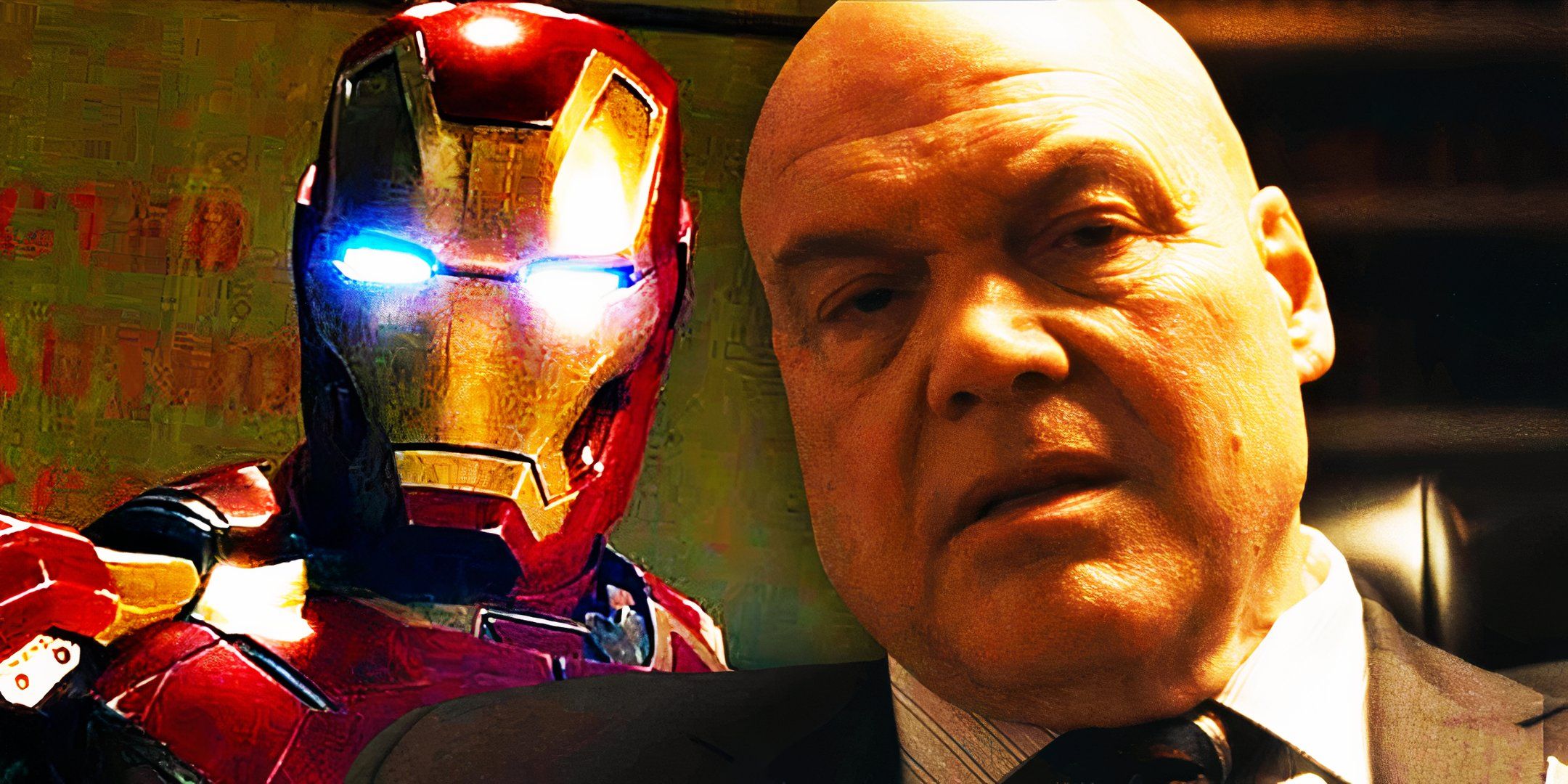
The duo also found the episode's "extremely meta" approach to telling this satirical story, with Oh noting Downey Jr.'s role as the antagonistic auteur director of the movie being a unique aspect. The Golden Globe winner specifically compared his time as Iron Man in the Marvel Cinematic Universe, in which he was "playing these archetypes of Western, white patriarchy", and his "bold" decision to play such a virulent character in The Sympathizer:
Hoa Xuande: The thing that's actually really funny in the show is when the Captain is trying to get the Vietcong actors to say a certain line about freedom and independence, and the actor, Tien, who plays the Vietcong character, he's so incensed and angry by the fact that he has to say these lines, and he's just yelling, "I have to say this, and I don't get paid enough." But it's just so funny to me that he's passionate, and he's incensed about that situation, the film industry putting him in that situation, having to play something that he doesn't believe in. But the auteur loves it and completely dismisses anything about the language, or anything about what even that story or that moment is about, but just trying to capture what he believes the narrative is supposed to be. It's really telling of what the wider industry has been telling about these stories for a long time, that they're just capturing these moments that they believe what the story should be, as opposed to actually listening in and leaning into what these different perspectives are that haven't been told for a long time. Sandra Oh: It's enjoyable, and also, I think it's extremely sophisticated and extremely meta. One of the meta things is that Robert Downey Jr, who spent a decade of his life playing Iron Man, playing these archetypes of Western, white patriarchy. It's a very, very bold thing to do, and I think you can get into the commentary of the meta of all that, but all the layers of it, and how, as the series continues on, the meaning of one actor playing all these characters then starts to really make sense and have a much deeper meaning. But yeah, so even when Tien is basically saying, "You're not paying me enough," he is a part of the group you have been seeing for this whole series. So then, when you see Bon and everyone, all the characters that we know, that we spend time with, are now the people in the background, you're also getting a piece of, "Hey, by the way, we know these people now." So, they're not a faceless nobody, because we've already spent time with them and Lana. It hits on a lot of notes, where it's like, "Oh, you can't ignore that, you can't ignore these background actors, because we've spent four episodes with them." Hoa Xuande: These characters, like you said, are not nameless, not faceless, they're actually a part of the journey as much as Captain. Sandra Oh: And they've taken the piss.
Working With Director Park Resulted In One Surreal Moment For Xuande & Oh
The Sympathizer marks Director Park's first major return to television in a creative position after previously helming all six episodes of the BBC adaptation of The Little Drummer Girl, having also executive produced it and the TNT adaptation of Snowpiercer. With the show, both Xuande and Oh recalled feeling some nerves over working with him but ultimately found the experience to be a joy, particularly in shooting one of their scenes together that felt somewhat surreal.
Hoa Xuande: Yeah, Director Park, stepping on set for the first time with someone who is a master of their craft, you have these inherent ideas of what you believe you need to do to match his level. And, for a while, I was really put through my paces. I was really nervous and insecure about even being able to do what he wanted me to do, let alone what I wanted to do. I think he's just very calm, he garners confidence in people when he speaks to them. He's got a lot going on that he doesn't really divulge, and he's quite mysterious in that way. But you sort of learned to feel and see what it is that he's trying to grasp in his frame as he's directing you. It took me a while to understand that, but once I felt like I got going with him, and once you learn how a director works, and the director works out how you work, you build this shorthand language about trying to create moments in a scene. I was able to do one takes by the end of this, but yeah, he really inspires confidence in you. He trusts you, he chooses you, so he's just trying to put you in his frame of the world, and something that I kind of like to say is that he puts the dots on the board, and it's your job to connect them, and once you understand that, it's actually quite seamless and quite freeing to do. Sandra Oh: You know, there's this one scene, our kind of intimate scene, romance scene. It's actually one shot from above, and when we were rehearsing it, just the way that he was there on the bed looking at us. He's trying to figure out what he wants, and then he takes the bold move of just saying, "It's just one shot." So what the director is signaling to the actor is that, I believe in you. I just have one shot." [Laughs] He is giving you his confidence and his belief. He sets up a beautiful shot, and it's, "I have confidence that you will get all the information in the time that we need it." And we did do it. I loved doing that scene, man. We just smoked up a storm. Hoa Xuande: Yeah, we were getting high off the fake cigarettes. [Laughs] It was hilarious, by the end of it, we were crawling out of there. Sandra Oh: His confidence in his own vision was the confidence that he gives to, I think, everyone on set.
The Captain & Ms. Mori's Relationship Will Face One Major Struggle
Oh's Ms. Mori serves as a key figure in the Captain's evolution throughout The Sympathizer, introducing him to some of the unique elements of living in the United States and the struggles to come from being an Asian in the country. Despite the quick connection they find in one another, Oh and Xuande tease that one aspect of the Captain's personality could result in trouble for their relationship:
Sandra Oh: You know why [their relationship fails]? It's because he doesn't call me back. That's why he does not call me back. Hoa Xuande: I'm afraid. [Laughs] Sandra Oh: That's true, though, the Captain is afraid. Hoa Xuande: Yeah, that's the thing with meeting Sandra for the first time. Rehearsals were so lovely and warm. I immediately was just like, "How am I going to relate to Ms. Mori in a way that I almost loathe her to love her?" But the thing that I found interesting, I guess, in playing the Captain is that he's been so repressed in every way, his identity not being confident, even as a kid to stand up for himself, and even suppressing his own beliefs, trying to walk a thin line between who he is and who he isn't. And that even permeates through to love, and his love life. And then he meets Ms. Mori, who is this free and liberated woman who believes in the idea that love is given freely. And it's such a strange and freeing idea that he's never really confronted before. It's like he wants to believe that he could be that, he wants to be intoxicated by it, but he can't give himself into it enough, because he's never really given himself into anything before. And he's got this one moment — Sandra Oh: He could have! Hoa Xuande: He could have, and he's just afraid. And that really speaks a lot to, I guess, the Captain's journey. But even in this moment, he's just too afraid to let go of himself, to be with somebody. Sandra Oh: And you can see deep into, like, 106, Ms. Mori accepted him, and really would accept all of him to a certain point. And then, she's just like, "You need to go." But she is so curious about his mystery, but at a certain point, as a liberated woman, she's not going to wait around for any man. And I personally love that. There's some fuzzy lines, and I think that she could have been a little bit more compassionate when you were in the hospital. But the Captain doesn't even know himself. So, you see her really trying to crack him open, trying to make him more transparent, but he's not willing to. And that ultimately is the reason why I think she moves on to Sonny, who is much more engaged, and much more questioning. He's not willing to answer questions, really answer questions. But I really did love their kind of kinetic attraction.
Xuande & Oh Had Different Ways Of Getting Into Their Sympathizer Characters
While many actors find music as a helpful tool for getting prepared for their work, Xuande and Oh found different methods of doing so. The former even admitted that in his efforts to curate playlists for his roles, he has never "been successful" in, given he tends to lean on songs that resonate with him, while the latter finds imagery to be a more useful means for getting in the mood of the production:
Sandra Oh: Yeah, I gotta tell you, not so much music for me, I'd say our wardrobe. Our hair, makeup and wardrobe really informed a lot, Danny. Yeah, Danny Glicker, our fantastic costume designer with vintage fabrics, that really helped, at least for me, get me into the space. Also, the hair and makeup that really helped that really helped me. Hoa Xuande: I love the idea of curating playlists to get into characters, I just never have been successful in doing that. Because I tend to just lean into songs that I like that have nothing to do with shows and the emotionality of a show. I kind of just sometimes lean too far into things that I like — Sandra Oh: They give you an emotion? Hoa Xuande: They give me an emotion, but don't really necessarily fit the time period. I think, speaking to that, often it's because when I associate a lot of the songs that I hear that are related to the Vietnam War, they've just been played over and over and over again. And then, when I hear those songs, I think about those images, as opposed to recreating and having fresh perspectives. When you hear "Born in the USA," or "Paint It Black", or in Australia, it's like "The Last Train Out of Khe Sanh". I think they've all been attached to very specific depictions of the Vietnam War, and I'm trying to get away from that. So, a lot of what I do is image based, and I look up images that will elicit those emotions from me as opposed to creating and curating playlists — which I love the idea of, I just haven't been able to do that yet. Sandra Oh: Yeah, the images of women and women of color in the Women's Lib movement, finding those characters, those pictures, on the internet with collages of that helped.
About The Sympathizer
Based on Viet Thanh Nguyen’s Pulitzer Prize-winning novel of the same name, THE SYMPATHIZER is an espionage thriller and cross-culture satire about the struggles of a half-French, half-Vietnamese communist spy during the final days of the Vietnam War and his new life as a refugee in Los Angeles, where he learns that his spying days aren't over.
Your browser does not support the video tag.
Stay tuned for our other Sympathizer interviews with:
Phanxinê & Kieu Chinh
Vy Le, Toan Le & Ky Duyen
Fred Nguyen Khan & Duy Nguyễn
Susan Downey & Niv Fichman
Park Chan-wook
Don McKellar
New episodes of The Sympathizer air Sundays on HBO and Max.




COMMENTS