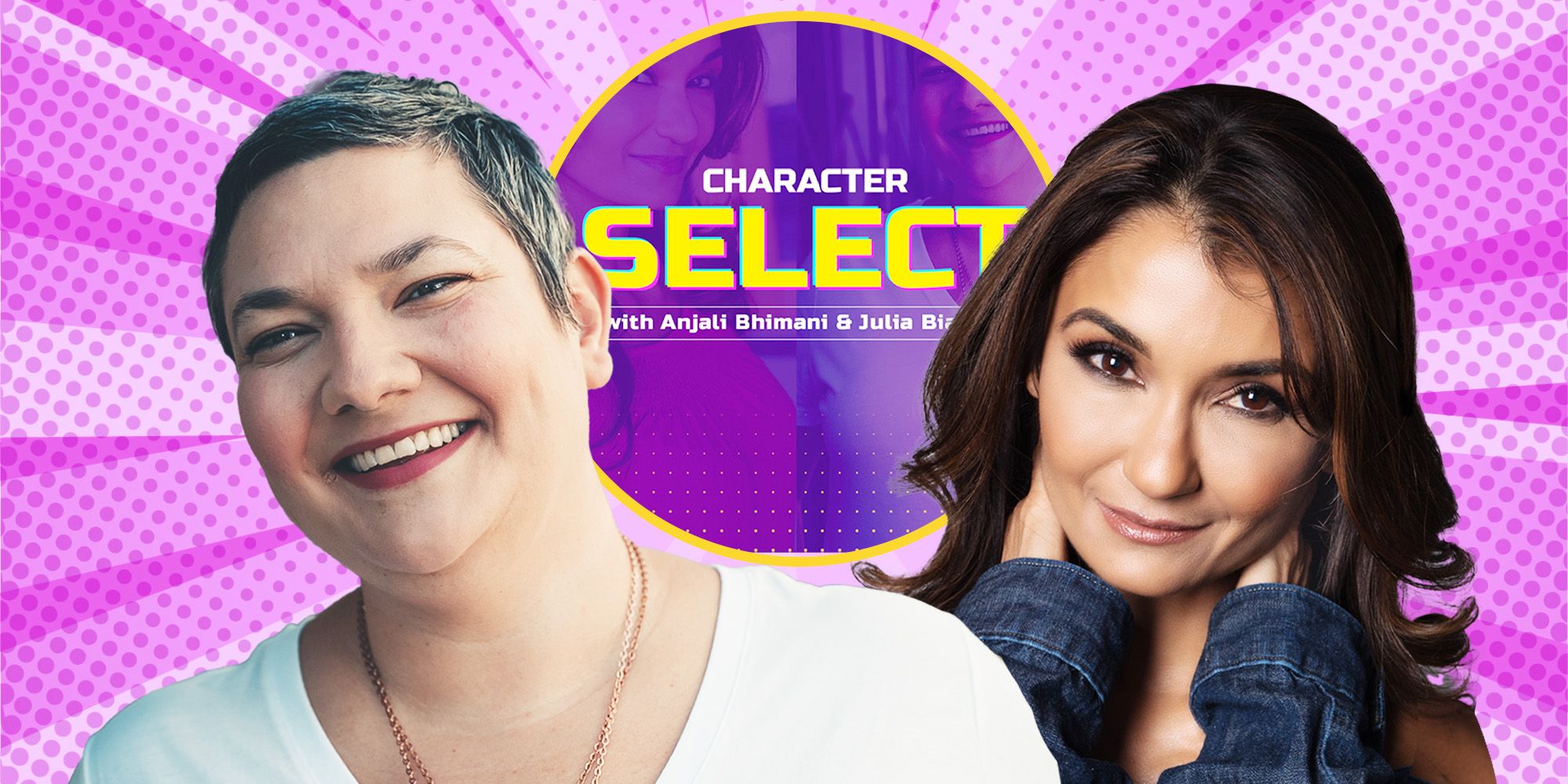
Character Select's Hosts On Casting & Playing Iconic Roles: "Games Don't Need Stars"
Summary The Character Select podcast highlights video game creation from various industry perspectives and features notable guests.
Anjali Bhimani and Julia Bianco started the podcast after seeing diverse perspectives on the selection of BAFTA nominees.
The duo offers insights into game casting challenges, best fit roles, and the complexity of performances in games through experience and expertise.
The Character Select podcast is a new show that showcases the video game creation process from the perspective of different roles in the industry. The series is hosted by two women who have extensive experience in gaming: casting director Julia Bianco, who's cast for games like The Legend of Zelda: Tears of the Kingdom, and actress Anjali Bhimani, known for roles like Symmetra in the Overwatch series and Aunt Ruby in the Ms. Marvel Disney+ series. Since it began earlier this year, the podcast has featured guests like Mass Effect's Jennifer Hale and Matthew Mercer of Critical Role.
The podcast stems from a meeting Bhimani and Bianco were both a part of to help determine BAFTA's video game nominees. After being floored by the selection of titles and different perspectives brought to the table, the duo decided to create a series highlighting the immense effort that goes into creating a game. Each episode of Character Select features industry veterans spanning across voice actors, composers, writers, and other creatives to talk about memorable video game performances and behind-the-scenes secrets.
Screen Rant interviewed Bhimani and Bianco to discuss the new podcast, the evolution of game casting, and the most memorable video game performances.
An Introduction To Character Select
Drawing Inspiration From The Gaming Community
Close
Screen Rant: First, I would love to hear just a little bit about what made you guys feel like now is good timing for a podcast like yours, and the biggest takeaways you hope players have from the podcast, in terms of what goes into games?
Anjali Bhimani: I kind of want to leave the timing to Julia for this one. I'm going to leave it to you. Julia Bianco: I think what's interesting about what we're doing is that we definitely said, "No one needs another podcast, except this is a perspective that no one's actually bringing to light right now." And we felt like after hearing so many people have so much reverence and love and passion for these characters, that it was only right for us to put some kind of highlight on some of the people that make these things happen. And especially I think, too, because there is a lot of misunderstanding of what goes into a video game and what goes into making a game, especially when it comes to unions and different countries and different ways of doing things in different places, payment structures. It's all very different from, let's say, Hollywood, and there's a lot that goes into it. And so just being able to shine a light on how many different people, how many different stages, where things might get caught up, why decisions are made a certain way, and just kind of highlighting all of the different people. So timing-wise, it is at least a little bit evergreen. Nothing we're really talking about is so timely that it can't be consumed in a year or two. So that's also kind of part of what we thought was really cool about it is we can put this out there and it can still live and be useful in the future. Anjali Bhimani: I'm going to just piggyback on that to answer the second part of your question. One of the things that we found so special, like she said, the conversations that are had behind the scenes among developers and among people who are creating games. So many of them - including one of the conversations that we had with a large group at BAFTA that really inspired us to bring these conversations to light - they're so reverent and they are also so full of perspectives that are completely different based on people's expertise. Whether it is someone who is working with the sound design of a game or someone in the narrative direction or the casting director like Julia, there's so much that goes into a performance that people don't necessarily clock, whether they're players or even people who are performing in the games. A lot of times they just don't realize - and I will say a lot of times, I just didn't realize - how many people and how many different parts there were. And so largely, what we want players and game creators to walk away with is a broader appreciation and a deeper appreciation for everything that goes into performances, and an understanding of so many of the roles behind the scenes that so many people don't know even exist. The artistry that goes in behind the scenes to game development is absolutely extraordinary and is absolutely vital in the creation of these characters and in the realization of these performances that have touched us so much. Plus, one side thing that we sort of didn't clock we were going to get to enjoy, but now we have discovered that we get to enjoy, is watching or hearing from the people whose performance we are talking about and hearing their joy at hearing other people talk about the intricacies of what made that special to them. Because it's a very special thing to hear that respect from your peers and know that, "Okay, cool. What I did worked and that's exactly what I was going for." It makes it very worthwhile. Julia Bianco: And I think it's an archive, because the people that are creating these performances aren't being asked the questions so there isn't a document of the questions that we're asking. And really, it's a very simple, "What about this performance?" or, "What went into it?" But even just the most recent episode with Michael Chu talking about the performance with Anjali, it's so unique to be able to have those two people in the same room talking about what is a character who is very cemented in the history of game characters. So I think it's also just really cool to have an archive of these conversations.
Yeah, definitely. And you've already had a handful of really cool guests since the podcast started. What have been the most surprising things that you've learned so far in those conversations?
Anjali Bhimani: Oh, most surprising things. I mean, it was definitely a surprise to both of us that Matthew Mercer started playing video games with his grandmother. That's a delightful surprise, and also, it tracks perfectly in terms of his journey. It just makes such perfect sense that Grandma Mercer, I don't know if it was that side of his family, but that that's the joy that came into it. I think for a lot of our guests, it's been surprising to me, also, the trajectory of their careers. Because very few of them actually started doing the thing that they are now doing, they kind of just ended up there up there, which made me feel great because that's kind of what happened with me as well, and with Julia, I mean, Julia, you always knew that you wanted to go into games, but this specific situation that you are in now is a product of your journey. Julia Bianco: The journeys are definitely the most surprising part. We have a future episode that has the discussion of a [with emphasis] journey with a composer.
Oh, well I know who it is now.
Julia Bianco: [Laughs] In real time, I am hearing his trajectory and going, "Oh my gosh. I can't believe that's where the connection happened in your life and that's how you got to doing these things." hat part has been really, really, really cool to hear how they got there and sharing those journeys along with the performances. Anjali Bhimani: Also, I don't think we have to be secretive about who it is because they're in the trailer. Julia Bianco: Oh, yeah. Anjali Bhimani: So yes, you know who it is, it's Austin Wintory. But it's so cool, again, hearing that someone who seems like they are so specifically focused on this and so genius at what they do could have gotten there in such a different way than we expected. I think it's a huge testament to anyone out there in the world to just follow the joy. We don't live in a world where you have to pick one lane and stick with it for the rest of your life - gone are those days. And game development is so relatively new, in terms of career choices, that you can almost mold your own career, mold your own path, which is very, very exciting. Julia Bianco: And people are really sharing and they're willing to help. Whereas in some other industries, I think it's a little bit less. Anjali Bhimani: Yeah. It's really cool and heartwarming and affirming how much - because I know it's this way in the voiceover industry, but also just in the game development industry more broadly. While, obviously, companies are very secretive as they are developing the games, people are very excited to share the process once it's out because it's their baby and they've been working on it for so long. And like she said, people have been very generous and open.
Casting A Video Game Role
How Casting Directors Find The Perfect Fit
And Julia, your career has spanned so many really big games like Spider-Man, and Legend of Zelda. I'm curious the kind of unique challenges that come with casting actors for these characters that are so well-known by fandoms already, where everyone is sort of painting their own picture in their head of what that character is?
Julia Bianco: I try not to let that get in my way at all. I will try kind of hard not to have preconceived "who this type of actor should be," especially even as it comes to ethnicity or gender. I really like pushing boundaries and I know that as a casting director, I have to give my clients options. And a lot of times, more than one actor could play the role, and giving them 10 to 12 really solid different options allows them to figure out who meets the challenges, exceeds the challenges at hand. Some of those challenges are, if it is a performance capture role, location and availability because they do want to step into TV actors or maybe some more well-known actors. But then once you start filming schedules and people aren't necessarily in LA, it's not so easy to design entire performance capture shoots around one person's schedule unless they're the main person. So things like that. Technology is definitely not a challenge in finding people, but it's definitely on the actor side something that - learning how to self-tape for video games specifically so that you can get animators to see what they need to see in your audition and that type of stuff. Those are definitely some of the areas where there's a little bit of getting over hurdles and whatnot, but it's very similar to casting for other media. And I just try to not let any kind of preconceived things cloud me and give them lots of different options. And ultimately, what people don't necessarily realize is that casting doesn't make the decision. We just provide options and then the clients end up having to take those decisions on themselves. And a company like Insomniac and Spider-Man, they're going to have a lot of considerations when they're making those big calls that are well above my pay grade. So as long as I provide a lot of great options, then they can make those harder decisions.
And I'm curious, sort of on the flip side of that, if there are any games where the actors just sort of fell into place extremely easily because they were just perfect for their role for whatever reason.
Julia Bianco: Yes, that happens. It happens kind of often. I like to talk about Wylde Flowers, which is -
I love that game.
Julia Bianco: Oh, yay! I love that you love that game. It's so amazing to have a client and a company who's willing to put in the money to hire amazing talent and actually do AAA audio for a Switch game, if you will, or a mobile game. And I love that game. And Erika Ishii plays the butcher in that game and when they sent me the sides, it's the one and only time where I basically just said, "You have to cast Erika. You don't really have a choice here. The background matches. The image matches. Everything here matches. Let's make sure that we can get the read out of her that you want. But that said, this is Erika's role." And so that is one that I always kind of think of because it was just so naturally them. stray gods standout experience
Anjali, I know this is going to be a fairly daunting question, but I'm curious what some of your most memorable video game roles have been over the years, and also if there's any bucket list franchise that you would love to work on that you haven't gotten a chance to yet?
Anjali Bhimani: Oh, wow. You're right. It's a broad one. But I will say I think the one that has really stuck with me the most in recent years - I mean, obviously Symmetra and Rampart from Overwatch and Apex Legends are very well known and those are very dear to my heart. But Medusa in Stray Gods, which came out last year, is hands down one of my just favorite roles, period, that I've gotten to play, not just in games, for so many reasons. One is how wide open the creative team was to the interpretation of this character, which is such a testament to the artistry and the collaborative force that is Austin Wintory, David Gaider and Troy Baker, who was directing. And the fact that they were so wide open to have this conversation about, "What does she sound like? How do we manifest the different parts of her personality?" At the time, we did not have any music. Well, we had the track that I listened to. My recording session from Medusa was the first session that they had. So really, there was no system yet, and the music track that we were working with was a dude sort of singing my part and plunking it out on the piano. And so knowing that there was kind of nothing and it was being built up from there was both freeing and scary, but ultimately we'll lean more towards freeing. And so their excitement when I offered up one of the options that I offered up - the whole game feels, to me, like a love letter to these characters and to these stories and to these myths. And every single person who worked on it is such a superstar so it's just so dear to my heart. And I love that character. I just love her. I love that we get to see the duality of this supposed monster, depending on what choices you make in the game, whether you get to see them or not. I love that very, very much. And also, it combines three of my favorite things in the world: mythology, video games, and musical theater, so like, duh. Julia Bianco: Nerd heaven. Anjali Bhimani: Yep, big nerd. Proud of it.
It's funny, I have a question about your Medusa role, actually. Because that game, the whole thing is there's the split song paths, and I've seen that document where it shows, "These are the possible threads." I'm so curious, from a recording perspective, how that worked for you, shifting between something that's angrier and something that's a little more quiet and sad. What is that process like?
Anjali Bhimani: Honestly, in many ways, it was very similar to working on a "normal" video game because most of the time when we're recording a game, we're getting a spreadsheet of all these different lines with some context of what's going on there, and the director is telling us or whatever devs are on the call are telling us what's going on there. And then you give a few takes and then either they pick one of those, or you do it again with a little direction. So you're jumping from emotion to emotion very, very rapidly already. The difference is when we were doing it musically - and God bless Austin for being able to even figure out a way that sheet music would work for that - you would basically be jumping from, "Okay, cool. You're going to do these four measures. Now you're going to jump to these four measures down here. Now you're going to jump to the next page," or, "We're going to do this and now we're going to jump to this," or, "This connects with this, but it also connects with this so let's just hear that back and see how it flows into it." So yeah, it hearkened back to working on musicals, which is where I first started my career is in theater, and the process of just developing them and rewriting songs and figuring out what the voice of the character was not just in terms of their actual physical voice, but in terms of how they were expressing themselves. It was a very, very fun process.
Bucket Lists & Best Performances
The Hosts' Recent Favorites & Dream Franchise Roles
And is there a bucket list franchise you'd love to work on?
Anjali Bhimani: Oh, God, so many. I genuinely don't know where to begin. I have such a love for the performances in The Last of Us that if they were making a Last of Us 3 or something like that, I would love to be a part of that. Just to be a part of that would be really, really special, especially after the events of The Last of Us 2. I want to know what happens so badly. I want to be a part of the solution. Or not, who knows? Play an evil character, totally fine with that too. So that's one of them. I think, honestly, my bucket list character, I don't know what world they would fit in yet because I haven't met them yet. And what I do love about video games is literally there is no limit. Doesn't have to look like me, doesn't have to be as tall as I am, doesn't have to be my age. It could be absolutely anything. It could be a dragon, it could be a person, it could be anything - too many choices.
And if you guys ever got the chance to present the very first Oscar for a video game role, what actor and for what performance would you like to present it to?
Anjali Bhimani: Don't do that to me. I don't think we can do it. I mean, here's the thing: much like the Oscars, when you actually watch all the nominees - this is the origin story of Character Select, is that we were on a committee to take the long list for the BAFTA Games Awards for Best Supporting Performance. We were taking the long list and reducing it down to the actual list of nominees that everybody would see. It is impossible to pick one. Every single one has such tremendous virtues and such tremendous differences. It's impossible to compare them. I can talk about things that pop into my mind as extraordinary performances, but there's no way I could pick one. My brain would burst. Julia Bianco: Yeah, I couldn't pick one, but we did talk about potentially picking our own for if we were interviewing ourselves on Character Select. And the performance that I always go back to is from Hellblade and the main woman in that. Facial capture technology was really just coming into its prime. It's a very emotional game with a lot of mental health topics and her performance is remarkable, especially given the topic and the technology and all the things that go in. So I would love to dissect that performance. But I think, of course, it would be impossible to choose. I think if we put it in the context of each year, it might be a little bit easier. Anjali Bhimani: Yeah, that might easier to do. For all time, it's not possible. And every time we have a conversation about this, mine change up a little. I mean, one performance that consistently pops into my head is Laura Bailey in The Last of Us 2, which is just like, come on. But also just recently, Kraven in Spider-Man 2. Julia Bianco: So good. Jim Pirri. Anjali Bhimani: Jim Pirri is so terrifying and sexy and powerful and it's just - Julia Bianco: Agreed. Anjali Bhimani: He's the sweetest guy ever in real life. And then you see him in this game and you're like, "Oh, that man is going to tear my head off with one look." Julia Bianco: So good. Anjali Bhimani: So yeah, really extraordinary. That was a very extraordinary one recently.
The Future Of Performance & The Podcast
Casting Trends & Exciting Upcoming Guests
And a big trend over the past decade or so - and Anjali, you're a great example of this - is actors having a more sort of blended resume between working in video games, but also working in television and film and stage. What do you both think has contributed to this shift and where do you see things trending in the future?
Anjali Bhimani: I think one of the most important things, necessity being the mother of invention, is that everybody has needed to become good at so many different things to be able to continue having a career in this business. There are very, very, very few people who can just do one thing and coast on that these days. For me, it's been also just a factor of now we can. We don't have to pick one lane. They're all related. They're all forms of storytelling in which you have to be a good actor at the core. But as technology also has become more and more extraordinary, the need to do so many different things, the need to express yourself in so many different ways has just become more and more prevalent, I think. Julia Bianco: Yeah, and I think at the same time, there's actors needing to diversify their toolbox. There wasn't even a need for casting in video games before 10 years ago because the voice directors were doing all the casting because there weren't that many roles. But as the roles increased and then the needs for the roles increased, not just voiceover, but performance capture or facial capture or celebrities or whatever the extra might be, they started looking to more traditional casting methods for those. They would go to casting directors outside of games. They would also then go to all the agents that repped TV actors and film actors and things like that. I think the awareness that it is a path also just became more clear to the people representing the actors and the willingness. Anjali Bhimani: Yeah. That's a huge thing. For most of my voiceover and gaming career, I've only had one rep, my manager, who is my ride or die, who really understood that everything is everything and understood that performing in a unitard with sensors on yourself and a camera in front of your face and cameras are all around the room was as difficult, if not more difficult, than any other medium that I was working in and as vital to the course of a career. And this is also, I think, one of the goals that we have with this podcast is people are finally really starting to respect the artistry that has to go into creating these games. It's no longer like, "Oh, this is something that movie actors do on the side." It is an art form in and of itself. And as an actor, having your representatives understand that and understand what goes into it is really, really important. Julia Bianco: And respected, because there's a lot of fighting for respect in games when facing Hollywood agents or Hollywood contracts and whatnot. It's just a little bit of a different beast and so there's a lot of covering our own path and a lot of explaining. It's hard to give top billing when the billing doesn't exist. Anjali Bhimani: My answer to that is studios, please don't only look for stars, because you have stars that you have never heard of and they are available to you. Julia Bianco: Absolutely, 1000%. I think that it shows a lot of games don't need stars to do well and I think that that's been proven. And then it seems like a lot of the bigger games kind of just sprinkle them in for worldwide attention, which that's okay too. Anjali Bhimani: Yeah, it is fun. Look, I love stunt casting just like the rest of them. When I saw that trailer for Cyberpunk and Keanu leaned down I lost my s*** like everybody else. I lost it. And then I was also like, "Hey, we're twinsies. Symmetra has a mechanical arm too."
I know Austin is going to be a guest, is there anyone else exciting that you can tease who's coming up?
Anjali Bhimani: My God, everybody is exciting. That's the best part. Julia Bianco: I think we haven't announced, officially, Jay-Ann Lopez. Anjali Bhimani: That's right, we have not officially announced her. Jay-Ann Lopez, Black Girl Gamers. And that conversation is - Julia Bianco: We could do a whole podcast, just the three of us. Anjali Bhimani: Yeah. Seriously. And talk about a multi-hyphenate and a person who carved their own path. Julia Bianco: No kidding. Anjali Bhimani: I think that's the first episode where I might've cried because it's just - yeah, that's a good one. That one's coming. Julia Bianco: When the first episode came out, I was telling Anj and the others that one of the coolest things was seeing it come up in the charts next to all these podcasts that were male-led. To be talking about a topic that is not a specifically feminine topic, but being led by two industry titans, if you will, is - Anjali Bhimani: Thank you. That makes me a tiny titan. I appreciate it. Julia Bianco: A tiny titan. Yes, the tiniest titan. [Laughs] Anjali Bhimani: [Laughs] That feels like a game right there, The Tiniest Titan. Julia Bianco: But yeah, I think that that's also been really incredible, because I've spent a lot of time on the side of trying to get more women and underrepresented people into the game industry. But it is very cool to be able to do something that is not focused on necessarily that, but already doing it without trying just because of who we are. Anjali Bhimani: It's pretty fun, and I'm very excited too. I know she's already out there, but I'm excited for people to have the Erika Ishii episode and the Tom Keegan one because we go so deep into performances. Everybody's just freaking amazing Julia Bianco: And lots more to be recorded. Anjali Bhimani: Yes, yes. We've got many on the books. Julia Bianco: And we want suggestions too.




COMMENTS