Fallout's Battle Of Anchorage Was More Significant Than The Show Suggests
Spoilers are ahead for Fallout season 1's ending.
Summary Cooper Howard's journey from war hero to Hollywood actor to Vault-Tec spokesperson is a central focus of Fallout season 1.
The Battle of Anchorage, a pivotal event in Fallout lore, plays a significant role in shaping Cooper Howard's backstory.
With the revelation that Vault-Tec caused the nuclear exchange, Fallout season 2 may explore the tensions that led to the world-altering moment in 2077.
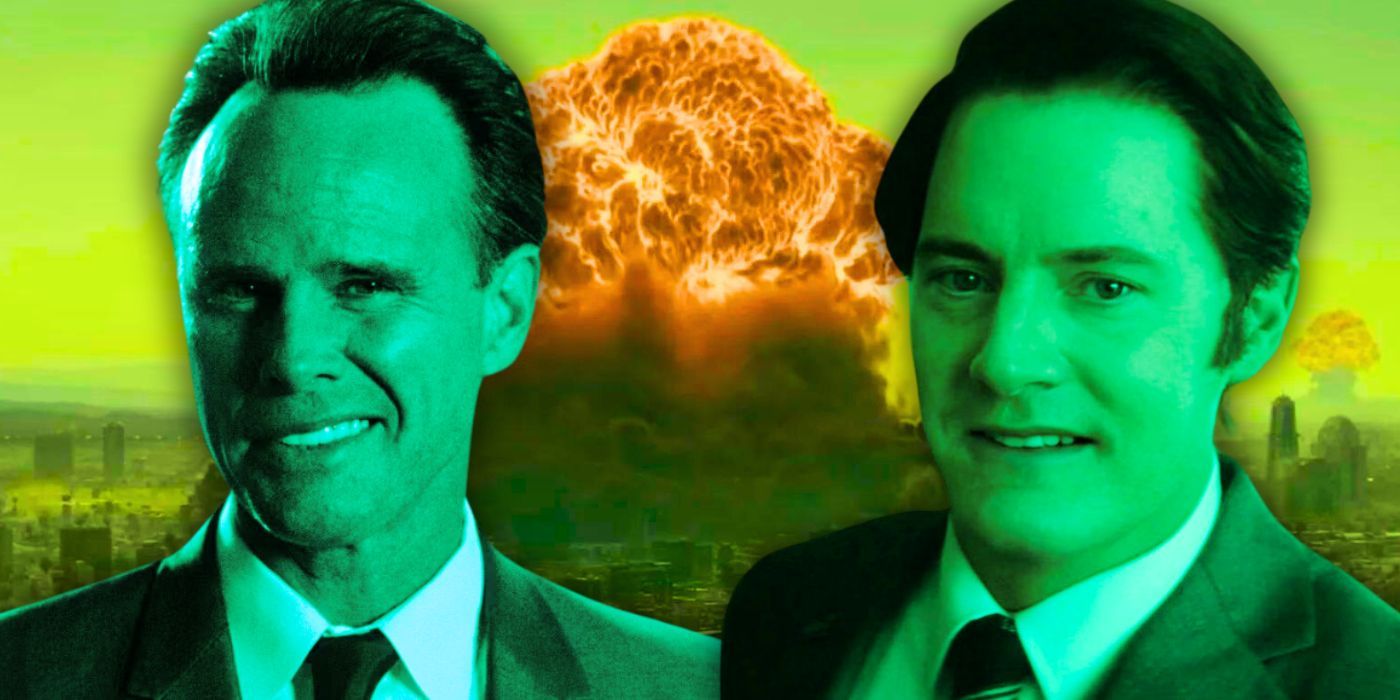
Over the course of its 8-episode run, Fallout season 1 addresses a lot of franchise lore, but it isn't able to cover everything in the extensive Fallout timeline. Set 219 years after the bombs drop on the US, the Amazon Prime Video TV show captures the world of Fallout at a unique moment — a moment that follows every pre-existing mainline game. Vault Dweller Lucy MacLean (Ella Purnell) and Brotherhood of Steel acolyte Maximus (Aaron Moten) only know the US as a Wasteland, but Walton Goggin's Ghoul keeps one foot firmly in the pre-nuclear exchange past.
While talking to his wife and Vault-Tec executive Barb, Cooper mentions fighting in a war...
Once known as Cooper Howard, prolonged exposure to radiation has ravaged The Ghoul's skin, turning the gunslinger into a mutant version of his former self — at least on the surface. Internally, The Ghoul is still a struggling Cooper. Before Vault-Tec's bombs dropped in 2077, Cooper was a famous Hollywood actor who became the trusty spokesperson for Vault-Tec at his wife's encouragement. While talking to his wife and Vault-Tec executive Barb (Frances Turner), Cooper mentions fighting in a war, but Fallout doesn't delve into the Great War or the Battle of Anchorage beyond a few throwaway lines.
Your browser does not support the video tag.
Cooper Howard Fought In Fallout's Battle Of Anchorage
The All-American Hollywood Actor Also Served His Country In The Great War
Close
The story of Fallout's Cooper Howard is a long one, especially since he has lived for several centuries. Before the first bombs strike Los Angeles in 2077, Cooper tells his daughter Janey (Teagan Meredith) about a trick he learned while serving as a US Marine in the Great War. If an atomic bomb's mushroom cloud is smaller than a thumbs up, there's still time to run. Not only does this small moment establish Cooper Howard's link to the now-iconic Vault Boy mascot gesture, but it's the first time viewers learn something about his past as a soldier.
...there was no saving the day anymore — not even in Hollywood.
After fighting in the Great War, Cooper became a Hollywood movie star, leading in-universe flicks like A Man and His Dog and The Man from Deadhorse. When nuclear-exchange paranoia began running rampant in Hollywood, the trajectory of Cooper's film career shifted. Execs wanted his often-heroic characters to die; there was no saving the day anymore. Eventually, Cooper agreed to be Vault-Tec's celebrity spokesperson. While arguing with Barb about the Vaults and Vault-Tec's moral standing, the couple discuss the trauma they're still grappling with as a result of Cooper's harrowing wartime service on the front lines.
Related Fallout Changes Game Canon: What The New Shandy Sands Means Going Forward Canonically, the town of Shady Sands is best known for giving rise to the New California Republic faction, but the Fallout show changes some details.
The Battle Of Anchorage's History In The Fallout Games Explained
The Conflict In Alaska Began A Decade Before Fallout's Nuclear Exchange
Close
In the present, Cooper Howard explores what happened to his family and, although he doesn't get very far in solving that mystery, it's clear that Barb and Janey are keeping him going. The situation parallels his Marine days during the Battle of Anchorage. Also referred to as the Liberation of Anchorage, the conflict saw the United States battling China after the latter invaded Alaska in the winter of 2066 — 11 years before Vault-Tec dropped its nuclear bombs on the US. As diplomatic efforts worsened between the two nations, both sides feared an invasion from across the Bering Strait.
...the US reclaimed the Trans-Alaska Pipeline and liberated Anchorage in January 2077.
When Chinese forces finally moved into Alaska to siege the state's oil pipelines and reserve, the act of aggression officially began Fallout's Chinese-American War. The Battle of Anchorage didn't really turn in the US' favor until the Army deployed Power Armor soldiers. Eventually, the US reclaimed the Trans-Alaska Pipeline and liberated Anchorage in January 2077 after years of harrowing trench warfare. During the fight for Alaska, the US attempted to annex pockets of Canada, causing skirmishes between the former allies. Of course, that ended when the Great War — a global thermonuclear exchange — unfolded in October 2077.
Related Fallout: Breaking Down Each Character's Special Build In The TV Show The characters of the Fallout TV show were recently given official SPECIAL stats, and while some of them fit perfectly, others are more of a stretch.
How The US's Conflict With China Could Set Up Fallout Season 2 & Beyond
Fallout Should Continue To Draw On Its Past In Future Episodes
Close
Even though the Fallout show hasn't explicitly mentioned the war between the US and China, it's a canon story, which means the Battle of Anchorage happened. It's possible Fallout remained vague on the details of the fictional conflict because it would have been too much information for franchise newcomers to unpack at once. Still, with Fallout season 1's ending revealing that Vault-Tec actually dropped the first bombs and caused the world-ending nuclear exchange, the past will catch up with the present in Fallout season 2, especially since it's not clear what Fallout's world looks like outside the US.
All 8 episodes of Fallout season 1 are now streaming on Amazon Prime Video.




COMMENTS