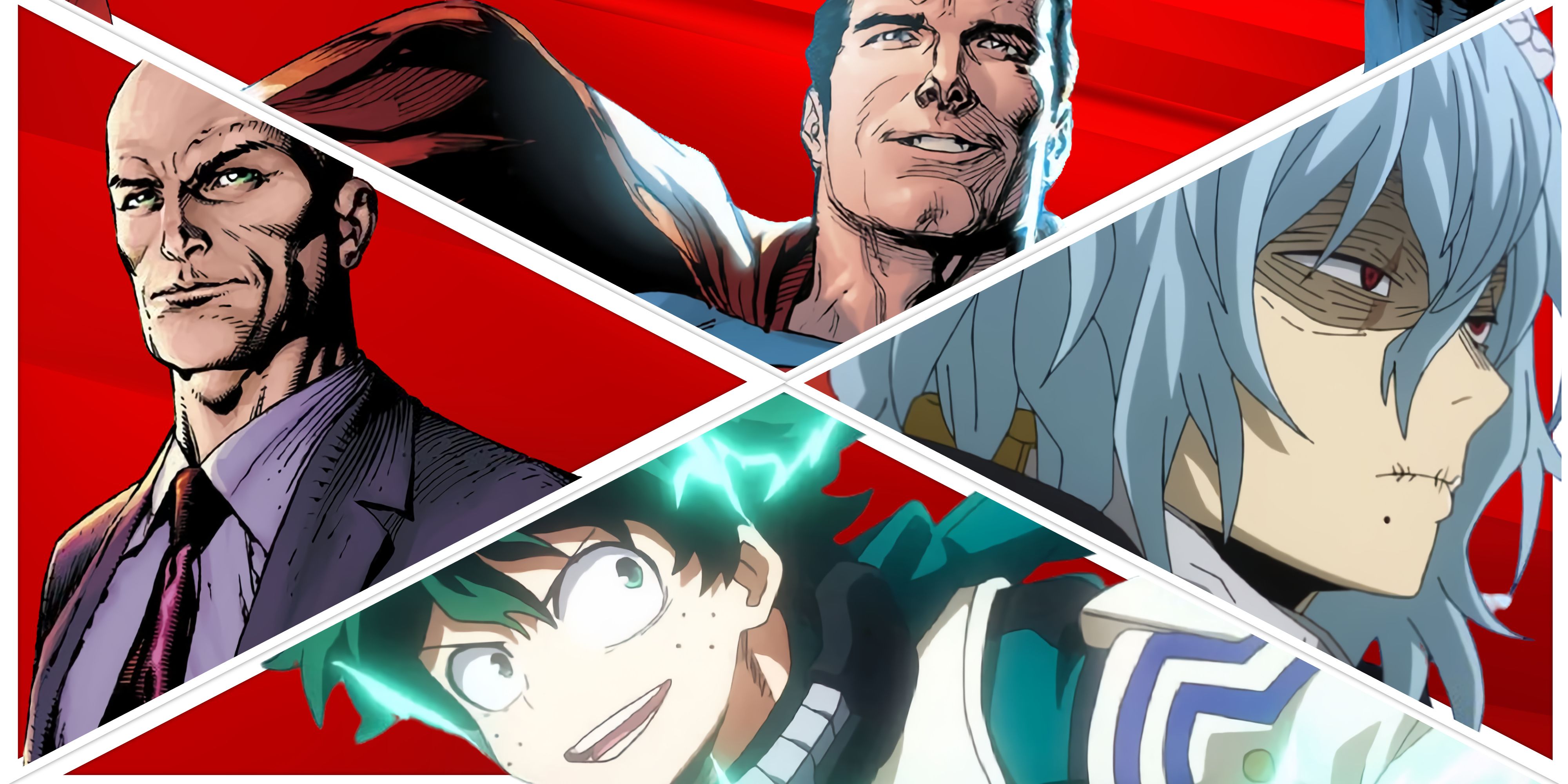
My Hero Academia Has One HUGE Advantage Over American Superhero Stories
Summary Unique to manga, My Hero Academia's linear plot ensures impactful decisions without retcons or miraculous resurrections.
Heroes and villains in My Hero Academia face definitive outcomes - no redemption middle ground like in American comics.
Deku's selfless determination in My Hero Academia sets him apart as a true hero, making his choices matter more to the story.
My Hero Academia, the acclaimed manga series created by Kohei Horikoshi, follows the story of Deku as he becomes the world’s greatest Hero. Of course, the series draws inspiration from American superhero comics, of which Horikoshi is a great fan. While the series has had side stories and spin-offs, it has never diverged from its original idea. From the start of Izuku’s training with All Might to the Final War arc, Deku’s battle against the forces of evil has been the central focus of the story.
While this may seem restrictive at times, it is an incredible advantage that Horikoshi’s work has over its American counterparts. Once an event occurs in the manga, it can rarely outdone, preventing sudden retcons or miraculous resurrections. This is better exemplified by the villains that the protagonist has faced as the story has progressed. Unlike the antagonists in American stories, who tend to change sides when the story requires it, My Hero Academia’s villains do not have that privilege.
Related How My Hero Academia Was Inspired By Marvel and Western Comics There's no question My Hero Academia is inspired by Western comics, but the connection to Spider-Man and other heroes runs deep.
My Hero Academia’s Villains Have Only One Chance
My Hero Academia was created by Kohei Horikoshi, anime adaptation produced by Studio Bones
For decades, American superhero stories have been known for not having a definitive storyline. This gives incredible flexibility to the writers, who are capable of working with intriguing and innovative concepts while not truly affecting the universe of the series. Due to this, villains in these types of works can become what the plot of each iteration needs them to be. They can become heroes for a short while and return to their evil ways a few moments later. This is not a problem and is part of what makes American superhero stories so beloved across the world.
The world created by Horikoshi does not follow these same rules. A villain can either be redeemed by the Heroes or continue their evil ways, there is no middle ground. For example, after his encounter with Deku during chapters 176-180, the villain known as Gentle Criminal chose to be rehabilitated and becomes a better man. Muscular, on the other hand, remained the battle-hungry villain that Izuku knew, with Izuku defeating him for good in chapters 307 and 308. This gives additional weight to the decisions made by villains in this universe.
Deku Knows The Importance Of His Choices
His determination to redeem Shigaraki proves that he knows there is no running back
Close
Tomura Shigaraki, one of the main antagonists of the series, has been described by most characters as irredeemable. The pain and destruction he has caused during his time as All For One’s apprentice will never be forgotten or forgiven. During chapter 305, even his grandmother, Nana Shimura, advised Deku against letting the young villain live, as he had become too dangerous. Yet, Deku decided to ignore everyone who claimed Shigaraki was beyond salvation and still tried to save Tenko. This decision served two important purposes for the story.
The first is to show how heroic and selfless Izuku is, presenting him as the embodiment of what a true Hero should be. The second is to acknowledge that Deku knows Shigaraki will not have a second chance at redeeming himself after being defeated. If Shigaraki refuses to live as a changed man, Deku will be forced to end his life while he is still a villain. There will be no do-overs, Midoriya will either keep Shigaraki alive as a redeemed man or he will kill him as a villain.
This difference between the two genres is what allows My Hero Academia to make the decisions of its characters matter more to the story.
If My Hero Academia was a traditional American superhero story, this would not be such a difficult decision. Deku could either kill or help Shigaraki become a hero, but the decision would most likely be undone in the future to have Midoriya fight his greatest enemy once again. This has occurred several times to heroes like Spider-Man, who have helped villains be redeemed only to have them turn evil again a few issues down the line. While this is a completely valid method of storytelling, it would invalidate some of Deku’s efforts to save Tenko.
Your browser does not support the video tag.
One Story Vs Multiple Continuities
Most manga are not rebooted like it often happens with American comics
When a manga’s story is finished, it is rare for it to ever be rewritten. The possibility of a sequel being created is still there, and it has occurred with many popular series in the past. Beloved stories like Dragon Ball or Naruto have been continued years after their endings to keep expanding their universes. Nonetheless, this is done with the knowledge that the events of the prequel cannot be changed, forcing the continuation to adhere to the rules set that were previously established.
American comics do not work under the same formula. Comic characters are created to last for decades, bringing joy to countless generations. It is rare for a popular American superhero to be completely retired, with most having been around since the dawn of the genre. This need for new stories is what causes comics to seldom follow a single storyline. For example, when Superman died while fighting Doomsday, the writers needed to bring him back to continue his adventures. His demise was still a shocking event, but it could not be his ending.
Close
This difference between the two genres is what allows My Hero Academia to make the decisions of its characters matter more to the story. Still, this can also play against Horikoshi’s story, as fans have seen several times in the past. Several decisions made by the manga creator have not sat right well with audiences before, like Bakugo’s miraculous recovery after being on the brink of death. Having a linear plot can help the events of the series be more impactful, but it can also be disastrous when readers do not enjoy what is happening.
Both mediums have their strengths and weaknesses when it comes to telling stories. Horikoshi is aware of this, which is why he did an amazing job focusing on the advantages of manga. He made sure to create a story where its characters' decisions would have a great impact on the development of the series. Mangas like My Hero Academia and American comics have fans all over the world celebrating their unique ways of narrating epic adventures. These mediums should be equally appreciated, as they are both beloved aspects of modern culture.
All chapters of the My Hero Academia are available to be read on Manga Plus.
READ ON MANGAPLUS




COMMENTS