This $200 Million Best Picture Nominee From 21 Years Ago Is How Ridley Scott Should've Made Napoleon
Summary Napoleon's scope was too broad, resulting in a lack of depth in character development and storytelling.
Master and Commander's focused approach on a specific period revealed deeper truths about the Napoleonic era.
Despite critical acclaim, both Napoleon and Master and Commander failed to resonate with a global audience financially.
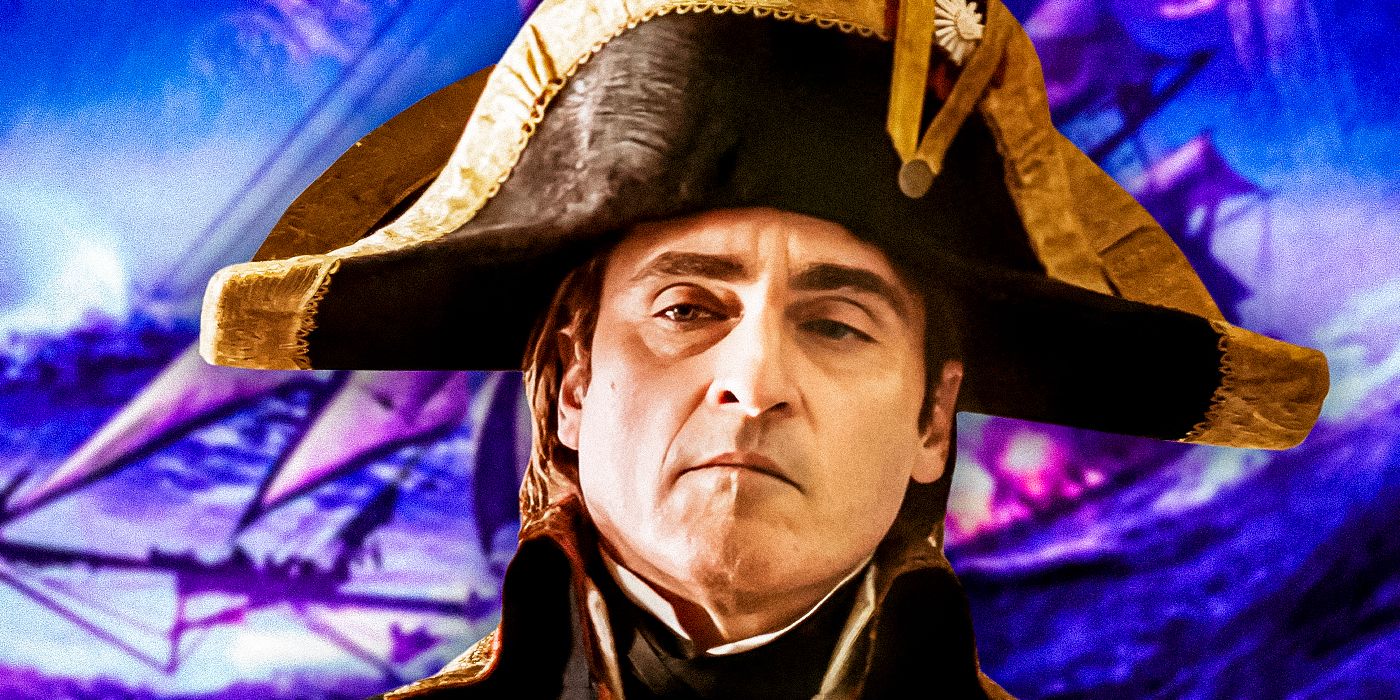
Ridley Scott's Napoleon was an ambitious but flawed attempt to examine the legendary French emperor, but one 21-year-old movie reveals how the 2023 film could have better brought Bonaparte's story to life. Made on an estimated budget of between $130-200 million, Napoleon made just $220 million at the global box office. Although a streaming release on Apple TV+ mitigated some of the damage, the film nevertheless failed to resonate with theatrical audiences. However, as one earlier project proves, there was a way for it to find greater critical success.
Although Napoleon received mixed reviews from critics, there is no doubting the film's scale or the sincerity of its effort. The narrative encompasses a huge swathe of Bonaparte's life, beginning with the execution of Marie Antoinette in 1793 and running all the way up until his death in St Helena 28 years later. This scope was part of the problem, as Napoleon's incredible achievements were diminished by being crammed into one 157-minute movie. However, while Napoleon proves that fitting three decades into one movie is a recipe for failure, another film shows that taking a more concentrated approach can produce great results.
Related Napoleon Ending Explained Ridley Scott's Napoleon highlights the titular subject's life. From military campaigns to personal tidbits, we break down the biopic's ending.
Master And Commander Proved Napoleon's Approach Was All Wrong
Close
Released in 2003, Peter Weir's Master and Commander: The Far Side of the World is one of the best movies ever made about the Napoleonic era. Based on English author Patrick O'Brian's celebrated novels, the film follows the crew of HMS Surprise as they attempt to track and apprehend the French ship Acheron in a maritime ballet that uses the ocean as its dancefloor. Starring Russell Crowe and Paul Bettany as Captain Jack Aubrey and Stephen Maturin, the film delivers explosive naval combat while providing an intimate look at life in the Royal Navy during the early 19th Century.
On one level, a biopic about Napoleon and a fictional story of naval combat are two very different projects. However, given the movie's shared setting, Master and Commander provides some valuable lessons about how to tell a story set during this era – including one about Napoleon himself. Compared to Scott's movie, Master and Commander is a much more focused project – authentically bringing to life the crew of a single English vessel amidst a global conflict. And yet, it's this focus that helps the movie draw its characters incredibly vividly and reveal more about the era than Napoleon manages in its 28-year sweep.
Master and Commander proves that, instead of trying to tell Napoleon's story in a single movie, the best way to reveal deep truths about his character and make him a believable protagonist is to concentrate on a specific period. Scott's film could have emulated Weir's movie and followed Napoleon's journey during the French Revolution, or delved into the siege of Toulon, or his legendary Russian campaign. Ironically, in trying to cover everything, the film failed to explain almost anything about his motives and nature. As Master and Commander proved, the Napoleonic era demands specificity instead of generality.
Master And Commander's Critical Success Proves How Great Napoleon Could Have Been
Although the film as a whole failed to provide a definitive account of Bonaparte's story, there were aspects of Napoleon that succeeded. As demonstrated by a trio of Academy Award nominations for Best Production Design, Best Costume Design, and Best Visual Effects, the film is full of vivid period details and is an undeniably immersive viewing experience. However, the fact that the film received such mixed reviews, even with the recognition that its design was exceptional, proves that the biggest problem with the movie was with its story, and the knock-on effect that had on characterization.
Rotten Tomatoes Critics Score Rotten Tomatoes Audience Score Napoleon 57% 59% Master and Commander 85% 80%
By contrast, Master and Commander's critical acclaim, combined with its equally immersive world-building, highlights that using specific stories to paint a broader picture of a particular period is a much better approach than rushing through three decades in two-and-a-half hours. Like Napoleon, Master and Commander was also nominated for Best Costume Design and Best Visual effects at the Academy Awards. The movie's additional nominations in eight further categories, including Best Picture, demonstrate that the Napoleonic era itself is no obstacle to critical success – it just requires a more limited scope.
Related Napoleon Cast & Character Guide: Everyone Joining Joaquin Phoenix In Ridley Scott's History Epic Ridley Scott's historical epic Napoleon will bring the story of the French emperor to life with a talented cast led by Joaquin Phoenix.
Master And Commander Continued Ridley Scott's Original Legacy
Perhaps what's most ironic about the relationship between Napoleon and Master and Commander is that Weir's movie very much followed in the footsteps of an earlier Ridley Scott historical hit. After winning Best Picture in 2000 with Gladiator, Scott helped rekindle interest in historical epics as a genre. As well as Master and Commander in 2003, this led to several other similar projects, such as Wolfgang Petersen's Troy, Ridley Scott's own Kingdom of Heaven, and Oliver Stone's Alexander. Although each of these movies has a different setting, they share certain hallmarks that establish a clear connection.
Each of these films was given a significant budget to more accurately bring its world to life. Just as in Gladiator, a specific story and timeframe was used to reveal a wider truth about the movie's setting, instead of trying to tell too wide-ranging a story over an unwieldy period. The exception to this was Alexander, which is widely regarded as one of the weakest of the early 2000s historical films and made many of the same mistakes as Napoleon. The fact that Scott had the example of not just Master and Commander but movies from his own catalog makes Napoleon feel like even more of a missed opportunity.
Master And Commander's Failure Proves The Sad Truth About Napoleon
Close
Master and Commander's critical success compared to Napoleon suggests that its narrative approach to the period was a better strategy. However, despite the acclaim, the fact that it too failed to make an impact at the box office suggests that, whatever story a Napoleonic movie tells, there may not be significant audience interest. Similarly to Napoleon, Master and Commander made around $200 million against an estimated $150 million budget – a financial failure, considering that most movies need to make around two-and-a-half times their budget to break even. Considering its accolades and critical acclaim, this performance is doubly disappointing.
Budget Box Office Napoleon $130-200M $220M Master and Commander $150M $200M
The Napoleonic Wars constitute one of the most consequential periods in Early Modern history. Beyond being a solely European concern, the events affected the entire globe and left their mark on international politics for centuries to come. However, the fact that the stories are often so centered on Europe may explain why movies like Napoleon and Master and Commander have failed to resonate with a global audience. Master and Commander may prove that there was a better way to tell Napoleon's story. Unfortunately, the film also suggests that almost any Napoleon movie was always likely to fail, given its setting.




COMMENTS