How Accurate Is Civil War? What It Gets Right & Wrong
Spoilers are ahead for Civil War (2024).
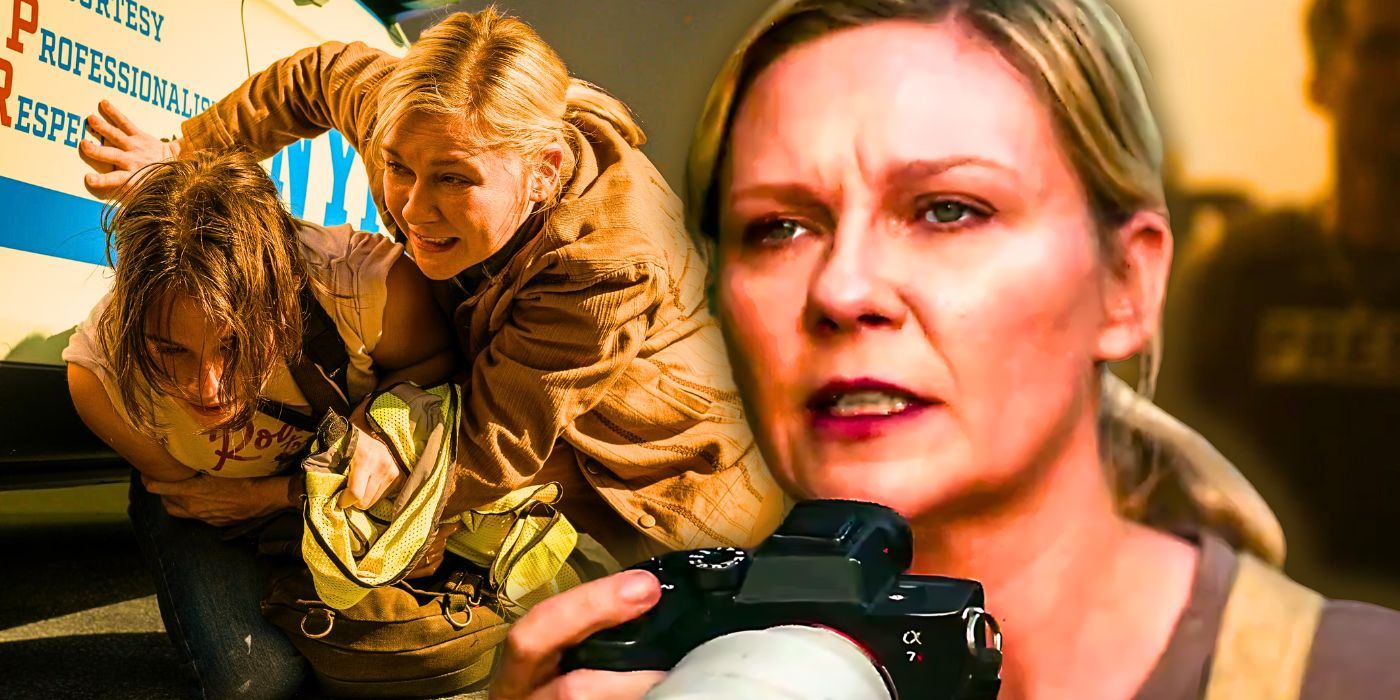
Although Alex Garland's Civil War didn't deliver the kind of world-building political backstory viewers had anticipated, the film does provide a searing portrait of photojournalists. In particular, it centers on those who travel to the front lines of conflicts to chronicle the horrors and intensity of war. Kirsten Dunst plays Civil War's Lee Smith, a renowned war photographer who sums up the aims of her job perfectly: every time she sent a picture home from a war-torn country, Lee believed "it was a warning." Since an authoritarian American government is fighting rebel factions, Lee's warnings didn't help.
[Civil War's Joel] hammers home the kind of addictive adrenaline rush war journalists can experience when covering the action up close.
Lee's colleague, Reuters writer Joel (Wagner Moura) hammers home the kind of addictive adrenaline rush war journalists can experience when covering the action up close. Meanwhile, Lee's character is a prime example of a veteran war photographer. She doesn't interfere with what's going on around her, and, no matter what, Lee gets the shot. That changes when Lee saves aspiring photojournalist Jessie (Cailee Spaeny) from an explosion during a New York protest. Jessie tags along with Lee, Joel, and another veteran journalist, Sammy (Stephen McKinley Henderson), prompting the apolitical Civil War to delve into how one becomes a war photographer.
Your browser does not support the video tag.
What Civil War Gets Right About War Photojournalism
Veteran Photojournalists Have Praised Civil War's Depiction
Close
Writer-director Alex Garland's powerful, ambiguous war epic has divided viewers with its approach. While some audiences expected to learn more about the circumstances that led to Garland's titular civil war, the film is less interested in the details of the dystopian, war-torn history of the United States. Instead, it paints the horrors of war with a broader brush, focusing instead on how photojournalists navigate their incredibly vital, challenging, and traumatic roles. Pulitzer Prize-winning photojournalist Carolyn Cole recently spoke to the Los Angeles Times about what Civil War gets right about the rigorous occupation at its center.
[Carolyn Cole, a] real-life war photographer, found Dunst's portrayal solid, especially when Lee kept her calm...
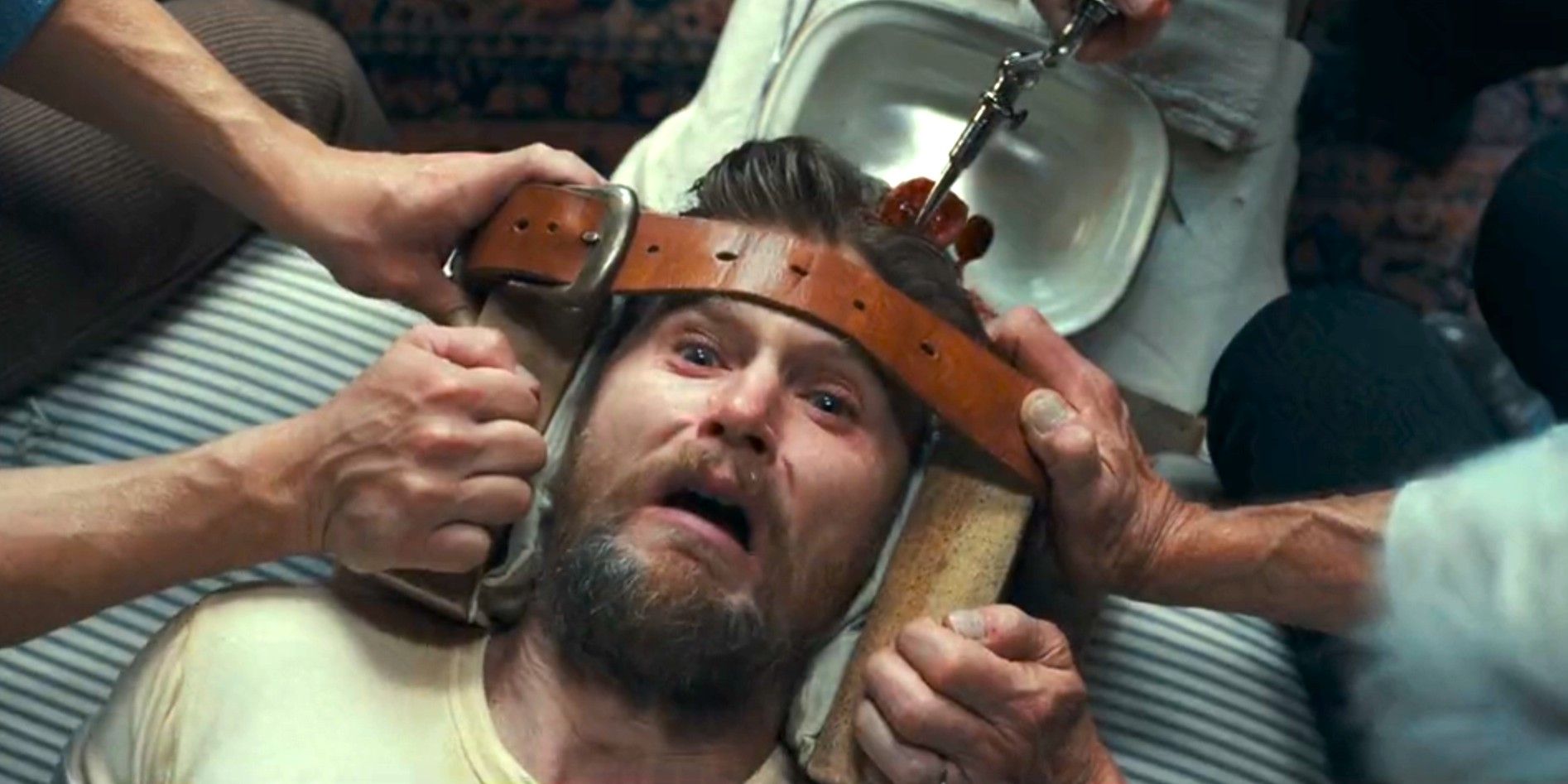
Overall, Cole felt that Civil War had many realistic moments, from the dynamic between veteran photographer Lee and newcomer Jessie to the way the journalists traveled together and pooled resources. Even the haunting, dangerous people the film's journalists came across during their trek — notably, Jesse Plemmons' Civil War scene — felt like plausible echoes of real-life happenings to Cole. "Like all movies, the intensity of each scene is exaggerated," Cole notes, "but the scenarios are possible." Additionally, the real-life war photographer found Dunst's portrayal solid, especially when Lee kept her calm during incredibly intense or brutal moments.
Related Civil War Movie's America Map & State Alliances Explained Civil War's United States has been splintered into multiple warring factions, but a shared enemy has united most of them against the Loyalist States.
What Civil War Gets Wrong About War Photojournalism
Civil War Dramatizes Some Aspects Of War Journalism
Close
Although Dunst was able to successfully translate Lee's emotions and psychology to the screen, the actor wasn't always given good guidance when it came to the details of the photography itself. For example, Cole noted several instances in which Lee used a short lens instead of a telephoto lens or forgot to remove her camera from her bag, which is a must given the intense, fast-paced nature of the job. While many of these inaccurate moments crop up during Civil War's ending, when Lee's post-traumatic stress overtakes her, the movie's missteps stuck out to a veteran like Cole.
Photojournalists generally don't wear bright-yellow construction vests in the field...
The movie takes pains to try and ground the main characters' work in reality. During one scene, Jessie develops film while on the go, but she doesn't load her film into developing cans in a make-shift darkroom. According to Cole, she would often end up in a bathroom-turned-darkroom, drying chemicals with a hairdryer. Photojournalists generally don't wear bright-yellow construction vests in the field or leap into danger in order to protect their colleagues from gunfire and explosions. For Cole, Lee's decision to do the latter read more like a "motherly instinct" than a professional one.
Related Civil War's Real-Life Footage Use & Controversies Explained A new controversy has emerged with regards to the real-life footage used in Civil War to give it a gritty aesthetic and a deeper sense of realism.
How Accurate Civil War's Photojournalism Really Is
Alex Garland's Civil War Gets At The Core Of A Challenging Job
Close
Ultimately, Civil War's real meaning aligns pretty solidly with its accuracy in portraying photojournalists who cover conflicts and war. That is, although some of the details are glaringly wrong, Civil War gets at the emotional truth of the profession. Lee might not always have the right camera lens, but the character's journey allows viewers to understand the ins-and-outs of the harrowing profession. It's visceral, which makes it feel honest even in over-the-top moments. Over time, the physical and psychological effects of working as a war photographer begin weighing on veteran journalists.
By necessity, their occupation forces war journalists to put their humanity aside...
While Lee's breakdown might be fast-tracked for the sake of the movie, it rings true. Moreover, the dangers of covering conflict-torn areas are very real. Real-life photojournalists like Cole have seen friends lose their lives in brutal ways. Civil War doesn't shy away from this danger, chronicling just how much the journalists in these conflict zones rely on one another. For Cole, it's like a "fraternity" of sorts, even if they work for competing outlets. By necessity, their occupation forces war journalists to put their humanity aside, but it also brings out their most vulnerable, human aspects.
Related Civil War's A24 History-Making Box Office Explained A24 has scored its biggest opening weekend at the box office with Alex Garland's dystopian action thriller Civil War. Here's why it's doing so well.
Lee Miller & Other Photojournalists That Inspired Civil War
Kirsten Dunst's Character Takes Her Name From An Iconic World War II Photojournalist
Close
In order to paint an honest picture of war journalists and photographers, Garland's movie takes inspiration from real-life people and stories. For example, Lee Smith's name is an ode to famed World War II photojournalist Lee Miller. A fashion and fine arts photographer working for Vogue, Miller became one of the publication's key wartime correspondents, capturing images of the London Blitz, the liberation of Paris, and various concentration camps. Miller added an artistry to her war photography; sometimes, elements of the surreal depicted a moment's emotional truth more honestly (via Forbes). In many ways, Miller's intent aligns with Civil War's thematic aims.
Civil War is now playing in theaters nationwide.
Civil War Civil War is a 2024 action thriller from writer and director Alex Garland. Starring Kirsten Dunst, Wagner Moura, and Stephen McKinley Henderson, Civil War takes place in the near future and shows the United States entering a new Civil War after California and Texas attempt to separate from the country. Director Alex Garland Release Date April 26, 2024 Studio(s) DNA Films Distributor(s) A24 Writers Alex Garland Cast Kirsten Dunst , Wagner Moura , Stephen McKinley Henderson , Cailee Spaeny , Jesse Plemons , Nick Offerman Runtime 109 Minutes
Sources: Los Angeles Times, Forbes




COMMENTS