Easily Missed Baldur's Gate 3 Details Show Larian's Dedication To D&D Lore
Summary Baldur's Gate 3 reflects D&D deities through their followers' appearances.
Some characters in the game are clear representations of specific gods.
Not all gods are directly represented, but the game pays homage to D&D lore.
Baldur's Gate 3 is an enormous and richly detailed game, and this level of complexity can occasionally make it easy to miss some of its most interesting particulars. Months after its official release, the Baldur's Gate 3 community is still finding new secrets and surprises about the game, and this process of discovery will doubtless continue for a long time yet. Some features and ideas that aren't particularly hidden still end up frequently glossed over, however, and taking the time to look at them in detail drives the dedication of developer Larian Studios home.
The Dungeons & Dragons basis of Baldur's Gate 3 gives it a terrifying amount of lore to draw from, but one of the game's strengths is in how effectively it delivers this information without needing to bog down in exposition or wade through confusing information. Larian tends to hone in on the concepts that are most relevant to the story and characters and seed them intuitively throughout, building up an experience that works for both newcomers and tabletop veterans. It's obviously still possible to be overwhelmed, but a lot of smart decisions minimize the potential for problems.
Related Massive Baldur's Gate 3's Map Of Faerûn Reveals Potential For Sequels We'll Never See A sequel to Baldur's Gate 3 could have taken a lot of directions, and looking at everything in context reveals just how much potential the idea held.
Baldur's Gate 3 Makes Acolytes Look Like Their Gods
Classic D&D Deity Designs Are Reflected In-Game
Gods aren't exactly crowding the streets in Baldur's Gate 3, but their worshipers certainly are, and the game manages to represent the unseen deities extremely well through these followers. It stands to reason that devotees would generally display the traits that their gods value, hypocrisies aside, but what isn't necessarily as obvious is how much the design language supports this concept. All the major DnD deities have received plenty of descriptions and depictions over the years, and key aspects of these portrayals can be found in the costuming and style of their acolytes in Baldur's Gate 3.
Your browser does not support the video tag.
A particularly simple version of this phenomenon can be seen in the obvious dichotomy between Shadowheart and Isobel, respectively clerics of the Mistress of the Night Shar and the Moonmaiden Selûne. Shar has often been described and depicted with long black hair befitting of the dark throughout DnD history, and Selûne tends to feature silvery locks that reflect the moon's shimmer. Shadowheart's character arc can also showcase just how literal this approach to representation is, as turning her path away from Shar will move her toward falling in line with Isobel's appearance.
Related Jennifer English On How Baldur's Gate 3's Shadowheart Was "Her Dream Job" Jennifer English discusses playing Shadowheart in Baldur's Gate 3, her love for the role, and how she found the truth behind her character.
Baldur's Gate 3's Pantheon Has A Lot Of Stand-Ins
Dark Gods Can Be Found Everywhere
Close
This particular duality is easy to pick up on, but some others are less obvious without knowledge of DnD lore. Abdirak, a follower of the Maiden of Pain Loviator, is a significantly smaller presence within the game that embodies the concept even more specifically. Although the leather outfit that he shares with the traditional image of Loviator draws on obvious associations, the slim build and platinum hair that the man and goddess share are more specific traits that paint a pretty clear picture of Larian's aims in translating the deity's image.
Continuing down the path of Baldur's Gate 3's abundance of dark deities, Minthara bears Spidersilk Armor that draws a clear connection between her and Lolth, the Queen of Spiders. Most drow tend to be Lolth-sworn, and Minthara doesn't seem to be the most devout among them, but it seems quite deliberate that this motif is chosen for her armor in particular. As the most prominent drow figure in the game, it's the easiest way to draw that link in iconography, and the traditional description of Lolth's drow form as a striking woman is also an obvious match.
The Spidersilk Armor is a great choice for stealth in Baldur's Gate 3, so it's worth picking up and keeping around even if the party doesn't recruit Minthara.
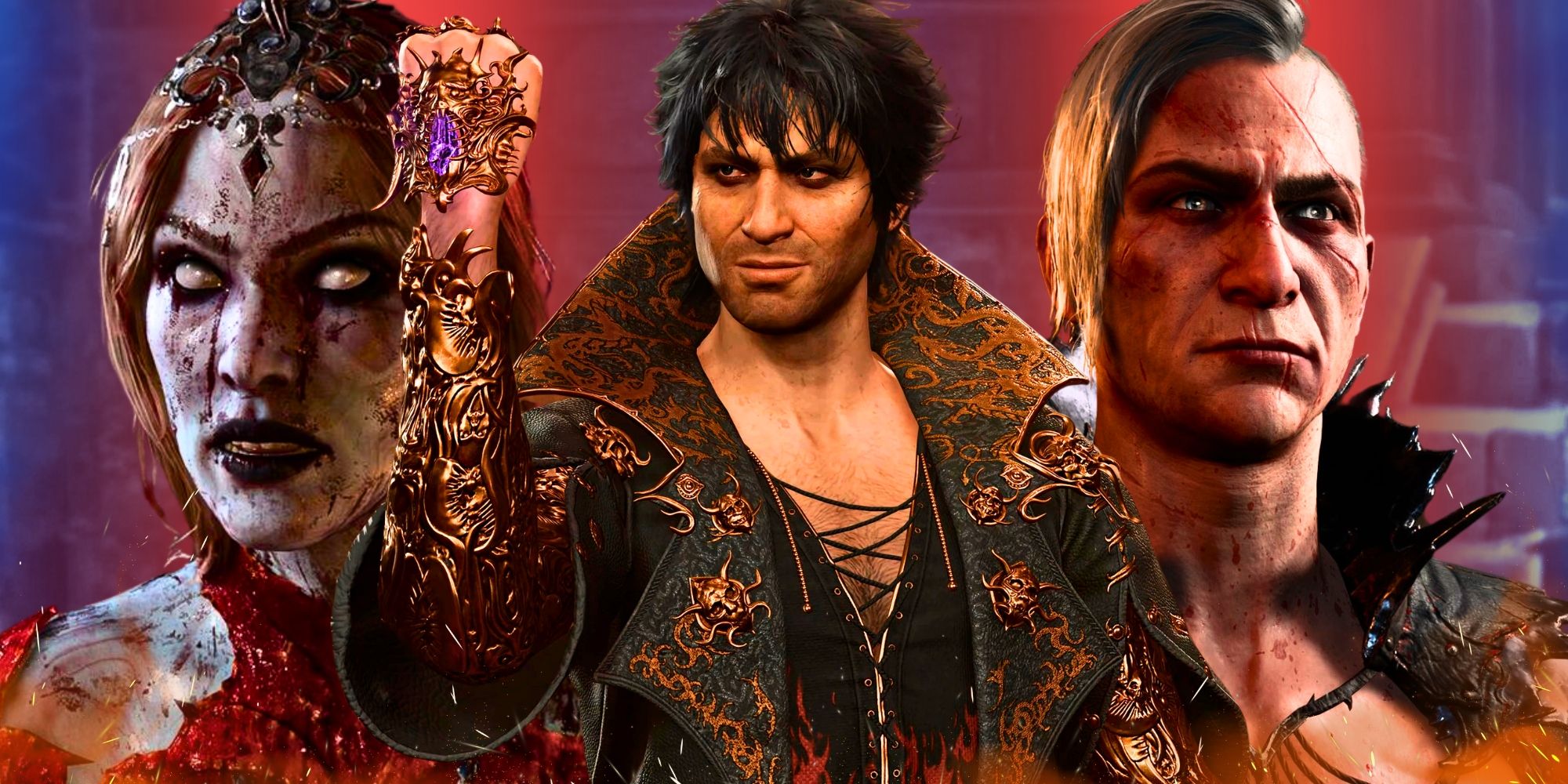
Perhaps the most significant usage of characters as stand-ins for gods lies in the Chosen of the Dead Three, who each bear physical traits of their patrons. Ketheric Thorm has all the stormy presence of the military commander that he is, but he embraces the skeletal image of Myrkul through his ribbed armor adorned with skull designs. Orin the Red resembles the Slayer form of Bhaal with bloody exoskeletal armor of flayed flesh. As the one who most needs to blend in, Enver Gortash maintains the most normal appearance, but his jeweled gauntlet carries over a staple accessory of Bane.
Not Every God Is Represented In Baldur's Gate 3
Divine D&D Iconography Isn't A Constant Presence
There's no hard rule about characters resembling associated gods in Baldur's Gate 3, and there are obvious examples where the correlation isn't as strong. Outside of the general githyanki appearance and armor, Lae'zel isn't a particular reflection of Vlaakith's iconography, for example. Gale's close relationship with Mystra also doesn't result in him bearing any notable signifiers of her image, although she's certainly left her mark on him in other ways.
Related Baldur's Gate 3: Pros & Cons Of Romancing Gale In BG3 Gale is the most popular romantic interest in Baldur’s Gate 3, but starting a love affair with him can be risky. Here’s what to watch out for.
In both of these cases, the increased presence of the actual gods in question within the game lessens the need for any link. If Lae'zel and Vlaakith were too similar in form, it would ultimately just make the character designs less distinct when they both show up in the story. On the other end of things, there are also plenty of gods who are only vaguely referenced and have no distinctly represented followers in Baldur's Gate 3, so not every deity mentioned in the story ends up having their image conveyed in any way.
It's obvious that Baldur's Gate 3 comes from a place of love for DnD and the rich world of the Forgotten Realms, and although some of the ways this manifests can be relatively minor additions to the experience, it's always nice to piece together connections. The concept of carrying over a god's design language to their followers is simple, but drawing on classic depictions shows some real respect for DnD's history. Baldur's Gate 3 is a world marked by many gods, and their presence is much more strongly reflected than it might appear at first glance.





COMMENTS