Stamets Has Tardigrade DNA? Star Trek: Discovery’s Spore Drive Navigator Explained
Summary Commander Paul Stamets has tardigrade DNA thanks to combining his own genetics with a tardigrade named Ripper.
Stamets' tardigrade DNA lets him navigate the USS Discovery through the mycelial network.
Stamets invented the USS Discovery's spore drive, and he is unaffected by temporal disruptions thanks to his tardigrade DNA.
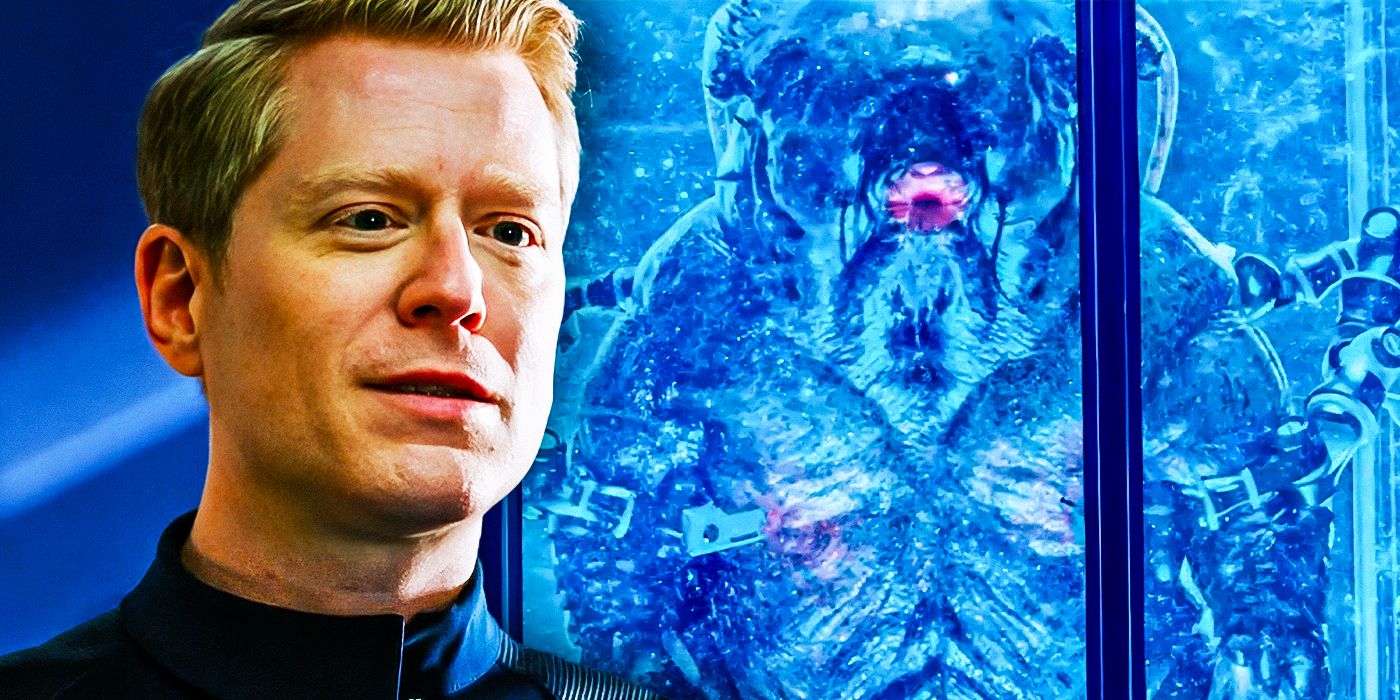
It's true: Commander Paul Stamets (Anthony Rapp), the inventor of the spore drive on Star Trek: Discovery, has tardigrade DNA. Discovery's displacement-activated spore hub drive is a classified propulsion system unique to Star Trek: Discovery, and an alternative to the warp drive that's usually seen on Star Trek's starships. Rather than warping space-time to travel faster than light, the spore drive actively displaces the USS Discovery from normal space into another plane of existence, the mycelial plane. During a jump, or "black alert", Discovery travels along the mycelial network, an interconnected structure that branches through space-time organically.
Spore drives were installed on two Crossfield-class starships in the 23rd century, with Stamets assigned to the USS Discovery and Stamets' research partner, Straal (Saad Siddiqui), assigned to the USS Glenn. Discovery operated its spore drive with cultivated spores, but was only capable of short jumps, whereas the USS Glenn could make much longer jumps. A disaster aboard the Glenn in Star Trek: Discovery season 1, episode 3, "Context is for Kings", proved that a failure to navigate with complete precision through the mycelial network could result in space-time twisting through organic matter, causing fatal "helical trauma." The only survivor was a huge tardigrade, which attacked Discovery's away team, and was brought aboard the USS Discovery.
Related Star Trek: Discovery’s Anthony Rapp & Paul Stamets Explained Broadway veteran Anthony Rapp plays astromycologist Paul Stamets, one of Star Trek's first LGBTQ+ main characters, on Star Trek: Discovery.
Why Commander Paul Stamets Has Tardigrade DNA In Star Trek: Discovery
It's better than making the tardigrade be Discovery's navigator.
Close
Commander Paul Stamets' tardigrade DNA is essential to navigating the mycelial network that the USS Discovery's spore drive uses to jump through space. Star Trek: Discovery season 1's Captain Gabriel Lorca (Jason Isaacs) appreciated the savage nature of the angry tardigrade, nicknamed "Ripper", and demanded that Specialist Michael Burnham (Sonequa Martin-Green) make Ripper into a weapon. Burnham's workaround to Lorca's request was working with Stamets to find that Ripper the tardigrade had a symbiotic relationship with the spores, and could independently navigate the mycelial network to make longer jumps, like the USS Glenn had done. However, the jumps were painful for Ripper, who couldn't consent to being used as a tool.
Tardigrade DNA gave Stamets the ability to co-exist with the mycelial network itself.
Paul Stamets' solution was to combine Ripper's tardigrade DNA into his own, so Stamets could navigate the mycelial network directly, instead of subjecting Ripper to a lifetime of pain as the spore drive's unwilling navigator. Tardigrade DNA gave Stamets the ability to co-exist with the mycelial network itself, a dream come true for Star Trek: Discovery's astromycologist, but it came at a high cost. The pain that Ripper felt was neurological damage that Paul also sustained when navigating the mycelial network. Although Stamets took the pain on willingly, repeated exposure to long jumps along the network pushed Stamets' mind to the limits, and warped Stamets' perception of reality.
Genetic engineering was outlawed by the United Federation of Planets following Star Trek's Eugenics Wars, but the USS Discovery's spore drive was one of Starfleet's only advantages in the Klingon War, so the Federation gave Stamets a wartime pass for tampering with his own DNA.
Why Commander Stamets’ Tardigrade DNA Lets Him Live Outside Of Time
Reality is all gooey in the mycelial network.
Close
Star Trek: Discovery's Commander Paul Stamets is no longer bound by the constraints of time, thanks to the tardigrade DNA that lets Stamets navigate the USS Discovery through the mycelial network, which exists outside normal space-time. Because Stamets' tardigrade DNA biologically connects Stamets to the mycelial network, Stamets' own perception of time and space is more aligned with the quantum nature of the mycelial plane. Paul Stamets is aware when something isn't right with time; when Discovery is caught in a time loop in Star Trek: Discovery season 1, episode 7, "Magic to Make the Sanest Man Go Mad", Stamets is the only person who can break it.
Stamets' ability to exist outside of time made him crucial to solving Star Trek: Discovery season 5, episode 4, "Face the Strange's" time loops.
Commander Stamets' connection to the mycelial network can go even further, altering Stamets' relationship with space-time. When repeated jumps push the USS Discovery closer to Star Trek's Mirror Universe, Stamets confuses the two timelines and becomes entangled with Mirror Stamets' memories. Stamets' memory of his husband, Dr. Hugh Culber (Wilson Cruz), exists physically within the mycelial network after Culber's Discovery season 1 death, allowing Paul to resurrect Hugh in Star Trek: Discovery season 2. Once just a navigational necessity on Star Trek: Discovery, Commander Paul Stamets' tardigrade DNA makes Stamets naturally aware of the flow of time and space, and able to spot abnormalities within it.
Star Trek: Discovery is streaming on Paramount+.






COMMENTS