10 Harsh Realities Of Rewatching Batman's 6 Live-Action TV Shows
Summary Batman in TV often took a backseat, leaving room for sidekicks, original characters, and budget constraints.
Gotham missed the mark by failing to focus on Batman's evolution and revealing his live-action Batsuit too late.
Titans tried too hard to distance itself from being a kids' show, resulting in an edgy tone that missed the mark.
Batman has had a tumultuous history with live-action TV, with no series revolving around the character's mythos being unequivocally good with no qualifiers. As far back as 1966, Batman has featured in numerous live-action TV shows, with Adam West being the first live-action Batman to truly popularize the flagship DC hero. Despite the Dark Knight's history with TV, his legacy on the small screen as it stands today is far from untarnished, with each series having its own unique drawbacks.
Many of these unfortunate truths about Batman's many TV show appearances lie in Batman's actual presence in them. For whatever reason, most shows set in Gotham have Batman either taking the backseat or erased from the narrative completely, focusing on sidekicks or even original characters instead. Additionally, compared to Batman's excellent animated shows, the budgetary restraints of live-action mean that getting across a super-powered setting is inherently more difficult.
10 Gotham Had To Work Around Batman
The prime example of a Batman show that barely features him
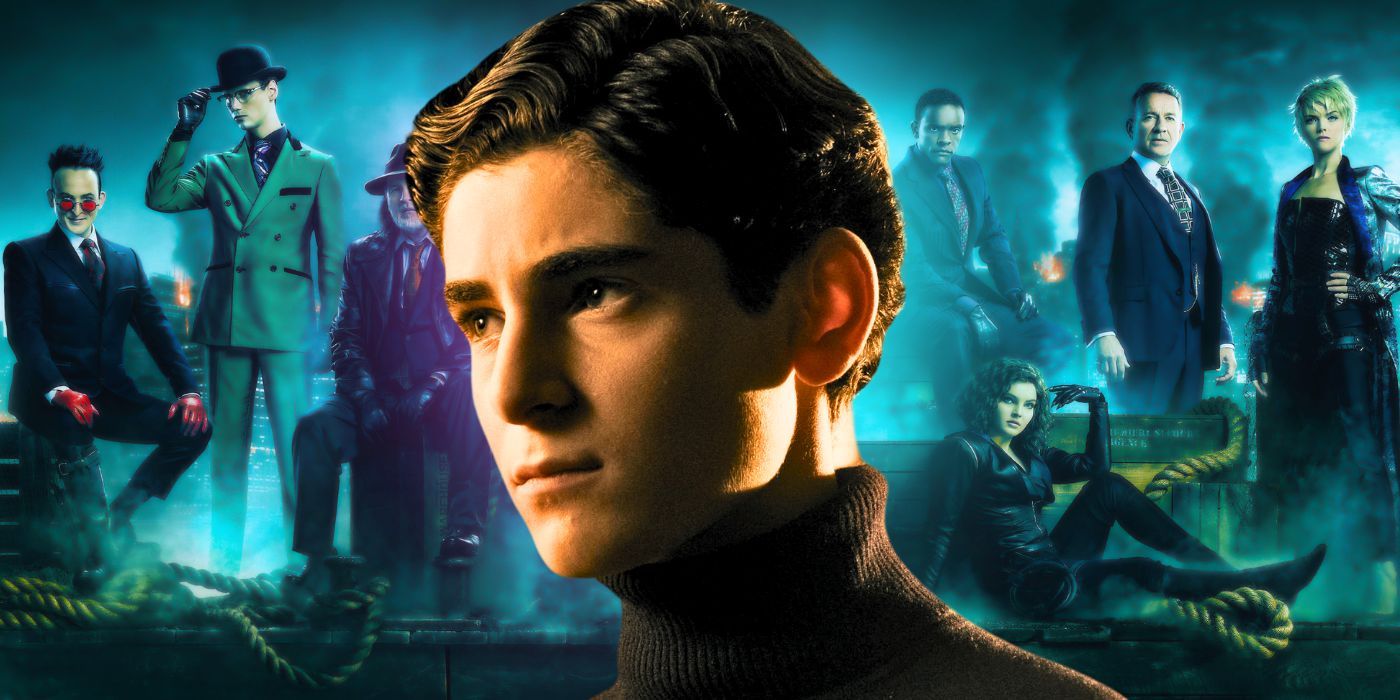
Being a prequel series, Gotham served as more of an origin story for the city itself, taking place at the very beginning of Batman's first steps in becoming the fearsome vigilante known and loved today. With James Gordon and the Gotham City Police Department taking on the primary protagonist roles, a young Bruce Wayne is left to slowly develop into the Caped Crusader with the death of his parents still fresh in his mind. Even though the audience knows that Bruce is on the path to becoming the legendary hero, the show has to painfully dance around the idea.
Bruce Wayne is indeed an important character in the series, but isn't allowed to make meaningful strides into becoming Batman until far too late into Gotham's five-season run, making for a frustrating arc. The end result is an awkward balance that would've been better off writing Batman out completely or focusing on him more. It doesn't help that the ultimate reveal of Batman's live-action Batsuit in Gotham's series finale left much to be desired.
9 Adam West’s Batman Is Nothing Like The Character Today
Silver Age Batman may as well be an entirely different hero
In many ways, the cheesiness of the original 1966 Batman series has aged quite gracefully. The tongue-in-cheek humor may actually be a better fit for modern day post-irony comedic sensibilities, making each corny joke and mind-boggling leap of logic in solving a Riddler puzzle hit all the harder. But as a piece of Batman media, the series occupies a strange place.
Today, Batman is better known as a gritty, serious hero, largely thanks to the revitalization of the character with Tim Burton's Batman in 1989, and then again with Christopher Nolan's Batman Begins in 2005. It's difficult to reconcile this image of the modern Batman with that seen in the 1966 series, injected full of Silver Age camp. The cognitive dissonance required to watch the original Batman show after getting to know the character through years of serious content is nothing to scoff at.
8 Gotham Knights Tried To Make A Batman Series Without Batman
It turns out, the Batfamily isn't as compelling as their namesake
It's one thing to sideline Bruce Wayne in a Batman series as Gotham did, but Gotham Knights took things to the next level by killing off the Caped Crusader in the very first episode. The crux of the series revolves around Batman's former allies trying to make sense of a Gotham City that no longer has its protector, with Bruce Wayne being unceremoniously murdered at the top of the show. Making such a dramatic change in the mythos of the original DC comics isn't anything to be taken lightly.
Unfortunately, Gotham Knights failed to sell its Batman successors as being more interesting than a show simply centered around The Dark Knight would've been. None of the primary cast has the presence to keep audiences from wondering what Batman would've done in their situation, undermining the entire premise of the series. This simple fact could be a big part of the reason as to why Gotham Knights was canceled shortly after its premiere, lasting only a brief single season.
7 Gotham Messed Up The Timeline Of The Batman Mythology
Too many classic villains were introduced ten years too early
By keeping Bruce Wayne so young, Gotham had a difficult problem on its hands -- How to sow the seeds of classic Batman villains while not having their arc be over with by the time of Batman's debut. At first, the solution was to create new antagonists, such as Fish Mooney, to act as placeholder villains. Meanwhile, famous names like Oswald Cobblepot were able to show their younger faces, slowly developing into their own as villains at the same time as Batman himself.
As Gotham went on, more and more familiar identities from Batman's rogue's gallery ended up making appearances. From The Riddler to the Mad Hatter to even the Joker himself, the series wound up mining Batman's villains for as much value as they could get. This ended up creating an unfortunate reality in which most of Batman's major villains were firmly established long before he actually donned the cape and cowl, messing with the sacred mythology of Batman's traditional timeline to an intense degree.
6 Gotham Knights Missed Out On Batman's Son In Favor Of An Original Character
Turner Hayes is no Dick Grayson
As difficult to sell as the premise of a Gotham whose Batman died may have been, Gotham Knights had an excellent opportunity to put Robin front and center. Surely the power vacuum of Gotham's lack of a heroic protector in the show would inspire the Boy Wonder to step up to the role. Instead, Gotham Knights opted to try out a wholly original, and wholly unremarkable, character at front and center, Bruce Wayne's previously-unkown adoptive son, Turner Hayes.
Even though Batman has had multiple compelling wards over the years with pre-existing backstories, such as Dick Grayson, Jason Todd, and Tim Drake, Gotham Knights instead took the opportunity to sell audiences on Turner Hayes. Unfortunately, Hayes isn't nearly as compelling as any of the classic Robin identities would've been, making the idea of creating a new adoptive son for Bruce Wayne when he already has so many to choose from in the source material all the more puzzling. Carrie Kelly's Robin being there from the beginning also makes Turner unnecessary in his own series.
5 60s Batman Over Relied On Its Campy Charm
Campiness doesn't excuse everything
The campiness of 1966's Batman show wasn't just a concept that had to be lived with, but the prime draw to the series in the first place. Adam West's Batman made it clear from the start that tongue-in-cheek humor and knowingly silly caped antics were to be the star of the show, and anyone not on-board with that simply wouldn't be catered to. But the conscious decision to go for such a goofy tone doesn't excuse every shortcoming the show had.
In many cases, Batman over-relied on its cheesiness to skate by on other aspects. The best examples of this are the series' many fight scenes, in which the mediocre and unexciting choreography is obscured by colorful captions reading "Bam!", "Ouch!" or "Crunch!", hiding the miniscule budget. As charming as the tone of Batman was, it doesn't excuse the lack of effort the series clearly had in certain regards, like Cesar Romero refusing to shave his mustache for the role of Joker.
4 Titans Tried A Little Too Hard To Ensure It Wasn’t For Kids
The lack of "Teen" in the title should've been enough
Centered around the classic teen hero group rather than the Bat-Family as a whole, calling Titans a Batman series may admittedly be a bit of a stretch. However, considering Bruce Wayne makes appearances in the show as early as the first episode, and isn't an insignificant part of the show. That being said, most of the issues Titans has that become obvious on a second viewing stem from places other than Batman's integration within it.
From the very first episode, Titans had a clear tone problem. Knowing that general audiences were more familiar with the superhero team from the Teen Titans cartoon network series, Titans was desperate to ensure that viewers were aware the live-action series wasn't for kids. From Robin's infamous "F*** Batman" line to the bleeding eyeliner of the later seasons, Titans delved far too deep into edginess that, ironically, made the series come off as more juvenile than the 2003 cartoon.
3 Titans Misses Out On Cyborg
The Teen Titans crew was missing one of their most classic members
Beyond its edgy tone, Titans also caught a justifiable amount of flack for the absence of a certain mechanized hero among the Titans' core roster. Victor Stone, a.k.a. Cyborg, was nowhere to be seen in the series, despite being one of the most well-known Teen Titans members in popular culture. Trading in Cyborg in favor of other Teen Titans members like Wonder Girl, Superboy, Hawk, and Dove, the series never offered an explanation for Victor Stone's absence.
It could be explained that, with Cyborg's newer role as a founding Justice League member in the DCEU, the series wouldn't have wanted to use him in a lesser-known team to avoid confusion. Yet in the same continuity as Titans, Cyborg does make an appearance in the Doom Patrol series, meaning his Justice League status wasn't in consideration. Even if his comics history with the Teen Titans is suprisingly brief, Titans has an undeniable personality vacuum in its cast because of Cyborg's absence.
2 Birds Of Prey Was More X-Men Than Batman
The metahuman narrative felt tacked-on
Similarly to Gotham Knights, Birds of Prey told the story of Batman's successors in a Gotham that no longer had his protection. Insinuating that Batman voluntarily left Gotham after being too overwhelmed was enough of a sin for the series to commit, but this is far from the worst aspect of the 2002 show upon revisiting it. Where Birds of Prey gets truly confusing as a Batman-adjacent story is the introduction of the metahuman narrative, which made the series feel more like an X-Men series.
Birds of Prey explains that within its universe, there exist metahumans, people born with unique powers of inexplicable origin. With an entire underground subculture surrounding them and familiar themes of discrimination being explored through the idea, it's clear that Birds of Prey took some hefty inspiration from a Marvel property in its DC adaptation. Not only that, but famous Batman characters like Catwoman were retconned to be metahumans all along, an unnecessary and drastic change to the comics that only serves the show's bizarre insistence on the metahuman narrative.
1 Batwoman Is Jarringly Passed From Kate To Ryan
The titular heroine's identity swap could've been handled better
Few Batman series were as ill-fated as 2019's Batwoman. From a focus on themes of social justice to the very concept of a female-led Batman series, the show had an unfortunate uphill battle against a close-minded viewership. Regardless of the political implications of the series, its legacy is further tarnished by an obvious misstep that could've been handled better.
From season 1 to season 2, the title of Batwoman is passed from Bruce Wayne's cousin, Kate Kane, to Ryan Wilder, an undisciplined homeless woman with no connection to the Batfamily. Compared to Kane, who had to earn the Batwoman suit, Ryan finds it after it quite literally falls out of the sky and into her lap, taking up the mantle of the hero for no good reason. Even if this jarring shift in protagonists was the result of Batwoman's behind-the-scenes drama, it could've been better integrated into the story of Batman.




COMMENTS