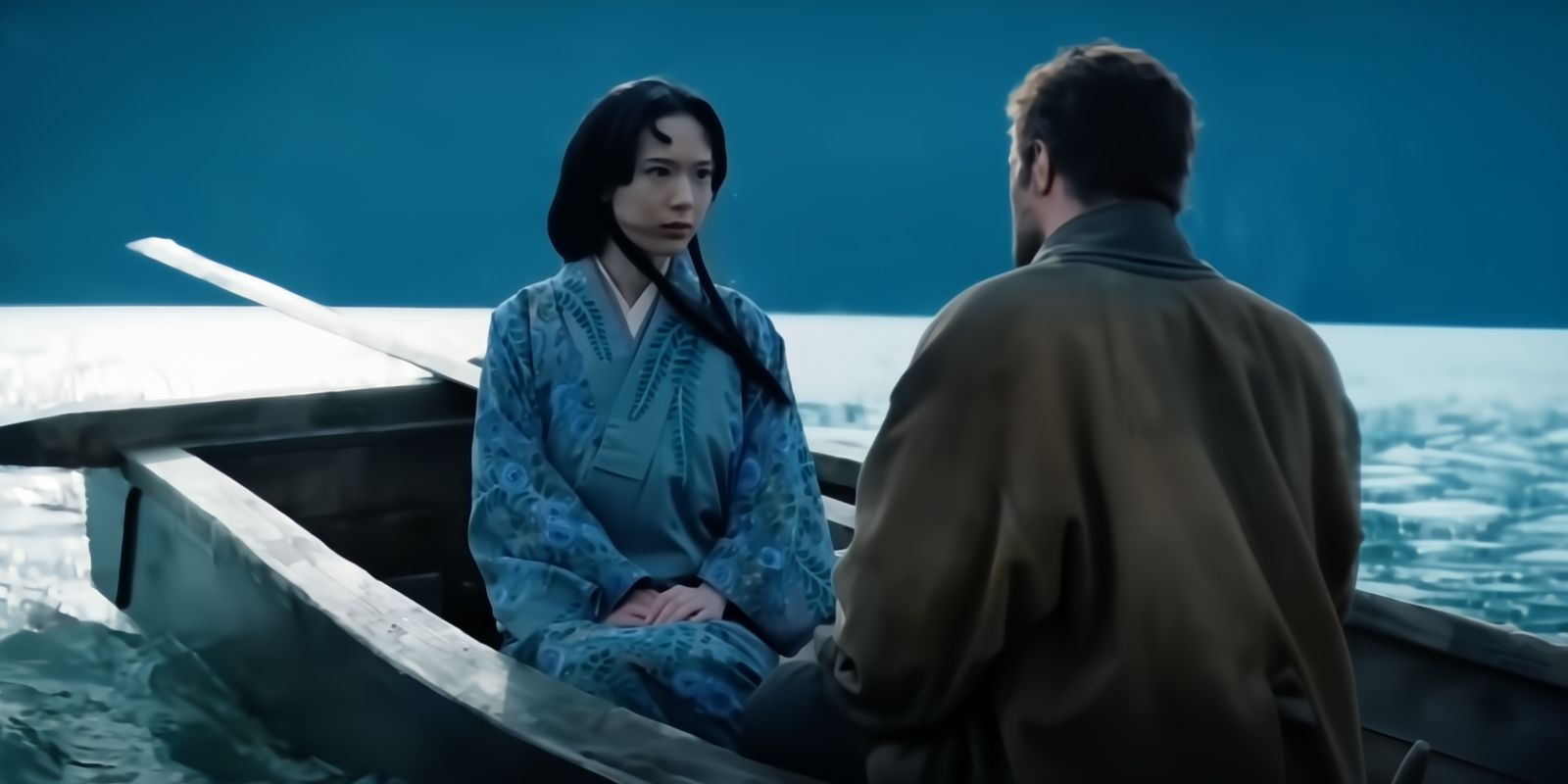
"Pouring Them Is So Antithetical": Fuji & John Blackthorne's Boat Scene In Shogun Episode 10 Explained By Creators
This article covers a developing story. Continue to check back with us as we will be adding more information as it becomes available.
Summary Marks and Kondo talk about the emotional boat scene between Blackthorne and Fuji in the finale of Shōgun.
The scene was a departure from the book and was meant to keep Mariko's spirit alive in the story.
The rawness in the performance came from the unique perspectives of Blackthorne and Fuji mourning together.
Shōgun creators Justin Marks and Rachel Kondo explain John Blackthorne's boat scene with Fuji in the finale. Adapting the events of James Clavell's 1975 novel of the same name, FX's Shōgun concluded its 10-episode run this past week, bringing closure to the story of Blackthorne (Cosmo Jarvis) and his journey in feudal Japan. The touching finale features a final scene between Jarvis' character Fuji (Moeka Hoshi) in a rowboat, with the former dropping Marriko's cross into the ocean and the latter the ashes of her late husband and child.
In a recent interview with Mens Health, Marks and Kondo break down Shōgun episode 10 and that poignant Blackthorne and Fuji scene. Check out their comments below:
Kondo: That's also a departure from the book. Marks: I have to credit one of our producers, Mako Kamitsuna, with developing the kernel of that, because we were talking about ways to keep Mariko's spirit alive in the story. It felt appropriate for the two of them to mourn her together. It was a tough scene to do because that was all practical. It wasn't green screen out there. That boat was rockin'. It felt very raw in the performance, in a way I was really proud of. They both come to it from a very vulnerable place. Kondo: And from very different places, too. Fuji came at it from a Japanese place, this idea of pouring the ashes of her children; these are ashes meant to be stored in a family vault. They hold on to them. The idea of pouring them is so antithetical, and yet the idea that Blackthorne would release this cross, whereas the Westerner would want to cling to something. That's what the rawness is from. They were actually coming at it from their unique perspectives. It became uniquely Blackthorne and Fuji.
More to come...
Source: Men's Health




COMMENTS