Every Civil War Controversy Explained
Summary Civil War has sparked controversy for its portrayal of a futuristic America torn by civil war and its political commentary.
The film's use of archive footage from controversial figures like Andy Ngo and Helen Lewis has polarized audiences and critics.
Despite mixed reviews, Civil War has been a box office success and has generated buzz for its depiction of journalism and intense storyline.
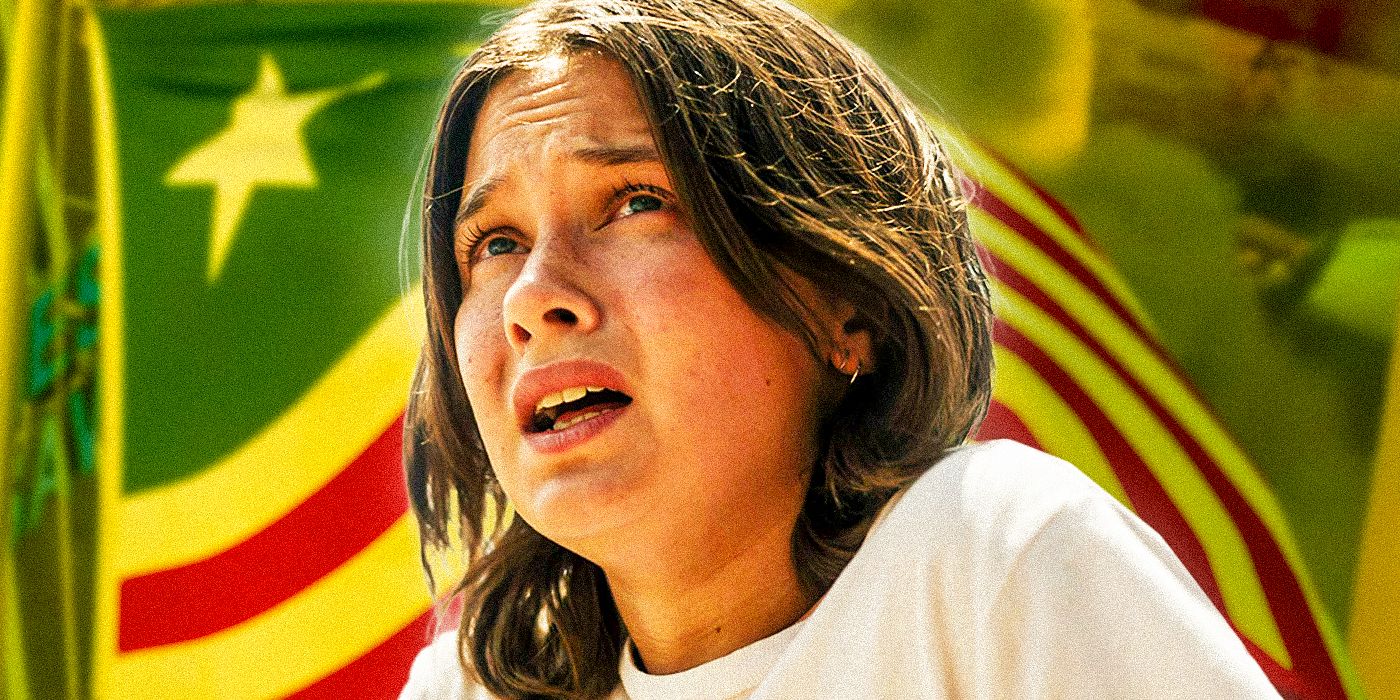
Since its release, Civil War has been generating several controversies. The political action thriller was written and directed by Alex Garland, best known for his feature debut Ex Machina. Distributed by A24, Civil War has become a box office success. It stars Kirsten Dunst, Wagner Moura, Cailee Spaeny, and Stephen McKinley Henderson as journalists covering the tragic events in a futuristic America torn by civil war. In the film, the revolutionary Western Forces, comprising states like California and Texas, advocate for secession from the country and seek to eliminate the authoritarian president.
Meanwhile, their opposition, the Loyalist States, is led by the president himself, who is currently serving an illegitimate third term in office. The movie follows the journalists entering the heart of Washington, D.C. and the White House to cover the war and the president's actions. Civil War has received mixed reviews, with some praising its performances, gritty realism, and political commentary, while others criticize Alex Garland's allegedly apolitical and neutral gaze on American politics. The film has polarized both audiences and critics over several issues, including its end credits, posters, and politics.
Your browser does not support the video tag.
Related Civil War Ending Explained Alex Garland's latest, Civil War, has an explosive ending that leads to multiple deaths. We break down the film ending's biggest moments and more.
Civil War's Andy Ngo Credit Controversy Explained
Ngo Has Repeatedly Propagated Racist, Islamophobic, and Homophobic Views
Close
Several viewers have criticized the Civil War producers, Andrew Macdonald, Allon Reich, and Gregory Goodman, for using archive video footage supplied by Andy Ngo, a far-right influencer. Ngo is the writer of Unmasked: Inside Antifa's Radical Plan to Destroy Democracy, which the LA Times has called "dishonest" and "trolling, not reportage". Jacobian has labeled him "the most dangerous grifter in America" and has reported several examples of him spurring violence and harassment against people on the left who he considers his personal targets. Ngo has repeatedly peddled conspiracy theories and propagated racist, Islamophobic, and homophobic views.
The decision of Civil War producers to credit Andy Ngo has been widely seen as an endorsement of his views and as granting him legitimacy, whereas others argue that it is merely a legal requirement to credit individuals for footage used. Critics argue that the makers could have sought footage from anywhere else, and question the need to platform Ngo, who has himself been sued for violating copyright law by embedding video shot by other journalists in his tweets without permission (via The Intercept). Ultimately, the decision-making behind where to source footage and who to credit remains unknown.
The decision of Civil War producers to credit Andy Ngo has been widely seen as an endorsement of his views and as granting him legitimacy.
Civil War's America is dystopian and fictionalized, but rooted in reality. The film thus weaves real footage from recent American history into the narrative to enhance its immersive, authentic, and realistic feel. This is a common editing technique, aiming to blend fiction with reality. It is largely a stylistic choice, wherein director Alex Garland opts in his movie for brief snippets of real footage, often making them difficult to identify or contextualize within the film. While the archival footage credits could have been a mere logistical decision, many have seen it as the film aligning with Ngo's political ideologies.
Why Civil War's Helen Lewis Acknowledgment Is Controversial
Her Views Have Been Seen As Transphobic And Derailing Trans Rights
In its end credits, Civil War also thanks Helen Lewis, a staff writer at The Atlantic. This expression of gratitude is controversial as Lewis has gained notoriety for writing numerous pieces arguing against transgender rights. Specifically, she has opposed medical transitions and has been a fierce critic of young people transitioning. In July 2017, Lewis articulated her concerns regarding the potential implications of gender self-identification: that it could compromise the safety of rape shelters for women and might contribute to an increase in sexual assaults in women's changing rooms.
For instance, she asked in The Times: "In this climate, who would challenge someone with a beard exposing their penis in a women's changing room?" Amid pervading culture wars, Lewis' opinions have been viewed as fearmongering about transgender people and propagating a conservative and harmful conception of gender theory. Many in the LGBTQ+ community and its supporters have called out Lewis for her transphobia and view her as a TERF (trans-exclusionary radical feminist). In response to this criticism, she emphasized that she's always advocated for the rights of transgender individuals to be free from harassment and abuse and has believed in the validity of trans identities.
Amid pervading culture wars, Lewis' opinions have been viewed as fearmongering about transgender people and propagating a conservative and harmful conception of gender theory.
While some argue that Lewis' reputation has been unfairly tarnished by the "woke left," others point to her prominent status as a feminist writer who let down transgender individuals with her recent writing. Ultimately, the reason behind the decision to thank her in the end credits remains unknown. Lewis is not known for her photojournalism, and she is not a war photographer. Many have wondered what she ended up contributing to Civil War's real-life footage or background research, and whether the gratitude expressed to her reflects the filmmakers' endorsement of her views.
Your browser does not support the video tag.
Civil War's AI Posters Sparked Controversy For A24
The Posters Depicted Post-Apocalyptic Scenes Across the United States
Close
Prior the film's release, A24 unveiled a series of five striking posters promoting Civil War, which sparked immense controversy across social media. The five images featured in the posters depict post-apocalyptic scenes set in major cities across the United States, depicting widespread destruction and conflict. From a blackened wreck in Las Vegas to a floating gun unit outside Los Angeles, troops on patrol in San Francisco, a ruined Miami street, and tour boats full of refugees on the Chicago River, these scenes evoke a sense of war-torn devastation in iconic locations.
People couldn't believe a film about photojournalism would use AI-generated posters, especially since its director Alex Garland's debut Ex Machina warned about the dangers of AI.
However, none of these scenes actually appear in the movie. This discrepancy led some to argue that the promotional campaign was setting unrealistic expectations for viewers. Others criticized the posters for being AI-generated, which naturally resulted in notable inaccuracies in geography and landmarks. For instance, the Marina Towers buildings in Chicago are typically located on the same side of the river in reality, but in the artwork, they appear on opposite sides. Many also expressed frustration at blatant disregard of the wider film fraternity's concerns about using AI-generated content and its impact on workers' jobs.
However, a source close to the movie contended that the purpose of these images is to visualize the nationwide impact of the fictional war depicted in Civil War. They explained to The Hollywood Reporter: "These are AI-generated images inspired by the movie. The entire movie poses a big 'what if' scenario, and we wanted to extend that concept on social media — powerful imagery of iconic landmarks with a dystopian realism." Either way, people couldn't believe a film about photojournalism would use AI-generated posters, especially since its director Alex Garland's debut Ex Machina warned about the dangers of AI.
Related Civil War's Sniper Scene Explained & What It Reveals About The War Civil War's sniper scene is one of its most intense moments, and its haunting ambiguity contains all the clues to figure out the war itself.
How Civil War Tackled Politics Divided Audiences
The Film Lacks A Central Thesis
Your browser does not support the video tag.
Civil War's deliberately ambivalent political commentary has also divided audiences. Not only is the specific cause of Civil War's conflict left intentionally unclear, but the film lacks a central thesis of how the United States realistically got to this point and who is to blame. The movie doesn't delve into the realistic nuances and political intricacies of contemporary America. Instead, it glosses over these fundamental aspects to concentrate on the immediate realities of war in a broader sense, irrespective of specific motives. Despite being a visceral and arresting action thriller, Civil War's real meaning and larger point remains ambiguous.
Not only is the specific cause of Civil War's conflict left intentionally unclear, but the film lacks a central thesis of how the United States realistically got to this point and who is to blame.
Many have criticized the film for being apolitical. In a piece titled "The Compellingly Packaged Cowardice of ‘Civil War’", The Hollywood Reporter argued that "Civil War tells us bad things are happening, but never tells us why they are happening." Likewise, Wired criticized the film's politics for being "confused and potentially radicalizing." The Independent, too, lambasts Civil War for crumbling into "thematic uncertainty", decontextualizing violence, and intentionally disregarding the concept of power altogether. The audience, the article argues, is left uninformed about the reasons behind the conflict, who might be suffering oppression, or what freedoms have been compromised. All that is portrayed is violence.
Even CNN and The Wall Street Journal agreed about this, though the Civil War director Alex Garland's response to the criticism is that "they're just missing the point." For him, the film deliberately doesn't explicitly state its political position, but leaves it to the audience's interpretation. It is perhaps precisely because of this ideological uncertainty that the crediting and thanking of Andy Ngo and Helen Lewis was so controversial, as audiences couldn't discern the film's position in the first place. This muddied messaging has been a major source of controversy for Civil War.
Civil War's Depiction Of Journalism Has Been Debated
How Accurately Does The Film Portray Photojournalism?
Close
Civil War's accuracy in its depiction of journalism has also been debated among audiences and critics. On one hand, Pulitzer Prize-winning photojournalist Carolyn Cole said in the Los Angeles Times that the film largely gets photojournalism right, pointing to authentic instances like the dynamic between seasoned photographer Lee and newcomer Jessie, and the collaborative travel and resource-sharing among journalists. Even encounters with unsettling and potentially dangerous individuals, like Jesse Plemmons' scene in the film, resonated with Cole as believable reflections of real-world events. While each scene's intensity may be heightened, Cole acknowledged, the situations portrayed were largely accurate.
Additionally, Cole commended the portrayal of Lee by Kirsten Dunst, particularly her ability to maintain composure during highly intense or brutal situations. Civil War also captures the essence of war photography, allowing viewers to viscerally gauge the physical and psychological effects of the job. Moreover, the perils of reporting from conflict-ridden regions are undeniably genuine. Civil War confronts this danger head-on, illustrating the profound reliance that journalists in these war-torn areas have on one another. While their profession necessitates the suppression of personal emotions, it also reveals their most fragile and humane facets.
On the other hand, Civil War makes some glaring mistakes when representing photojournalism. The Guardian criticizes the film for its stereotypical and sensationalist portrayal of journalism. Typically, for instance, photojournalists don't don bright yellow construction vests while working in the field, nor do they actively place themselves in harm's way to shield their colleagues from gunfire and explosions. Cole also observed multiple occasions where Lee opted for a short lens over a telephoto lens or neglected to remove her camera from her bag, a critical step considering the intense and rapid nature of the profession.
Your browser does not support the video tag.
Ultimately, all these controversies have only generated more buzz for Civil War. Amid mixed reviews, the film has emerged as an unprecedented hit, one of A24's biggest so far. While many facets of the action thriller have been polarizing, it seems audiences have largely enjoyed Civil War. The film has 7.6/10 on IMDb and 72% on Rotten Tomatoes, which indicates an overall positive response.
Related 10 Best Movies Like Civil War A24’s newest movie, Civil War, follows a group of journalists in the near future when another civil war has broken out in the United States.




COMMENTS