Rarely Seen Baldur's Gate 3 End Game Option Reveals Important Hidden Lore
Summary Uncovering hidden references and lore in Baldur's Gate 3 adds complexity.
Orpheus' dialogue references Oryndoll, an Illithid city of vast influence.
There's no precedent in lore for the characters of Urengol and Valraag, but their story parallels the main plot of BG3.
Choosing one strange course of action near the end of Baldur's Gate 3 reveals a treasure trove of hidden lore, but doesn't explain it to the fullest extent. Taking place in the Forgotten Realms setting for Dungeons & Dragons, Baldur's Gate 3 incorporates 40 years of DnD lore. For the most part, it's a complete story in and of itself - most central concepts in the story are well explained through dialogue. However, it still exists in the context of millennia of Faerûnian history, and occasionally touches on a more arcane piece of background.
[Warning: This article contains some spoilers for Act Three of Baldur's Gate 3.]
Suffice it to say that Baldur's Gate 3 has a huge body of lore. While it's totally playable without engaging with any of this optional background, in-game history books and throwaway references reveal a much more complicated story. Looking out for these references can enrich the experience, but it's not always clear what they're referring to. That's all the more apparent in a certain endgame line from everyone's favorite githyanki hero.
Related Stunning Baldur's Gate 3 Cosplay Perfectly Captures The Proper Choice For Shadowheart A cosplayer showcases a beautifully done rendition of a Selune Priestess in Baldur’s Gate 3, thus highlighting the best choice for Shadowheart.
What Is Oryndoll In Baldur's Gate 3?
Orpheus' Dialogue References An Ancient Illithid City
Close
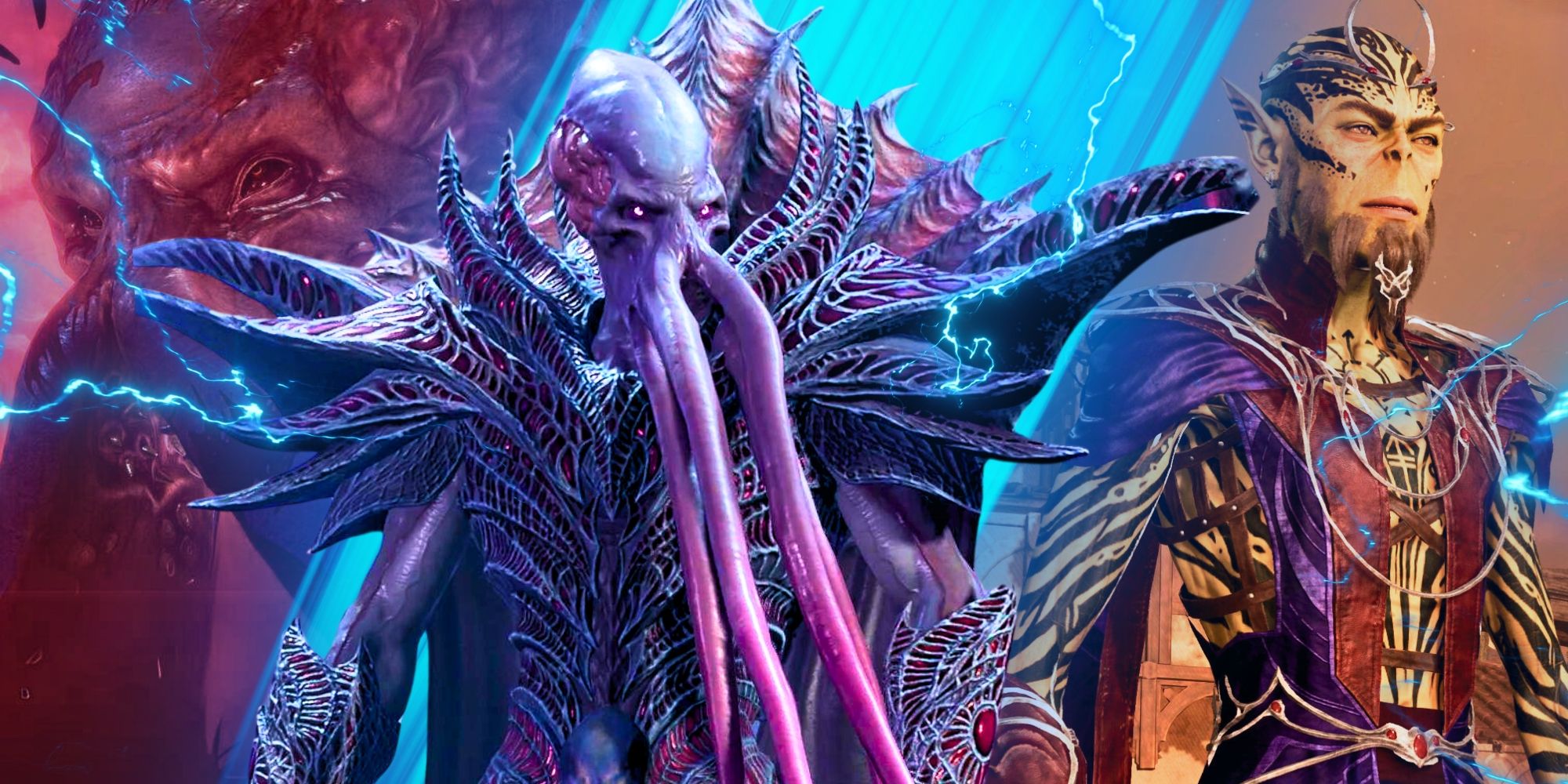
Near the end of Baldur's Gate 3, Orpheus' dialogue may reference the Illithid city of Oryndoll, a pretty obscure bit of lore. It doesn't play an enormous role in the immediate plot, but does put it into important context. However, this isn't the most common scene for players to see, as it requires a certain unpopular course of action around the Orpheus-Emperor conflict in Baldur's Gate 3. In order to hear Orpheus' account of Oryndoll, players must first choose to transform Tav fully into an Illithid, then free Orpheus.
Although Oryndoll appears in a wide variety of DnD sourcebooks, it's best described in Drizzt Do'Urden's Guide to the Underdark.
This decision isn't common, since turning into a Mind Flayer reverses all the player's hard work in the character creator, and can put an immediate end to most of the romances in Baldur's Gate 3. Nevertheless, when they speak with Orpheus after the fact, he'll compare his current situation to the legend of Oryndoll.
Oryndoll is a large Mind Flayer city in Forgotten Realms lore, situated in the Lowerdark, the furthermost depths of the Underdark. Home to thousands of Illithids and a vast collection of lore, it could be said to be one of the greatest Mind Flayer strongholds in all of Faerûn. Oryndoll is a veritable fortress of Illithid activity. Thralls are manufactured, knowledge is cataloged, and new Illithids are born within its walls. The city is the origin of several Illithid ethnic groups, and is also considered a holy land by worshipers of the Illithid creator god Ilsensine.
Oryndoll also has a rich history of its own, being the partial site of several wars that shaped Illithid and dwarven society. The first of these were the Mindstalker Wars, circa -11000 DR, in which Illithids attacked mountain dwarf settlements, taking members of Clan Duergar captive and turning them into thralls. The descendants of these thralls, having evolved to thrive in the Underdark, later became the duergar race. But despite millennia of conditioning aimed at making them subservient, duergar retained their free will. A duergar uprising in -4000 DR freed them from Oryndoll, almost destroying the city in the process.
Dates in the Forgotten Realms setting are usually marked in reference to the Dalereckoning (DR), a human-elf truce that represents the dawn of modern Forgotten Realms society. Baldur's Gate 3 takes place in 1492 DR, several thousands of years after the founding of Oryndoll.
Oryndoll next pops up in the Forgotten Realms annals in 1358 DR, when Ilsensine took on the form of an Elder Brain in the city. This led to an Illithid golden age, in which the Mind Flayers of Oryndoll consolidated their power and renewed their attempts at conquest outside the Underdark. It also turned Oryndoll into a religious center for certain devout sects of Mind Flayers.
The history of Oryndoll puts the events of Baldur's Gate 3 in context as yet another Illithid assault on the territories above the Underdark. This is a recurring event in Forgotten Realms lore - each time Mind Flayers gain a significant amount of power, usually with the creation of a new Elder Brain, they attempt to take over the rest of the world as they believe it's their destiny to do. However, each Illithid assault is beaten back by the very people they're attempting to oppress - unless the player chooses one of the worst endings in Baldur's Gate 3.
Who Are Urengol & Valraag In Baldur's Gate 3?
How BG3 Changes Forgotten Realms Lore
Custom Image by Katarina Cimbaljevic
Although Oryndoll is well documented in Forgotten Realms history, there's no mention of the other two figures Orpheus references - Urengol and Valraag - in the extensive body of lore. Specifically, Orpheus compares Mind Flayer Tav to Urengol, an Illithid of legend who rebelled against their hivemind after undergoing ceremorphosis. He likens himself to Valraag, a githyanki noble from the same story, who was forced to reckon with his status as an enemy of the Illithids. It's not totally clear how much of the story is fact and how much is myth, but the implications are apparent.
The Urengol-Valraag story parallels several plot points in Baldur's Gate 3. It references the Emperor's own complicated morality. Although he loves being a Mind Flayer and even encourages Tav to use their Illithid powers in Baldur's Gate 3, the Emperor denies the broader desires of the hivemind in an effort to stop the Elder Brain's takeover. But the hidden lore around Urengol and Valraag suggests that the Emperor wasn't the first Illithid to turn against his people. It further reveals that ceremorphosis, a process aimed at removing as much of an individual's personality as possible, rarely works completely.
Related Baldur's Gate 3 Fan Manages To Make One Of The Game's Best Attacks Even Stronger One dedicated Baldur's Gate 3 player shows off their solution for making Sneak Attack one of the most powerful abilities in the entire game.
Ultimately, like the reference to Oryndoll, this line of dialogue serves to point out an inherent flaw in Illithid attempts at conquest. Mind Flayers need to convert humanoids in order to propagate, but any kind of individualism is an immediate threat to their survival. Since all humanoid races have some measure of personality, and ceremorphosis can't remove it entirely, humanoids simply make poor Mind Flayers. But because Illithid culture insists on its own superiority, Mind Flayers are doomed to repeat this mistake.
Part of Orpheus' reference to the myth of Oryndoll may be a simple nod to a recurring location in DnD sourcebooks, but the other is an entirely original creation. Both reference recurring events in Faerûnian history and reveal that the events of BG3 aren't all that original. This is simply the latest in a long line of Mind Flayer conquests foiled by failed ceremorphoses and humanoid individuality. Although the Illithid crisis is well and truly averted by the end of Baldur's Gate 3, the lore implies it won't be long until the Mind Flayers try again.







COMMENTS