D&D’s New Core Rulebooks Have A Major Issue That Might Delay Your Campaign
Summary The release of new Dungeons & Dragons ruleset revisions starts in 2024, but all the core rulebooks won't be out until 2025.
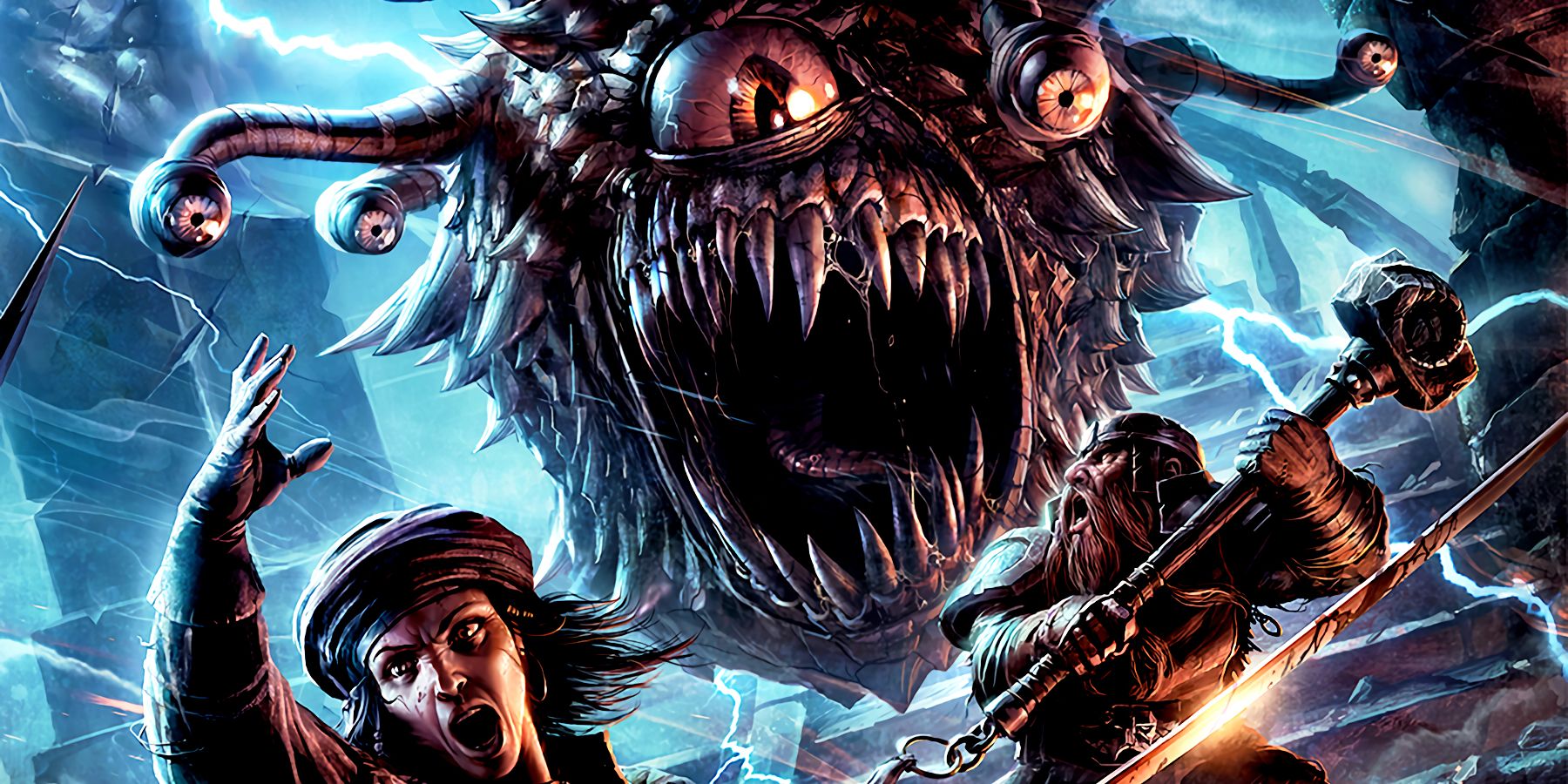
There is a significant gap between the release of the new Player's Handbook and its accompanying Monster Manual.
One D&D can't be properly evaluated without all three core rulebooks, leaving character and monster balance a mystery for five months.
The revised rules for Dungeons & Dragons will begin its release this year, but the staggered schedule will prevent players from judging the edition’s balance until 2025. One D&D, or edition 5.5, is launching in a different order from the original 5e books. The fifth edition Player’s Handbook was released in August 2014, the Monster Manual in September, and the Dungeon Master’s Guide in December of that year. This year will see the revised Player’s Handbook and Dungeon Master’s Guide, but the new Monster Manual does not drop until 2025, making it impossible to properly evaluate its game design until the new year.
The 2024 Dungeons & Dragons release schedule currently shows the new Player’s Handbook dropping in September and the Dungeon Master’s Guide releasing in November, but the updated Monster Manual is not scheduled until February 2025. This is a delay of three months from the Dungeon Master’s Guide, and five months from the Player’s Handbook, creating an odd lacuna for potential early adopters of the new rule set. Fans can compare classes among themselves and contrast the edition’s complexity with the 2014 5e rules, but until the revised monsters are available, the edition holds too many unknowns to gauge its quality.
Related D&D - Vecna: Eve of Ruin Release Date, Preorders, Bundles, & Book Info A new adventure for Dungeons and Dragons will celebrate the franchise’s 50 years by bringing back one of its most prominent villains ever: Vecna.
D&D Class Balance Cannot Be Judged Without Monsters
Classes That Seem Viable May Not Be If Monster Design Works Against Them
Close
Longtime DnD fans know that monster balancing has been a consistent challenge for the game’s designers. Monsters of the Multiverse buffed monsters that were too weak in the 2014 Monster Manual, since some high-level creatures only earned their Challenge Rating when using a very specific series of actions. Many 5e DnD enemies are essentially a pile of hit points with a bland multiattack routine, and possibly a more interesting and unique ability that rarely gets to shine thanks to the game’s action economy. Players can see the capabilities of the revised hero classes in September, but this reveals little without monsters.
Your browser does not support the video tag.
Some of 5e DnD’s lackluster builds and classes, like a two-weapon specialist fighter, or the monk class, may have seemed fine in a vacuum, but when compared against monsters of various levels, it became evident that these character options were subpar. Feats like Great Weapon Master and Sharpshooter may have seemed unwise, with their -5 penalty to hit, but a review of actual monsters tells a different story. The Thug, a foe ranked as CR 1/2, is a common archetype for low-level parties to encounter. This enemy has only an Armor Class of 11, but a relatively staggering 32 Hit Points.
Hit Point bloat has been an issue with monster design across editions. The original 4e Monster Manual designs had large pools of HP, but offered little threat. The redesigned Monster Vault creatures were deadlier, but fell faster. 5e DnD suffers from similar issues with its monster design, but more recent supplements have tried to correct this problem.
Players discovered the supremacy of DnD hand crossbows and polearms thanks to a combination of feats that synergize well. A sword and shield fighter might take four to five rounds to dispatch a single Thug at low levels, where more optimized builds can defeat them in less than half that time. The efficacy of the monk’s Stunning Strike feature becomes questionable when compared against the consistently high Constitution saving throws of most powerful monsters. Players cannot gauge the usefulness of elemental specialization without knowing how common monster resistances to those elements are, and the same applies to status effect immunities.
Fans Cannot Know If One D&D Is Worth It Until 2025
Players Happy With 5e May Not Want To Change Rulesets
All of this adds up to a bleak picture for the 2024 DnD revision. The Player’s Handbook and Dungeon Master’s Guides often contain a few sample monsters, and new rules are traditionally paired with simple adventures that contain monsters within them. These typically only address a few low-level challenges, however, which leaves players guessing as to the validity of builds at mid and high levels. Though 4e DnD was polarizing with fans, it avoided this particular pitfall by releasing all three of its core books at the same time, letting players compare class features against monsters of every Challenge Rating.
Related Everything We Learned At The D&D 50th Anniversary Event A D&D showcase of 50th Anniversary plans offered a look into what fans can expect from the tabletop roleplaying game in 2024 and beyond.
While One D&D promises compatibility with existing adventures, suggesting the new rules might technically work with the current 5e Monster Manual, fans should expect the new monster and character books will better reflect the designers' intent for the revision. Dungeon Masters could have used the original 3.0 Monster Manual with 3.5 Player’s Handbook characters, or the 4e Monster Manual with D&D Essentials characters, but redesigned and rebalanced monsters are needed to fit the specifics of each revision. The Monster Vault that launched with 4e’s revision, D&D Essentials, offered a distinct improvement over the original 4e monster design, especially concerning combat speed.
Though backward compatibility with existing 5e adventures has been promised for One D&D, the practicality of such compatibility remains to be seen. The 4e Essentials revision worked seamlessly with the original 4e DnD content, but adapting a 3.0 adventure for 3.5 characters was cumbersome and impractical.
The model of splitting the rules between three core books has long set DnD apart from most other tabletop RPGs. The significant delay in releasing the One D&D Monster Manual creates a roadblock to campaigns, certainly, but it also limits fans from judging how much of their time and money they want to invest in the revision, as opposed to continuing with the abundant amount of existing 5e DnD material published by Wizards of the Coast and third parties. Those who are content with the current version of the rules can continue with quality unofficial DnD 5e settings for years.
One D&D Must Convince Players To Make Adjustments
Without The 2025 Monster Manual, Balance Can't Be Truly Evaluated
New rules have to offer significant improvements over 2014’s 5e DnD system to persuade groups to adapt to changes, as opposed to continuing with a familiar rule set or shifting to any of the many promising DnD alternatives on the market. Fans cannot accurately make that judgment until nearly half a year after the One D&D Player’s Handbook is released. DnD can tell many kinds of stories, but at its core, it is a heroic fantasy adventure where heroes battle monsters. The release schedule leaves Dungeons & Dragons’ future in an awkward position, and players must wait until 2025 for answers.






COMMENTS