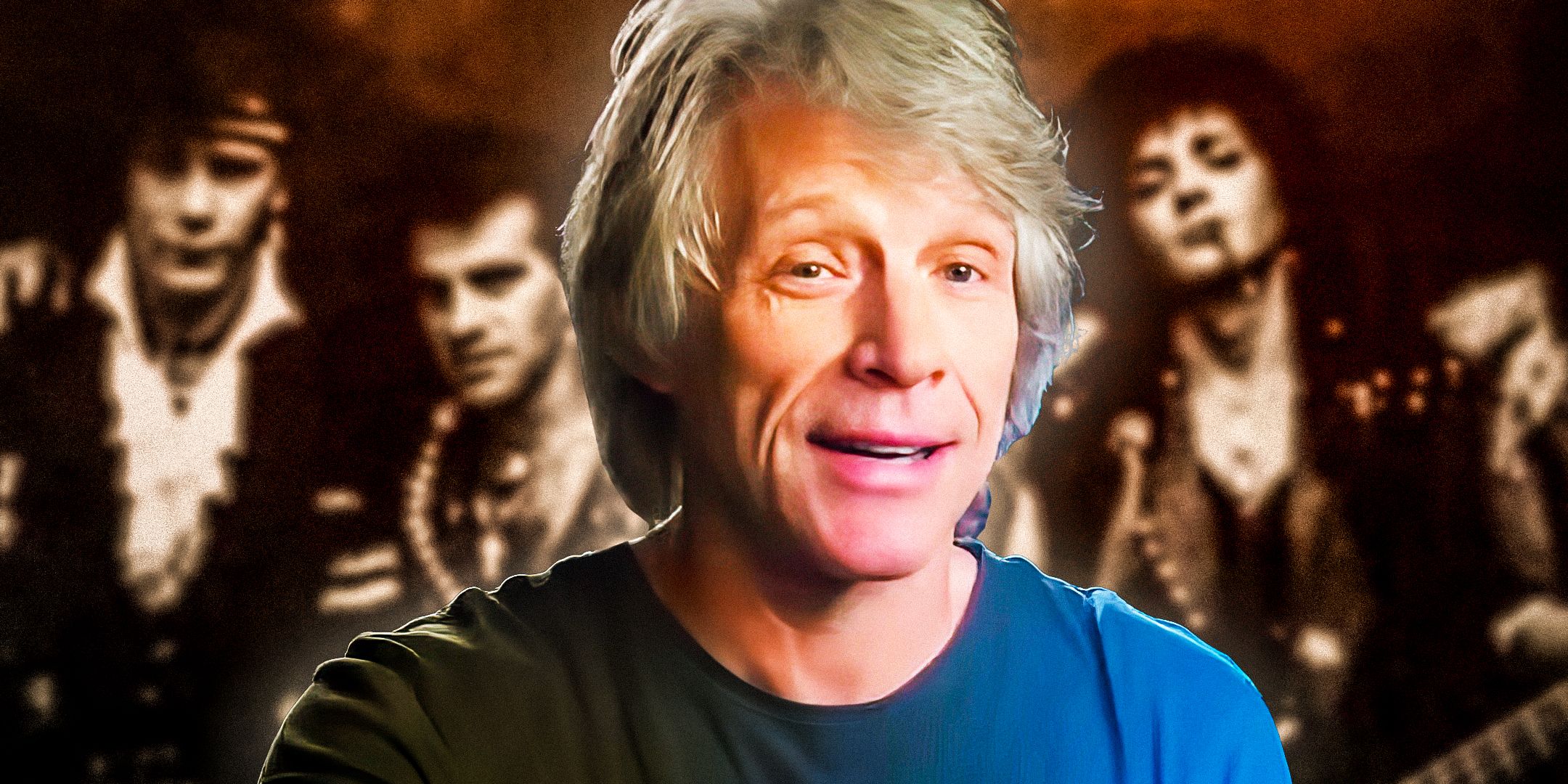
10 Biggest Bon Jovi Reveals From Hulu's Thank You, Goodnight Documentary
Summary Jon Bon Jovi considered retirement in 2019, reflecting on the toll of preserving his legacy in the documentary series.
Vocal issues since 2013 led Bon Jovi to consider stepping down if he can't perform at his best.
Richie Sambora's regretful departure from Bon Jovi during the Because We Can Tour is explored in the series.
Hulu's documentary Thank You, Goodnight: The Bon Jovi Story is a four-part miniseries covering over four decades of the rock band Bon Jovi's journey and features some big revelations about the group's history. Additionally, the docuseries highlights Jon Bon Jovi's vocal injury and how he navigates being a rock star still touring in his 60s compared to when the band originated in 1983. The lead singer turned 62 on March 2, 2024, less than two months before the release of Thank You, Goodnight: The Bon Jovi Story.
Transitioning between 2022 and significant moments from the past, the documentary series details Bon Jovi's highs and lows. It also takes viewers behind the scenes of the Grammy Award-winning band's formation, surprising opinions on a couple of their biggest hits, and the reality of the toll it takes to play hundreds of shows during endless concert tours.
Related Where Every Bon Jovi Band Member Is Now (& What Happened To The Ones Who Left) The Hulu docuseries offers an exclusive behind-the-scenes look at the rise of one of the most popular American rock bands of the 1980s, Bon Jovi.
10 Jon Bon Jovi Considered Retirement In 2019
The desire to preserve his legacy took a toll on Jon Bon Jovi
Close
In the first episode of Hulu's documentary series, "New Jersey vs. Everybody," Jon Bon Jovi admits that he thought about retirement in the fall of 2019 when the band was in South America. The rock star wondered, "Maybe it's time to walk away. Maybe it's time to cool it."
Jon Bon Jovi goes on to explain the struggle of wanting to "achieve excellence" but being aware that those goals come with a price. He acknowledges the toll it can take on someone mentally, physically, and emotionally, in addition to coming to terms with aging. Change over time is inevitable, and for a long time, Jon Bon Jovi tried "to maintain that being" of his younger self on stage, but it took more out of him as he became older. A significant component was the impact on his vocal cords.
9 Jon Bon Jovi Has Been Suffering Vocal Issues Since 2013
The singer will walk away from Bon Jovi if he is unable to perform at his best
Close
Jon Bon Jovi began taking vocal lessons during the band's 1988-1990 New Jersey Syndicate Tour. He credits the lessons for making him a better singer and shares that he felt great for the next two decades. It wasn't until 2013 that the singer notes that problems began. Jon Bon Jovi felt his voice wasn't at the level he expected, so he started working with three vocal coaches.
The effort is worth it for him; the bottom line for Jon Bon Jovi is that if he can't perform at his best or feels like he's dragging the band's legacy down, he's out.
Over the past couple of years, Jon Bon Jovi has attempted to return to where he was a decade ago. "At 50, things change," he says. "And at 60, it's like, holy f---." He doesn't consider his work — including laser treatments and vitamins — on his vocal cords tiring, but it's similar to a workout. The effort is worth it for him; the bottom line for Jon Bon Jovi is that if he can't perform at his best or feels like he's dragging the band's legacy down, he's out.
8 Jon Bon Jovi Was A Gofer For His Cousin Tony Bongiovi
Jon Bon Jovi ran errands at New York's recording studio Power Station
Close
In 1980, Jon Bon Jovi became a gofer for his second cousin, legendary producer and recording engineer Tony Bongiovi. The future Rock & Roll Hall of Famer was allowed to run errands at the Power Station, a famous recording studio in New York that Bongiovi founded in 1977. Some tasks involved included running to the bank, grabbing food, and making horse bets. Other times, "you had to bring girls, sometimes you had to bring drugs," among other favors.
The opportunity led to Jon Bon Jovi meeting Obie O'Brien, a producer and record engineer for whom he would record original songs during the nights and weekends at the Power Station. He also had the chance to witness some of the greatest musicians of all time at the studio, including The Rolling Stones, David Bowie, Queen, Diana Ross, and more. O'Brien noted Jon Bon Jovi's commitment to learning all he could about making music and how he would spend his time writing songs at the Power Station after his shift. This eventually led to the rock band's debut single, "Runaway."
7 Richie Sambora Didn't Like Bon Jovi's Hit "Runaway"
Sambora feels their early music didn't have Bon Jovi's signature style
Close
In episode 2, "Nowhere to Everywhere," former band member Richie Sambora admits that he "kind of disliked very much" Bon Jovi's hit song "Runaway." Jon Bon Jovi wrote and recorded the song in 1982 at the Power Station before the rock band was formed. After multiple record companies rejected him, the lead singer took his cassette to DJ Chip Hobart, who worked at the local radio station WAPP. The song was included with a mixture of local musicians' tracks and became a hit in 1983; Bon Jovi was created following the initial success of "Runaway."
Sambora, the band's lead guitarist and co-writer at the time, didn't give further details in Thank You, Goodnight about his displeasure with "Runaway." However, he credited Jon Bon Jovi's leadership qualities and how he was a "go-getter" and "hustler." Sambora commented on "Runaway" years before the documentary during an interview with The Sydney Morning Herald in March 2014:
The early Bon Jovi stuff I can't stand. I just think we didn't have our stylistic voice. But some people love some of that stuff. Like people are going "[play] Runaway" and I'm going "I hate that song! I'll never play it again!''
6 Bon Jovi's "Disaster" Of An Opener At Madison Square Garden
The band's first time playing Madison Square Garden had a rough start
Close
After ZZ Top's opener canceled on their Madison Square Garden show in 1983, Bon Jovi was brought in to open for the rock band instead. It was the band's first time playing in Madison Square Garden, and the plan was to kick off with a song written by Jon Bon Jovi and Sambora. When Sambora attempted to start with a guitar solo to light up the crowd, his guitar didn't work. The audience went from "polite applause" to chanting for ZZ Top. Sambora calls it "the longest 18 seconds" as "everything went into slow motion."
Your browser does not support the video tag.
At the time, Bon Jovi didn't have the resources they would later receive as a famous music group. Jon Bon Jovi took off his own guitar and gave it to Sambora, saying, "That's what we've got. Let's go." Sambora dove into his solo and Bon Jovi played for about 22 minutes. The crowd and the band had fun, but Doc McGhee — their manager who signed them on after the event — called it a "disaster." The experience became the first of many lessons for the band.
5 Touring With The Scorpions Taught Bon Jovi How To Perform
Scorpions prioritized high-energy entertainment during their shows
Close
In 1984, Bon Jovi began touring with the German hard rock band the Scorpions, best known for their hit "Rock You Like a Hurricane." The band was branching out and getting to experience playing in arenas, along with learning from the Scorpions how they wanted to perform on stage. In Thank You, Goodnight: The Bon Jovi Story, the band shares how the Scorpions gave 120 percent during every concert and knew how to involve the audience in the show.
Bon Jovi became known for their high-energy performances even when touring hundreds of shows in over 20 countries. Jon Bon Jovi strove to include the crowd in every concert by engaging with them directly and guaranteeing an unforgettable experience. Part of the inspiration for being an exciting band to watch on stage came from Bon Jovi's time with the Scorpions.
4 Jon Bon Jovi Was Underwhelmed By "Livin' On A Prayer"
The original version of the song was missing a bassline
Close
When Bon Jovi began working on their third album, Slippery When Wet, they brought in musician and songwriter Desmond Child to help take their music to the next level. After Jon Bon Jovi and Sambora co-wrote "You Give Love a Bad Name" with Child, they began work on "Livin' on a Prayer." Jon Bon Jovi initially wasn't impressed by the first version of the track, though. The lead singer recalls the day they wrote it and "not thinking much of the song."
It's a piano, an acoustic guitar, and us sitting there with notebooks. The entire verse is one chord, and there's no bassline... There's nothing else there. So when we walked out of the room, I went, "Eh, it's okay. Who knows? It's fine."
Child says he and Sambora begged Jon Bon Jovi to record the song, as the lead guitarist called "Livin' on a Prayer" the best song the band had written to date. As the story goes, they reworked the song, which included a bassline by bassist Hugh McDonald. "Livin' on a Prayer" became a No.1 Billboard hit and is considered Bon Jovi's signature song.
3 Jon Bon Jovi Eloping With Dorothea Hurley Caused Backlash
The couple's marriage was met with drama and concern
Close
When Jon Bon Jovi married high school sweetheart Dorothea Hurley after eloping in Vegas in April 1989, the singer says, "It was holy hell from the minute we started telling anybody." He had assumed people would be happy for the couple, but there was "drama and backlash" from the rest of the band, their families, McGhee, and especially the fans. Bon Jovi's keyboard player and backup vocalist, David Bryan, admitted they were worried female fans wouldn't like Jon Bon Jovi anymore because he was married.
Hurley spoke about the negative reactions, sharing her concerns that she did not want "to be the reason why Jon was not able to continue in what he wanted to do." Ultimately, the couple determined this decision was about them and nobody else, even if some people's perspective of Jon Bon Jovi had changed.
2 Doc McGhee Didn't Believe In Jon Bon Jovi's Acting Career
Jon Bon Jovi made his first cameo in the film Young Guns II
Close
Starting in the early '90s, Jon Bon Jovi wanted to pursue a career in acting. Following his debut solo album, Blaze of Glory — written as a soundtrack for the Western movie sequel Young Guns II — he became interested in movies and writing soundtracks while the band took a break. Bon Jovi's manager admits in Thank You, Goodnight: The Bon Jovi Story, episode 3, "Brothers in Arms," that he "didn't believe in [Jon Bon Jovi's] acting career at all."
The two fell out over their disagreement about Jon Bon Jovi's career path, and McGhee was let go. "There was a lot of unexplained animus," Jon Bon Jovi shares, saying it was unclear why they hated each other. Child explains that it's easy to "lose control of your life" when you "have a manager that's that strong" who normally makes decisions on their client's behalf. Jon Bon Jovi realized they didn't need a manager and created Bon Jovi Management, essentially making him "the boss of this big business" at about 28 years old.
1 Richie Sambora Regrets How He Left Bon Jovi
Sambora offered an apology for his abrupt departure from the band
Close
During their Because We Can Tour, Sambora quit Bon Jovi in 2013. The band revealed that while recording their album What About Now, Sambora frequently missed sessions for personal reasons. Bon Jovi's backup guitarist and producer, John Shanks, filled in for Sambora, who said he felt the band was becoming "stale." Jon Bon Jovi and the band continued recording the album and Sambora suddenly exited. Bon Jovi found a guitarist named Phil X, who was meant to be a temporary replacement but became a permanent member in 2016 when it was clear Sambora was not returning.
"She needed me, and I needed her; truthfully, we didn't have enough time."
Beyond tension with the band, Sambora also cited "deep family problems" and how being on the road kept him away from his growing daughter: "She needed me and I needed her, truthfully, we didn't have enough time." In episode 4 of Thank You, Goodnight: The Bon Jovi Story, "Legendary," Sambora reveals that he has no remorse about leaving the band but regrets how he departed Bon Jovi. He apologized to his fans and "the guys" in the band during his final interview on the documentary series.
All four episodes of Thank You, Goodnight: The Bon Jovi Story are streaming now on Hulu.
Source: The Sydney Morning Herald




COMMENTS