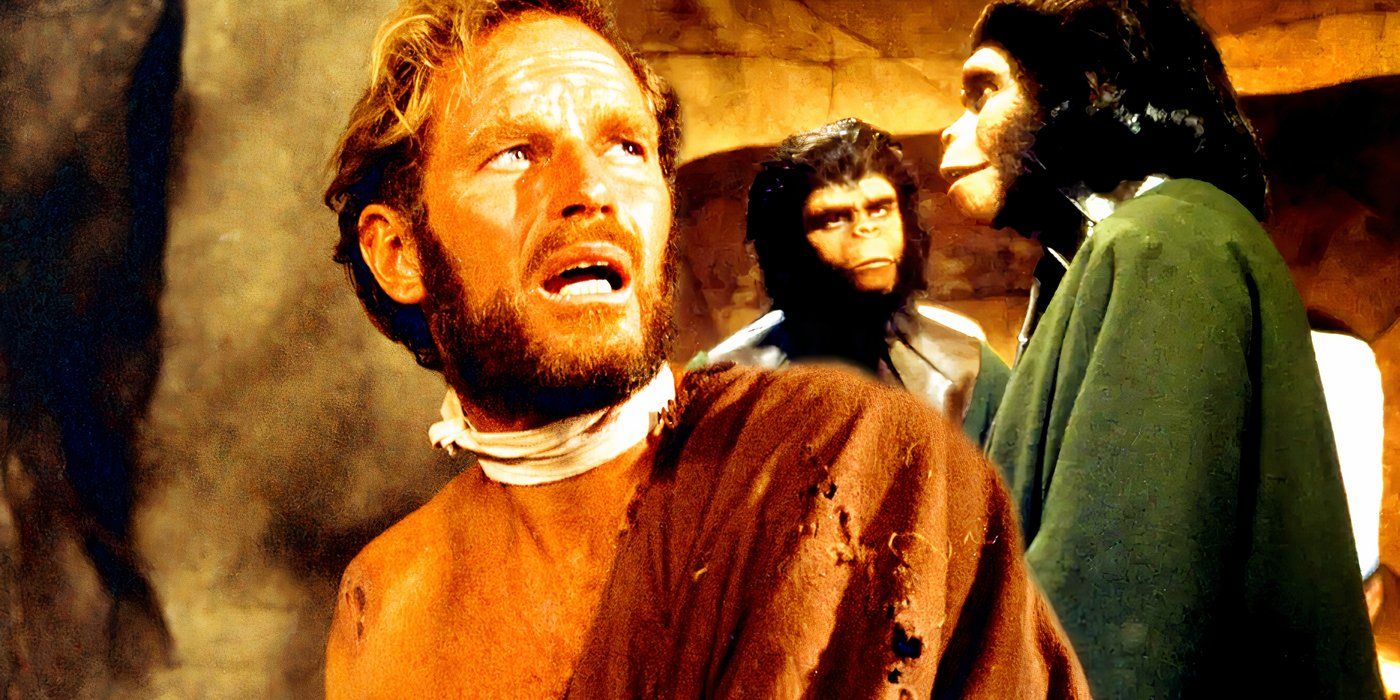
Original 1968 Planet Of The Apes Remake Prospects Get Candid Response From Kingdom Director Wes Ball
Summary Wes Ball believes that remaking the 1968 Kingdom of the Planet of the Apes is unnecessary.
The director states the original movie holds up even if it is somewhat dated.
Tim Burton previously tried to remake the original 1968 movie, but it was met with negative reception.
Kingdom of the Planet of the Apes director Wes Ball explains why he has no interest in remaking the original 1968 Planet of the Apes. Ball's new film takes place 300 years after the prequel trilogy that concluded with Caesar's death in War for the Planet of the Apes. Despite its later placement in the timeline, Kingdom of the Planet of the Apes is still a prequel to the original film and is intended to launch another trilogy for the long-running franchise. The reviews for Kingdom of the Planet of the Apes have been positive, which spells promise for the franchise's continuation.
While speaking with CinemaBlend, Ball was asked whether he felt any pressure to ultimately remake the 1968 Planet of the Apes and whether he had any interest in creating such a project. The director responded that he wasn't interested in remaking the original movie, even questioning the necessity. Read Ball's comments below:
No, I've never felt the pressure. In fact, I have no say in this, so it doesn't matter, but you would never go back and remake the original. You would just make all the stories that you can do up to that point [makes sound effects]. Cut. You go back and start '68 over, and there's the end of the franchise. Hopefully that's many, many years [from now]. But why? Why go back and remake it? Right? It's great. It still holds up. You can still watch it. It's great. It's a little timed; it's a little dated. But it's still works, you know? So anyway, that's the way I see it.
Wes Ball Proves Why A Planet Of The Apes Remake Isn't Necessary
Tim Burton Tried & Failed To Live Up To The Original 1968 Version.
Close
These prequels have received positive critical and audience reception, which a remake would likely fail to deliver as it would inevitably be compared to and unable to live up to the heights of the 1968 Planet of the Apes.
The 1968 Planet of the Apes is one of the most iconic science-fiction movies of all time. An updated version would be akin to remaking other beloved science-fiction films, including the original Star Wars, Back to the Future, or Blade Runner. There is no need to undermine or reinvent the triumph of the first Planet of the Apes and its enduring legacy in cinema and the science-fiction genre. Tim Burton's critically panned 2001 Planet of the Apes remake is proof that it can't work.
Related Planet Of The Apes (1968) Ending, Explained The 1968 original adaptation of Planet of the Apes was a sci-fi cinematic event, but the classic movie's ending left viewers with a lot of questions.
Among the original's many strengths, nothing can top the Statue of Liberty revealed at the end of 1968's Planet of the Apes. Burton tried and failed to do it in a convoluted fashion at the end of the 2001 remake. As Ball indicates, one of the franchise's most significant advantages is Planet of the Apes' vast timeline. Even with the 300-year jump between War for the Planet of the Apes and Kingdom of the Planet of the Apes, there are still many years left to explore before the original.
This leaves plenty of room to tell new stories and further explore the evolution that leads to the version of Earth that Taylor returns to in the original film. Unlike the 2001 remake, the prequel trilogy revolving around Caesar and Kingdom of the Planet of the Apes still fit within the canon of the original movie. These prequels have received positive critical and audience reception, which a remake would likely fail to deliver as it would inevitably be compared to and unable to live up to the heights of the 1968 Planet of the Apes.
Kingdom of the Planet of the Apes is currently playing in theaters.
Source: CinemaBlend




COMMENTS