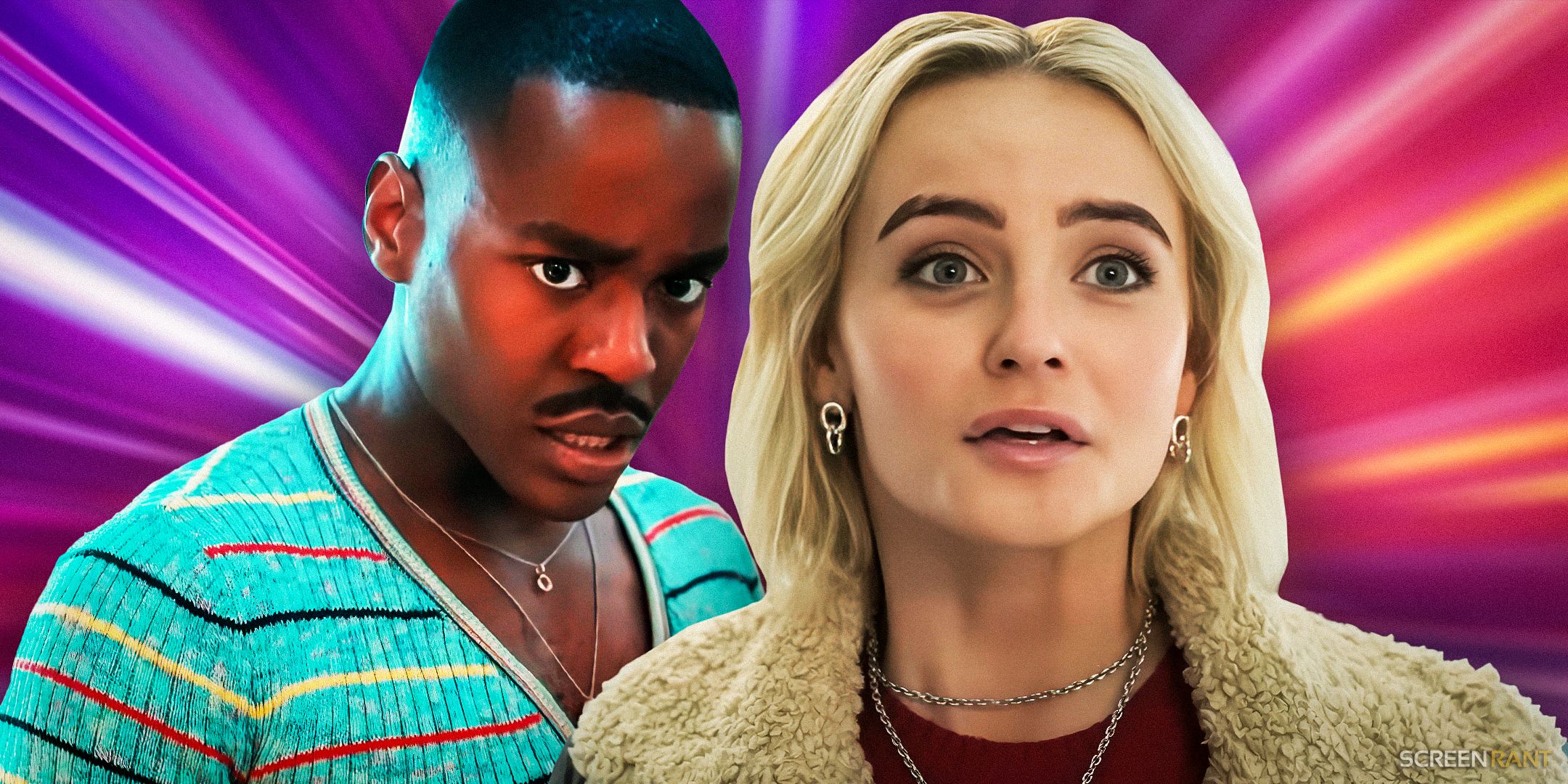
Doctor Who Season 14's Great First 2 Episodes Cover Up A Bigger Problem RTD Must Address
Warning: spoilers ahead for Doctor Who season 14, episodes 1 & 2
Summary Doctor Who season 14 starts strong with "Space Babies" and "The Devil's Chord," setting a promising tone for the new era.
The success of Ncuti Gatwa's debut year as the Doctor will be crucial in revitalizing the show.
The real challenge for RTD lies in the final two episodes, where big mysteries need to be successfully resolved.
Doctor Who makes a strong opening statement with "Space Babies" and "The Devil's Chord," but season 14's true test is still to come for RTD. Since Disney insists on marketing Ncuti Gatwa's first full season flying the TARDIS as "Doctor Who season 1," it's hardly surprising that Fifteen's early adventures feel like a clean slate. With reaction to recent Doctor Who seasons ranging from muted to outright divisive, tempting back former showrunner Russell T Davies was intended as a rejuvenation, but that soft reset started looking a little bit harder once Disney joined the party.
Consequently, a great deal is riding upon season 14. Not only is Gatwa's debut year leading the Doctor Who cast a test of whether the cloud of apathy that developed over the past three seasons can be shrugged off, but Disney will be hoping to see a return on their investment in the Whoniverse. It is no overstatement to claim Doctor Who's future will be shaped by how well season 14 is received, and while "Space Babies" and "The Devil's Chord" get proceedings off to a very strong start, RTD's real challenge remains on the horizon.
Related 20 Greatest Doctor Who Stories Of All Time, Ranked Doctor Who has been a fixture on TV screens for 60 years, meaning there are plenty of stories to choose from when picking out the Time Lord's best.
Doctor Who Season 14's "Space Babies" & "The Devil's Chord" Are Both Great Episodes
Close
The bottom line for Doctor Who season 14 is: "so far, so good." Episode 1, "Space Babies," serves as a classic opener that would have slotted perfectly into RTD's original era if his 2000s VFX budget stretched to making babies talk. Never taking itself too seriously, "Space Babies" is a blast of good-humored fun that expertly establishes the all-important bond between Ncuti Gatwa's Fifteenth Doctor and Millie Gibson's Ruby Sunday, then sprinkles timely social commentary over the top.
Effectively recycling the "base under siege" format with an appropriately scary monster that - in true RTD style - turns out to be utterly ridiculous, "Space Babies" is a gentle introduction to Doctor Who for newcomers, and a pleasant escape for those more familiar with the Time Lord's shenanigans. Beyond the uncanny valley visuals of talking babies, nothing in Doctor Who season 14's premiere is reinventing the wheel, but strong performances, decent gags, and swift pacing ensure quality remains high nonetheless.
"The Devil's Chord" is even better - more ambitious in scale and more unique in style. The Doctor's latest jaunt through 1960s London puts a few well-placed dents in the traditional Doctor Who mold, bringing back the musical numbers that have become increasingly common since RTD's return and delivering the lofty concept of a Beatles-free world that almost sounds like something Danny Boyle could make a movie about. Jinkx Monsoon as Maestro is a stunningly good choice, justifiably forcing the entire episode to orbit around them. The Doctor's genuine terror at facing another Toymaker-level threat, meanwhile, raises the stakes far, far higher than "Space Babies."
Fifteen's sparring with Maestro is reminiscent of the first time Jon Pertwee's Doctor played charisma tennis with Roger Delgado's Master in the 1970s, and it would be criminal if "The Devil's Chord" is the last audiences see of Jinkx Monsoon's thrilling new villain (spoiler alert: it probably isn't). The Doctor's dynamic with Ruby gets better and better with each scene, and RTD makes clever use of Doctor Who's hefty tome of lore to anchor Maestro's introduction to existing franchise history. Some Doctor Who viewers may wince their way through "There's Always A Twist At The End," but this kind of daring madness is exactly what RTD was rehired for.
Doctor Who's Problem Isn't Its Standalone Episodes - It's Sticking The Landing
Doctor Who Season 14's Success Hinges On Its Larger Narrative
Doctor Who season 14 emerges from its first two episodes looking very good. No major missteps are made, and some of the magic lacking during Chris Chibnall's reign is unquestionably restored - in addition to a few fresh ingredients tossed into the blend. "Space Babies" and "The Devil's Chord" are not, however, the episodes upon which Doctor Who's new era will eventually be judged.
The first installments of Ncuti Gatwa and Millie Gibson's debut run are distinctly standalone escapades. "Space Babies" is especially isolated, only briefly referencing the larger Ruby Sunday falling snow mystery simmering in the background. "The Devil's Chord" digs deeper into Doctor Who's DNA by revealing Maestro as the Toymaker's child and dropping some meatier Ruby hints, but, ultimately, episode 2 is still a standalone story about a godlike villain wreaking havoc in Earth's past... ft. The Beatles.
Delivering good standalone outings has never really been Doctor Who's problem. Even the less-than-loved "Flux" season hit form with "War of the Sontarans" and "Village of the Angels," largely because both ignored the overarching Flux and Timeless Child storylines. RTD is famously adept at penning one-off Doctor Who stories, so while season 14 begins in encouraging fashion, "Space Babies" and "The Devil's Chord" were never going to be anything less than solid entertainment. This style of episode is RTD's bread and butter - exciting 45-minute bursts of family-friendly sci-fi that contain small clues building toward the eventual grand finale.
Doctor Who Season 14's Problems Are More Likely To Come In Its Final 2 Episodes
"The Legend Of Ruby Sunday" & "Empire Of Death" Pose The Biggest Challenge
Close
Indeed, it's the grand finale looming ahead that poses the real challenge for RTD with Doctor Who season 14. Doctor Who typically attempts one big swing per season, usually culminating in the final episodes after a season of build-up. RTD's first era had Bad Wolf, Torchwood, and Saxon, then his successor, Steven Moffat, fumbled the pass. Rather than sticking to one long-running arc in a season, Moffat wove a needlessly complicated narrative involving cracks in Amy's wall, the Silence, Gallifrey, the Doctor's real name, Trenzalore, the Impossible Girl, the Doctor's death, River Song's parentage, and an exploding TARDIS throughout Matt Smith's entire tenure.
Doctor Who's problem is not figuring out how to keep audiences enthralled for one hour on a Saturday night.
Moffat eased up on the complex multi-season angles for Peter Capaldi's Twelfth Doctor, save for the quite brilliant Missy teases in Doctor Who season 8, but the franchise once again found itself in a mire on long-form storytelling when Chris Chibnall took over as showrunner. The Timeless Child, Chibnall's big gambit, took the form of an immensely controversial retcon that fundamentally changed the premise Doctor Who was built upon. Even worse, the narrative was never properly concluded, with the biggest Timeless Child questions still unanswered as of season 14.
Doctor Who's problem, then, is not figuring out how to keep audiences enthralled for one hour on a Saturday night, but how to tell a more ambitious, ongoing arc that doesn't inspire head-scratching confusion or keyboard-hammering rage. For Doctor Who season 14, the real test isn't "Space Babies" and "The Devil's Chord" - a test passed with flying colors, incidentally - but the final two episodes: "The Legend of Ruby Sunday" and "Empire of Death."
Can RTD Successfully Pay Off Doctor Who Season 14's Big Mysteries?
The Bi-Generation Twist Was A Red Flag
Close
RTD has seeded an array of mysteries since returning to Doctor Who - the One Who Waits, Ruby's parents, the mystery woman who abandoned her, Meep's boss, Mrs. Flood, etc. - and season 14's final two episodes will inevitably be where some or all of those threads are resolved. Doing so successfully will be the true mark of Doctor Who's long-awaited return to form. Conversely, botching the big reveals will prove the same old problems haven't been addressed.
Initial success could count for naught if RTD's Ruby Sunday resolution goes down like a Sontaran stand-up routine.
On one hand, RTD has a very strong track record of handling Doctor Who's season-long mysteries deftly, with Bad Wolf, Saxon, and even the Time War all held aloft as prime examples of storytelling in modern Doctor Who. On the other, the returning showrunner got off to a shaky start with the 60th anniversary's bi-generation twist. While not something Doctor Who had been hinting at prior, bi-generation was exactly the kind of sweeping, unnecessary, convoluted lore rewrite that caused problems during Moffat and Chibnall's eras and stirred up controversy with viewers.
Big answers have been promised regarding the mystery of Ruby Sunday, and how well Doctor Who resolves that narrative will have a far bigger impact on season 14's legacy than talking infants or The Beatles. Doctor Who may be hitting all the right notes in episodes 1 and 2, therefore, but that initial success could count for naught if RTD's Ruby Sunday resolution goes down like a Sontaran stand-up routine.
Episode Disney+ Release Date "Space Babies" and "The Devil's Chord" May 10 "Boom" May 17 "73 Yards" May 24 "Dot & Bubble" May 31 "Rogue" June 7 "The Legend of Ruby Sunday" June 14 "Empire of Death" June 21




COMMENTS