Doctor Who's Beatles Episode True Story Accuracy: 9 Changes & Details
Warning: Spoilers ahead for Doctor Who season 14, episode 2, "The Devil's Chord."
Summary Doctor Who's "The Devil's Chord" changes The Beatles' history, but features some factual accuracy, like Abbey Road Studios ties.
The cast includes all Beatles members, primarily focusing on John and Paul, while weaving in other historical figures.
The use of the Mrs. Mills Piano in the final showdown reflects a unique blend of fiction and history.
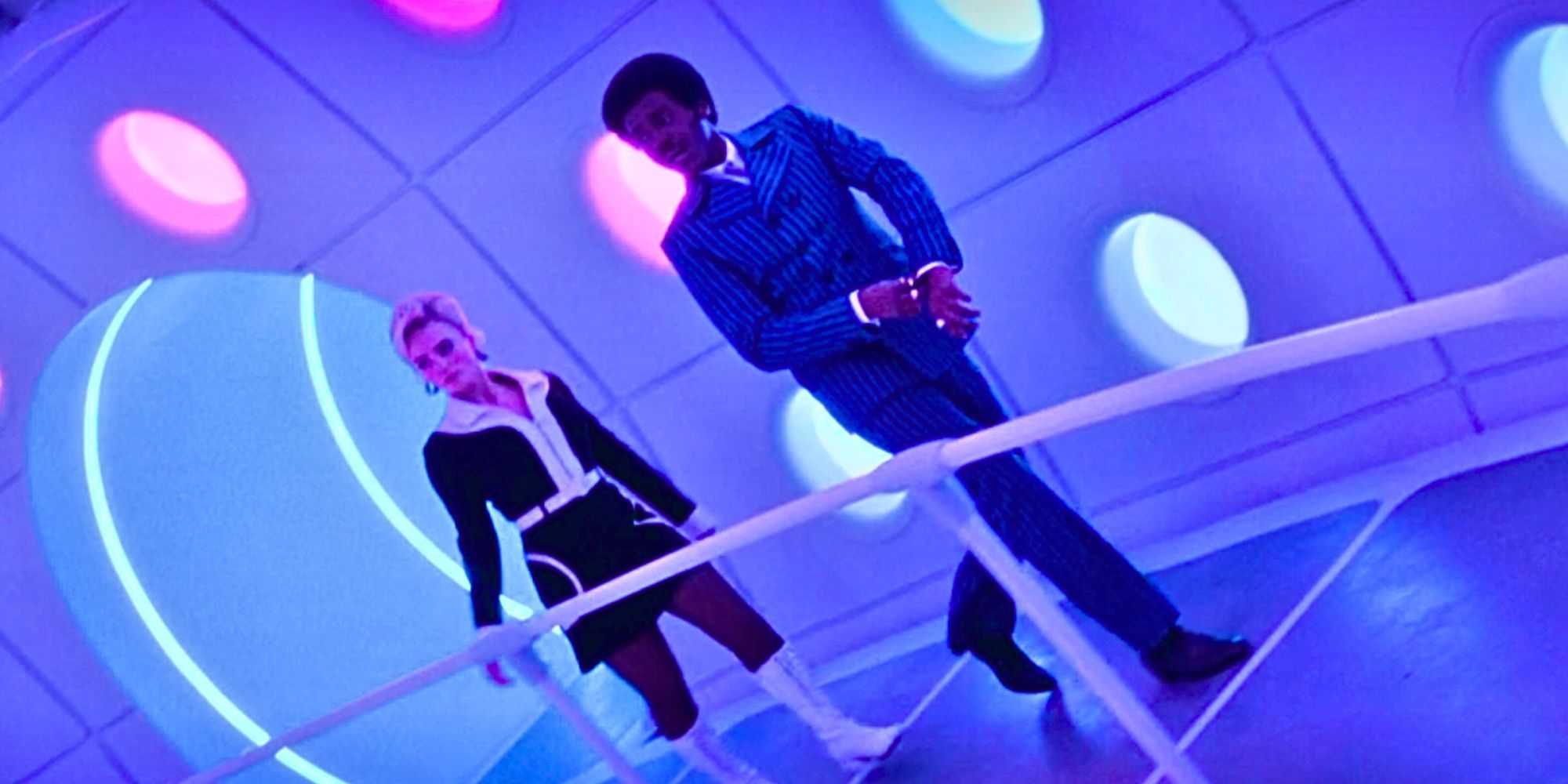
Doctor Who season 14, episode 2, "The Devil's Chord," features one of the most legendary bands of all time, but certain facts about The Beatles' early years are purposefully different from what happened in real life. Although "The Devil's Chord" alters The Beatles' true history, parts of the episode are surprisingly accurate. John, Paul, George, and Ringo have strong ties to Abbey Road Studios, so it makes sense for the story to unfold there. "The Devil's Chord" adds to the list of historical figures met by the Doctor in the modern era, even if some details are intentionally incorrect.
The Doctor Who season 14 cast includes a version of all four members of The Beatles, including another famous Liverpool musician. Although all five fictional portrayals of the performers appear in "The Devil's Chord," it's only really John Lennon and Paul McCartney who play any meaningful role in the story of the episode. Some of the episode's inaccuracies are glaringly obvious. However, the installment is surprisingly consistent with real events in parts. What happens as a result is a rewarding blend of history and fiction.
Related 20 Greatest Doctor Who Stories Of All Time, Ranked Doctor Who has been a fixture on TV screens for 60 years, meaning there are plenty of stories to choose from when picking out the Time Lord's best.
9 Did The Beatles Really Record Their Debut Album At Abbey Road in 1963?
The Beatles' first studio album is called "Please Please Me"
Close
The answer to this question is simple - yes. However, The Beatles' first album, 1963's Please Please Me, actually began recording in late 1962. Sessions ended in February 1963, so "The Devil's Chord" would need to be set very early in 1963 to be historically accurate, although the month is never mentioned in the episode. Abbey Road Studios went on to become a big part of The Beatles' recording process throughout their career. Much of the band's discography was recorded at the same facility. So, the actors playing The Beatles in Doctor Who are in the right place.
Interestingly, The Beatles' final album was recorded and released in 1969 and was named Abbey Road.
As the Doctor mentions in the episode, the studio wasn't actually named Abbey Road Studios until 1976. Before then, it was known as EMI Recording Studios. According to the Abbey Road Studios website, it was constructed in 1931 and was the first purpose-built recording studio in the world. Interestingly, The Beatles' final album was recorded and released in 1969 and was named Abbey Road. So, the studio was never known as Abbey Road Studios until long after the band had parted ways.
The Beatles broke up in 1970.
8 Was Cilla Black Also Recording At Abbey Road In 1963?
Cilla Black was also from Liverpool
Close
Although never quite achieving the same level of superstardom as The Beatles, Cilla Black' strong ties to the band as well as her own incredible vocal talents gained her a great deal of success. Her first single, "Love of the Loved," was written by John Lennon and Paul McCartney, and produced by well-known Beatles producer, George Martin. At the time, Martin worked heavily out of Abbey Road Studios, so it's likely that "Love of the Love" was indeed recorded there.
What remains unclear is whether Doctor Who took a creative liberty by having Black recording at the same time as her fellow Liverpudlians, The Beatles. Cilla Black certainly went on to record further material at Abbey Road, and her connections to The Beatles and Liverpool made her part of the Merseybeat movement and the cultural phenomenon known as the British Invasion.
7 Who Was The "Martin" Recording The Beatles?
George Martin was The Beatles' producer
Close
The man behind the recording desk in "The Devil's Chord" is a fictionalized version of producer George Martin. The legendary figure was often referred to as "The Fifth Beatle," due to how much work he did with the Liverpool four-piece. As well as producing The Beatles, Martin also worked with artists like America, Jeff Beck, and even the solo projects of Paul McCartney and Ringo Starr.
As well as his technical expertise, Martin was a very capable musician and would often contribute to the arrangements of the compositions he was overseeing - The Beatles included.
George Martin is known for helping The Beatles achieve their signature sound, especially during the band's more innovative, experimental phases. As well as his technical expertise, Martin was a very capable musician and would often contribute to the arrangements of the compositions he was overseeing - The Beatles included. Martin passed away at the age of 90 in 2016 but is fondly remembered as one of the best producers of all time.
6 Why Was The First Doctor In London In 1963?
Doctor Who first aired in the early '60s
Close
When on the roof of the studio with Ruby, the Fourteenth Doctor explains that his first regeneration is currently in Shoreditch, and points out the area of the city where his younger self should be. This is a reference to the very early years of Doctor Who, with the first episode airing in 1963. Although the First Doctor's implied presence doesn't influence the episode, it's a meta acknowledgment of the show's inception.
Related Doctor Who Season 1, Season 14, Or Season 40? Disney Era Confusion Explained The Disney era of Doctor Who has resulted in a confusing numbering convention that begins with Ncuti Gatwa's first season as the Fifteenth Doctor.
Directly involving the First Doctor in "The Devil's Chord" would arguably have caused too many issues with Doctor Who canon to justify. Firstly, it's possible that the version of the First Doctor at the time of the episode was just as affected by Maestro's ousting of music and therefore didn't notice anything was amiss. Alternatively, the Fifteenth Doctor could have been wrong, with Maestro's changes to the timeline changing the Doctor's past, so he never took up residence in the junkyard with his granddaughter. Both theories cause plot holes, so it's for the best that One stayed away.
5 Who Was The "Mr. Epstein" Mentioned To Paul By The Doctor?
The Beatles were managed by George Epstein from 1961-1967
Close
When the Doctor is trying to get the attention of Paul McCartney, he approaches the Beatles star and tells him, "Mr. Epstein sent me." The name isn't just one conjured out of thin air by the Doctor, but actually references a key figure in The Beatles' career. "Mr. Epstein" is the title the Doctor is using to refer to Brian Epstein - The Beatles' manager. By 1963, Epstein had managed the Beatles for two years, after coming to an agreement in 1961.
The Doctor is perhaps being cautious by saying he'd been sent by The Beatles' manager, as McCartney may not have wanted to speak to someone about the band unless absolutely necessary. The fictionalized version of the Beatles bassist is visibly disillusioned with making music in "The Devil's Chord," so the Doctor's technique was probably correct. If he hadn't introduced himself in such an official capacity, then McCartney wouldn't have had any duty to speak with the Doctor.
Brian Epstein was the manager of The Beatles until his death in 1967.
4 The Mrs. Mills Piano - Did It Exist?
The Beatles have used the piano in the real world
Close
Mrs. Mills was an English pianist whose career blossomed in the 1960s and continued into the 1970s. She would often record on the same piano whenever she was at Abbey Road Studios. The Doctor is correct in referring to the instrument as "The Mrs. Mills Piano," as that is indeed the name it has become affectionately known by due to its strong ties to its musical namesake.
The famous piano has been used on countless recordings, including for film scores and even Beatles songs. The Doctor uses the piano to fight Maestro due to the instrument's reputation, hoping it would contain enough power to help him defeat Jinkx Monsoon's villain. What's confusing about this is that Mrs. Mills' career was still very young in 1963. So, paired with humanity's downtrodden attitude toward music in "The Devil's Chord," the piano shouldn't really hold all that much power.
The power of the Mrs. Mills piano could come from the lost musical potential caused by Maestro's changes to the timeline.
3 Was The Band's Song About Dogs A Real Beatles Song?
Copyright law got in the way of "The Devil's Chord"
Close
The Beatles' music rarely appears in TV shows due to the high cost of the copyright fees when compared with songs by other artists. This is an issue that showrunner/writer Russell T Davies acknowledged in an interview with Empire. Speaking about the copyright conundrum, Davies said: "That's where the idea came from - copyright law!" As a result, the intentionally underwhelming song that the Doctor and Ruby see the band recording is an original composition that was written for Doctor Who.
"I've got a dog, he's called Fred My dog is alive, he's not dead I love my dog, he loves me too I haven't got a cat, only a dog My dog, my dog, my dog, my dog I've got a dog, I love my dog He's my dog, he's not your dog If you want a dog, get your own."
The lackluster melody, short runtime, and heartless lyrics of the piece are a testament to mankind's lack of passion for songs - a phenomenon caused by Doctor Who's Maestro. The energy and feel of the band during the episode's closing musical number is perhaps much more akin to The Beatles' real sound, but it's still not an authentic Beatles performance and was once again written specifically for use in "The Devil's Chord."
According to The Telegraph, 2019's Yesterday movie had to pay $10 million to Sony to use songs by The Beatles on the production's soundtrack.
2 Were The Beatles Really So Apathetic About Songwriting?
Lennon & McCartney's attitude in Doctor Who doesn't align with reality
Close
Due to Maestro appearing in the timeline in 1925, mankind's passion for real music started to slowly die. As a result, many of the recording artists from then onward made only a token effort to create anything approaching a soulful composition. In Doctor Who, The Beatles aren't spared this major shift in attitude toward artistic expression. To prove this, during an exchange with the Doctor, McCartney is unusually relieved to hear that his songs aren't very good.
In reality, The Beatles were passionate songwriters and one of the most successful bands of all time.
In reality, The Beatles were passionate songwriters and one of the most successful bands of all time. 1963 was marked by the band's debut album, but they went on to record several more before parting ways in 1970. In fact, The Beatles' second album, With The Beatles, even came later in the same year as their first. Similarly, 1964 and 1965 both gave birth to two new Beatles albums each.
1 Did A Godlike Entity With Red Hair & Superpowers Really Disrupt The Beatles' Recording?
Jinkx Monsoon's character is a completely original concept
Maestro is the most blatantly fictitious element of "The Devil's Chord," but they're never supposed to be historically misleading. Jinkx Monsoon's Doctor Who character is what sets the events of the episode in motion, as their changes to the timeline are what the character feeds on - especially when it results in the loss of music and popular songs. However, if Maestro had existed in reality, the disruption to The Beatles' recording process wouldn't have been as extreme as expected.
Related Doctor Who: Every Doctor & Who Played Them (In Chronological Order) Doctor Who has been played by a crop of fantastic actors going back several decades, and each version has been both unique and memorable.
According to Udiscovermusic, the Please Please Me album was, "Mostly recorded in one day at Abbey Road Studios." So, once the wild musical closing number is over at the end of "The Devil's Chord," The Beatles would have had ample time to both start and finish their debut album. Thankfully, Maestro never interfered with the real Beatles, so the Doctor Who villain doesn't appear in real historical records.
Episode Disney+ Release Date "Space Babies" & "The Devil's Chord" May 10 "Boom" May 17 "73 Yards" May 24 "Dot & Bubble" May 31 "Rogue" June 7 "The Legend of Ruby Sunday" June 14 "Empire of Death" June 21
Sources: Abbey Road Studios, Empire, The Telegraph, Udiscovermusic,




COMMENTS