Baldur's Gate 3 Gets One D&D Character Totally Wrong, But For A Good Reason
Summary BG3 uses DnD mechanics but adapts it with changes like restricting Short Rests to two a day.
Balancing in BG3 differs from DnD to make up for the lack of Dungeon Master.
Characters like Raphael and Ansur in BG3 are challenging due to the game's altered mechanics.
Baldur's Gate 3 has managed to be both one of the best games of the decade and a faithful adaptation of its source material, Dungeons & Dragons. For the most part, it uses the basic mechanics of the TTRPG, such as DC, AC, and the majority of rolls coming from a d20. Since the medium of the game is different to what it is adapting, there have been changes to make BG3 fit the CRPG genre, which wouldn't be necessary for the tabletop. An example would be restricting Short Rests to two per day.
[Warning: Spoilers for Baldur's Gate 3, Act 3.]
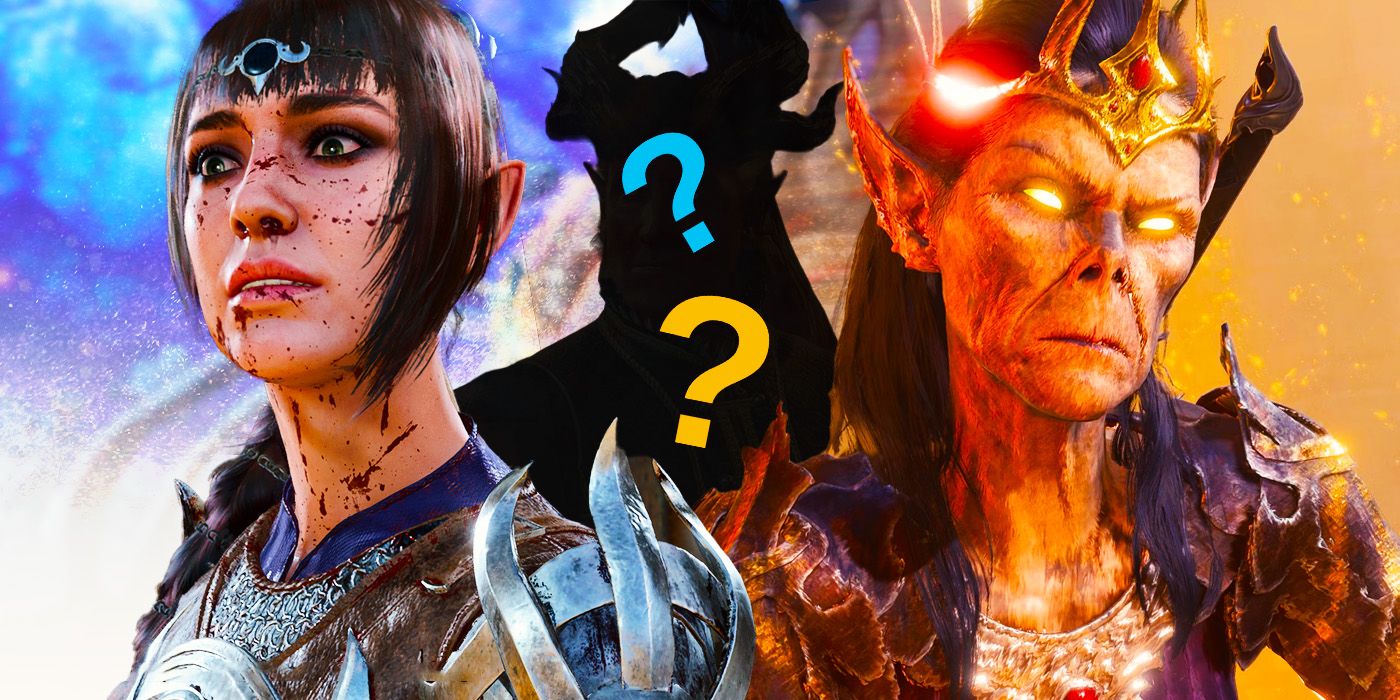
To make up for the lack of a Dungeon Master, who can change the game as its happening, BG3's balancing is quite different to DnD 5e's. Player characters in Baldur's Gate have far more abilities to make up for the lack of freedom in the tabletop version, which can be easier to exploit. Illithid powers can be paired with powerful multiclasses to make terrifying party members, and this skew in the balancing has resulted in characters being far different from DnD. The most overt example of this is Raphael and his House of Hope encounter during Act 3.
Related Baldur's Gate 3 Player Finds Easily Missed OP Amulet After 900 Hours Of Playing This easily missable amulet in BG3 Act 1 will grant players lesser restoration and help cure Pandirna without expending spell slots.
How Baldur's Gate 3 Gets Raphael Wrong
Overpowered For BG3's Level Cap
Close
Raphael's fight in the House of Hope is optional, which is lucky, since it is meant to be the hardest fight in the game. He has a legion of cambions at his side, who can reflect Radiant damage back at the party, and the scheming devil himself has an immense 666 HP. Other than being a brilliant joke, this health pool is the biggest in the game, and when he is being bolstered by his four Soul Pillars, it feels as though the odds are stacked against Tav and their crew.
The party should have reached the level cap of 12 at this point, but if this encounter was in DnD, the party would likely need a few more levels to stand a chance. Demogorgon, the final boss of the Out of the Abyss module and Prince of Demons, is meant to be fought by a level 15 party with four members. He has 464 HP according to his stat block, which is significantly shy of Raphael's thematically amusing total health. This makes the son of Mephistopheles more powerful than the Prince of Demons, despite facing a lower level party.
After passing a persuasion check with a DC of 30, players can recruit Yurgir to fight on their side against Raphael.
There Are Many Reasons For Raphael Being Different To D&D
BG3 Has Different Power Scaling
A level 12 member of Tav's party is more powerful than the typical DnD party member at the same level. The magic items in Baldur's Gate 3 are more abundant, and more than three can be equipped at one time. Illithid abilities are incredibly powerful and, as is the nature of most CRPGs, BG3's mechanics can be exploited easily. Raphael is meant to be a near impossible fight for players, especially in Tactician or Honour mode, and with BG3's party members having a superior kit at their disposal, he needs to eclipse most of his DnD counterparts.
BG3 doesn't have DnD's attunement system with magic items. In DnD, party members are required to attune to certain items to use them and cannot be attuned to more than three at a time.
BG3 enemies don't have Legendary Actions unless in Honour Mode. They don't use many Lair Actions either, and for the most part, they abide by the same rules the player does, unlike DnD 5e foes. Plus, Hope is an ally in the fight, who makes for a fearsome healer, and for those that are struggling to defeat the devil in his own home, they can always stockpile the room with Smokepowder Barrels. Should they save the Gondians from the Iron Throne, players can always use the Runepowder Bomb to clear the room once the encounter begins.
Related Disturbing, Rarely-Seen Baldur's Gate 3 Scene Proves Larian Thought Of Everything Baldur's Gate 3 features a truly mind-boggling level of detail, and one gross scene that isn't likely to show up in most campaigns proves it.
Ansur Is Also Different To His D&D Counterparts
Endgame Bosses In BG3 Don't Translate To D&D
The undead dragon, Ansur, is also very different from any 5e counterpart. With 400 HP (600 in Tactician Mode), he doesn't fit with any type of existing dragon in DnD. For example, an adult red dragon, with a Challenge Rating of 17, has 256 HP, while the ancient variant has 546 HP. By default, Ansur sits between these two health pools, but in Tactician he eclipses both, which is odd considering that an ancient red dragon has a CR of 24. This is far beyond what a level 12 party in DnD should be able to manage.
Ansur has the AC of most adult dragons, rather than that of ancient dragons. He has 19 AC, which remains the same between different difficulty modes.
Like Raphael, Ansur is an optional boss fight, and with two allies in the form of water myrmidons, the fight is skewed further in his favor. Still, this fight is relatively balanced for BG3 and Tav's level 12 party, even if it's on the harder side. The overall balancing of the game, and its differences to DnD, make it daunting yet doable, whereas if a tabletop party of four were put in the same situation, it would likely be an encounter they would be forced to flee from.
Related Baldur’s Gate 4 Doesn’t Need Larian Studios, There’s A Better Choice Some fans are disappointed that Larian will not work on any future Baldur’s Gate projects, but there is a better option for the series’ future.
Baldur's Gate 3 Is An Adaptation Of D&D, Not A Copy
Adapting A TTRPG 1:1 Is Impossible
Comparisons to DnD will always exist for Baldur's Gate 3, but the elements that make them different affect the balancing of the two far more than one would expect. Since BG3 doesn't have to worry about keeping a DM entertained, alongside a party, enemies don't have a plethora of different abilities in encounters, like Lair and Legendary Actions on standard difficulty settings. On the other hand, BG3 gives player characters even more to work with, like Illithid abilities and no restrictions on magic items.
Some things simply cannot translate directly from the tabletop to a CRPG and overall balancing is but one example of this. The level cap of 12 (largely to avoid seventh-level spells and other reality-altering facets of high-level DnD), Short Rests being restricted to two a day, and initiative rolls using a d4 instead of a d20 are all changes from 5e that Larian Studios saw fit to make. These decisions were likely the right ones, since Baldur's Gate 3 has become one of gaming's greatest achievements in the last few years.




COMMENTS