10 Movie Misconceptions People Always Have (& How To Correct Them)
Summary Misconceptions about famous movies can spread fast and become urban legends in pop culture.
Some commonly believed movie myths have been debunked, but still persist due to popular belief.
Behind-the-scenes rumors and fan theories can create lasting misconceptions about films and their details.
There are many misconceptions about popular movies that audiences believe to be true but have otherwise been corrected. Whether it's by word-of-mouth or conversations online, misconceptions about movies can spread fast and be taken as fact. Sometimes, if a misconception goes on long enough, other movies and TV shows can adapt the misbelieved details into their parodies and references.
Misremembered character details can be attributed to audiences' incorrect mental images of famous character designs, assigning them identifying details that were never there. Other common misconceptions are a result of movie fan theories and behind-the-scenes rumors that became as large as the films themselves. When such a dominant conversation surrounds a film, it can be difficult for the truth to become well-known. Therefore, while many movie misconceptions have been debunked, they are still considered plausible by a large group of people.
Related 10 False Horror Movie Myths (& How They Were Debunked) Many horror movies were the subject of myths, whether due to the themes in them, on-set tragedies, or rumors about the actors, among other things.
10 Three Men And A Ghost?
The ghost of a boy isn't lurking in the background
Three Men and a Baby is an 80s comedy film in which three men are unexpectedly put in charge of looking after a baby. Despite its lighthearted comedic tone, there's a dark misconception about one particular scene in the film. Jack (Ted Danson) is walking around the house with his mother and as they pass a window, what appears to be a ghostly figure hides behind the curtains. Audiences quickly assumed the sound stage where Three Men and a Baby was filmed had been haunted.
It was believed that the boy was someone who had died on the sound stage years before Three Men and a Baby was filmed, but this is not the case. In reality, the "ghost" is a cardboard cutout of Danson intended to be used for another scene, but was eventually cut from the film. The rumor became so popular that the TV show Supernatural referred to the myth in the episode "Hollywood Babylon" in season 2. Despite Tom Selleck, another star of the film, correcting the misconception, the Three Men and a Baby urban legend is still brought up.
9 Lurtz's Knife Throw Was Accidental
The sequence was choreographed
Throughout all The Lord of the Rings trilogy, a realistic appearance of the weapons used was crucial in bringing the story to life. When possible, real weapons were used in scenes and safely monitored. In The Lord of the Rings: The Fellowship of the Ring, a fight between Lurtz and Aragorn (Viggo Mortensen) breaks out and the knife thrown by Lurtz is real, as confirmed by director Peter Jackson.
It's been believed that the knife thrown by Lurtz's actor, Lawrence Makoare, was meant to land near Mortensen's head, but instead accidentally came flying directly at him. Though Mortensen's reflexes are quick, they weren't improvised as many believe. In the director's commentary for the film, Jackson states that the knife was always meant to be thrown at Mortensen, who managed to deflect the real knife during the first take. Therefore, while there's truth to Mortensen's skilled quickness and to the authenticity of the weapons used during the fighting sequence, Mortensen was expecting the knife.
8 Raining Milk In Singin' In The Rain
Milk was not used as a replacement for water
The 50s musical, Singin' in the Rain, sits comfortably within numerous "best films of all time" lists. It's beloved for its story and, of course, its musical numbers. In one of these scenes, in which Gene Kelly is singing the titular song, the raindrops are visible. It's a significant element of the musical number, but such a rainstorm is not always easy to capture on camera. Thus began the misconception that milk was mixed with water to help with the visibility of the pouring rain.
However, co-director of Singin' in the Rain, Stanley Donen, debunked this myth and explained how lighting helped in pulling off the scene (via DGA Quarterly). Backlighting was used for the scene because relying solely on lighting in front of the rain washed the droplets out on camera. As fun of a conversation starter as it is, milk was not used to enhance the clarity of the raindrops.
7 Khan Noonien Singh's Muscles
His muscular chest is real
Star Trek II: The Wrath of Khan is seen by many as one of, if not the best, Star Trek films. Additionally, the film's antagonist, Khan Noonien Singh (Ricardo Montalbán), is noted as one of the best fictional villains and the performance by Montalbán is a large part of the character's legacy. During the filming of The Wrath of Khan, Montalbán was in his early 60s and because of this, many people assumed his signature muscular build was a prosthetic.
This, however, is false. The director of The Wrath of Khan, Nicholas Meyer, spoke about meeting Montalbán for the first time and confirmed that Khan's fit appearance was all natural (via USA Today). When Meyer first met Montalbán, he too questioned his natural figure, stating, "The guy was in great shape." Montalbán's passion for fitness outside his acting job provided a memorable image of a beloved villain.
6 Jill's Death In Goldfinger
The cause of her death is not probable
The third installment in the James Bond series, Goldfinger, features a death that many audiences believed to be possible in real life. In Goldfinger, Bond (Sean Connery) discovers the deceased body of Jill Masterson (Shirley Eaton) that has been covered in gold paint. Bond then declares the cause of her death was "skin suffocation." The labeling of Masterson's death caused a misconception among audiences that paint could kill someone if it covers one's body entirely.
However, many professionals, including dermatologist David E. Bank, said this was not possible (via NBC News). Bank pointed out, "We don't breathe through our skin." He further explained that had the gold been melted down into a liquid before being painted on someone, then damaging burns would be the result, but nothing would come of gold in paint form. Additionally, answers were sought out in a Mythbusters episode and a similar conclusion was produced.
5 Leonardo DiCaprio's Injury In Django Unchained
He didn't use his real blood for the scene
During an intense scene in Django Unchained, Leonardo DiCaprio's Calvin slams his hand down on a table. When the glass breaks, DiCaprio suffers a real injury but opts to finish the scene. The scene went in an unplanned direction and Quentin Tarantino chose to continue the use of blood when Broomhilda (Kerry Washington) enters the room a few moments later. The reports of DiCaprio's injury led many to believe that the blood Calvin smears on Broomhilda's face was real, but it wasn't.
While on The Drew Barrymore Show, Washington confirmed that once DiCaprio finished, he was bandaged up and the remaining scenes were shot twice. The scenes were filmed twice so Tarantino could decide whether they worked best with or without fake blood on Broomhilda. The unscripted moment in Django Unchained is a bold example of DiCaprio's dedication to his performance, but fortunately, it didn't go too far at the risk of his co-worker's comfort on set.
Related What Happened to Django & Hildy After DJANGO UNCHAINED Fans of DJANGO UNCHAINED may be wondering what happens to the characters after the credits roll. Look no further than his crossover with Zorro!
4 Jason Voorhees' Weapon Of Choice
Jason didn't use a chainsaw in Friday the 13th
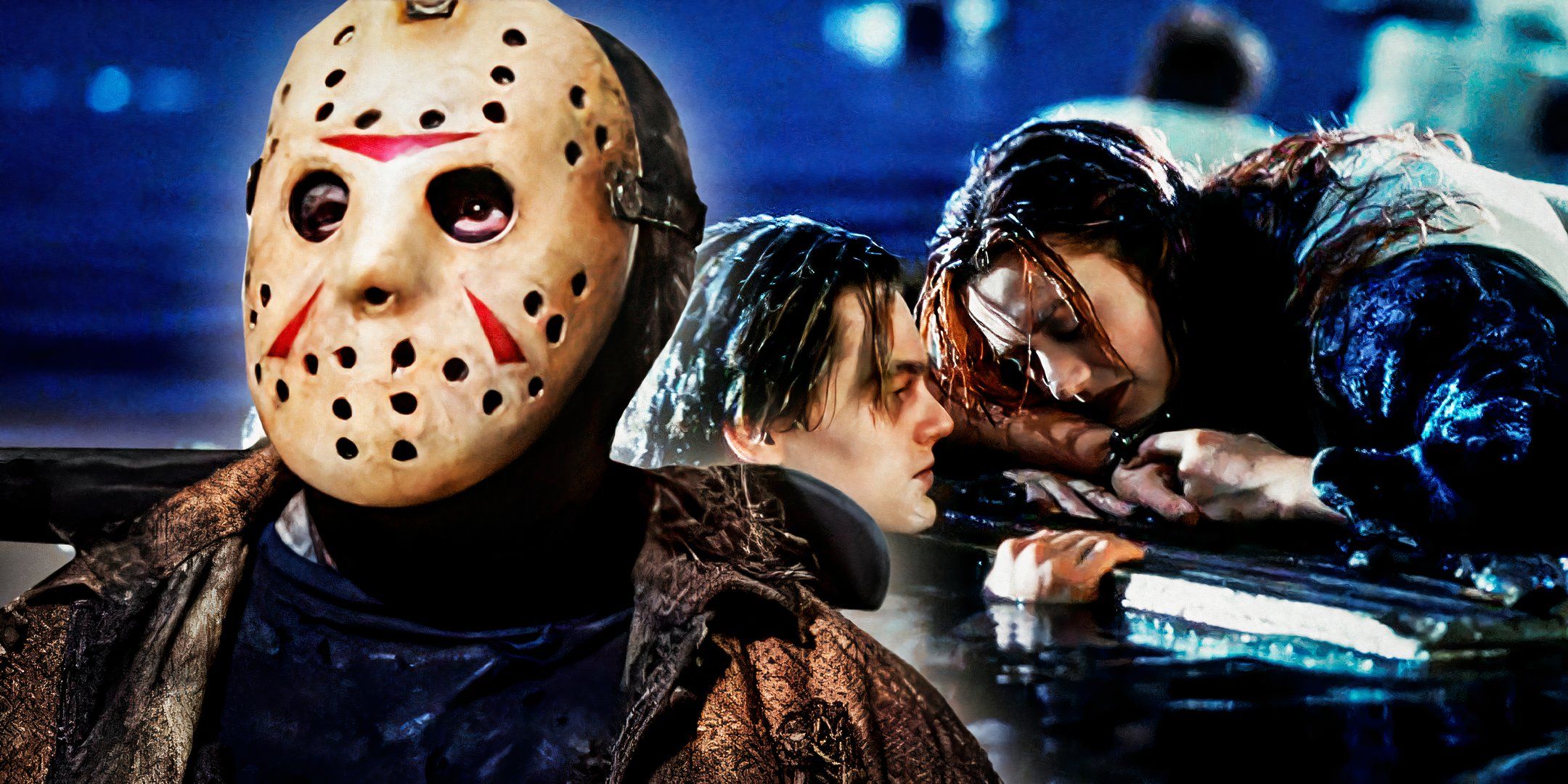
Many of the best slasher villains have a weapon they gravitate toward when on their killing sprees. For Friday the 13th killer, Jason Voorhees, audiences typically assign a chainsaw as his weapon of choice, but this would be incorrect. Instead, Jason's signature weapon is a machete. Still, a chainsaw has become synonymous with the hockey-masked antagonist, largely in part to an episode of The Simpsons.
Numerous pop culture references have been made in The Simpsons, resulting in the animated parody gaining just as much recognition as the original material. One of these references in The Simpsons shows Homer in the episode "Cape Feare" when he runs into Bart's room wearing a similar mask to Jason's and holds up a chainsaw. It's likely the chainsaw is meant to represent another famous villain, Leatherface from The Texas Chainsaw Massacre, but audiences noticed Jason's mask first and saw it as his weapon.
3 Tom Cruise's Risky Business Dance
Joel wasn't wearing sunglasses
Another moment The Simpsons referenced was Tom Cruise's dance in Risky Business. The celebratory dance while Joel is home alone has been referenced throughout movies and TV shows that followed, including, Arrested Development, The Nanny, and Scrubs. Each of these parodied moments, including the scene in The Simpsons, also recreates Joel's attire; a loose, button-down shirt and briefs. Yet, a major difference that many recreations seem to get wrong is the addition of sunglasses.
It's a misconception that Cruise was wearing black sunglasses during this scene and, while this isn't true, it makes sense why audiences believe this. Ray-ban sunglasses are a large part of Joel's look that are worn throughout Risky Business and on the film's poster. Though they aren't included in the iconic dance number, the stylish accessory is heavily associated with the film, and it's because of their placement within Risky Business that sales went up following its release (via Los Angeles Times).
2 Quint's Drunken U.S.S. Indianapolis Speech
Robert Shaw wasn't drunk while filming
Jaws is famous for being the first big summer blockbuster and uncovering a fear of sharks among the public. There have been many conversations over the years about filming Jaws and, in addition to the mechanics of the famous shark, "Bruce," it was speculated that Robert Shaw was intoxicated while filming his famous monologue as Quint. Though Shaw did suggest to Steven Spielberg that he drink to get into character, Spielberg said he had too much to drink and the scene never got filmed (via Entertainment Weekly).
Instead, they shot the scene the next day after a few takes. Shaw likely didn't feel great, but he was sober and didn't drink moments before filming the scene as the popular misconception goes. Aside from Shaw's involvement, there was much speculation surrounding the speech and who should be credited as the writer. In the same interview, Spielberg credits screenwriter Howard Sackler as having the original idea, which eventually got changed and broken down as Jaws' script was coming together.
1 The Door That Saved Rose's Life
Jack wouldn't easily be able to fit alongside Rose
Throughout the years, one of the biggest debates surrounding Titanic has little to do with the accuracy of the 1912 sinking. Rather, audiences are split on whether the door that saves Rose's (Kate Winslet) life could have fit Jack (Leonardo DiCaprio), thus saving him too. Numerous tests have been done to prove one way or another what the realistic outcome would be, including an experiment done on an episode of Mythbusters.
In the episode, hosts Adam Savage and Jamie Hyneman are strapped up in life jackets and lay on top of a door similar to that in Titanic. Though Savage and Hyneman fit tightly alongside one another, it wasn't until a life jacket was tied underneath the door that the two floated. Otherwise, two people would sink into the cold water. Regardless of where audiences side in the Titanic door debate, James Cameron has said Jack's death needed to happen and was most fitting for the character and overall story.
Sources: DGA Quarterly, USA Today, NBC News, Los Angeles Times, Entertainment Weekly




COMMENTS