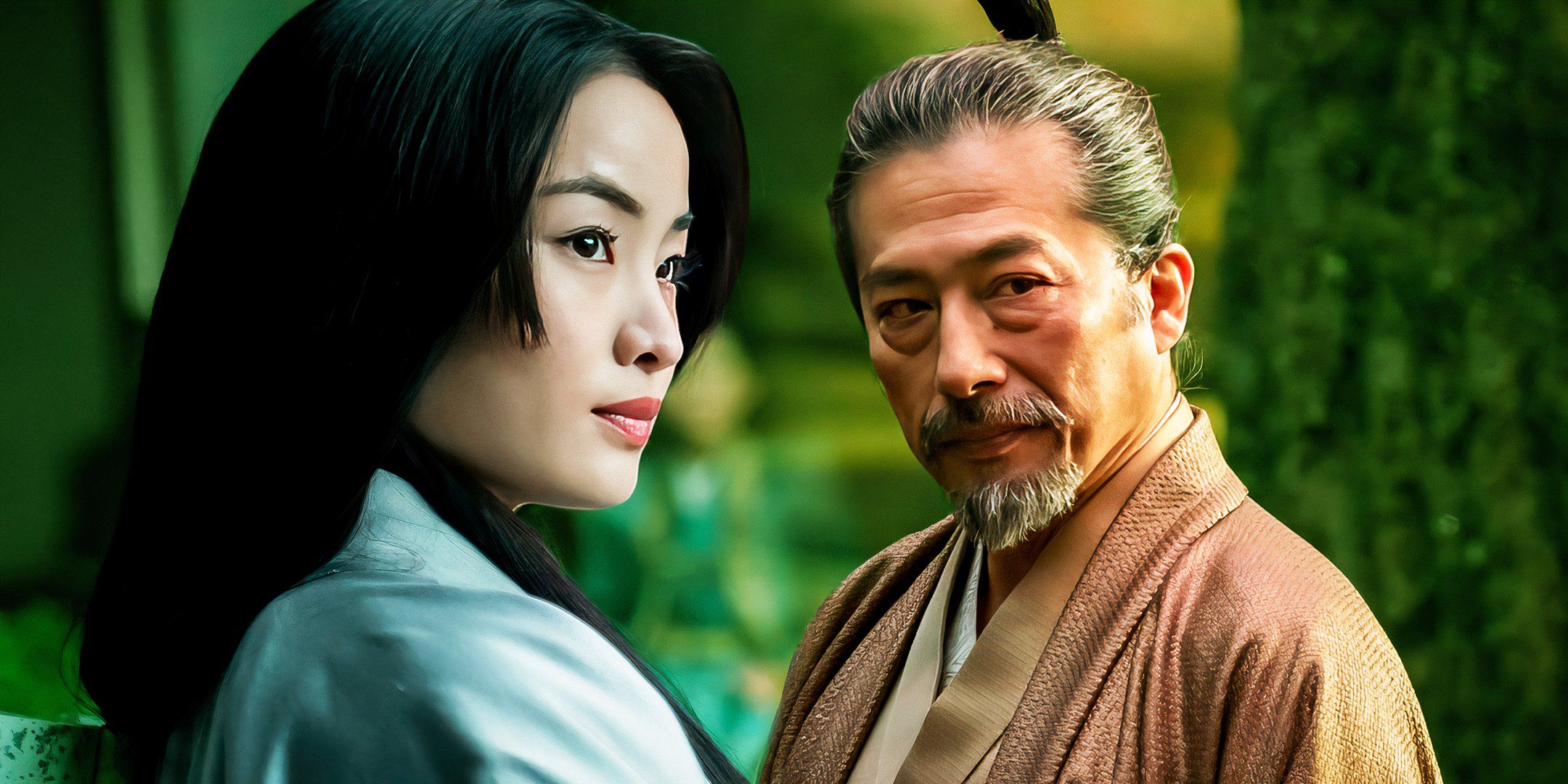
8 Reasons Why Shogun Season 2 Is A Bad Idea (Despite How Great Season 1 Was)
Summary Shogun's story ends perfectly in season 1, making a sequel risky.
Season 2 may struggle to match the greatness of the first season.
Japan's peaceful era post-Sekigahara may not offer compelling content.
FX's Shogun has garnered so much popularity that talks are being held about bringing the miniseries back for another season, but there are eight big reasons that Shogun season 2 would be a bad idea. Shogun is based on James Clavell's 1975 novel of the same name, which was also adapted into a miniseries in 1980. Shogun's excellent cast and masterful production has helped it eclipse the 1980 version, launching Clavell's story back into the public eye in stunning fashion.
By the end of Shogun, it's natural for fans to immediately want another installment. The miniseries is so engrossing and addictive that it's nearly impossible not to reach the end and be desperate for another season to materialize. However, despite the brilliance of Shogun, returning for a sequel season would be a huge risk. Ultimately, there are eight major reasons that bringing Shogun back for a second season would be a mistake for FX and Hulu.
Your browser does not support the video tag.
8 Shogun Season 1 Exhausted The Source Material
Shogun Is Based On James Clavell's 1975 Novel Of The Same Name
Close
The most obvious reason that Shogun season 2 shouldn't happen is that season 1 covered the entirety of the 1975 novel it's based on, leaving it without an obvious way to move the story forward. A major part of Shogun's incredible success comes from the incredibly engaging narrative provided by Clavell's novel, which means a potential Shogun season 2 would be taking a huge risk by trying to come up with a story worthy of succeeding the original.
Shogun is available to stream on Hulu and Disney+.
While it's clear that Shogun's writing team is extremely talented, it would be difficult to craft a worthy season 2 without the historical expertise of someone like Clavell. The brilliance of the narrative lies in its ability to reinterpret history in a way that is largely speculative, but not at all misleading. That's a fine line to walk, and without years of studying the history and culture of the people one hopes to depict, it's all but impossible to do it as well as Clavell. It's not impossible to write a worthy Shogun sequel, but it would be incredibly difficult.
Your browser does not support the video tag.
7 Shogun's Story Was Never Meant To Span Multiple Seasons
Shogun's Story Is Perfect As A Miniseries
Close
Shogun's complex and somewhat ambiguous storytelling is perfect for a miniseries, but the limited nature of the story was never meant to span more than one season. With that in mind, Shogun season 2 would almost definitely drop a notch in terms of its storytelling, and it could overexplain the little gray areas and unanswered questions that made season 1's finale so good. Further, the history Shogun is based on becomes far less intriguing after the establishment of the Edo shogunate.
Related Shogun: Blackthorne's 10 Greatest Insults Ranked The intensely creative and hilarious insults of the sailor John Blackthorne included some of the funniest lines from the FX miniseries Shōgun.
History aside, Shogun's ending also leaves the characters in what feels like the right place to end their stories. All the character arcs in Shogun are written specifically to last for one season, and because they were all done so well, none of them feel like they have a natural progression that could provide a basis for Shogun season 2. In fact, everything about Shogun was written and produced to last for one season, so trying to stretch the narrative out for another installment could significantly dilute season 1's brilliance.
Your browser does not support the video tag.
6 Toranaga's Rule Wouldn't Be As Entertaining As His Rise
Toranaga Becomes Shogun After Season 1's Conclusion
Close
He would undoubtedly be just as magnetic on-screen, but the story of his administrative reforms and consolidation of power are decidedly less eventful than his rise to power.
At the end of Shogun season 1, Toranaga reveals his plan to Yabushige, describing the inevitability of his triumph over Ichido and his installment as shogun. This moment reveals the depth of Toranaga's strategies and represents the peak of his story, meaning there might not be much for his character to offer in a potential season 2. He would undoubtedly be just as magnetic on-screen, but the story of his administrative reforms and consolidation of power are decidedly less eventful than his rise to power.
That's not to say that Tokugawa Ieyasu — the historical figure Toranaga is based on — didn't have any challenges to deal with after becoming shogun, but nothing he dealt with was nearly as dramatic as his rise to power. Outside of pacifying a few rebellious clans, most of his reign was spent setting up the dynasty that would rule Japan until midway through the 19th century, so Shogun would likely have to lean into fiction to make Toranaga's story work in season 2, potentially damaging the quality of the narrative.
Your browser does not support the video tag.
5 Too Many Of Shogun's Best Characters Are Dead
Lady Mariko And Yabushige's Deaths Make Season 2 More Difficult
Close
One of the things that makes Shogun so good is its ruthless refusal to give even its best characters plot armor, but unfortunately, that makes it more difficult to return for a second season. Lady Mariko and Yabushige are two of Shogun's most complex and intriguing characters, so their deaths in season 1 would be felt keenly if the series were to return. Shogun season 2 would also be missing its striking antagonist, Lord Ichido, whose devious schemes were the perfect distraction for Toranaga's strategies.
Although Shogun's creative team could almost certainly come up with some engaging new characters, it would be nearly impossible to replicate what each of these characters meant to Toranaga. Ichido is used to disguise Toranaga's ruthless ambition, Lady Mariko represents the sacrifices he is willing to make, and Yabushige's teetering foreshadows Toranaga's ability to play both sides of the field. While Shogun season 2 could come up with some intriguing characters, it's unlikely they would complement each other so perfectly.
Your browser does not support the video tag.
4 Shogun Season 2 Could Spoil Season 1's Perfect Ending
Shogun's Finale Strikes A Perfect Balance Between Clarity And Ambiguity
Close
Shogun's finale wrapped the show up in a perfect way, making it a huge risk to renew the show for a second season. The final episode finds the perfect balance between answering the audience's questions and leaving things open to interpretation. This is an incredibly difficult balance to find at the end of a TV series, and returning for a second season would almost certainly upset that balance. The show would have to answer questions about Blackthorne, Toranaga, and others that are better left to the imagination.
Related Shogun's 10 Most Shocking Twists, Ranked FX's Shogun is one of the most entertaining miniseries around, making it worthwhile to rank the 10 most shocking plot twists in the show.
Blackthorne's future is a particularly good example of this because it leaves almost everything up in the air, yet doesn't feel incomplete in any way. Blackthorne is last seen hauling the wreckage of his ship out of the sea, and for the first time in the entire series, he seems to be at peace. Despite losing Mariko and the boat that could've taken him home, he finally finds a sense of purpose and belonging that allows him to move forward. Ultimately, returning for a second season isn't worth spoiling perfect endings like Blackthorne's.
Your browser does not support the video tag.
3 Shogun Season 1 Set The Bar Impossibly High
Shogun Has Been Lauded As One Of The Best Miniseries Of The Decade
Close
Another issue a potential Shogun season 2 would face is that it would be incredibly difficult to live up to the standard of the first season, which makes it harder to satisfy fans expecting the same level of quality. Shogun season 2 could end up being one of the best shows of the year and still fall well short of what it produced in the first season. Shogun's creatives are evidently capable of creating something spectacular, but it's difficult to catch lightning in a bottle more than once.
Shogun holds a 99% Rotten Tomatoes score at the time of writing.
Further, it would be difficult to replicate the stakes of Shogun's first season without a historical event of similar importance, and there are none that involve the same figures represented in the show. The tension and pulse-pounding suspense are what makes Shogun so entertaining, and without similar stakes to build that tension around, it's hard to imagine the second season matching the quality of the first. With that in mind, Shogun season 2 would be likely to disappoint fans no matter how good it is.
Your browser does not support the video tag.
2 Shogun's Legacy As An Outstanding Miniseries Is Enough
Shogun Season 2 Could Tarnish Its Sparkling Reputation
Close
Shogun has garnered a reputation as one of the best miniseries in decades, which gives it another reason not to move forward with a second season. Its legacy as an outstanding miniseries is already firmly established, but if the show were to move into a full series, it would be considered in a different light. Shogun could go from one of the best miniseries ever made to that one show that had an excellent first season before falling off the map.
Of course, if Shogun were to return and continue the brilliance of season 1, then it would have an opportunity to expand its legacy beyond miniseries.
Of course, if Shogun were to return and continue the brilliance of season 1, then it would have an opportunity to expand its legacy beyond miniseries. However, considering how difficult it would be to replicate the show's initial success, the more likely outcome is that a sequel season would damage Shogun's legacy. That said, it might be better for FX and Shogun to be content with having produced such a fantastic miniseries and move on to the next project.
Your browser does not support the video tag.
1 Japan Entered A Time Of Relative Peace After Sekigahara
The Battle Of Sekigahara Led To The Start Of The Edo Shogunate
Close
As previously mentioned, one of the big issues with returning for Shogun season 2 is that the events depicted in season 1 were the start of a new era of unification in Japan, which was far more peaceful and progressive than the century before. After the establishment of the Edo shogunate, or Tokugawa shogunate as it's also referred to, the country underwent a series of economic and governmental reforms that are intriguing to a scholar, but less so to the wide audience Shogun wants to appeal to.
More than 150,000 people fought in the decisive Battle of Sekigahara.
This is not to say that the Edo period was a time of complete peace and prosperity — schemes and skirmishes can always be found in medieval society — but nothing in the immediate aftermath of the events depicted in Shogun could compare to the momentous occurrences seen in the miniseries. Of course, Shogun is historical fiction and could easily make up a new story, but that would dampen the show's appeal to history-oriented fans, who likely make up a large portion of its audience.
Your browser does not support the video tag.




COMMENTS