Crafting A Stylish Puzzle Game From Scraps
Summary Lorelei and the Laser Eyes is a demanding puzzle game with rewards for all players to love.
The game's black-and-white visuals and fractured style communicate a unique, creative experience.
Scrambled puzzles challenge players to understand the game without relying on guides.
Indie game developer Simogo has a long track record of interesting titles, but its newest, Lorelei and the Laser Eyes, might be the most ambitious and unusual yet. As a complex puzzle adventure set inside a black-and-white hotel, it doesn't take long for the game to set itself apart from anything out there. What also becomes clear is just how much thought and creativity went into the experience, which took over four years to craft.
Lorelei and the Laser Eyes is a demanding puzzle game, and asking a lot of the player makes it all the more important that the rewards are well worth it. In this case, there's something for virtually everyone to latch onto, from books on numerology to retro gameplay sequences. It might not be easy to beat, but it could certainly prove easy to love.
Related Lorelei And The Laser Eyes Review: A Mind-Bending Puzzle Game Among The Year's Best Lorelei and the Laser Eyes is a stylish, complex puzzle game, and picking apart its secrets is well worth the effort of figuring out what goes where.
Screen Rant sat down with Simon Flesser, co-founder of Simogo, to discuss various elements of the design and influences behind Lorelei and the Laser Eyes, from its one-button control scheme to Last Year at Marienbad, and how the final product unveils its secrets.
Simon Flesser On Lorelei And The Laser Eyes
Simogo's Co-Founder Discusses Style And Design
Close
Screen Rant: The first thing that tends to grab people's attention about Lorelei and the Laser Eyes is the visual style. How did you originally conceive the look of the game?
Simon Flesser: We came up with Sayonara Wild Hearts, which was a game with a lot of colors, very saturated. I struggled a lot with colors, and I struggle a lot with colors, always. So one of the first things we decided was that the next game should be black and white, even before we knew what the next game was. The intention was not really to make something like — for Sayonara Wild Hearts, the intention was probably to make something that was beautiful — but with Lorelei and the Laser Eyes, the ambition is not necessarily for it to look beautiful, but rather to communicate this sense of it being fractured, that there's a lot of different impressions that are maybe contrasting each other to create sort of a feeling of a collage world, or a fractured world, or whatever you want to call it.
Were there any notable challenges in communicating information and space to players within that limited palette and the fractured style?
Simon Flesser: Yes, because black and white is always difficult, but either way, you sort of have to… I guess contrast is the big thing when designing any visuals, where you want to point the attention to. I guess some of the red stuff that Lorelei has helps to sort of point players to where they need to go, but the red is not necessarily there to only point players towards points of interest. I think the biggest thing was sort of more to play with how, because it's such a weird, like, with the photo textures and stuff, it's such a weird style. Our biggest struggle was how to communicate depth, I would say, more than anything.
Like in Resident Evil, different areas often use dynamically different camera angles. How do you find the right ones to choose there?
Simon Flesser: I think it's always a struggle between, you want to be as close as possible to the character, because that's what's sort of cool to look at, but it's not necessarily the most functional. You want to have the camera as straight as possible, in a sort of top-down thing-ish, which is the most functional thing to understand 3D space. But one thing that we're doing that differs a lot from old survival horrors is that our camera is more or less always pointing north in some ways. It’s like, it could tilt, but it never tilts more than 40 degrees on any side. So it's always pointing north in some way. It's easier for players, I would say, to build a sense of space and how everything is connected.
How did the one-button control scheme emerge?
Simon Flesser: Good question. I think that's sort of the same thought that is continued from Sayonara Wild Hearts. That is, we want to create a complex game, but not one that requires dexterity, really. One of the factors is that we want everyone to be able to play. You're sort of creating an even playground for players that have played games for all of their lives and players that have never played a game before. It's also just interesting to us to challenge conventions and see how we can boil down stuff, and solve stuff differently than we, collectively as designers, have decided how games should be controlled. In a way, I guess it's sort of academic. It's just interesting for us to try to sort of find a new solution.
Were there ever moments in development where an idea had to be altered because it would have required more inputs, or did you find that it was consistently sufficient?
Simon Flesser: It’s interesting. It never had more than one button, so that was sort of an early design restriction. We created this, what we call the always forward design — always forward, always backward design — which means that the players cannot just magically appear in a place where they weren't before. Not necessarily spatially, but also for menus and how you just interact with stuff. Either you go through the tunnel or you're going into the tunnel and hit the dead end, then go back. Everything is sort of thought out in that way, because we wanted all interactions to be created equally. If you're speaking to another character, that should be the same as interacting with a puzzle. We had some thoughts that it was interesting to sort of have players commit to their decisions.
It doesn't take long in Lorelei to notice that it’s invoking things like silent film, and the impression of varied influences extends into a lot of areas of the game. Were there any particular inspirations that were a core part of making and conceptualizing it?
Simon Flesser: Definitely a lot of film. Last Year in Marienbad, or at Marianbad, I believe is the American title, was a big inspiration, and I guess a lot of books as well. The Magus — I don't know how that is pronounced in English — by John Fowles, and the work of Paul Auster. All of these older games that we, I wouldn't necessarily say grew up with because we're much older than these games, but the sort of stuff from the late 90s and early 2000s. And a lot of things aren't necessarily direct inspirations. It's more, I think when you're working on something, it becomes the things that you're interested in at the moment.
Lorelei also feels in a way like an archive, collecting and recording everything from fictional movie posters to games within the game. Are there any pieces that you wanted to include that didn't ultimately end up fitting within the scope of the game?
Simon Flesser: Good question. I guess most of the things that we wanted to have in there are in there in some shape. I guess they morphed or transformed a lot during development, but I'm trying to think if there was a specific [example]. We wanted even more text than there is. At that time, we had an idea that the library should have a hundred books like a real library. But I think we included most of the things from the archive that we wanted to include.
Crafting An Unusual Puzzle Structure
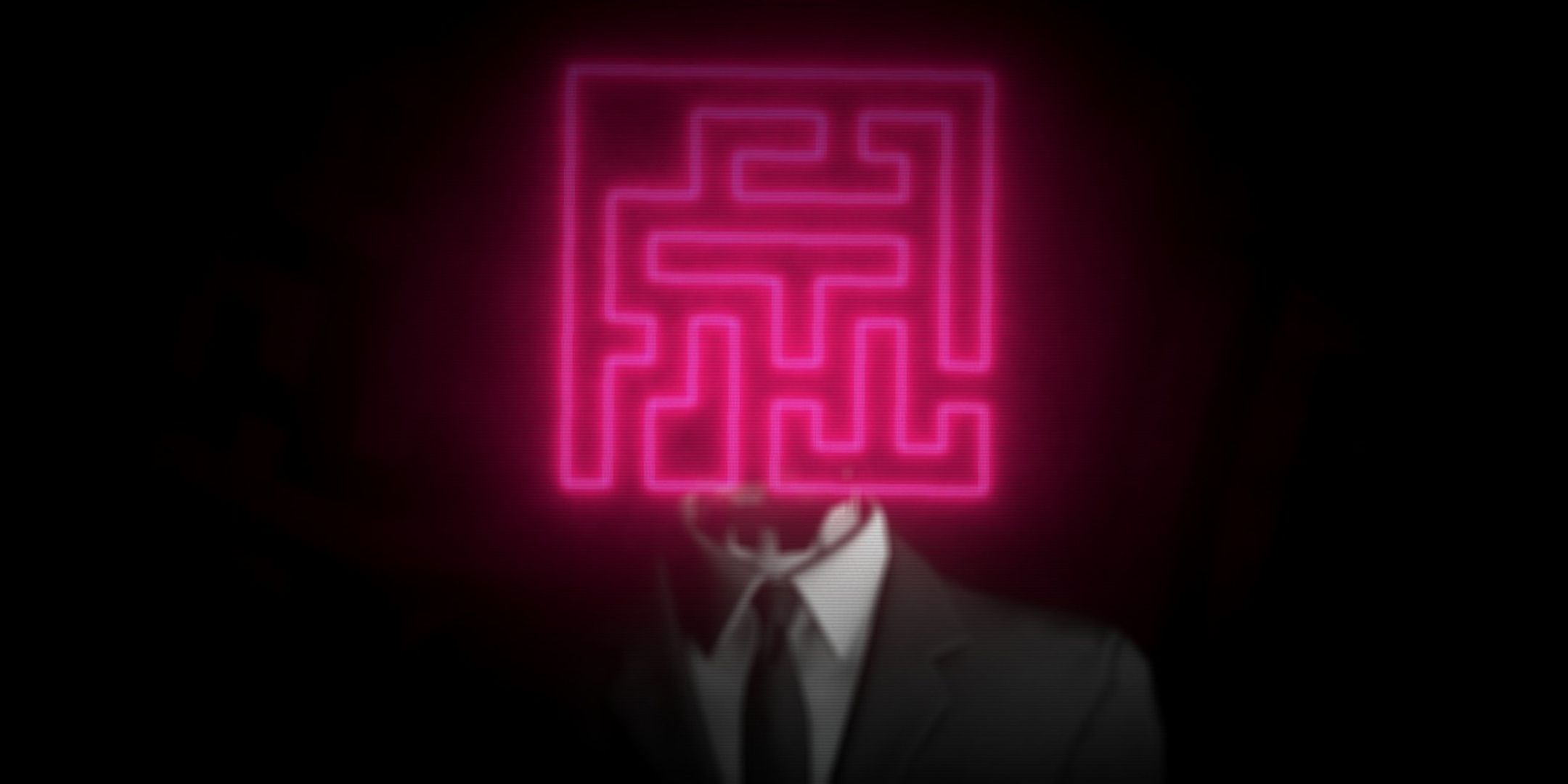
Scrambled Pieces & Shattered Mazes
When it comes to the puzzles, something you've talked about before is the element of randomization. Can you describe what that looks like in a basic capacity?
Simon Flesser: Each new playthrough that’s started has its own scramble, with values and how puzzles are scrambled, and it's different from puzzle to puzzle. Not every puzzle has scrambled elements, but the majority of them have, and it's basically, for us, that we…let me see how I can put this into words. We think it's interesting if players need to understand the puzzles, even if they are looking at guides. So, if they were looking at guides for this game, they would have to look at a guide that explains the puzzle.
They can't just get a number and put it in there, and that's the answer.
Simon Flesser: Yeah.
Reductively, there's kind of two levels on which most puzzles function. There's the puzzle itself in a basic capacity, and then there's how the information needed to solve it is distributed throughout the game. How hard is it to figure out where to place all the puzzle components?
Simon Flesser: Very difficult. It's about communicating an idea, and you need to have the players understand how this stuff is connected, but you don't want to make it too obvious, and you don't want to make it too diffuse. And of course that's very subjective, right? So we had overarching design perspective that would - that was like the bigger puzzles would have their cipher, or whatever you want to call it, distributed throughout the game, whereas the puzzles leading to that cipher should always have the clues close at hand.
I know you don't want to divulge too much about the puzzles before people get to try them out, but even in a vague reference, do you have any particular favorites?
Simon Flesser: I think the Shattered Maze is interesting, and that's one of the first things we did, which is not necessarily a puzzle, really. It's more like a… I guess it is a puzzle. I think the final puzzle is good in that it's such a spaghetti. Every time you tested that you're sort of very nervous about if you input the right thing, because the input is so long, or there's a lot of effort that goes into inputting it. I think that's interesting to me. I'm trying to go through them in my head. I haven't played it for a few weeks now. Generally, I like symmetry and I like when you find symmetry between things. When I had an idea, or when we had an idea, that would fit with like, "okay, the maze is nine pieces, this name is seven characters long, you know, this thing is five symbols" - I like these sort of symmetries between things. Whenever that works together I’m very pleased.
Do you have any idea what the lowest Secret completion that the story of the game could be finished at is?
Simon Flesser: I can't remember the exact number to be honest.
That's fair.
Simon Flesser: But it's… 70 or 80. I'm actually not sure, but it's around that. Maybe don't quote me on that.
The sort of patchwork nature of the story leaves a lot, at least as it's progressing, to individual perception and interpretation. Are you hoping that any particular elements are universally recognized by the players, or is a player's unique experience more of the goal here?
Simon Flesser: The latter, definitely. I think media overall, and games, and arts overall — they can be about the message, but it doesn't have to be about the message. For me, it's more interesting about the idea. So if I've communicated an idea to someone, then that creates a thought within them, or creates an idea within them, then I think that's very good. I think it's not necessary for me to have “This is the thing, this is what I want to say, and please understand what I'm trying to say.”
What kind of reactions to Lorelei would make it feel to you like the game was a success?
Simon Flesser: (long pause) That it makes people think about things, and have ideas about things.
Lorelei and the Laser Eyes is available now for Nintendo Switch and PC.




COMMENTS