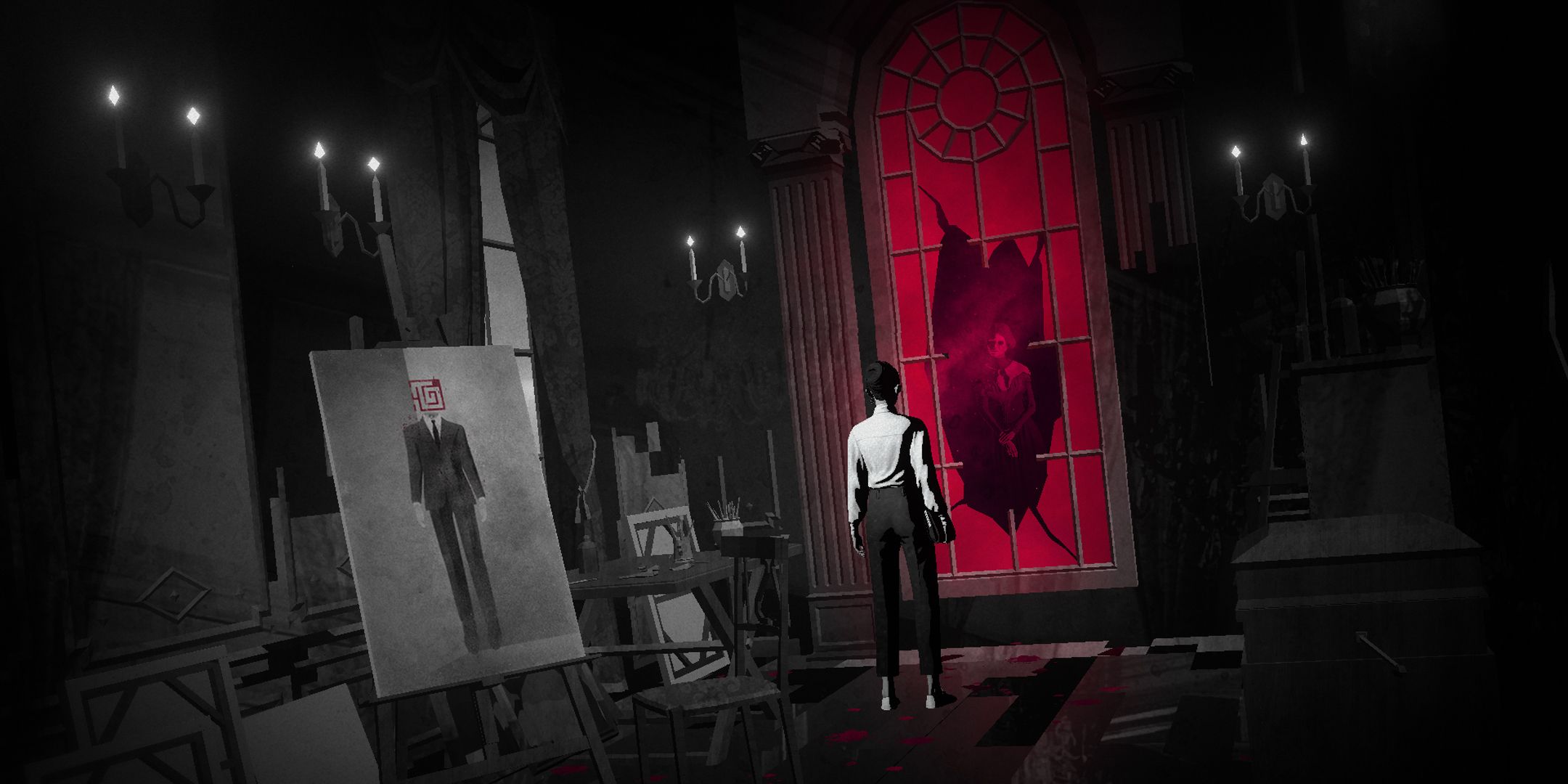
Lorelei And The Laser Eyes Makes A Hard Game Easier With This Feature
Summary A one-button control scheme aims to make Lorelei and the Laser Eyes accessible to all players.
Simogo's unconventional approach challenges conventions in game design for a unique gameplay experience.
Lorelei and the Laser Eyes offers a mental challenge with no mechanical dexterity required, appealing to a wide audience.
New puzzle game Lorelei and the Laser Eyes isn't for the faint of heart, but developer Simogo has a unique approach to opening up the game to all audiences. As the studio behind games like the impressive Sayonara Wild Hearts and Year Walk, Simogo has never been especially bound to convention. These games also have a knack for knowing where to streamline things and where to branch out in new directions, which is a lot of what makes them so easy to pick up and get immersed in.
In an interview with Screen Rant, Simogo co-founder Simon Flesser talked about the game's unique control scheme, which treats all buttons as one and the same for the purpose of interactions. Flesser connects the concept to the design philosophy behind Sayonara Wild Hearts, marrying complex game design with a lack of demand for dexterity.
Simon Flesser: "One of the factors is that we want everyone to be able to play. You're sort of creating an even playground for players that have played games for a lot of — for all of their lives, and players that have never played a game before."
The One-Button Control Scheme Has Many Purposes
Lorelai And The Laser Eyes Is Killing Several Birds With One Press
Close
Inducting those who aren't experienced with games into something as mind-bending as Lorelei and the Laser Eyes could be a tall order, but it's one that makes a lot of sense in context. The title has as much in common with literature and film as it does with other games, so there's certainly some wide-ranging appeal in its story, presentation, and ideas. It's also something that could be a good fit to play with a partner or friend, and making the controls as simple as possible works toward the aim of easy recruitment.
Like many other aspects of Lorelei and the Laser Eyes, there's also a bit of experimentation behind the idea. Flesser also mentions that Simogo enjoys challenging conventions and calls the attempt to go about things differently an "academic" pursuit. While there's often a reason for the overarching trends in evolving controls and game design, taking an opportunity to rewire things is always interesting, and not every experience will be best-served by sticking to the norm.
Related Lorelei And The Laser Eyes Review: A Mind-Bending Puzzle Game Among The Year's Best Lorelei and the Laser Eyes is a stylish, complex puzzle game, and picking apart its secrets is well worth the effort of figuring out what goes where.
The last point that Flesser offers toward the purpose of the control scheme is a sense of "always forward or always backward design," where interacting with menus, objects, and space in general never skips out on linear movement. There's no quitting out of a screen or fast traveling away from a location. It's a sensibility that benefits the game's sense of progression, even if it's not always the most convenient.
From a standpoint of finding solutions, there are definitely easier games to get into than Lorelei and the Laser Eyes. At the same time, there's certainly something to be said for the fact that there's no aiming portal guns or furiously slamming Tetris bloccks. Lorelei and the Laser Eyes isn't a mechanical challenge, just a mental one, and that could be what invites a lot of players in.
Check out the full Lorelei and the Laser Eyes interview right here!





COMMENTS