The Monsterverse Is 10 Years Old, What The Hell?
Summary The MonsterVerse, at 10 years old, has expanded beyond cinemas with five movies and two TV series, jumping around the timeline.
The series has successfully adjusted its style and tone, with entries feeling unique while still part of a bigger story.
Despite mixed critical reviews, the MonsterVerse has been commercially successful, paving the way for future big and small screen projects.
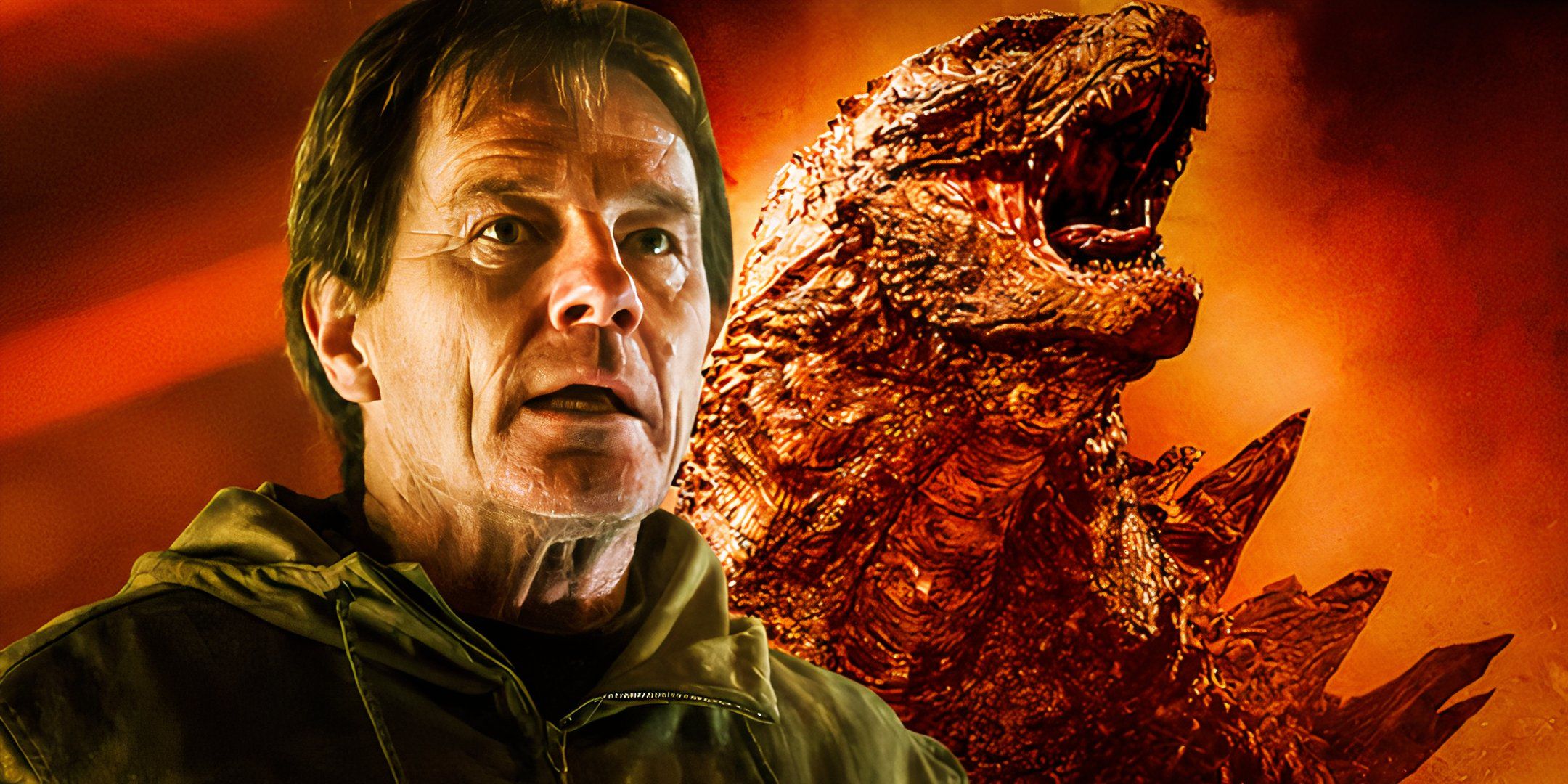
Despite feeling like a relatively new arrival on the franchise scene, Legendary Pictures and Warners Bros.' MonsterVerse is officially 10 years old – a milestone that both speaks to the state of the modern movie industry and provides some interesting insight into the series' future. Starting off in 2014 with Gareth Edwards' Godzilla, the series has undergone major tonal and narrative shifts in its 10-year lifespan. As a result, the MonsterVerse is one of the most diverse and interesting ongoing franchises.
Since the release of Godzilla in 2014, there have been four further movies and two TV series, ensuring that the MonsterVerse has expanded beyond cinemas. One of the more interesting aspects of the franchise is how different installments have freely jumped around the timeline, with Godzilla follow-up Kong: Skull Island taking place decades before the events of the first film, and Apple TV+'s Monarch: Legacy of Monsters jumping back to the original movie's immediate aftermath. More than an interesting foible, this approach goes some way to explaining why the MonsterVerse's 10-year anniversary is somewhat surprising.
2:23 Related MonsterVerse: Godzilla/Kong Movie Timeline Explained From the ancient origins of the Titans to the global outbreak of Godzilla and more, here's a complete breakdown of the MonsterVerse movie timeline.
The MonsterVerse Turning 10 Years Old Is Very Surprising
Close
Because the MonsterVerse does not follow a neat chronology where each installment feeds directly into the next, it can be more difficult to recognize whether a particular movie or TV show is strictly part of the same wider story. Kong: Skull Island, for instance, despite sharing a studio and now clearly understood as part of the broader mythos, was not immediately identifiable as a Godzilla prequel, or part of an extended universe. Because so many installments jump between different points in the timeline, it's easy to forget just how many different movies and TV shows have now been involved in telling a more all-encompassing narrative.
Different movies being difficult to track is not the only reason the 10-year milestone comes as a shock. A key factor is that recent years have seen a glut of franchise content, whereas the start of the MonsterVerse was much more sparse. Between 2014 and 2019, only Godzilla and Kong: Skull Island were released, making Godzilla, in particular, feel like an outlier. From 2019 onwards, however, the MonsterVerse has released three movies and two TV shows in five years, making the franchise feel like a more defined package. Considering how much of the MonsterVerse's content is recent, it's easy to forget that its origins are a decade old.
How The MonsterVerse Has Changed Across Its 10 Years
Close
Another factor in the MonsterVerse's surprising longevity (as well as its success) is the diversity of its content. Over the years, the series has constantly adjusted its style and tone, making each entry feel unique, despite sharing a bigger story. Godzilla, for instance, was praised for its comparatively gritty tone – a stark contrast with the 70s bombast on display in Kong: Skull Island. Likewise, Godzilla: King of the Monsters emphasized spectacle and scale (with admittedly mixed results), while the animated Skull Island series leaned into the franchise's inherently ludicrous premise.
The fact that the MonsterVerse can bring so many contrasting styles together in one cohesive series is testament to the flexibility of its subject matter. Before the franchise existed, legendary monsters like Godzilla and King Kong had already proven that they were capable of sustaining dozens of different movies with equally contrasting tones and stories, based on the strength of their designs and cultural capital. While this makes it easier to understand how the franchise can continue supporting so many different projects, it doesn't diminish the achievement of stitching them together into a coherent whole.
Given the cinematic legacy of characters like Godzilla and Kong... it would have been easy for the MonsterVerse to remain movie-based.
It's also important to recognize how, as the series has developed, the MonsterVerse has taken more risks with the format it uses to tell its stories. Given the cinematic legacy of characters like Godzilla and Kong – not to mention how much they clearly benefit from being seen on the biggest screen and biggest scale possible – it would have been easy for the MonsterVerse to remain movie-based. However, it's important to note that two of the franchise's most critically successful entries (Skull Island and Monarch: Legacy of Monsters) have been explicitly designed for TV – again highlighting the series' diversity.
Has The MonsterVerse Been A Success?
Custom Image by Lukas Shayo
While not every entry has been an industry gamechanger, it's clear that the MonsterVerse as a whole has been a successful enterprise. Based on a combined budget of between $805-880 million, the five MonsterVerse movies have made an impressive $2.51 billion return. Factoring in the generally accepted rule that a movie needs to make back approximately two-and-a-half times its budget to be successful, it's clear that the MonsterVerse has been a hit – albeit with some movies performing better than others.
MonsterVerse Movie/TV Show Budget Box Office Rotten Tomatoes Score Godzilla (2014) $160 million $529 million 76% Kong: Skull Island (2017) $185 million $568 million 75% Godzilla: King of the Monsters (2019) $170-200 million $387 million 42% Godzilla vs. Kong (2021) $155-200 million $470 million 76% Skull Island (2023) - - 82% Monarch: Legacy of Monsters (2023) - - 89% Godzilla x Kong: The New Empire (2024) $135-150 million $559 million 53%
The picture is slightly more mixed critically. Unlike historic franchises such as the MCU, Star Wars, and even the DCEU, the MonsterVerse cannot boast an outstanding, critically-acclaimed entry. Reviews for the best entries in the series have generally hovered around the 75% positive mark on review aggregator Rotten Tomatoes, with the weakest movie (Godzilla: King of the Monsters) dropping to 42%. Interestingly, the strongest MonsterVerse entries from a critical perspective have been the two TV shows, with both Skull Island and Monarch: Legacy of Monsters scoring over 80% – perhaps providing a hint as to where the franchise's best future lies.
What Do The Next 10 Years Of The MonsterVerse Look Like?
Close
Unsurprisingly, given the MonsterVerse's ongoing commercial success, there are plans to continue the saga on both the big and small screen. On May 10, 2024, Legendary confirmed that former MCU writer Dave Callaham has been commissioned to write a follow-up to Godzilla x Kong: The New Empire (via The Hollywood Reporter). Although what the story will involve remains unclear, the project looks set to continue the franchise's trend of a team-up between its two most charismatic characters – albeit with Kong presumably in his new role as head of the Hollow Earth ape tribe.
Beyond the movie sequel, however, the MonsterVerse's most intriguing future is arguably unfolding on television. In April 2024, Monarch: Legacy of Monsters was renewed for a second season, confirming the story's next chapter, while work has been completed on a second season of Netflix's Skull Island series (via ComicBook), although the show is still awaiting a green light from Netflix. While these updates only address the franchise's immediate future, the ongoing popularity of the MonsterVerse suggests that it could easily keep going for another decade.
Source: The Hollywood Reporter, ComicBook




COMMENTS