The Next Planet Of The Apes Movie Will Have To Break A 10-Year Tradition Because Of One Character
Summary Human characters in the Planet of the Apes reboot trilogy never returned, making Mae's potential return a game-changer for the franchise.
Mae represents humanity's struggle to reclaim dominance, offering a new perspective on the conflict between humans and apes.
The sequel to Kingdom of the Planet of the Apes should explore the uneasy truce between Noa and Mae, highlighting the ongoing struggle for power.
One key character from Kingdom of the Planet of the Apes will ensure that the franchise finally breaks a casting trend that has existed throughout the entirety of the reboot trilogy. Beginning with Rise of the Planet of the Apes in 2011, the modern Planet of the Apes prequel movies have explored how the world depicted in Planet of the Apes (1968) came to be, focusing on the messianic first intelligent ape, Caesar. Through revolutionary motion-capture technology, Andy Serkis brought Caesar to life for each of the first three movies of the rebooted timeline.
While actors like Serkis, Karin Konoval (Maurice the orangutan) and Toby Kebbell (Koba the bonobo) played the same character in the Planet of the Apes rebooted timeline, the franchise has seen an array of A-list actors come and go as human characters. James Franco, Keri Russell, Jason Clarke, and Woody Harrelson all played ape allies or enemies at different points during Caesar's life. Kingdom of the Planet of the Apes may not have any established A-listers in human roles, but it may still force a casting trend that has remained consistent since Dawn of the Planet of the Apes (2014).
Related Kingdom Of The Planet Of The Apes Cast & Character Guide Owen Teague leads the Kingdom of the Planet of the Apes cast as Cornelius. But who else is starring alongside him and what characters do they play?
Planet Of The Apes' Reboot Movies Don't Have Human Characters Return
The reboot trilogy focused squarely on Caesar
Close
Despite the bevy of big names that have played key roles, the rebooted Planet of the Apes trilogy has never had a human character return for more than one movie. Historically, each human character has played their role in support of Caesar's overarching narrative, and then exits. Most disappear off-screen and are presumably dead by the time the next movie picks up, although some enemies (Gary Oldman's Dreyfus in Dawn of the Planet of the Apes and Woody Harrelson's Colonel McCullogh in War for the Planet of the Apes) meet their ends during the movies' events.
All Planet of the Apes Movies Planet of the Apes 1968 Beneath the Planet of the Apes 1970 Escape From the Planet of the Apes 1971 Conquest of the Planet of the Apes 1972 Battle For the Planet of the Apes 1973 Rise of the Planet of the Apes 2011 Dawn of the Planet of the Apes 2014 War for the Planet of the Apes 2017
Most of the reason for this is the story changes due to time jumps. 10 years pass between Rise of the Planet of the Apes and Dawn of the Planet of the Apes, and in that time period the Simian Flu wipes out most of humanity, presumably including James Franco's Will Rodman. Two more years pass between Dawn and War for the Planet of the Apes, during which time Jason Clarke's Malcolm and Keri Russell's Ellie fled San Francisco. Woody Harrelson's villainous Colonel chooses to take his own life at the end of War.
Why Kingdom Of The Planet Of The Apes' Sequel Should Bring Back Freya Allan's Mae
She represents an important viewpoint in the world
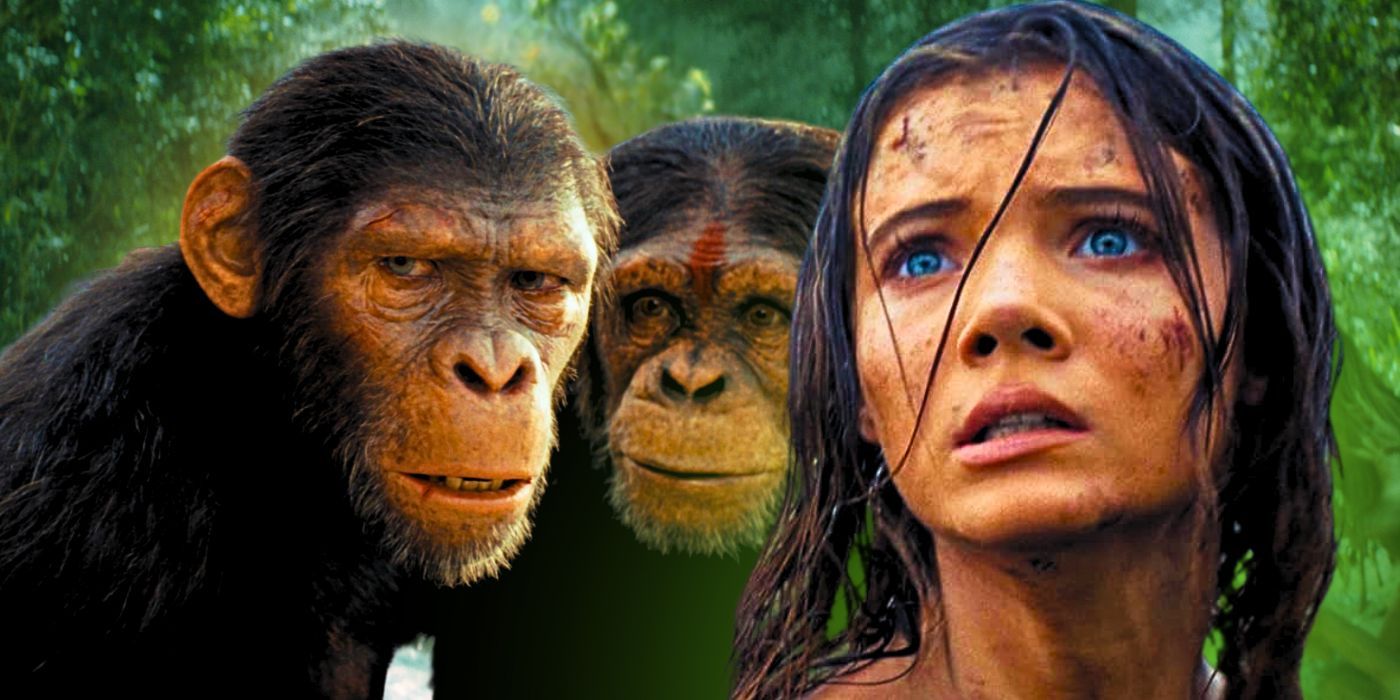
The trend of never bringing back human characters should end with Freya Allan's Mae, who was introduced in Kingdom of the Planet of the Apes. Mae is a human from one of the last remaining human tribes that managed to quarantine from the Simian Flu over countless years, likely aided by the genetic immunity seen in the survivors in San Francisco in Dawn of the Planet of the Apes. Unaffected by the virus, Mae and her comrades are seeking a way to reintroduce satellite communication to the world with the item she takes from Proximus Caesar's vault.
Mae provides the audience with a human viewpoint as the franchise progresses. While each of Kingdom's three predecessors had human characters, the series was entirely about Caesar. The new trilogy has the opportunity to have Mae and Noa act as co-protagonists, providing perspective on the motivations and machinations of both humans and apes as the neverending battle for dominance over the planet rages on. While Noa's motivations are fairly simple (protecting his clan), Mae can be the face of humanity's determined struggle to reclaim what was lost--likely at the expense of the apes.
What Could The Kingdom Of The Planet Of The Apes' Sequel's Story Be?
It will need to address Kingdom's final conversation
Kingdom of the Planet of the Apes ends with Noa and Mae standing at cross purposes. While Noa primarily seeks to provide safety and prosperity for his clan, he has now been tantalized by the possibilities of "ancient" human technology. He can, and should, become the new leader in driving apekind forward, just as Caesar did. Mae, on the other hand, wants to see humanity reclaim the world they lost, and become the dominant species once more. The central conflict in the sequel to Kingdom should include how the two lead their respective species into the future.
In the original version of the final conversation between Mae and Noa, Mae actually points the gun at Noa's back before deciding not to pull the trigger.
The final conversation that Noa and Mae had resulted in an extremely uneasy truce, with Mae concealing a gun that she thought better of using after Noa revealed his innocent intentions. It's clear that Mae has no love for apes in general, and was perfectly ready to eliminate Noa as a threat on the spot. Their individual struggle should serve as a representation of the greater struggle between the species, as both sides seek to gain an advantage with the aid of technology, which Kingdom of the Planet of the Apes placed emphasis on.




COMMENTS