IF Brilliantly Improves One Major Aspect Of This Beloved 20-Year-Old Animated Show
The following contains spoilers for IF, now playing in theaters
Summary IF shares similarities with Foster's Home but excels in transforming its setting through imagination, adding visual power to the film.
In IF, imaginary friends struggle to connect, unlike Foster's Home For Imaginary Friends where bonds are easily formed with visible friends.
IF emphasizes reuniting imaginary friends with their creators, while Foster's Home For Imaginary Friends focuses on spreading imagination to new generations.
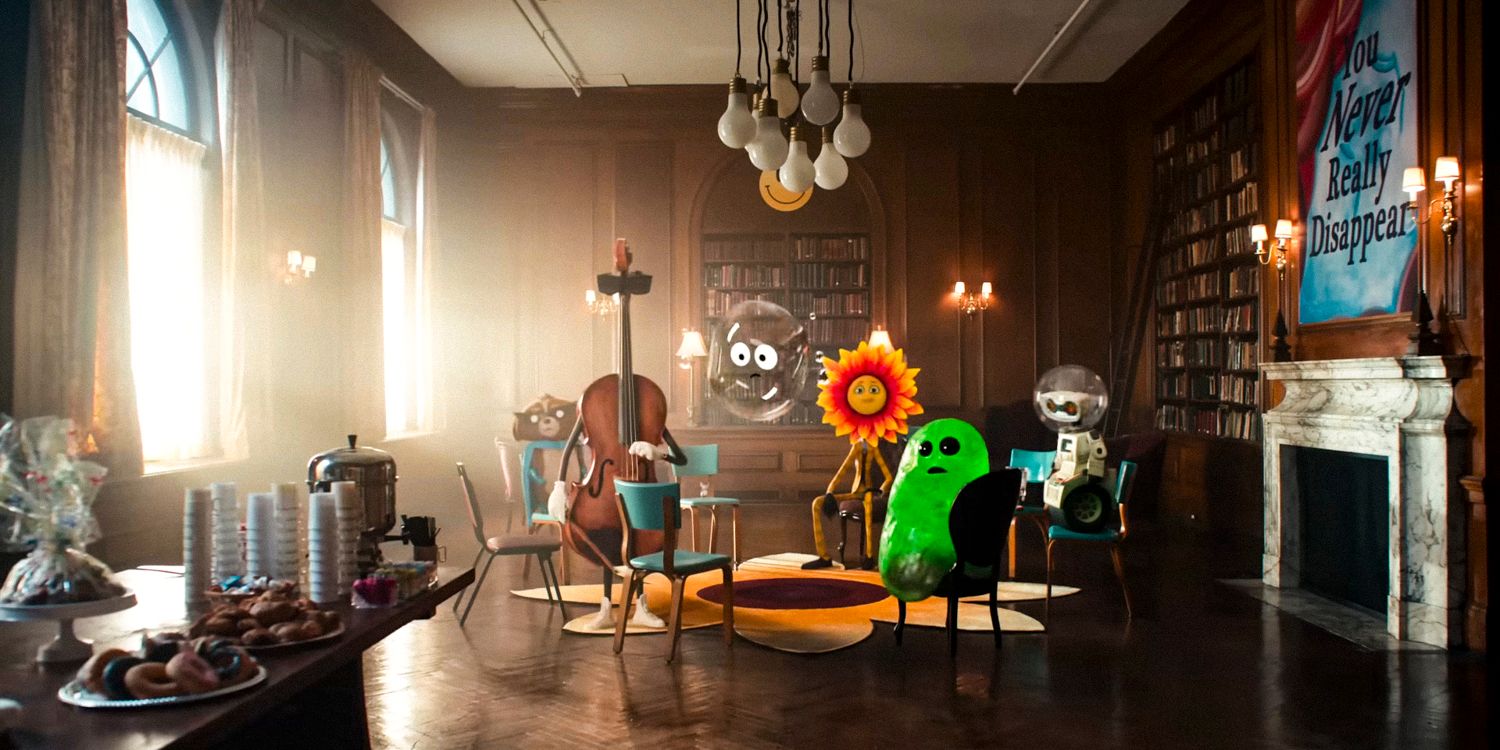
IF shares a lot of elements with a Cartoon Network classic, and it improves on some specific elements of their shared premise. IF focuses on the titular IFs, imaginary friends who have found themselves living in a retirement home after their human creators grew up and forgot them. Much of the film highlights the inner lives of the imaginary friends and follows the efforts of Bea to take them somewhere new to call a home outside of the retirement home.
In terms of concept, John Krasinski's IF has a lot in common with an animated series that debuted twenty years ago. While the two shows touch on similar concepts, both ultimately explore these ideas from different points of view and feature different core messages. Notably, IF does do one thing better than the older cartoon did that adds a lot of visual power to the film and fits into the colorful cast of characters in IF.
Related John Krasinski’s Next Movie Is The Perfect Answer To Waiting For Toy Story 5 The upcoming 2024 movie from John Krasinski is the perfect way for audiences to make the long wait for Toy Story 5’s eventual release better.
IF Improves Foster's Home For Imaginary Friends' Key Setting
Close
IF's Retirement Home for imaginary friends has a lot of clear similarities with Cartoon Network's Foster's Home for Imaginary Friends, but IF's central location has a creative element that the Foster's Home can't quite match. The similar IF and Foster's Home For Imaginary Friends both focus on imaginary friends who have lost touch with the kids who created them. The titular Foster's Home is shown as a large building. While the halls can be bizarre and expansive, the architecture is compared to a labyrinth because of its similar-looking halls and rooms.
By contrast, the retirement home for imaginary friends in IF is a more fluid and expansive space. While it initially appears to be a very basic (albeit hidden) building, the architecture can be impacted and transformed through imagination. Bea discovers this firsthand after Lewis tells her to change the setting with her imagination. This leads the center to transform around them, shifting geography and size. While Foster's Home For Imaginary Friends has the more striking location from an external perspective, the ability to transform the setting to reflect the imaginary creations is a great element of the film's visuals.
How IF Differs From Foster's Home For Imaginary Friends' Main Concept
Image via Paramount Pictures
IF and Foster's Home For Imaginary Friends initially seem to be working from the same premise. Both stories initially highlight an imaginary friend placement program, dedicated to connecting the friends to the kids they can form new bonds with. However, IF's second act takes a turn when the imaginary friends Bea and Cal introduce themselves to the young Benjamin and fail to inspire a bond. In Foster's Home For Imaginary Friends, kids can all see imaginary friends and are quick to form connections. In IF, imaginary friends are invisible to almost everyone and don't make connections as easily.
Your browser does not support the video tag.
Ultimately, the moral of IF is that imaginary friends need to be reunited with the people who created them. Even though they're adults, the IFs are shown to still have a massive positive impact on them, and can help improve the lives of people even if they can't see the IFs. By contrast, Foster's Home For Imaginary Friends makes a point of highlighting how only a handful of people, such as Madame Foster and Mac are able to retaining their connection to their imaginary friends. Instead, these connections need to be fostered between new generations and the older imaginations.
Related New John Krasinksi Movie Commits Very Hard To Making 1 Gag From The Office Even Better A new promotional video for John Krasinski's upcoming comedy movie features a callback to an iconic joke from his previous series, The Office.
Why Foster's Home For Imaginary Friends' Message Works Better Than IF
Image via Paramount Pictures
Both Foster's Home For Imaginary Friends and IF have sweet messages at the core of their story, highlighting the importance of retaining imagination in the face of life changes and struggles. However, IF and Foster's Home For Imaginary Friends differ in their focus. For IF, the argument is against losing sight of the innocence and imagination that people can easily find in their youth but can lose as they get older. This is why the IFs end up being happiest when they are able to reunite with their original people.
Foster's Home For Imaginary Friends is a more proactive story, which takes the idea that imagination can move from one person to another and inspire new generations to find the kind of joy that once inspired others. It's a message that speaks to the importance of spreading imagination to new generations, whereas IF remains primarily focused on the internal growth that imagination can provide. IF has a sweet central message, but the broader emotional potential of Foster's Home For Imaginary Friends gives the animated show an edge over the John Krasinski-directed film.







COMMENTS