D&D’s New Core Rulebooks Will Fix A Major Spellcasting Problem
Summary The upcoming edition of D&D is available for preorder on June 18.
The new Player's Handbook could address persisting spellcasting issues with its art.
The new edition may enhance spellcasting components for more dynamic gameplay.
Since 2014, Dungeons and Dragons has been using and supporting its fifth edition. Thanks to some good luck, massive gaming projects, and famous fan shows, 5e has become D&D's most popular version, breaking into the mainstream. Several factors can be attributed to this, such as 5e's ease of play compared to older versions and shows like Stranger Things and Critical Role popularizing the tabletop RPG for wider audiences. Baldur's Gate 3's success has also helped in this regard, and all three have been made during the 5e era, but D&D is looking to move beyond its fifth edition.
The hotly anticipated, upcoming version of D&D has been fan-dubbed as 5.5e, since players don't expect the latest version to stray too far from the widely popular fifth edition. There could be quality-of-life improvements, official revisions of certain classes, and a fresh new take to lead the franchise forward, similar to what 3.5e did for D&D's third edition. The new core rulebook is set to be available for preorder on June 18, and it seems as though it will fix a major problem that has persisted with D&D's spellcasting for some time now.
Related 10 Best Magic Items In D&D's Vecna: Eve of Ruin, Ranked Vecna: Eve of Ruin litters magic items old and new throughout its adventure, and some could definitely be a big benefit to any D&D party.
How D&D's New Rulebook Will Fix Spellcasting
A Closer Look At Material Components
Close
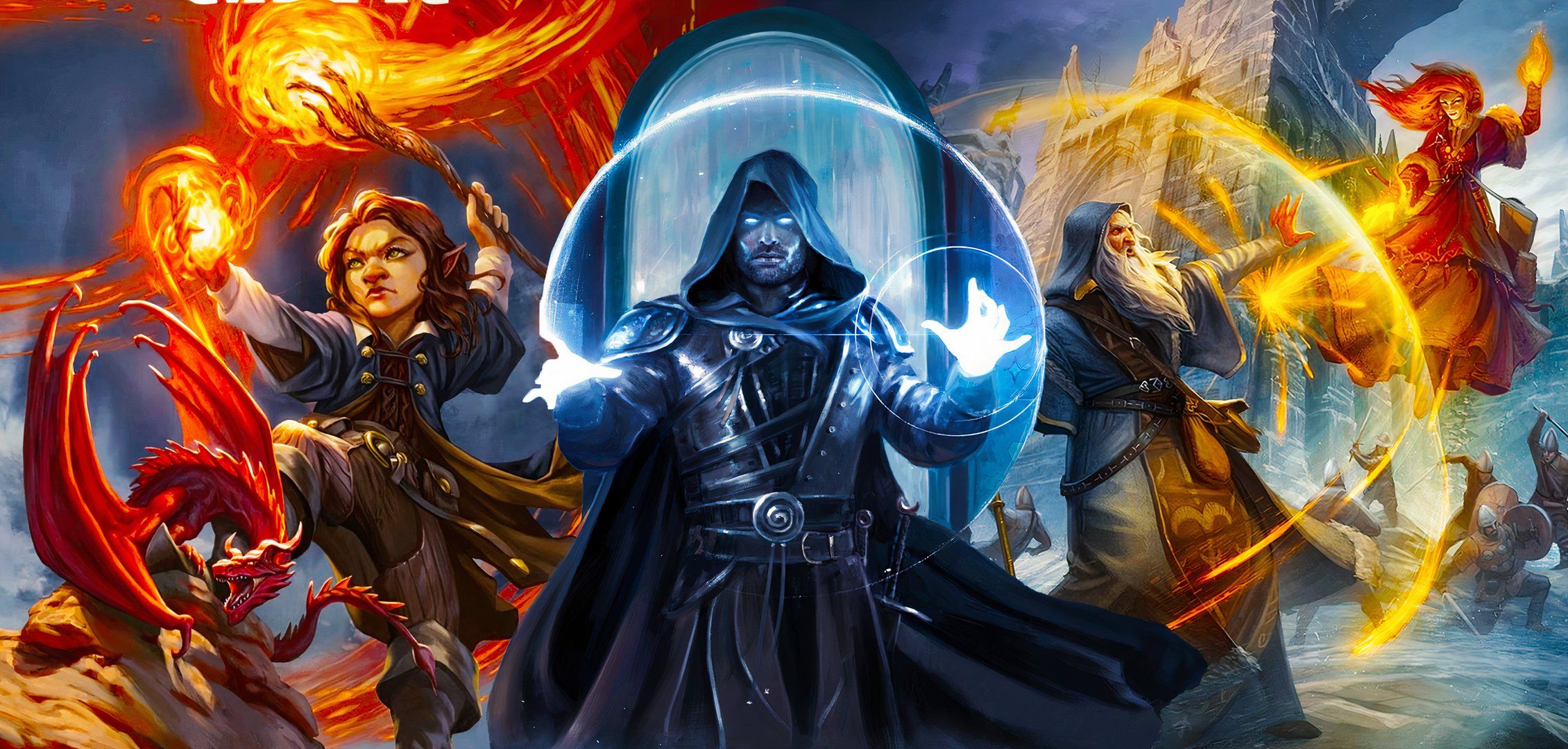
Art has been revealed for the new core rulebook, which has been called the Player's Handbook, just like its 5e variant. As usual, the art from Wizards of the Coast is stunning, depicting dragons, adventures, and battles, as one would expect. Interestingly, the art has another function besides looking beautiful, as it "has a chief goal of helping to further an understanding of the game." This extends to spellcasting, too, which has remained an ambiguous part of the tabletop RPG despite its prevalence and use.
Spells in D&D require components, but these components are often arbitrary unless they specifically require a material that costs coin. There are three different component categories: verbal, somatic, and material, although most spells are usually placed under more than one. Again, these categories feel arbitrary unless under specific circumstances, like silence preventing the use of verbal component spells. It is telling that Baldur's Gate 3 elected to emit the use of components in its spells.
Although most material components for spells in D&D might seem odd, they make more sense when viewed as jokes. For instance, detect thoughts requires a copper coin, which makes it a play on the phrase "penny for your thoughts." Several illusion spells use a bit of fleece, a play on "pulling wool over someone's eyes."
The art for the new Player's Handboook will show spells being cast, and this demonstration of magic might mean that 5.5e could lean more heavily into the components of spellcasting. This will help spells feel different in how they are cast, since in 5e the act of using a spell has always felt a little undefined. A spell is declared, then it happens, and the components used for that spell are usually ignored. Somatic components are especially odd since the hand movements of a spell are never defined and practically don't affect gameplay at all.
Related Everything We Know About D&D's New Player's Handbook In 2024 An updated version of the Dungeons & Dragons 5e Player's Handbook is due out in 2024, and there are a lot of changes heading to the 50-year-old RPG.
Spellcasting Is One Of D&D's Strong Points
More Complex Than Martial Combat
Spellcasting has always been vital to Dungeons and Dragons. Players can choose to ignore classes that use spells, but the choice means that there is variety in how a party can play. One can hurl balls of fire, while another can hit people with a big stick. It's part of what makes the TTRPG so special, but there is no denying that spellcasting is more complicated than martial combat, yet that complexity has been somewhat ignored with the underdeveloped implementation of spell components.
5e is the most beginner-friendly version of D&D and was a welcome change after the general dislike of the TTRPG's 4th edition, which failed to live up to the expectations of the widely loved 3.5e.
The upcoming Player's Handbook promises to elaborate on the understanding of the game through its art. That extends to spellcasting, and it could mean that spells become more dynamic and developed in how they are cast. There is already a myriad of different spells for different classes that are able to do so many different things, but they all feel as though they are cast the same way. The new core rulebook for Dungeons and Dragons can fix this issue, adding a bit more magic to spellcasting.
Source: Game Informer




COMMENTS