Dune's Bull Symbol Is More Significant Than You Realize
Warning! This article contains SPOILERS for Frank Herbert's Dune novels.
Summary Leto's bull's head symbolizes his father's death, serving as a constant reminder of risks and and the importance of facing fear.
The bull's horns represent the threats of House Harkonnen and the Emperor, which posed deadly dangers to House Atreides.
The bull motif in Dune draws parallels to the Minotaur myth, symbolizing death and danger for the Atreides amidst political complexities.
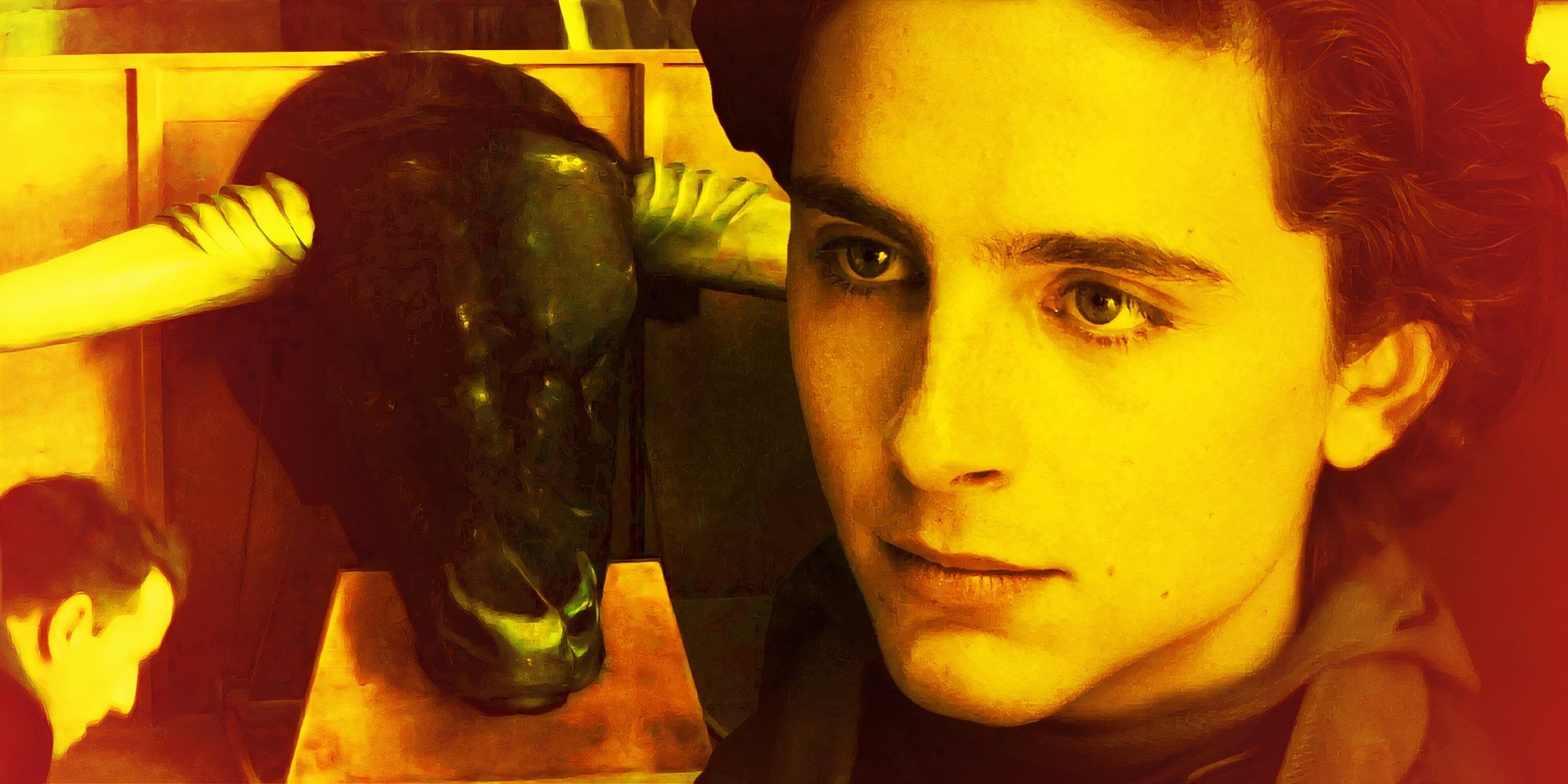
The Dune franchise is filled with metaphors, allegories, and symbolic imagery, but one of its most important wasn't hidden at all: the bull's head that House Atreides proudly displayed. There are several important groups and factions in the world of Dune, but none are as prominent as House Atreides. They're the central figures of the series, and as such, the future of the franchise will focus on House Atreides; their future will be explored in Dune: Part Three, while their history will be explored in Dune: Prophecy. That history was already hinted at by the franchise's most important symbol: the bull.
Denis Villeneuve's Dune movie featured the bull motif prominently throughout its runtime, hinting at its true importance. From the beginning of the film, when Paul looks at a statue of a matador, to when Leto looks up at its head as he takes his final breath, the bull was present for every part of House Atreides' depiction in the movie. While it may seem like a simple callback to the Atreides' history, the bull motif also holds deeply important symbolism, and it underscores many of the biggest plot points and themes of Dune.
3:21 Related The Atreides/Harkonnen Family Tree Explained As proven by Dune: Part Two's twists and turns, the Atreides and Harkonnen family tree is complicated, but understanding the bloodlines is crucial.
Leto's Bull's Head Is A Reminder Of His Father's Death
Leto's Father Was Killed While Fighting A Bull
Close
Early on in Dune, Leto and Paul spoke about Leto's father, and how he was killed while fighting a bull. Since his father's death, Leto had filled the Atreides' living places with imagery of bulls, both on Caladan, and after they moved to Arrakis. Those bull symbols served as a constant reminder to Leto of his father and how he died, and they served a practical purpose as well. They were meant to help show Leto and Paul that taking risks and facing fear is necessary, but that there is also a constant possibility of death inherent in them.
Atreides Family Tree Cause of Death Leto's Father (Old Duke) Bullfighting Leto Assassination Paul Assassination
It's also interesting to note that, despite what the bull symbols are meant to convey, neither Leto nor Paul actually heeded their advice. Leto's father may have been killed by a real bull, but Leto's bull, the cause of his death, was Arrakis. He knew very early on that it was a trap, yet he accepted the challenge anyway, and found himself trampled by it. Paul, too, found his bull in the form of the Fremen. Despite how much power he gained from them in the first novel, the Fremen would inadvertently be the cause of Paul's death in Children of Dune.
The Bull Also Symbolizes The Harkonnens And The Emperor
The Bull's Horns Are Dipped In Blood, With Each One Representing A Threat To The Atreides'
Close
A notable part of the design of the bull's head is its two horns that have both been blackened by blood. This, too, connects to the bull's symbolism, as each horn represents one of the major powers that threaten to gore House Atreides: House Harkonnen and the Emperor. The Harkonnens presented the most overt threat, as the Baron hatched the actual plan to destroy House Atreides, and they were openly antagonistic towards them. The Emperor presented a more subtle, but no less deadly, threat from a systematic angle, as he manufactured the scenario that allowed the Harkonnens to strike and avoid the political backlash that should have entailed.
Related Dune: 10 Things Only Book Readers Know About The Baron Harkonnen The Baron Harkonnen is one of Dune's most compelling figures, and there's a lot about his personality that only book readers will understand.
The idea that the Harkonnens and the Emperor are represented by the bull's horns works on a literal level, as House Atreides really did face two deadly threats at the same time, but it also works on a more symbolic level as well. A bull's horns are difficult to dodge: avoiding one horn could place the matador directly in the path of the other. The only way to truly stay safe from the bull's horns is to avoid the bull entirely, a lesson Leto never learned. The same applies to the Harkonnens and the Emperor: the only way Leto could have survived was by avoiding Arrakis entirely.
The Bull Is A Reminder Of The Minotaur Myth
The Landsraad Is A Massive Political Maze With A Deadly Threat At Its Center
Bulls are also often used symbolically in the real world, and they're a major influence in one ancient Greek myth: the Minotaur. The Minotaur was a mythical creature with the head of a bull and the body of a man, and he was imprisoned in the labyrinth, a massive, nearly unsolvable maze. As punishment for killing a local king's son, Greek children were sacrificed to the Minotaur. Eventually, the Greek hero Theseus entered the labyrinth and slew the Minotaur with the help of a golden thread that allowed him to exit the maze.
Like Theseus, the Atreides' had to navigate the Landsraad, Dune's political system, which was a confusingly complex and dangerous game in itself.
The myth of the Minotaur has some surprising parallels to Dune, and it's possible that the Atreides' bull's head is a reference to it. Like Theseus, the Atreides' had to navigate the Landsraad, Dune's political system, which was a confusingly complex and dangerous game in itself. Since there were so many threats in the Landsraad, like the Bene Gesserit and the Harkonnens, one wrong turn could lead to certain death, and at its center was the greatest threat of all: the Emperor, just like the Minotaur. In that sense, it was Paul who acted as Theseus, as he was able to navigate the maze of the Landsraad.
The Atreides' Bull Is A Many-Layered Symbol For Death And Danger
Scenes With Imagery Of Bulls Indicate Death Is Drawing Near In Dune
Close
The bull also symbolizes death more generally for House Atreides. The scenes where imagery of bulls are included indicate death is drawing nearer. Paul first sees the bull statue while Jessica trains his gift with the Voice, a tool he would later use to dispense death both in the ornithopter and in his command of the Fremen. The bull was then prominently displayed when the Atreides' first arrived on Arrakis, and it even gave Jessica an uneasy and frightening feeling when she unboxed it in the novel. Finally, the bull's head loomed over Leto's dead body, watching him take his final breath.
The bull's symbolic connection to death all stems from the same place: Leto's father. Bullfighters dance around the bulls, essentially performing acrobatics to escape death, which is exactly what House Atreides had done since its inception. From the Landsraad to the other factions and houses, the Atreides' were constantly in danger from every side, and they had to constantly dance to avoid them. It was only a matter of time until the bull finally won.
The bull motif also extended beyond House Atreides in Dune: Part Two. The black-clothed soldiers at the edge of the Harkonnen arena on Geidi Prime were meant to resemble bulls with their horned heads. That could be considered a way the Harkonnens were mocking the Atreides' but it also symbolized how they dispensed death to their prisoners, and how the Harkonnens were drawing nearer to their demise at Paul's hand. Throughout every version of the story in the Dune franchise, bulls have been an incredibly important, and incredibly ominous, symbol.




COMMENTS