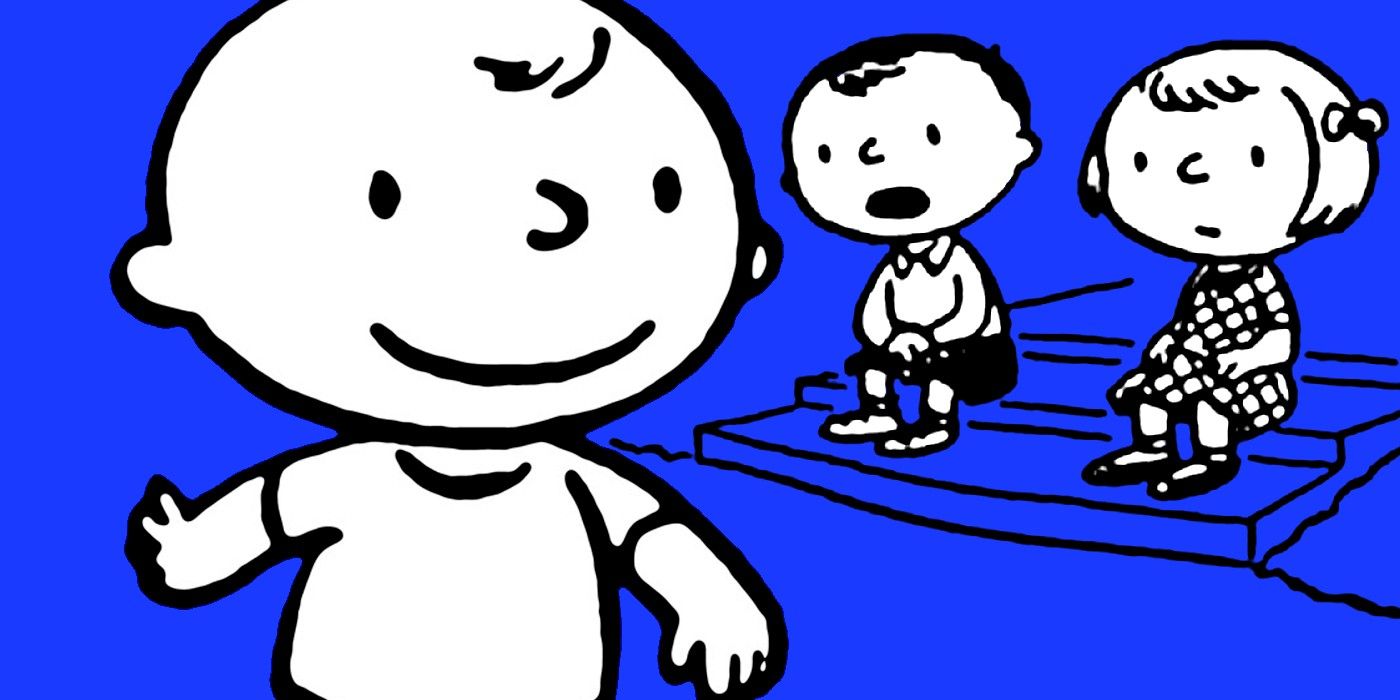
The Very First PEANUTS Comic Set The Saddest Part of Charlie Brown’s Character in Stone
Summary Though it may surprise fans that he initially debuted as a "passing" character, Charlie Brown's first appearance in Peanuts sets the foundation for his core traits, which in turn elevated the character to the iconic status he enjoys today.
The evolution of Charlie Brown from a passing character to the central figure is one of the most fascinating aspects of early Peanuts cartoons; for fans of Charles Schulz' work, new and old alike, studying Peanuts' characters' introductions adds great layers of context to their appreciation of the strip.
Charlie Brown quickly came to embody good-natured resilience in the face of constant defeat, which made him the perfect central character for Peanuts, and is essential to why he became such a beloved figure.
Charlie Brown is universally recognized as the central character of Charles Schulz' legendary comic strip Peanuts, but many readers might be surprised to learn he did not start out that way. In fact, he made only a passing appearance in Schulz' debut cartoon – something that several comic experts nevertheless suggest set the foundation for who the character would become.
As part of C2E2's "Four Perfect Panels: Fans of Peanuts and Charles Schulz" panel, comic historian Gene Kannenberg, Jr., alongside scholar Ivan Brunetti, discussed the evolution of Charlie Brown from his seemingly throwaway initial appearance, to becoming the most famous member of the Peanuts gang.
Offering a close reading of the first Peanuts strip, Brunetti and Kannenberg highlighted the idea that Charlie Brown's role in the cartoon resonated with the character's most memorable traits, as they quickly developed in the first few years of Peanuts publication.
Gene Kannenberg, Jr. is creator of the recently released "Here Comes Charlie Brown! A Peanuts Pop-Up" exhibit. Ivan Brunetti is the author of “The Peanut Papers,” a collection of essays about the history and cultural impact of Charles Schulz' iconic, long-running cartoon.
Related Charlie Brown's Football Gag Gets a Horrifying Ending in Hilariously Dark Fanart In a post on X, @hausofdecline shared a tribute to Peanuts' football gag, one that takes a wild turn while remaining true to the essence of the joke.
Charlie Brown's "Walk On" Debut Defined His Role In Peanuts
It Started From Peanuts First Panel
Close
Peanuts' debut set the foundation for Charlie Brown's core character traits, which Charles Schulz' soon identified and leaned into.
For readers who want to dive into the history of Peanuts, one of the most exciting things to discover is how the cartoon's many beloved characters were introduced, and subsequently, to chart how each character developed over time. The debut Peanuts strip offers an immediate surprise with the way it introduces Charlie Brown – not as the center around which the world of the strip would come to revolve, but rather in a brief, non-speaking appearance. As cartoonist and comic scholar Ivan Brunetti put it: “It’s almost like the strip goes on without him."
Appearing at C2E2 for the "Four Perfect Panels: Fans of Peanuts and Charles Schulz" panel, Brunetti admitted that Charlie Brown's introduction felt unusual in the context of how the character and Peanuts have become inseparable in the popular consciousness. As Brunetti noted:
It’s a much stranger strip looking at it in isolation. This created the world of Peanuts, and Charlie Brown, who is so central to the entire thing, is almost like a walk-on character who disappears.
However, as fellow comic historian Gene Kannenberg, Jr. noted, Charlie Brown's role in the strip was still indicative of the character he would grow into, saying:
He’s basically a passerby in his own strip. He has no voice. Kind of how he feels in the world sometimes, right? He’s there, but not there, in a sense.
According to Kannenberg's analysis, Peanuts' debut set the foundation for Charlie Brown's core character traits, which Charles Schulz' soon identified and leaned into.
Given Peanuts longevity, it might be easy for readers to mistake the comic's characters' familiarity for staticity, or fail to recognize the different ways the strip's most iconic gags took shape over the years. A closer look at some of Charles Schulz' formative strips, along with the expert perspectives of scholars and historians like Gene Kannenberg, Jr. and Ivan Brunetti, are vital to helping Peanuts fans develop an even deeper appreciation for Schulz' genre-defining work – and why the timeless quality if the cartoon continues to accrue new fans to this day.
Charles Schulz Quickly Realized Charlie Brown Was His Focal Character
The Joke Was On Him From The Start
Close
More than just the idea that his role in the strip represents how Charlie Brown would often come to feel, Charles Schulz' first joke cements his main character as someone who is often maligned by his peers.
Especially considering how quickly Charlie Brown emerged at the forefront of Peanuts' expanding cast of characters, it certainly stands out that he would have such an oblique appearance in the first-ever strip. As Gene Kannenberg, Jr. summed it up:
This is the way that Charles Schulz introduces what becomes his main character for the next 50 years: a tiny little figure in the background…he is only in 2 of the 4 panels, only really legible in 1 of the 2 panels he’s in, and he disappears halfway through.
That said, it is important to note that even in Peanuts' debut, Charlie Brown is indeed the focus of the cartoon, in the sense that he is the subject of all its dialogue, and ultimately the punchline of the strip's very first joke.
"Well! Here comes ol' Charlie Brown," the character who would come to be known as Shermy says in the first Peanuts comic. "Good ol' Charlie Brown, yes sir! Good ol' Charlie Brown...How I hate him!" Though he doesn't have an active role yet, the character is represented in every panel. More than just the idea that his role in the strip represents how Charlie Brown would often come to feel, Charles Schulz' first joke cements his main character as someone who is often maligned by his peers, usually unfairly.
Whether the series' creator planned to make Charlie Brown his central character from the start, and picked a surprising way to introduce him to the audience, or swiftly arrived at the conclusion as he continued developing the strip, Charles Schulz recognized the key attributes of the character early on. Peanuts protagonist came to be defined, in essence, as exactly who he was portrayed as from the beginning: a boy who can earn the ire of his contemporaries even without having to say or do anything.
Charlie Brown Became Synonymous With Good-Natured, But Hapless Protagonists
Charles Schulz' Peanuts Gang Proxy
Close
Given that Charlie Brown was, in a way, his creator's proxy character in the world of Peanuts, it seems that Schulz gifted the often-hapless characters with one of his own greatest strengths: drive and determination, no matter the odds.
The qualities inherent in Charlie Brown's Peanuts debut went on to define the character throughout the course of the strip's half-century run in syndication. In turn, Charlie Brown became synonymous with the comic – to a degree, even moreso than characters like Snoopy and Woodstock, or Lucy and Schroeder – precisely because of these ingrained attributes. To generations of fans, Charlie Brown represents a fundamentally good-natured individual, who is often ground down by the harsh nature of life, even for a child.
Key to the character's success was that – even in defeat, even when hope seemed elusive – Charlie Brown persisted. Charles Schulz himself once noted that his protagonist's core virtue was that he "kept losing outrageously," but always had the will to try again. Given that Charlie Brown was, in a way, his creator's proxy character in the world of Peanuts, it seems that Schulz gifted the often-hapless characters with one of his own greatest strengths: drive and determination, no matter the odds.
As Gene Kannenberg, Jr. and Ivan Brunetti alluded to in their C2E2 appearance, Charles Schulz' artistic success and Charlie Brown's myriad failures are irrevocably connected. The essence of the character, as established in his "passing" appearance in the first Peanuts comic, was precisely what made him the perfect protagonist to carry Schulz' work for decades. With his goodhearted, innocent nature contrasting his recognition that the world is a harsh and intimidating place, despite how often Peanuts jokes required him to be derided, even humiliated, one must imagine Charlie Brown happy.
Source: "Four Perfect Panels: Fans of Peanuts and Charles Schulz," C2E2 panel.




COMMENTS