30 Years Later, DC's ZERO HOUR Crossover Matters More than Eve: As a '90s DC Fan, I Can Tell You Why
Summary Zero Hour: Crisis in Time sought to fix continuity errors in the DC Universe post-Crisis, and its influences are still visible in today's comics.
Zero Hour had an epic buildup, introduced new characters, and significantly impacted the DC Universe's timeline.
Despite initial oversight, Zero Hour has remained crucial in shaping DC's storylines and characters for over 30 years.
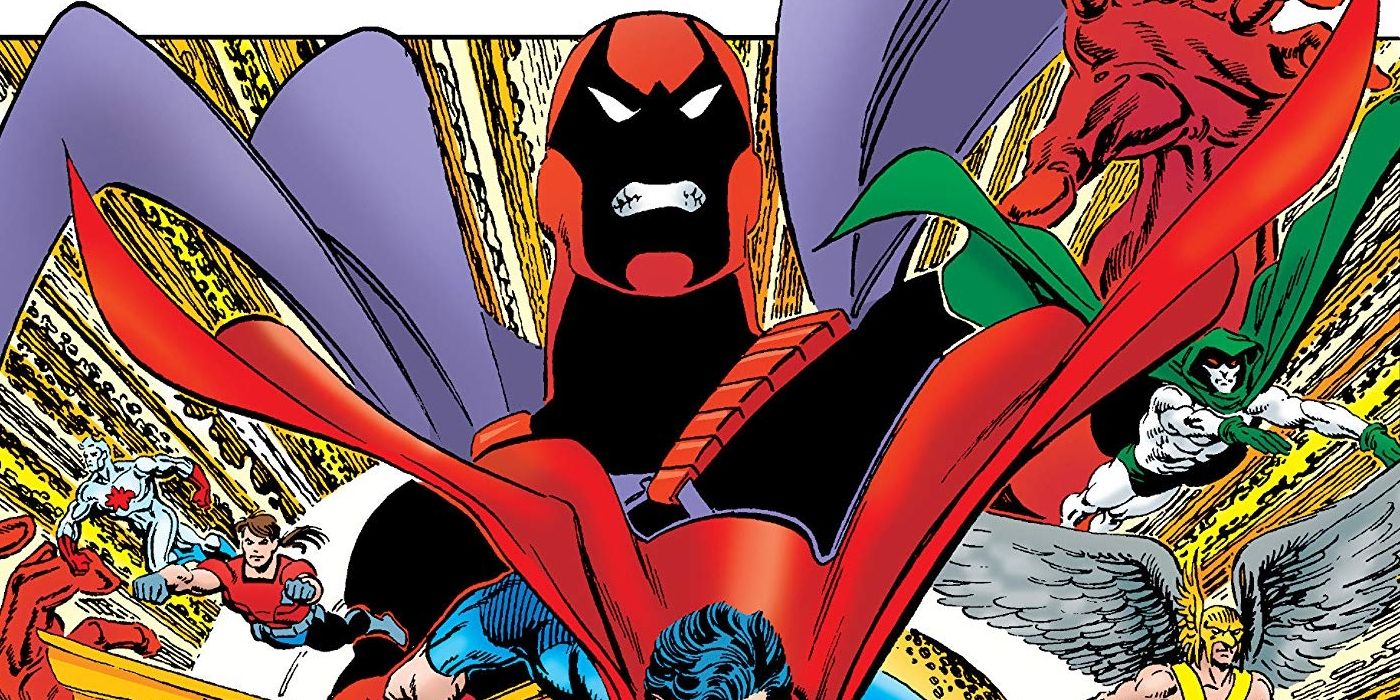
30 years after its initial publication, Zero Hour: Crisis in Time remains one of the most important DC events of the 1990s. An unofficial sequel to 1985’s Crisis on Infinite Earths, Zero Hour attempted to address some of the continuity errors that had slipped in since Crisis. Whether Zero Hour accomplished its goal of setting right these errors or not, echoes of it can still be found in DC’s line today.
Whether Zero Hour accomplished its goal of setting right these errors or not, echoes of it can still be found in DC’s line today.
Written and drawn by Dan Jurgens, Zero Hour: Crisis in Time appeared in shops during the summer of 1994, after nearly a year's worth of buildup and hype. The five-issue miniseries was published weekly, and used a unique “countdown” type numbering. Numerous DC books tied into the event, and in its wake, the publisher released zero issues of all their titles, intending them to be good jumping-on points for new readers. Zero Hour was an ambitious event, with roots deep in DC lore.
The Crisis On Infinite Earths Created the Modern DC Universe
Yet Problems Lingered Even After Crisis Ended
By the 1980s, DC’s continuity had become, in the eyes of some, incomprehensible, thanks in part to its sprawling multiverse. Marv Wolfman, who was one of comics’ most popular writers at the time thanks to his and George Perez’s New Teen Titans, was tasked with simplifying it all. DC’s 50th anniversary was also on the horizon, and what would become Crisis on Infinite Earths was intended to be part of the celebration. Crisis succeeded wildly in its goal of streamlining the DC Universe, and the Earth created in its wake still stands in one form or another.
However, continuity problems began almost instantly. Wolfman intended for every title to start over with a new number one issue, as a way of ensuring everyone was on the same page. DC editorial at the time took a more “hands off” approach. While this resulted in a great deal of creative freedom, it also led to a lack of coordination among creators. This led to some serious continuity issues with some of DC’s biggest characters.
Wolfman intended for every title to start over with a new number one issue, as a way of ensuring everyone was on the same page.
The two DC properties hit the hardest by the Crisis were Hawkman and the Legion of Super-Heroes. After the Crisis, John Byrne established that Superman never had a career as Superboy. Superboy was the inspiration for the Legion of Super-Heroes, and without his presence, everything fell apart. Furthermore, Hawkman’s history became muddled post-Crisis. After the Crisis, Hawkman (Katar Hol) takes Superman to where Krypton once was. It was a poignant story, but a year later, Hawkworld rewrote Katar Hol’s story. In this new incarnation, Hol did not come to Earth until much later, rendering the Superman story a continuity problem.
Zero Hour Had A Long and Epic Buildup
Zero Hour Drew On DC's Rich History
Close
Zero Hour appeared nine years after Crisis on Infinite Earths, but the buildup to it began a year before. DC announced the event via an ominous house ad in the summer of 1993, but kept details under wraps until a few months prior. The first official Zero Hour tie-in was in the anthology title Showcase ‘94 #8-10, which served as a prelude. The villain Monarch, formerly Hawk of Hawk and Dove, was transformed into Extant, who has been billed in promotional materials as Zero Hour’s antagonist. Hawk’s turn to evil had begun a few years prior in 1991’s Armageddon 2001.
Long-time DC fans will remember that Hal Jordan was Zero Hour’s true villain. Several months prior to Zero Hour’s publication, Jordan lost his mind in the wake of Coast City’s destruction during the Reign of the Supermen event. Jordan attempts to revive Coast City, which the Guardians see as overreaching. As chronicled in the Emerald Twilight story, Jordan attacks the Corps, massacring them as well as the Guardians. Jordan then took control of the Power Battery and took off for parts unknown. His return as Parallax in Zero Hour #1 was one of the most shocking comic events of the 1990s.
Waverider first appeared in Armageddeon 2001 #1
Seeds for Zero Hour were also sown in the works of its primary architect: Dan Jurgens. Beginning with the aforementioned Armageddon 2001, Jurgens began introducing new, time-travel oriented characters to the DC Universe, namely Waverider and the Linear Men. The Linear Men, existing outside of time and space, helped ensure the timestream flowed smoothly. The rough equivalent of Marvel’s Time Variance Authority, the Linear Men played a huge role in Zero Hour.
Zero Hour Hit the DC Universe With a Bang
Numerous Powerful Characters Fell Before Extant and Parallax
Close
Zero Hour kicked off in a grand fashion, with an unseen foe (revealed later to be Hal Jordan/Parallax) murdering the Time Trapper. The Trapper, regarded as one of the Legion of Super-Heroes’ most powerful foes, was easily dispatched, setting the tone for the rest of the series.
Meanwhile, the timesteam came under siege. Both the future and the past started to disappear, resulting in wholesale changes that threatened the fabric of reality. The other Linear Men warned Waverider of a “Crisis” that held the key to what was happening.
Traveling to the Linear Men’s home of Vanishing Point, Waverider learned the truth: a major “Crisis” had hit the universe, one that completely altered its shape. However, the universe had not finished healing from the Crisis. This was used to explain the continuity errors that had slipped into the DC Universe since. During Zero Hour, Jurgens attempts to untangle Hawkman’s continuity by merging all variants into one.
Finally, in Zero Hour #1, Parallax is revealed as the villain.
Jordan became convinced resetting Coast City was not enough–he needed to reset the entire universe.
Parallax/Jordan attempted to restore the multiverse, but thanks to the heroes, particularly Damage, he was defeated. Afterward, the universe returned to normal but with some major changes. The various iterations of Hawkman have been (seemingly) reconciled and the Legion of Super-Heroes received a complete, “from the ground up” reboot that removed all elements of Superboy from their origin. The international branch of the Justice League disbanded in the wake of Zero Hour, and several new heroes, including new incarnations of Starman and Manhunter, debuted shortly after.
Zero Month Gave the DC Universe a Fresh Start
Zero Month Saw the Beginning of Many Intriguing Story Lines
Close
Realizing that this may have contributed to the problem that led to Zero Hour in the first place, DC editorial decided to give every regular DC Universe title a “zero issue.
As mentioned earlier, Crisis writer Marv Wolfman wished for a common starting point for the new DC Universe, but it failed to materialize. Realizing that this may have contributed to the problem that led to Zero Hour in the first place, DC editorial decided to give every regular DC Universe title a “zero issue.” This, in theory, would give every DC character a common starting point. Referred to as Zero Month, several titles were canceled and many others began. Many of the books took the opportunity to embark on new directions or explore new corners of their respective characters.
Zero Hour Is the "Black Sheep" Of Crisis Events--But It Does Not Need to Be
Numerous Important DC Characters Got Their Start During Zero Hour
At the time of its publication, Zero Hour was a massive success for DC Comics. The series sold well, and nearly every subsequent Zero Month issue did great sales-wise as well. In the 30 years since its first publication, numerous other “Crisis” events have hit the DC Universe: Infinite Crisis and Death Metal, to name a few. Zero Hour sometimes gets lost in the shuffle, and this does it a grave disservice. Zero Hour gave a much needed “shot in the arm” to the DC Universe.
Zero Hour, and its buildup, saw the debut of several characters, many of whom would go on to become major players. The first was Kyle Rayner, who became Green Lantern after Hal Jordan betrayed the Corps. Impulse also zipped into Wally West’s life in the months leading up to Zero Hour. During Zero Month, the Justice League debuted a new line-up, as did the Teen Titans. The Justice Society temporarily disbanded in the wake of Zero Hour. Finally, cult hero Jack Knight (Starman) arrived during Zero Hour, and would headline one of the most acclaimed titles of the 1990s.
Zero Hour Still Matters, Even 30 Years Later
Zero Hour Helped Shape Decades Worth of Stories
While Zero Hour is often overlooked, it, in fact, is still influencing events in the DC Universe to this day. It was DC’s first attempt at acknowledging their post-Crisis continuity errors. While it was rare at the time, DC has gone back to the well with various other Crisis-style events. The multiverse, which Hal Jordan tried to bring back in Zero Hour, would later return for good during Infinite Crisis and its follow-up 52. Each of these events has helped shape DC’s vast lore. The company’s obsession with these types of events can trace its roots back to Zero Hour.
While Zero Hour may have, at first, seem to have damned these characters, it in fact helped redefine them, Hal Jordan in particular.
In addition, both Hal Jordan and Hawk, who were the primary antagonists of Zero Hour, would redeem themselves years later. During Green Lantern: Rebirth, writer Geoff Johns restored Hal to the Green Lantern Corps, revealing that “Parallax” was in fact an evil entity that had taken control of Jordan. While Zero Hour may have, at first, seem to have damned these characters, it in fact helped redefine them, Hal Jordan in particular. It is not a stretch that the character’s mid-2000s success began with Zero Hour. Hawk was subsequently redeemed in the Blackest Night.
Later this summer, DC will publish the Zero Hour: 30th Anniversary Special. While details remain mum, Hal Jordan will be involved in some capacity. Returning to Zero Hour 30 years later is proof the event mattered and is ripe for rediscovery by a new generation.




COMMENTS