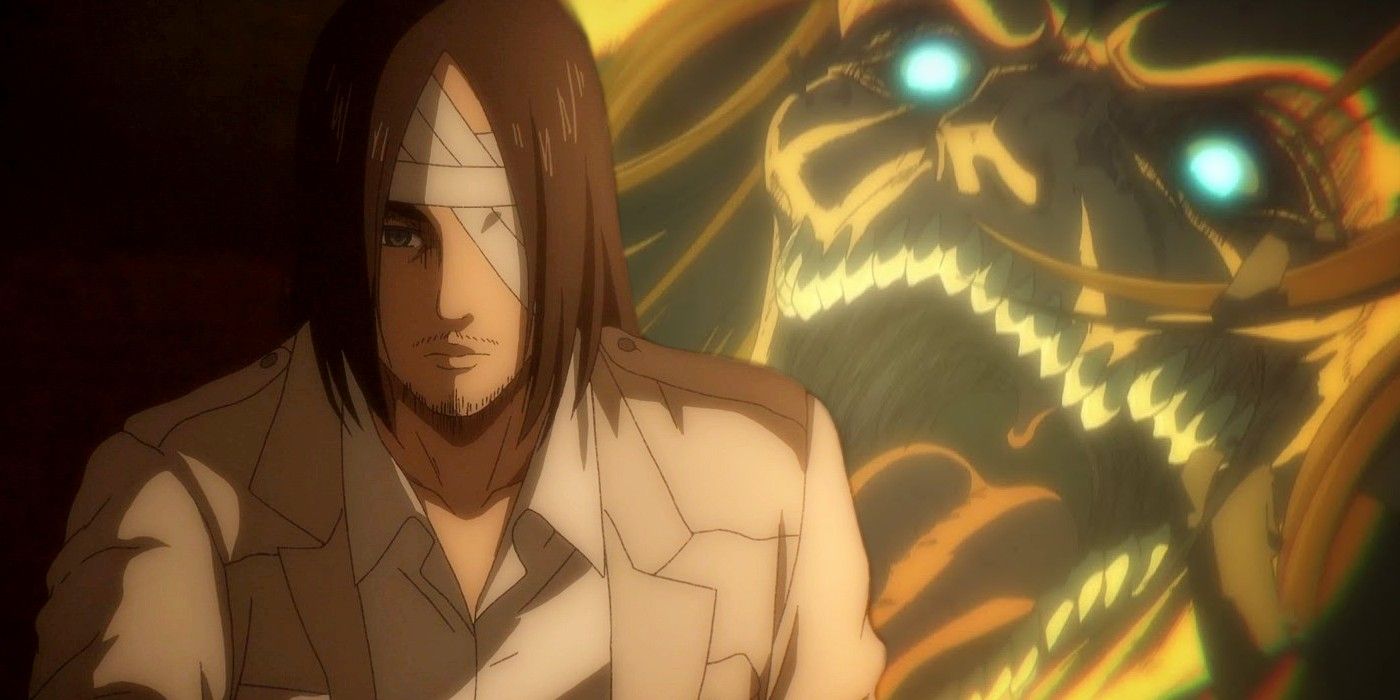
Attack on Titan's Ending Controversy Explained
Summary The final Attack on Titan episode showcased the dramatic end of The Rumbling.
Eren was stopped by the Scouts and Marleyans, leading to his tragic death.
The controversial and disheartening ending highlights the tragedy of war.
Attack on Titan's final anime episode aired in November 2023, concluding the beloved series after over a decade. The ending was dramatic and touching, bringing the horrors of The Rumbling to an end. However, in spite of this positive achievement, the conclusion was also devastating and resulted in many gruesome deaths, including those of a number of fan-favorite characters.
The final chapters of Attack on Titan showcased the Scouts and Marleyans as they battled in vain against the hordes of Wall Titans threatening to wipe out humanity forever. Eren began this onslaught of Titans, called The Rumbling, and it seemed there was little anyone could do to stop him.
Mikasa and Armin attempted to reason with him, having multiple conversations with their friend and urging him to find another solution that would not result in unnecessary murder and bloodshed. However, Eren's decision unfortunately could not be swayed, and Eren's previous friends became the ones who would take him down by force.
Eren Was Stopped by The Scouts and the Marleyans, Who Teamed Up to End the Rumbling
Previous enemies were forced to work together to prevent the destruction of their world
As the situation escalated and the troops began to struggle to hold off the advancing Titans, it became clear there was no other choice but to kill Eren. This horrifying reality was difficult for the Scouts to handle, as they had grown up with Eren since first enlisting in the Survey Corps all those years ago. However, out of options, Mikasa herself sliced off Eren's head and kissed him one last time, ending his reign of terror on humanity. The moment of Eren's decapitation was the most shocking in the entire series and one that no one could have predicted.
The scene was poignant and symbolic, but undoubtedly depressing as well. Mikasa kissed Eren's head, knowing she'd never have the opportunity to again, as Armin cried in anguish at the loss of his best friend. Unsurprisingly, even though The Rumbling was over, Eren's sacrifice did not completely end warfare or conflict in their world. The series concluded with Armin and the Scouts and Marleyans on a boat, on their way to engage in Peace Talks and share their accounts of what had occurred as a result of the conflict, in an effort to prove that constant warfare is a fruitless endeavor, which is Attack on Titan's main message.
The Controversial Ending Is Often Criticized for a Number of Reasons
Some fans were unhappy with Eren's death, while some felt the finale as a whole was too hopeless
Close
As the main character of the series, Eren was undoubtedly very popular and cherished by many viewers. Even if his actions sparked controversy, most fans were able to sympathize with his hatred for the Titans and dedication to protecting his friends and family from their tyranny. Eren's choice to commit genocide is rightfully appalling to most, making the Scouts' choice to stop Eren by force understandable and rational. However, some viewers felt he should not have died, and The Rumbling should have been carried to its conclusion or, alternatively, that he should have stopped The Rumbling of his own volition.
These potential ending ideas are intriguing and would drastically change the outcome of Attack on Titan. However, author Hajime Isayama has spoken about how fate plays into the story, and that Eren's life was predetermined to end the way that it did. It can be difficult to gauge Eren's true intentions, as he is a mysterious and complex character, but it seems as if his passionate urge to destroy the Titans led him to his eventual tragic fate. Ironically, in his unstoppable desire to be free, even Eren himself admitted that he had become a "slave to freedom."
Eren Shifted From a Slave to the Titans to a Slave to Freedom
Eren traded one master for another, and ironically, his yearning for freedom led to his death
Early on in Attack on Titan, Kenny Ackerman stated, "Everyone was a slave to something." His words could not have been more true and showed up again and again throughout the series. Isayama's decision to kill the main character was a bold move but fits well with this premise of everyone being enslaved to something or someone. Eren almost escaped from living under the thumb of the Titans, but his pursuit of freedom became his new captor. His death was hard-hitting and devastating, but ultimately necessary to properly depict this crucial lesson of the story and showcase the fruitlessness of war overall.
Another complaint commonly lodged about the conclusion is that it is a hopeless ending. Although the Scouts and Marleyans were able to see each other's point of view and stop the Rumbling, the situation in the rest of the world was still incredibly dire, even at the conclusion of the story. War continued to rage throughout the world and, despite the glimmer of promise provided by Armin's plan to participate Peace Talks, true worldwide harmony seemed far off. It makes sense that this ending could feel disheartening, especially after all the grave losses and deaths brought on by the war.
Related Attack on Titan Creator's Statement on the Ending is Heartbreaking On a trip to America, Attack on Titan mangaka Hajime Isayama decided to let his fans know how he feels about their reaction to his conclusion.
Attack on Titan's Disheartening Ending Is Realistic and Depicts the Tragedies Of War
Isayama himself has confirmed he planned how the story would end early on
Attack on Titan has always been a story with a bold and important message. Isayama explained in a New York Times interview that just as Eren was fated to carry out The Rumbling, he was fated to end the story in the way that he did. He went on to state that a perfectly resolved conclusion would be "not even believable" in the context of the serious, somber story he had written. The series has always reflected an anti-war message, and the ending is the culmination of that crucial point of Attack on Titan's story and Isayama's intended meaning.
Source: The New York Times




COMMENTS