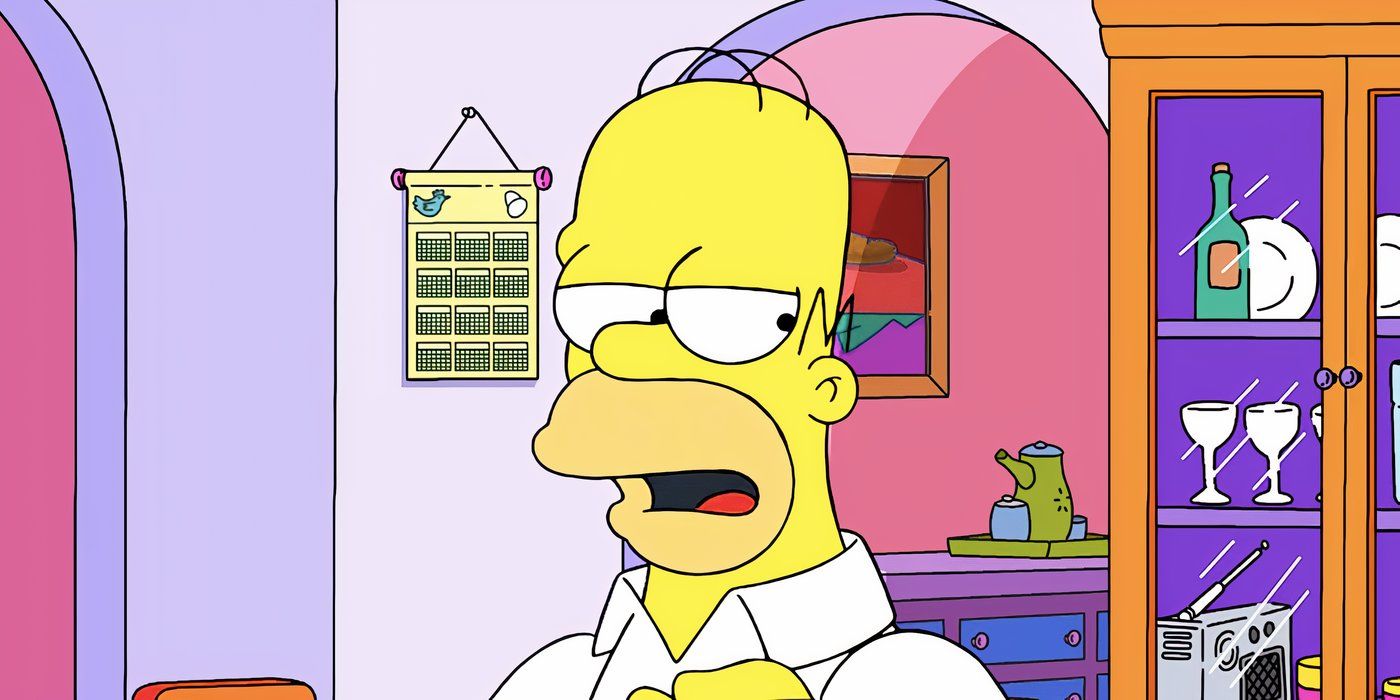
The Simpsons Season 35's Ending Finally Solved A 30-Year Old Homer Mystery
Warning: This article contains SPOILERS for The Simpsons season 35, episode 18.
Summary Bart's ambitious prank led Moe to explain Homer's deteriorating intelligence in later seasons.
Homer's character shift over time is due to "Flanderization" - an exaggerated trait becoming a defining feature.
Season 35 explores Homer's cluelessness in a more endearing light, showing he is a decent man at heart.
Although The Simpsons season 35 finale didn’t solve all the show’s plot holes, the episode did offer an explanation for one character change that viewers have discussed for decades. It is no exaggeration to say that Homer Simpson is one of the most influential TV characters of all time. Without him, there would be no Peter Griffin, Hank Hill, Bob Belcher, or Stan Smith. Although the Simpsons never age, Homer’s 35 years on television have seen him inspire countless characters who strive to be as lovably dim, as charmingly lazy, and as uniquely quirky as the iconic antihero.
Although The Simpsons season 36 may reverse this, Homer has undeniably changed since his original incarnation. In the early seasons of The Simpsons, Homer is markedly more dour, cynical, and misanthropic, but he is also much smarter. Homer’s anger was his original defining characteristic back when Bart was the show’s de facto main character. As Homer emerged as a fan favorite, his lack of intelligence and resulting frankness became his calling card. Homer was simple-minded and senseless, but this made him sweet and sincere. For all The Simpsons season 35’s problems, the show never lost sight of this.
The Simpsons Season 35 Finale Explained Homer’s Deteriorating Intelligence
Moe Misunderstood Bart’s Demand
Close
What season 35 did do was finally justify the gradual change in Homer’s intelligence. In season 35, episode 18, “Bart’s Brain,” Bart bought a human brain in a jar from Herman’s military surplus store and used it to pull off an ambitious prank. His well-meaning teacher, Ms. Peyton, reacted by getting Bart to treat the brain like a baby and carry it around for weeks, journaling about the experience. Initially hesitant, Bart eventually became emotionally attached to the organ. Unfortunately, he trusted Homer to look after the brain and his father got it mixed up with a jar of pickled eggs.
Although Homer was dull throughout the Golden Age of The Simpsons, his lack of intelligence became markedly more noticeable in the show’s later seasons.
When Bart asked Moe what happened to Homer’s brain, Moe suggested that years of heavy drinking and working with radiation took a toll on Homer’s intellect. Although Homer was dull throughout the Golden Age of The Simpsons, his lack of intelligence became markedly more noticeable in the show’s later seasons. This tracks with Moe’s theory, as Homer spent those years imbibing alcohol and working in a nuclear power plant, meaning the bartender might have been right on the money with his assessment. Of course, the real reason for Homer’s changing intelligence is rooted in the well-worn conventions of television writing.
The Real Reason Homer Got Less Intelligent In The Simpsons
The Simpsons Hero Fell Victim To “Flanderization”
Homer became less intelligent since his brainlessness was his defining characteristic and, as it became the thing that viewers expected from him, it gradually consumed his character. Homer fell victim to the phenomenon that TV Tropes users dubbed “Flanderization,” an infamous sitcom writing trend named after Homer’s neighbor Ned. When a character is Flanderized by a show’s writers, their defining characteristic becomes so exaggerated over time that it gradually changes their character completely. The Simpsons has a bad habit of indulging in this, reducing characters to one-note caricatures. Ned began life as Homer’s charitable neighbor, but this quickly changed.
Initially, Ned’s church attendance was one of many reasons Homer viewed him as a smug, superior figure, even though Ned was always friendly and accommodating. Over time, Ned’s religiosity became increasingly extreme and radical until his initial characterization as an impossibly generous, sweet neighbor was irrelevant and he was now a Christian zealot. Similarly, Homer’s ignorance was originally part of his general misanthropy in the early seasons, but by season 4, his stupidity was his most notable trait. This worked throughout the show’s Golden Age but, as The Simpsons entered its teens and twenties, Homer’s lack of intelligence became ludicrous.
The Simpsons Season 35 Made Homer’s Lack of Intelligence Work
Homer’s Cluelessness Made Him Seem Less Cruel
Close
Throughout these seasons, fans online renamed the family patriarch “Jerkass Homer” thanks to his behavior. One tired trend saw The Simpsons equate Homer’s innocence with thoughtlessness, with him frequently mistreating his family because he was too hopelessly empty-headed to understand the consequences of his actions. Fortunately, season 35 avoided this issue. Homer seemed genuinely guileless in this outing, which meant his frequent self-absorbed and short-sighted decisions were more understandable and endearing.
In season 35, episode 14, “Night of the Living Wage,” Homer became a corporate spokesperson for the company Marge was unionizing. This plot only worked because he clearly had no clue how meaningful a betrayal this was because he didn't understand corporate corruption. Similarly, episode 7, “It’s A Blunderful Life,” saw Burns pin a disaster on Homer because of his history of negligence. These plots riffed on Homer’s history of dumb decisions but ultimately proved that the hero of The Simpsons is still a decent man, regardless of his intelligence.






COMMENTS