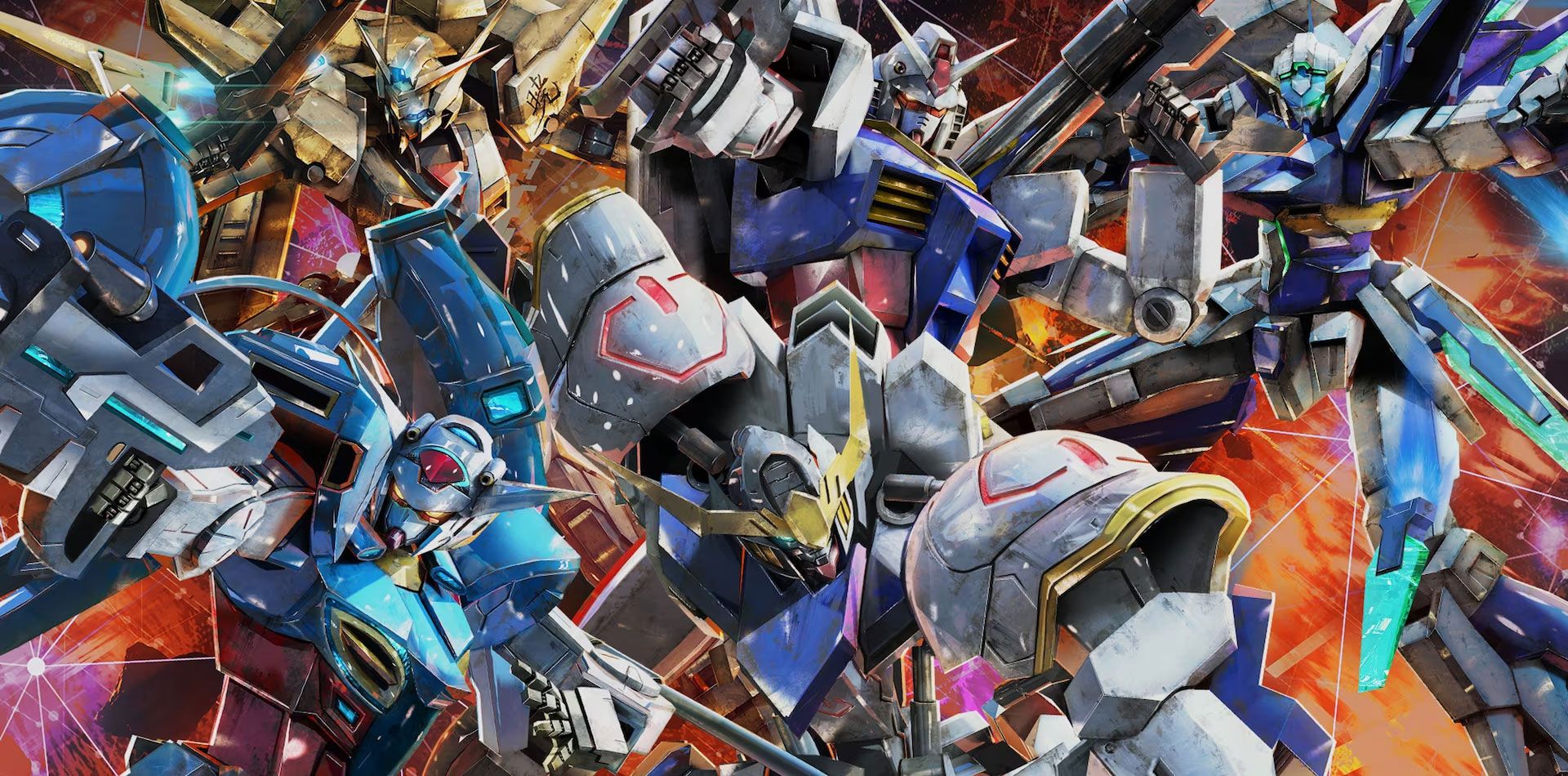
10 Best Gundam Anime of All Time, Ranked
Summary Classic Gundam series like SEED and Wing have stood the test of time, influencing future iterations for years to come.
Gundam Iron-Blooded Orphans delivers a dark and intricate story, though its controversial ending has divided fans.
Each Gundam series brings a unique perspective on themes like war and social class, showing the franchise's timeless appeal.
The Gundam franchise spans multiple subseries and spin-offs, a handful of which are often held up as being the best of the best. These have stood the test of time best, and are often referenced and brought up by fans as examples. Even if personal opinion varies, one cannot dispute the influence and quality these shows added to the reputation of the franchise.
The various anime range from the dramatic, the blatantly toyetic, and the obscure. The most fondly regarded, however, tend to put a spin on themes set by the original series: the cruelty of war, the conflict between social classes, and the question of how humanity will adapt to outer space. These shows have carried on the legacy of Tomino's classic through their respective decades, showing how timeless Gundam is.
10 Gundam: Iron-Blooded Orphans
Grungy Aesthetic Pushes "War is Hell" to the Limit
Close
One of the most recent entries to the franchise pulls no punches with its dark setting. With mobile suits that traded hands or were regularly salvaged, a group of protagonists who were both child soldiers and mercenaries, a ruthlessly pragmatic lead pilot character, and a detailed setting that included things like pirates and organized crime, Orphans provided a "serious" setting international fans had clamored for, for years.
The unique story perspective of a PMC seeking its fortune amid political turmoil is also deliciously complex, providing both action and intrigue. The only point of contention is the tragic ending the anime settled on for its second season, which has infamously left fans split on how to receive it. Some consider it a fitting and daring conclusion that adheres to the theme about the futility of war, while others feel it is mean-spirited and resorts to character assassination to achieve the ending the staff desired.
9 Gundam SEED
Early 2000s Classic Still Beloved for its Drama
Close
If Orphans is loved internationally for its grimness, SEED is a Japanese favorite for its dramatism. This series can be considered a vision of the original 1979 anime, updated for 2000s sensibilities. Combat is amplified and exaggerated, with mobile suits spewing lasers and explosions in every direction, while the conflicting sides are given a twist when its central characters, Kira and Athrun, are forced to fight despite being former friends.
Despite the certain goofiness inherent to SEED, it also has a fairly critical examination of the nature of prejudice and hatred. The strong core cast is also memorable enough to be some of the franchise's most popular characters even years on. The success of its latest movie, Gundam SEED Freedom, despite languishing in development hell, along with a multitude of further spin-offs, shows how influential and beloved SEED is by its lonesome, even with its cheesy moments that only add to its charm.
Mobile Suit Gundam SEED Destiny (2004) Release Date October 9, 2004 Seasons 1 Creator(s) Yoshiyuki Tomino , Hajime Yatate
8 Gundam 00
Ambitious Series Still Respected Despite Stumbles
Close
While not the strangest iteration, 00 ("Double O") bucked trends for the time. The machinery in the setting was a far cry from Gundam standards, especially when SEED was caught up directly homaging classic mobile suits. The plot also tackles unusual topics, like the validity of "peace through superior firepower", by turning the typically heroic Gundam pilots into veritable terrorists, albeit well-intentioned ones, out to become the only armed power in the world.
Sadly, the second season walked back on the story by recontextualizing the situation into a more standard "resistance vs evil overlord" plot. It also led to some characters and plot threads being awkwardly abandoned amid the retrofitting. Nonetheless, the machines and characters of 00 have garnered their own fans in the years since, proving that while the story couldn't sustain its aspirations, it still left an indelible mark on Gundam's fans.
7 Gundam Wing
Early Hit Also Serves as Blueprint for Future Gundam Series
Close
While G Gundam may be Sunrise's first alternate timeline, Gundam Wing has them perfect the formula and understand how to write Gundam for a new generation. While Universal Century's trademarks are still seen, such as a Char Aznable analog with similar sibling drama, the shift in focus from broad war to a team of photogenic teenage heartthrobs out to topple an authoritarian government revitalized the franchise.
Many shows have been influenced by Gundam Wing's outstanding success, with archetypes like the brooding pilot and the powerless but defiant princess getting their start with Heero Yuy and Relena Peacecraft. Still, that is not to say Wing has no value outside being a historical document: the premise of the five pilots working undercover and unaware of even the others provides several intertwining narratives that keep audiences on their toes as to how the plot will progress.
6 Gundam Unicorn
Late UC Story Is Among the Most Lavishly Animated
Close
Unicorn is one attempt to tie up the Universal Century after the movie Char's Counterattack. While the plot may be hit or miss, what isn't in question is how wonderfully rendered the machinery is, making it one of the best series just to look at the fantastic battle sequences, if nothing else. All of Universal Century's mobile suits are given a high-budget coat of paint, allowing both advanced machines and toyetic, formerly concept art vehicles to be brought to life.
The plot, though well-crafted, is the most likely sticking point that could turn off viewers. While it inhabits Gundam's wartorn setting, the structure of the story better resembles an adventure yarn, with a plucky young hero who guards and is guarded by a powerful (robotic) ally while embarking on a quest that takes him around Earth and Space. Even that, however, cannot hide Unicorn's strength, which commits some of the franchise's most recognizable mecha designs to screen.
5 Turn A Gundam
Oddball Entry Remains Adored by Fans
Close
Yoshiyuki Tomino's output for the franchise later on led to some of the strangest iterations, including the aforementioned Turn A, ostensibly set so far in the future that humanity has regressed to a pseudo early-19th century aesthetic, but suddenly finds itself at war between Earth's people and the invading Moonrace. The vision of picturesque farmlands presided by mobile suits is only equaled by the strangeness of the Turn A itself, whose features look like a particularly bad recollection of a Gundam.
Nonetheless, Turn A today is regarded fondly precisely for how it shook up the formula. That it was also created by Tomino, Gundam's creator, is nothing less than a stamp of approval for what can be considered "Gundam", even if the hero's ride chooses to have a sweeping mustache instead of the iconic V-shaped fin. Likewise, the optimistic tone the show chooses to end on was a change of pace during a time fans welcomed while the franchise was pushing dark stories past the point of incredulity.
4 Gundam Thunderbolt
Dark and Short War Story Masterfully Combines Violence, Art, and Music
Close
This short series also provides a spectacular artistic display, especially in how it chooses to set its major scenes to either blistering jazz tunes or wistful pop songs. Thunderbolt's first season goes all in on the horrors of war with some exceptionally visceral combat sequences. The story also cleverly plays with moral ambiguity by putting the personable underdogs on the typically villainous Zeon side, while the Gundam's pilot serves as a sadistic counterpart.
The first season is an excellent stand-alone story, though fans eager for more musically-inclined Gundam can also watch the second season, even if it ends on a cliffhanger that Bandai-Namco has so far shown no interest in following up on. Nonetheless, Thunderbolt, like its name indicates, packs a whole lot in a few episodes, with fantastic art, combat scenes, and cruel twists of fate.
3 Gundam: The 08th MS Team
Popular OVA Series Reenvisions Franchise with Vietnam War Aesthetic
Close
Some purist fans want Gundam focused on nothing but hyper-realistic armored warfare, and even they are catered to by 08th, which follows a team of soldiers fighting on Earth's surface - no space-based dogfighting occurs here. Instead, a trio of mecha cobbled out of spare parts lead the fight through the jungle. Combined with a Romeo and Juliet-esque subplot of the two leads falling in love on opposite sides, the OVA has all the material for one of the most popular side stories of the setting.
The series is often lionized as the ideal for the Universal Century by shucking off all the metaphysics and fanciful space combat to focus on ground-pounding warfare. Whether one agrees with that or not, 08th does help add nuance and scope to the One-Year War by focusing on the grinding, boring conflict fans had waited to see.
2 Mobile Suit Gundam
Original TV Series and Trilogy Still a Ground-breaking Concept
Close
Regardless of how receptive one is to the late 1970s art style and color palette, Tomino's original Gundam war tale remains one of the most memorable in media. It's worth watching on that merit alone, with the One-Year War providing the basis for a multi-series storyline tracking the rivalry between Amuro Ray and Char Aznable. Of course, the very first entry is littered with little oddities that mark the early awkward days, including a plot prone to meandering as much as White Base did to outrun Zeon, which is not helped by an episode count that nervous executives shortened in the day.
Today, most fans point towards the movie trilogy as a definitive vision, which trims the fat and adds improved animation, allowing the story's strengths to stand out better without getting lost in one episodic adventure or another. Even now, the One-Year War stands alone, as Gundam tracks a planet-spanning invasion when most sequels are leery of stepping outside small-scale conflict.
Mobile Suit Gundam Release Date April 7, 1979 Seasons 1 Creator(s) Yoshiyuki Tomino , Hajime Yatate
1 Mobile Suit Zeta Gundam
Immediate Sequel Gave Anime Room to Grow into Multiple Settings
Close
While it may be odd to place the sequel ahead of the original, Zeta is hugely important in how it allowed a simple TV show to expand its scope. While the first Gundam conveyed its war story succinctly, Zeta provided a stronger political element that let the setting thrive and gain depth. Now, it was no longer about a single ship fighting off an empire; it was a complex society where viewers could see various Earth and Space factions jockeying for power, exemplified by the three-way conflict that had everyone trying to either charm or battle one another.
While it is not an alternate timeline - Amuro and Char quickly reappear to join the fight - Zeta's active refusal to repeat the formula, instead providing all kinds of new mobile suits and organizations could easily be seen as the start of Gundam's true identity as a variety of settings all tied to an examination of warfare. While Mobile Suit Gundam alone is effective, it took Zeta to fully realize its potential.




COMMENTS